
Wall Street continued its strong rally on April 15th, with both the S&P 500 and Nasdaq Composite hitting new highs, despite inflationary pressures and geopolitical tensions in the Middle East.
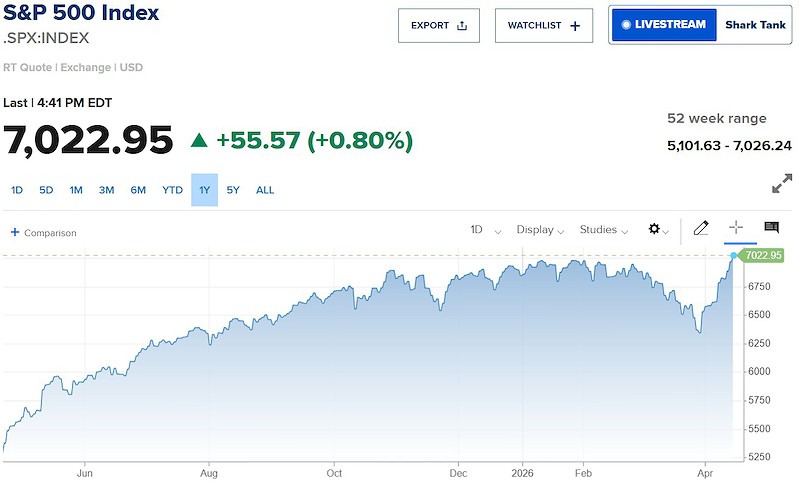
At the close of trading, the S&P 500 rose 0.8% to 7,023 points, surpassing its previous peak set at the end of January. The Nasdaq Composite gained 377 points, or 1.6%, to 24,016 points, marking its longest chain of 11 consecutive days of gains since 2021. Meanwhile, the Dow Jones edged down 72 points, or 0.2%.
This rally marks a significant reversal from the end of March, when the Dow Jones had fallen into correction territory after a five-week losing chain . The current developments show that investor sentiment has shifted rapidly.
Despite rising energy prices and inflation due to the Iran conflict, the market remains positive. Many on Wall Street believe that geopolitical tensions may soon ease, thereby limiting the negative impact on the economy.
According to Adam Crisafulli, head of Vital Knowledge, the market is forming expectations that the conflict will be brought under control and that the economic impact will be short-term. Meanwhile, President Donald Trump claims that the fighting in Iran is nearing its end.
Several organizations have presented similar scenarios. Wells Fargo predicts that the Middle East conflict could last for weeks rather than months, and expects the Strait of Hormuz – a vital energy shipping route – to be reopened soon.
Besides geopolitical factors, positive corporate earnings are playing a supporting Vai in the market. Bank of America reported first-quarter profits of $8.6 billion, up 17% year-on-year, while Morgan Stanley also announced better-than-expected results.
According to analysts, the fundamentals of the US economy remain stable, both in the corporate and consumer sectors. In the coming period, earnings reports from major technology companies such as Alphabet, Amazon, Apple, and Microsoft are expected to continue influencing market trends.
In addition, factors such as investment in artificial intelligence, fiscal policy, and a stable labor market are also contributing to strengthening the outlook for US stocks in the current period.