We know that short video platforms are stealing everyone's attention, and YouTube recently made an interesting decision: allowing you to set the Shorts feed to "0 minutes," completely removing this page from the app , and any account can enable it automatically.
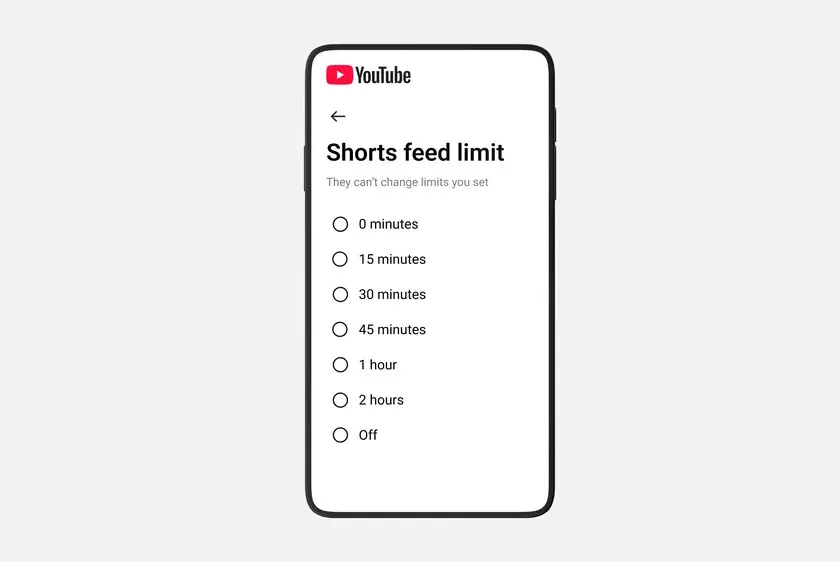
This setting is called "Shorts feed limit". Setting it to 0 will remove the Shorts feed page, but subscribed channels and regular videos will remain completely unaffected. (In my testing, there are currently 15 minutes available, but not yet 0 minutes; there may be time differences in upload times in different regions.)
How to enable: Open the YouTube app → Tap your profile picture in the top right corner → Settings → Time Management → Shorts feed limit → Select "0 minutes". Want to revert? Simply adjust the limit back to your desired duration.
The industry's first truly functional "off button"
YouTube officially calls this feature an "industry first." In the past, the screen time management tools provided by major short video platforms were at most limited to daily reminders, or pop-up windows asking users to "watch for another 15 minutes" after reaching the limit. It was easy to bypass the mechanism.
The feature will begin on January 14, 2026, when Jennifer Flannery O'Connor, VP of Product Management, announced a batch of updates to protect minors: Parents can set a daily Shorts viewing limit for teenagers aged 13 to 17 through Family Link, with options ranging from 120 minutes to 0 minutes.
YouTube's example at the time was: "When your child needs to concentrate on homework, set Shorts to 0 minutes; when they need entertainment during a long trip, change it back to 60 minutes." A few months later, this feature was gradually rolled out to all adult accounts, no longer requiring parental controls to activate.
Also added at the same time are the customizable "bedtime reminder" and "rest reminder" functions, which allow users to set personalized screen time reminders for their own schedules, rather than relying on the platform's default reminder time periods.
Why would YouTube "voluntarily cripple itself"?
In terms of numbers, YouTube Shorts has surpassed 2 billion monthly active users, making it one of YouTube's most crucial traffic engines in its battle against TikTok. Given this, offering a "completely off" option appears to be a proactive move to cut off its own traffic funnel from a business perspective.
The underlying reason may be regulatory pressure. Since 2023, the United States, the European Union, Australia and other countries have successively promoted legislation related to "social media harming minors". Pinterest, Instagram and TikTok have all been the main subjects of lawsuits and hearings. YouTube's proactive launch of the strictest blocking option is interpreted by the industry as "preemptively expressing its position" to the legislators and reducing the risk of being forced to regulate in the future.
This move also points to YouTube recalibrating its product positioning: short videos attract traffic, while long videos retain users and allow for deeper advertising. When the two cannibalize each other, encouraging users to actively choose to "only watch long videos" may actually improve the quality of high-value ad inventory.
For creators who rely on YouTube Shorts for content reach (including many cryptocurrency and finance KOLs), the impact of this new feature may be two-sided: on the one hand, the organic reach of short videos may decrease as more users enable the zero-minute limit; on the other hand, users who choose to continue watching Shorts may have a higher willingness to engage and a higher engagement rate.