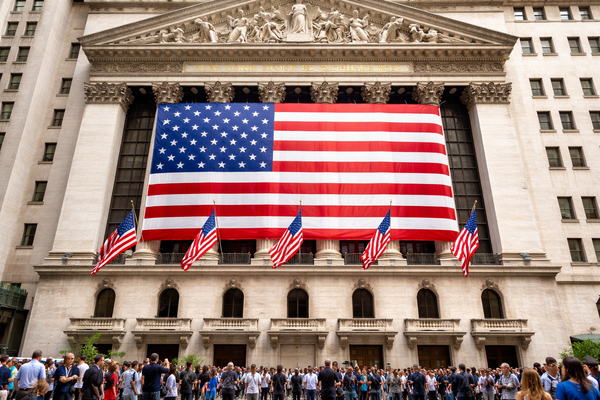
The digital transformation of traditional financial markets is gaining further momentum as the New York Stock Exchange (NYSE) has submitted a rule amendment to the U.S. Securities and Exchange Commission (SEC) to introduce trading of tokenized securities. With the NYSE moving in the same direction following Nasdaq's earlier approval, tokenized securities appear to be moving beyond the experimental stage and entering the realm of inter-exchange competition.
The core of this amendment lies in incorporating tokenization while maintaining the existing market structure. The NYSE proposed allowing the trading of tokenized securities for Russell 1000 index components and major ETFs within the framework of the Depository-to-Consumer (DTC) tokenization pilot project. These securities will use the same CUSIP numbers and tickers as existing stocks and will be traded in parallel on the same order books as traditional stocks. Settlement will also maintain the current T+1 system.
This design places emphasis on "gradual adoption" rather than a "complete transition to blockchain." Existing regulations, such as short-selling restrictions and market surveillance systems, remain in effect. It is a structure where technology changes while maintaining market order. This is interpreted as a strategy to verify the effectiveness of tokenization while minimizing regulatory risks.
This trend is particularly significant as the NYSE has joined the fray following the Nasdaq. This demonstrates that tokenized securities have emerged not merely as an experiment for specific companies or blockchain projects, but as a core pillar of the global exchange infrastructure competition. Moving forward, competition surrounding trading efficiency, securing liquidity, and expanding global investment accessibility is likely to intensify.
The market views this move as a "prelude to a transition." While T+1 payments and existing infrastructure are currently maintained, forecasts suggest that this could lead to structural changes in the long term, such as real-time payments or 24-hour transactions. It is also anticipated that stablecoin or digital cash-based payment systems may be integrated during this process.
Ultimately, the NYSE's recent move is closer to traditional finance absorbing blockchain rather than blockchain replacing it. It is a choice that prioritizes the continuity of market order over the center of technology. However, if this experiment is successfully established, the repercussions are expected to be significant, as it could reshape the very structure of trading and settlement in the capital market.