The 2026 Hong Kong Web3 Carnival has concluded, and the industry consensus has shifted from "bull market hype" to a clear narrative of the future: the integration of AI and RWA is moving from concept to practice. From Hong Kong Financial Secretary Paul Chan Mo-po's clear statement at the opening ceremony that "the cross-integration of Web3 and AI will rewrite the rules of the game," to HashKey's release of the white paper "On-Chain Finance and Tokenization in the Agent Economy Era," and ENI Network, UAQC, and other institutions showcasing their AI-driven RWA asset management solutions, the entire Web3 industry in Hong Kong reached a rare consensus in April: AI×RWA is not just an optional track, but the core theme determining the next round of competition.
Before this narrative was launched, SFI had already completed its full-chain layout, built a complete ecosystem with multiple segments, and taken the lead in delivering a feasible and comprehensive AI×RWA ecosystem solution—with the "iron triangle" as the core support and other businesses working together to assist and jointly empower the deep integration of AI and RWA .
I. Why has AI×RWA become a "must-answer question" for the entire industry in 2026?
To understand this issue thoroughly, let's first look at the current state of RWA: As of early 2026, the total value locked in on-chain RWA (excluding stablecoins) exceeded $25 billion, and institutions predict that it will reach tens of trillions of dollars by 2030. However, the core pain points of its cold start are still the depletion of liquidity after the assets are put on the chain, the lack of real users, and the lag in circulation tools.
Looking at AI iterations: By 2026, AI Agents will have evolved from auxiliary tools to independent on-chain participants. In the future, on-chain interactions will shift to high-frequency collaboration between "people and people, people and agents, and agents and agents." The massive demand from agents for wallets, payments, and asset management is becoming a new growth driver in the crypto market.
A clear closed loop has thus been formed: RWA has a massive amount of assets waiting to be activated, and AI has a massive amount of demand waiting to be matched. The two complement each other, coexist, and empower each other. From the Hong Kong Web3 Carnival to various industry summits, AI×RWA is the most frequently mentioned topic—all these signals confirm that this has become an unavoidable question for practitioners.
II. SFI's Complete Ecosystem Solution: Centered on the "Iron Triangle," Multi-Business Collaboration Empowers AI×RWA
While the industry is still debating "how AI can empower RWA" and "how RWA can meet AI needs," SFI has already forged a differentiated path. With SoluluPay as its core traffic driver, it connects five major business segments (Solulu Pay, Caviar, COPX DAO, RWA Incubator, and RWA Exchange) to build a full-lifecycle ecosystem covering "asset issuance → payment circulation → scenario consumption → investment trading → value enhancement," comprehensively adapting to the development needs of AI×RWA.
1. SoluluPay: The "traffic heart" of RWA's cold start, solving the core problem of "no one buying".
There's a consensus in the industry that the biggest challenge for RWA projects isn't the technology, but rather acquiring real users and initial liquidity. Many RWA projects, even after successfully putting their assets on-chain, stagnate due to a lack of users and ultimately become "air assets."
SoluluPay, as the core of the SFI ecosystem's traffic, perfectly fills this gap. Currently, it has accumulated over 200,000 active users, built up tens of millions of liquidity reserves, and aggregated resources from over 100 stablecoins and over 40 public chains. More importantly, these users are real accounts that genuinely participate in payments, consumption, and transactions within the ecosystem, demonstrating a strong willingness to pay and high user stickiness.
For projects entering the RWA arena, integrating with SoluluPay means they don't need to build a user system from scratch. They can directly access a precise traffic pool of 200,000 people, quickly complete the first round of subscriptions and liquidity launch, and skip the most difficult cold start stage. This is also the core premise of the AI×RWA narrative: AI can generate strategies, but ultimately, it is real people and their AI agents who take over the assets and complete the transactions.
2. COPX DAO: An AI-driven RWA value-added engine that solves the pain point of "dormant holdings".
As the core AI trading platform of the SFI ecosystem, COPX DAO's core competitiveness lies in its deep integration of AI technology with RWA asset management. Its core capabilities include machine learning quantitative strategies, "trading as mining" mechanisms, and DAO governance dividends. In the RWA scenario, these capabilities precisely address the industry's pain points.
For RWA asset holders, the biggest headache is "idle assets during the lock-up period"—COPX DAO's AI strategy can automatically complete hedging and arbitrage operations, allowing the held assets to continuously generate returns and completely solving the problem of "dormant holdings." The pricing problem that has long plagued the RWA industry has also been solved by COPX DAO's AI model. Based on on-chain data, market sentiment, and asset fundamentals, it outputs dynamic pricing references in real time, making RWA asset pricing more fair and scientific.
More importantly, through the autonomous learning and iteration of the AI Agent, COPX DAO can adjust its strategy portfolio in real time according to market fluctuations, achieving "passive returns around the clock," which is undoubtedly a core attraction for RWA investors seeking stability.
3. Caviar: A "consumption outlet" for RWA assets, bridging the last mile from "value appreciation to monetization".
The long-term value of RWA assets ultimately lies in their "monetization and consumability." If they can only be held and traded, but cannot be converted into actual equity, user engagement will eventually dwindle—Caviar exists precisely to solve this problem.
As a luxury e-commerce platform in the Web3 field, Caviar focuses on co-branded products with top brands such as Lamborghini and Fendi, and supports direct payments with stablecoins. Its previous record of selling out 4 million USDT in a single blind box sale in 4 days directly verifies the real demand of high-net-worth users for stablecoin consumption and RWA yield monetization.
In the AI×RWA ecosystem, Caviar's value is indispensable: it provides a "consumable" outlet for the appreciation of RWA assets. Users can directly redeem physical luxury goods on Caviar for investment returns earned through COPX DAO, truly realizing a closed loop of "asset appreciation → consumption monetization." The smooth operation of this closed loop also relies on the support of other SFI auxiliary businesses, forming a synergistic effect with the "iron triangle" to jointly solidify the integrity of the SFI AI×RWA ecosystem.
III. Closed-Loop Logic: From "Single-Point Breakthrough" to "Systemic Victory"
To thoroughly discuss the challenges of implementing AI×RWA, let's first look at the current state of the industry: In 2026, industry discussions shifted from "can it be done?" to "how to do it?" Most institutions attempted to enter the market with a single product, but were trapped in the predicament of "single-point breakthroughs failing to achieve significant results." SFI's key to breaking through this predicament lies in building a complete, fully functional, closed-loop ecosystem: RWA incubator produces compliant assets → SoluluPay provides real users and liquidity → COPX DAO provides AI value-added strategies → Caviar creates a consumer outlet → RWA exchange completes secondary circulation .
This closed loop precisely addresses the five core pain points of the AI×RWA track: difficulty in asset on-chaining, difficulty in user cold start, difficulty in increasing the value of holdings, difficulty in realizing profits, and difficulty in overcoming liquidity shortages. It is by no means a simple product patchwork, but a set of operational, replicable, and scalable ecological infrastructure.
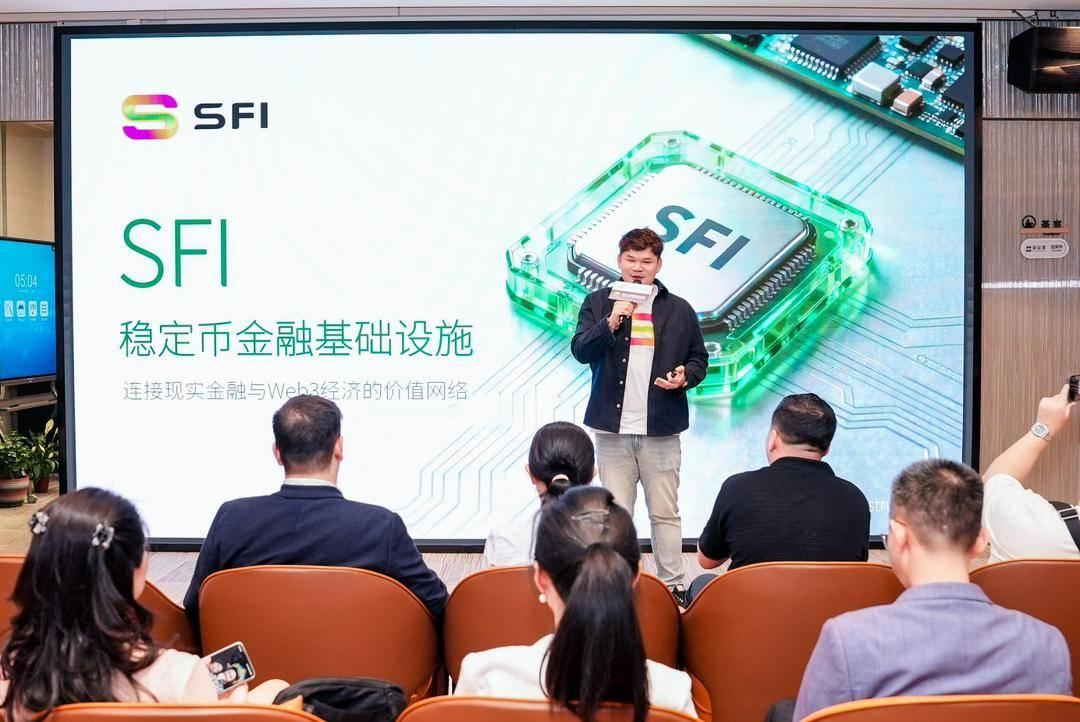
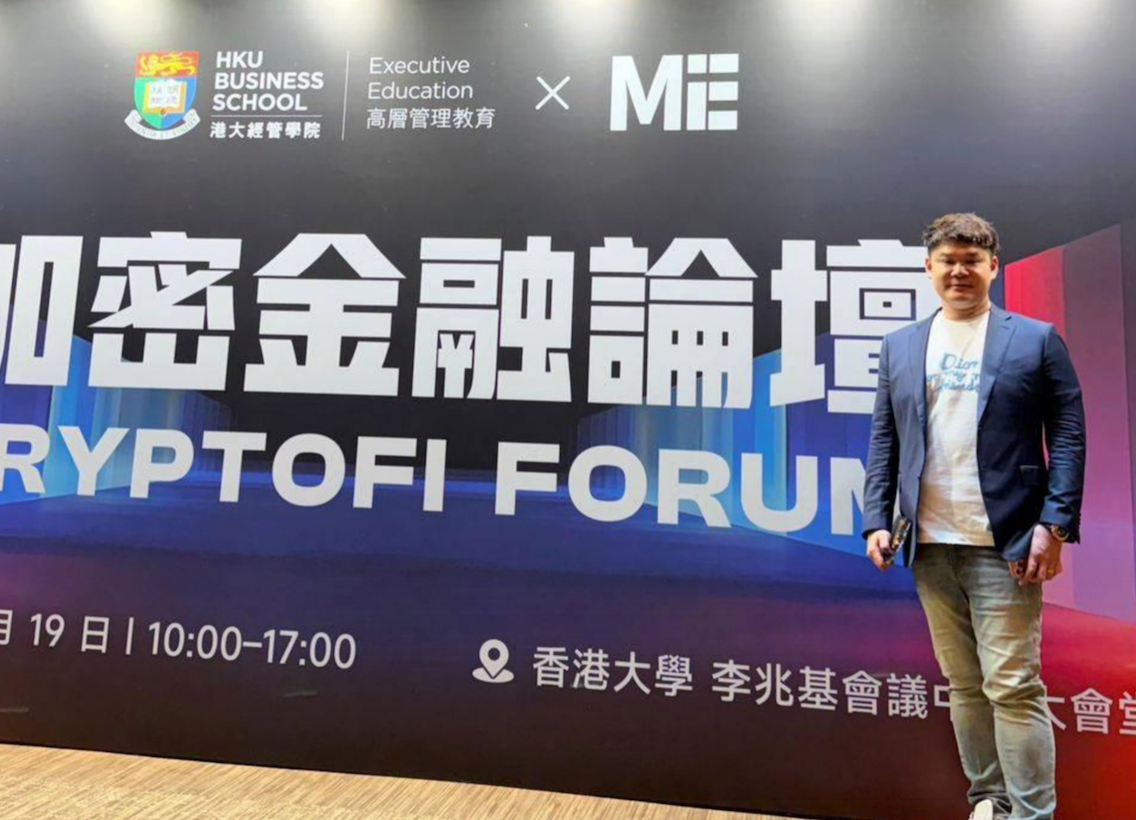
This closed-loop logic had already gained deep recognition from the core circle of the industry at the Hong Kong Crypto Finance Forum on April 8, 2025. On that day, Eddie Chong, Chairman of the SFI Foundation, appeared as a strategic partner with SFI and the "Iron Triangle" brand, engaging in in-depth dialogue with guests such as Chan Ho-lim, Under Secretary for Financial Services and Inland Revenue of Hong Kong, and Michael Wu, co-founder of Amber Group, systematically explaining SFI's ecosystem strategy of using SoluluPay as the core traffic driver and connecting the entire RWA (Real-Time Wireless Application) chain. Attendees generally agreed that the integration of AI and RWA is moving from concept to practice, and compliance capabilities will become the core moat of the industry—and SFI's "infrastructure + value-added + consumption" closed loop provides a practical example of this consensus, attracting significant attention from the audience. This forum also marked an important starting point for SFI to showcase its complete ecosystem capabilities to the core circle of the industry, laying a solid foundation for its future development in Hong Kong and its global reach.
IV. SFI's Global Compliance Strategy: Starting from Hong Kong
Hong Kong in April this year was undoubtedly a catalyst for the AI×RWA narrative. Within just two weeks, Hong Kong completed the policy loop of issuing stablecoin licenses and approving secondary trading of tokenized products. At the carnival, Paul Chan Mo-po clearly stated that the combination of Web3 and AI will reshape the global financial system, but the bottom line of "human intervention, controllable risks, and cross-border regulatory loop" must be adhered to. This also means that compliance capability will become the core moat of the AI×RWA track and the key for institutions to break through .
SFI's compliance strategy is already at the forefront of the industry: it has already obtained MSB licenses in the United States and Canada, and is steadily progressing on VARA in the UAE and Hong Kong, forming a compliance matrix covering major global markets. Hong Kong is the most crucial stop in this matrix. This appearance at the Hong Kong Web3 Carnival is not SFI's "first entry," but rather its first step in cultivating the local market and connecting with global resources.
Today, the compliance table in Hong Kong is set, and the narrative for the AI×RWA race has been written. Unlike those institutions that are still hyping up concepts and lack a complete strategy, SFI has already entered the game, building a complete ecosystem suitable for the development of AI×RWA with its "iron triangle" as the core and multiple businesses working together. It is steadily moving forward on the road to compliant development, aiming for a core position in the trillion-dollar AI×RWA market.