Written by: Long Yue
Source: Wall Street News
Recently, legendary investor and founder of Tudor Investments, Paul Tudor Jones, reviewed his 50-year trading career in an in-depth interview and shared many insightful views on core issues such as the risks of artificial intelligence, the valuation bubble in US stocks, the gold market, and Warren Buffett's investment philosophy.
He uses his 50-year trading career to tell you: compound interest is the most underestimated power, Buffett is the most underestimated genius, and AI is the most underestimated threat. Excerpt from the interview:
- Buying the S&P 500 at current valuations would result in a negative 10-year return, based on historical data.
- We are in the midst of a sovereign debt bubble. The stock market capitalization to GDP ratio has reached 252%—this figure was 65% in 1929 and 170% in 2000.
- Gold's annual supply increases by about 2%, while Bitcoin's mineable supply is limited and decentralized.
- On the day that gold experienced its biggest single-day drop in history, silver plummeted by 33%. On days like that, you have to be completely focused on the price movements every single minute.
- The consensus on AI safety is: we won't really take action until 50 million or even 100 million people die in an accident. That's insane.
- I did this because I wanted to make a lot of money and then donate it. I felt it was pursuing a noble cause.
- Anyone who truly succeeds in investing or trading must first and foremost be a great risk manager.
- The most important point is: you must make money by following the trend over the long term. All great wealth is accumulated by holding onto a trend for the long term.
- Warren Buffett is the OG of compound interest. He understood its power at the age of nine, while I brilliantly avoided it throughout my entire career. I deeply apologize to him.
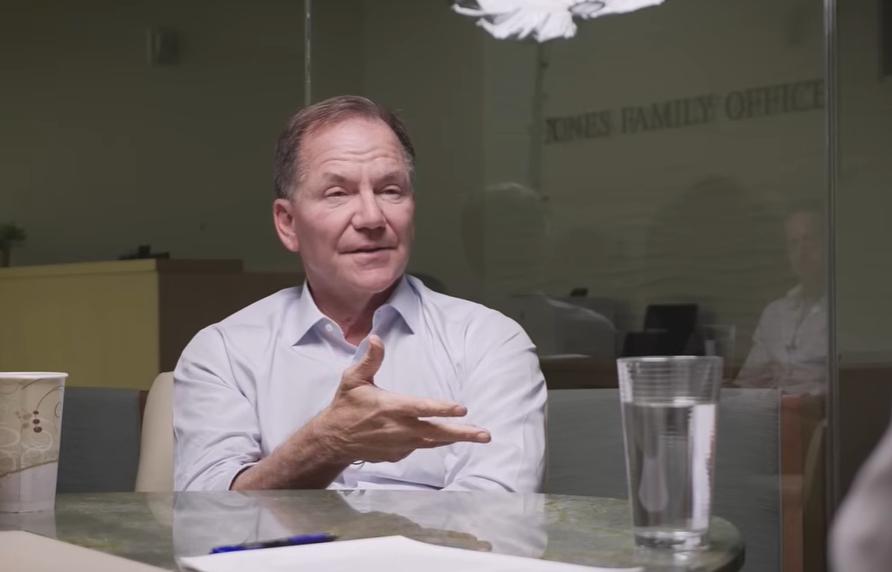
Apologize to Buffett: I've always been a big fool.
At the start of the interview, Jones discussed the fundamental difference between investors and traders, and then let out a chuckled "confession."
“I used to sit there and criticize Warren Buffett year after year,” he said. “My thinking was: he just happened to be in the right place at the right time, and he caught this bull market. If he had been in Japan, starting with the Nikkei index in 1989, it would have been a completely different story.”
However, after listening to a podcast about Berkshire Hathaway, his understanding was completely overturned.
I exclaimed then and there: My God, this guy is a genius, and I've always been the biggest fool. He understood the power of compound interest at the age of nine, while I brilliantly and skillfully avoided it throughout my entire career.
He specifically mentioned the partnership of Buffett and Charlie Munger: "Buffett would buy things for 50 cents, while Munger understands the power of compound interest in companies that continue to grow. The two of them together are incredibly powerful."
He concluded by saying, "Warren, if you happen to be listening to this program, I'm deeply sorry. You are the father of compound interest, and I wish I had even a tenth of your wisdom."
Jones likened his trading style to that of a right winger in American football: "I'm like a right winger who's played in the NFL for 50 years, fighting in the trenches every day. Whenever someone says they want to get into trading, I say: Long on stocks, go value investing."
Schedule: Wake up at 2:30 AM to watch the London stock market open.
When asked about his daily routine, Jones gave an impressive schedule—one he has maintained for over 40 years:
- I get up at 6:15 and work until 7:00.
- 7:00–7:45 Exercise, 45 minutes of high-intensity aerobic exercise
- Monitor the market from before opening until 10:00 AM.
- 10:00–12:00 Meeting
- Afternoon lunch and meetings, with one hour each before and after the market closes for review and planning the next day's strategy.
- 5:00 PM Returned home and took a one-hour walk with my wife.
- 7:00 PM – Work an hour later, watch the news, watch Netflix.
- Work again from 21:30 to 22:15
- I wake up at 2:30 or 3:00 AM, work for half an hour, and then watch the London market open for about 45 minutes.
"I've probably been doing this since the 80s," he said. "I feel like I have more work to do than I did 40 or 30 years ago because there's so much more information now. I receive 800,000 emails a day."
He admitted that information overload is eroding the ability to "execute with precision": "What does precision execution mean? It means buying when the market is in a bloodbath and selling when the market is euphoric. When you are trading 25 instruments at the same time, and 48 emails are coming in, all of which could be actionable information—information overload distracts me and makes it impossible to execute with precision."
US stock valuation: 252% warning line
Regarding the market outlook, Jones issued a clear warning signal.
Historical data shows that when you buy the S&P 500 at the current price-to-earnings ratio, the 10-year return is negative.
He said, "The S&P 500 is an excellent investment tool in the long run, but that's a 100-year average, which includes times when the price-to-earnings ratio was only six, seven, or eight—that's about a third of what it is now. Valuation is crucial, and the stock market is really expensive right now."
What worries him even more is the overall leverage level.
"Our country is overly concentrated in equity," he said. "The stock market capitalization as a percentage of GDP is now 252%. It peaked at 65% in 1929, 85% to 90% in 1987, 170% in 2000, and now it's 252%."
He further extrapolated to an extreme scenario: "If we revert to the average P/E ratio of the past 25 to 30 years, that would mean a drop of about 35%. 35% multiplied by 250% of GDP is 80% to 90% of GDP disappearing. The wealth effect reverses, capital gains tax revenue goes to zero, budget deficits explode, the bond market collapses, and the negative self-reinforcing effect snowballs—this is very disturbing."
He stated unequivocally: "We are in the midst of a sovereign debt bubble. In the stock market, the country's individual equity holdings are at an all-time high."
Furthermore, he pointed out the liquidity risks of private equity: "In 2007-2008, private equity accounted for about 7% of institutional portfolios. Now it's 16%. Liquidity is much worse than in 2008. You have to be aware of this when allocating assets."
AI Threat: Regulating Only After Someone Is Dead – That's Insane
On the topic of artificial intelligence, Jones displayed a systemic concern that surpassed that of the average investor.
He described a small, closed-door meeting he attended about 18 months ago, with about 35 to 40 people, including a modeling expert from each of the four major AI modeling companies.
"When I asked them directly, 'How do you think the safety issues of AI will be resolved?' The almost unanimous answer was: 'We might have to wait until 50 million or even 100 million people die in an accident before we really take action,'" he said. "That's insane."
He defined the core problem in AI research and development as the danger of the "build-destroy-iterate" model in this field: "This has always been the invention model of humankind since the dawn of civilization—build, destroy, iterate. But we have never been in a situation where the tail event of 'destruction' could cause the deaths of hundreds of millions or even billions of people."
Jones emphasized that AI regulation is the most pressing test of leadership today: "If this were a problem with one of my companies, it would have been brought under control long ago. That's what a good risk manager should do. But right now, there's absolutely no risk management here."
He put forward a specific policy proposal: "I think the most important and direct thing we can do is to require all AI content to be watermarked. Make it a federal felony—if someone intentionally violates the rules three times, put them in jail. I want to know what constitutes genuine human creation and what doesn't.
He also mentioned that shortly before the interview, he had been called twice by serious people asking about a certain video or statement—both of which turned out to be deepfakes.
"If we can get back to some real, honest, and normal ways of speaking, I think we have to do that," he said.
Gold and Trading: During a Major Market Crash, You Must Act with Utmost Swiftness
When discussing specific trading opportunities, Jones mentioned USD/JPY as a significant opportunity that is currently "in the works."
"The yen has been severely undervalued for quite some time," he said. "Japan has a net international investment position of about $4.5 trillion, about 60% of which is in the United States, and most of it is unhedged. That's a huge dollar exposure. And now, Japan has its most dynamic leader in half a century, whose approach is Japan First, and who will reshape the economy in a very entrepreneurial way."
He likened trading to boxing: "You and your opponent—that is, the market—enter the ring. You probe, feint, feel your opponent, and look for an opening. Occasionally you'll find a perfect opportunity, and then you throw a powerful punch."
Regarding extreme moments in the market, he described the day of the "biggest single-day drop in history" for gold and silver: "Silver surged (including volatility) by 33% in a single day. You had to be fully focused on every minute of that day—what you did at the opening, what you did when the price broke through a level you hadn't expected that day. You had to have a plan in advance, and that plan had to be executed automatically, it had to be thought out in advance."
Full transcript of the interview with Paul Tudor Jones
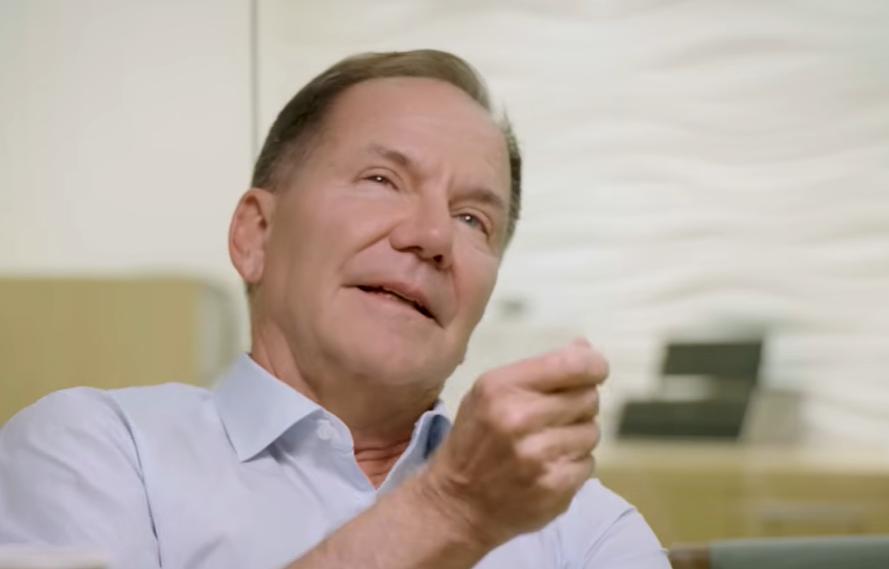
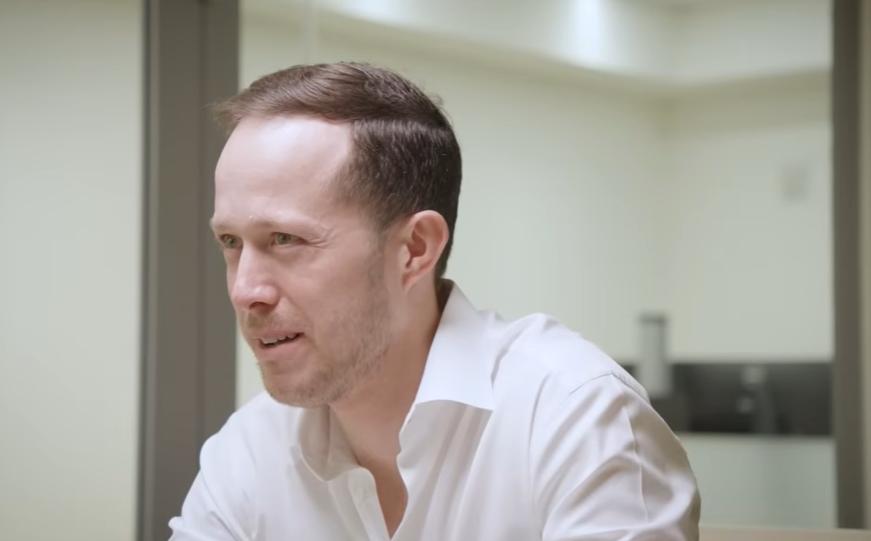
Legendary investor Paul Tudor Jones and Patrick engage in an in-depth conversation, reflecting on his 50-year career in the markets and his philosophy of life. Paul contrasts the starkly different lives of traders and long-term investors, sharing his firsthand experiences and insights from the 1987 stock market crash and the 1980 silver market crash, as well as his evolving understanding of Warren Buffett. He details his strict daily routine, his macroeconomic assessment of the current sovereign debt bubble, and his deep concerns about the safety and regulation of artificial intelligence. Beyond finance, Paul also recounts the founding story of the Robin Hood Foundation, its benevolent power of change, and offers words of encouragement to the younger generation: seek deeper meaning in life beyond professional achievements.
Chapter 1: The Kindest Thing (Opening)
Paul: My most important lesson is this: the way to make big money is to stick with a trend for as long as possible—go with the flow and persevere. Of course, you can also choose to be a value investor like Warren Buffett, not wasting a single penny. Year after year, I criticized Buffett, thinking he just happened to be in the right place at the right time, catching this bull market. I secretly thought, "My God, if only I could be like Buffett, as long as I believe in America, even if my portfolio drops by 50%, it doesn't matter, because America will eventually pull me out of the trough." Warren, if you happen to hear this, I sincerely apologize. You are the undisputed pioneer of compound interest growth.
Patrick: We had a conversation last time that really struck me, and I think it's perfect to start today's discussion with that—the difference between an investor and a trader. You said you wished you were an investor, that life would be so much easier. I'd love to ask you to describe the differences between these two lives, and what a trader's daily life is like.
Paul: No problem, I'll talk about it. We'll talk about markets, artificial intelligence, and many other topics. However, there's one segment in your podcast that I think is the most important, and if you don't mind, I'd like to start with that question—the one you ask your guests at the end of each episode.
Patrick: No problem, I like it!
Paul: Here's the thing—once I was giving a speech at a university now called Rhodes College in Memphis. I remember while preparing my speech, a thought suddenly popped into my head: who was my commencement speaker? I couldn't remember at all, and it was quite funny. Nobody remembers, right? Do you remember your commencement speaker? You're younger, maybe you do.
Patrick: He was the then-President of Ireland. I studied at Notre Dame University, and as you know, I'm Irish.
Paul: Okay. But this is interesting—nobody remembers their graduation speaker because the occasion itself is easy to lose focus. I was thinking, "Oh my god, I'm going to be on stage for 15 to 20 minutes, and nobody's going to remember a single word. How can I make it stand out?" Similarly, I suspect that people who listen to this podcast every day will forget most of the content, with only a few snippets remaining. So, if there's only one thing worth remembering from this episode, I hope it's this part.
Patrick: Okay. As everyone knows, I ask the same question at the end of every episode: What's the kindest thing someone has ever done for you?
Paul: That's a great question because that kindest thing happened, and it's also my earliest memory. I was about two and a half or three years old, around 1957. I got separated from my mother at a place called "Curb Market." Can you imagine the terror of a two-and-a-half-year-old child being separated from their mother? I stood there crying my eyes out, thinking my mother had abandoned me.
Just then, an elderly Black man came over and asked, "Little one, what's wrong?" I said, "I can't find my mother." He said, "Don't worry, we'll go find her together." Then he took my hand and led me through rows of stalls. It was an open-air fruit and vegetable market. Even now, I can still vaguely remember the smell of the fruits and vegetables there. We turned a corner and finally saw my mother.
I was overjoyed. When my mother saw me, she first smiled, then couldn't stop. She came over, picked me up, and then tried to take out five dollars to give to the old gentleman—in 1957, five dollars was a considerable sum. He waved his hand and said, "No need, madam. You would have done the same for my child."
It was such a simple act of kindness, yet it left a deep impression on me at the time. That night, my mother did bedtime prayers with me. We had a fixed prayer list that we read every night: God bless Mom, Dad, Peter, Paul, Alberta, Grand, Pete, Judy Lynn, and Sid… I asked my mother, “What was that old man’s name?” She said, “I didn’t ask.”
For the next ten to twelve years, that old man's name remained on my prayer list as "that gentleman." It was repeated probably four or five thousand times. Every night, he was there.
Time flies, and it's 1986. I'm 32, living in New York City, watching 60 Minutes on my couch. Harry Reasoner is interviewing a man named Eugene Lang. Eugene Lang is a businessman who has returned to his alma mater in Harlem to give a speech to the elementary school graduates. In the past 60 years, the neighborhood around that school has been completely transformed from an affluent neighborhood into a predominantly Black and Latino community.
Eugene asked the principal, "How many of these 12-year-olds will go to college someday?" The principal replied, "Statistically, maybe 8% or 9%." Eugene was incredulous—he himself had graduated from that school, gone to college, and achieved success. So he immediately decided to promise each of the children present that he would pay for their college tuition once they graduated high school. This deeply moved me.
He funded that year's students and started a project called "I Have a Dream." I thought to myself: I can do that too. The next day I called him, and he said, "Interesting. Three or four other people have contacted me. Let's get together at my place Tuesday night." I arrived a little late. I had expected to be assigned to Harlem or the Lower East Side of Manhattan, but I was assigned to Bedford-Stuy—at the time, the neighborhood with the highest crime rate in New York, even worse than the Bronx.
And so began a journey. I threw myself into it, going there every Tuesday to attend the elementary school's graduation ceremony and, like Eugene, promising the children that I would sponsor their college education once they graduated from high school. At that moment, everyone cheered, and the parents were overjoyed.
This journey lasted for nearly 14 years as I continued to sponsor new classes. I was enthusiastic, offering after-school tutoring, sports activities, and life skills training. About three years later, I noticed that the children's grades were not ideal after moving on to different junior high schools, so I started hiring private tutors.
About four years later, one of our children had died in gang conflict, and several girls had become mothers in their teens. I realized that I was facing not only academic challenges, but also social problems far more complex than I had imagined. Along the way, I learned so much from my failures and gained a profound understanding of what it truly takes to escape poverty.
Incidentally, the year after that, in 1987, the Robin Hood Foundation was established. This personal experience greatly inspired me and profoundly influenced the foundation's subsequent development. As Robin Hood grew, we introduced a quantitative evaluation system, set clear goals and standards, and finally, in the late 1990s, we founded a charter school near Bedford-Steffersent—the Bedford-Steffersent Charter School of Excellence.
Initially, it was an all-boys school. We named it "Excellence" to let these boys know that we expected them to excel. We assembled a dream team of educators, and about four or five years later, the school was ranked number one out of 543 elementary schools in New York City.
The lesson here is that while passion is important, you must have a sound methodology. In education, methodology is crucial.
Why is all of this related to that issue? Think about it—a simple act of kindness, an elderly gentleman helping a lost child, a Black man helping a lost white boy. When I saw that story on television, it was like a mirror reflecting my own childhood experiences, instinctively resonating with me. That's the power of kindness—a simple act of kindness can create ripples, have a profound impact, and achieve a multiplied effect.
I have no doubt that it was those four or five thousand prayers of gratitude to that old man that inspired a response within me when I saw Harry Rizna interviewing Eugene Long, and gave me the urge to emulate him.
I've been thinking about how wonderful it would be if each of us consciously started each day with a simple act of kindness. It doesn't have to be a big deal; it could be as small as what happened when I was three. But think about the possibilities—what a world it would be if 350 million Americans intentionally did one good deed every day!
What I want to say to young people is this: around the year 2000, everything changed. That atmosphere of mutual attack, malicious criticism, and cutthroat competition didn't exist before. It wasn't the way our generation was educated, nor was it the social atmosphere of the 70s, 80s, and 90s. Back then, there was a higher level of civility and respect between people. I believe we will eventually return to that state.
So I want to say to young people: You don't have to accept the way things are today and take it for granted as the norm for this country. This is not what this country has always been, nor will it be what it will be in the future.
Chapter Two: Aim High and Shoot Straight Out
Patrick: That's a breathtaking story, probably the best answer I've ever heard to that question. It's also the first time I've put it at the beginning of the show, which adds a unique touch. So, what was the ultimate message you conveyed in that commencement speech?
Paul: I went up on stage and asked the people in their 50s and 60s, "Do you remember what you said in your college commencement speech?" No one did. I enjoy hunting and fishing, so in my speech I talked about some of the ordinary challenges that one will face in life, as well as my thought process in preparing this speech, hoping to leave something interesting behind.
Finally, I said, "Whatever you do in the future..." Then I took out my bow, nocked an arrow, and said, "Whatever you do in the future, aim high and shoot straight." This action drew cheers from the audience. There was an apple next to me, and I shot it through.
Patrick: Really?
Paul: It's true. I don't know if they remember now, but everyone was dodging, and I thought, "They'll definitely remember this." I told the principal beforehand, "You don't need to rush up and stop me. It's part of the speech. I just want them to have a memorable night."
Chapter 3: Traders and Investors
Patrick: This story is also a brilliant setup that brings me back to the question I was just asking—what are the differences between the lives of investors and traders?
Paul: I started in 1976, when inflation was rampant. I started in the trading floor of a commodity futures exchange, when commodity prices were simply insane, doubling or halving every year, with staggering volatility.
For example, Bunker Hunt was manipulating the silver market at the time, buying approximately 200 million ounces of silver at an average price of about $3.12 per ounce. From 1976 to 1980, monetary policy was extremely loose, inflation began to soar, and silver prices skyrocketed. I had by then moved from the floors of the cotton exchange to COMEX—then the metals exchange—to execute some of their orders in the trading pool.
The entire market surged into an epic bull market. By around 1979, the price of silver had reached approximately $30 per ounce, catapulting Bunker to the third richest person in the world with a net worth of about five to six billion dollars—three times the wealth of the second-richest person. Bunker said, "I believe silver is the most valuable asset and resource on earth." When asked what he planned to do with the silver, he replied, "Bury it. I'm going to bury it. In fact, I plan to buy another 20 million ounces and bury that too."
So he bought 20 million ounces at $35 a ounce. As soon as the news broke, the price skyrocketed to $50. At that point, his net worth was approximately $11 billion, five to six times that of the second richest person. I simply couldn't believe how much money this man had made.
However, at this critical moment, COMEX made the decision to only allow closing out existing positions (not allowing new long positions), because physical holders were cornered—they were facing daily margin calls, and the banks were also collapsing. Silver plummeted from $50 to below $10 in just about eight weeks. Witnessing Bunker Hunt go from being the world's richest man to near bankruptcy had a profound impact on me and deeply influenced my subsequent investment philosophy.
From that moment on, I decided that I would never hold anything for the long term and never blindly trust any asset. My grandfather once told me when I was very young, "My child, your wealth is only equal to the checks you can write tomorrow." This saying is deeply ingrained in me. Therefore, liquidity has never been just a concept for me, but an instinct etched into my bones.
My early trading career also proved this point. Back then, I only had a $10,000 account, which could grow to $100,000, or go to zero. In my early twenties, I had a friend who could turn two or three thousand dollars into two million, but the market volatility was unprecedented. We were both brokers at EF Hutton at the time, and we nicknamed that friend "The Funeral Home Director" because he could turn a $10,000 account into a million, generating $100,000 in commissions along the way, and then going into a negative balance.
Therefore, the importance of liquidity is ingrained in my genes, because volatility is just too great, and we all live on the edge of a cliff.
Back then, the concept of "long-term holding" was a joke to me, because the returns from short-term trading were simply too amazing.
One of my mentors later taught an investment course in Virginia and invited me to be a guest lecturer. That was in 1982, and I went every semester after that. One of my favorite stories to tell that class was how the greatest wealth in history was accumulated. I would always ask my students: Who was the world's richest person? At that time, it was Bill Gates and Warren Buffett. How did they do it? My conclusion was: they did it by consistently following the trend over the long term. That's my most important lesson.
I'll summarize it into two or three key points, the core of which is: to make big money, the method is to stick with a trend for as long as possible. The paths to achieving this vary—you can own a company like Bill Gates or Steve Jobs, or you can do value investing like Warren Buffett, never wasting a penny.
Year after year, I criticized Buffett, smugly thinking: he just happened to be in the right place at the right time, catching this bull market. If he were in Japan, it would never have happened; if he had started from the Nikkei index in 1989, it still wouldn't have happened. It was all about perfect timing and circumstances; a genius born of a bull market.
This year marks my 50th year in the industry. The biggest difference between my trading and investing is that the BBI fund I manage has had a correlation coefficient of -0.12 with the S&P 500 index over the past 40 years. So you can see that 100% of our returns are alpha, and not a single penny is earned through market beta.
More than once I've thought: if only I could be like Warren Buffett, as long as I believe in America, even if my portfolio drops by 50%, it doesn't matter, because America will eventually pull me out of the trough. Of course, he works hard like everyone else, but that belief system is truly remarkable. Looking at myself, I feel like a right-side offensive tackle in the NFL for 50 years, battling in the trenches every day, with no respite. Whenever someone tells me they want to trade, I say: long strategies, trade stocks, do anything else. I've always admired that belief system; it works so well and has lasted so long.
But I must admit that if I were Buffett and experienced a 50% drawdown in 2008, the psychological impact would have been enormous. I don't think I have his composure, patience, and resilience.
Later, when I listened to the "Acquired" podcast episode about Berkshire Hathaway, I first heard that Buffett had understood the power of compound interest by the age of nine. Hearing this, all I could say was: This man is a genius, and I've always been a fool.
I've always wanted to write a book called "Now I Realize," documenting the series of cognitive errors I've made throughout my life. Now I realize how foolish I was. That person was a complete genius, because he grasped the power of compound interest at the age of nine—while I, through painstaking effort, successfully avoided it throughout my entire career. He understood it at nine, and at 17, he went to Columbia University to formally become a student of Benjamin Graham. What foresight!
Moreover, that podcast also showed me that he was smart enough to find Charlie Munger as his partner. Charlie is clearly a genius who can work independently: Buffett's approach is to buy something worth a dollar for fifty cents, while Munger deeply understands the power of compound interest inherent in continuously growing companies. The combination of the two is a perfect match.
Warren, if you happen to hear this, I'm deeply sorry. You are the undisputed pioneer of compound interest, and I wish I had even a tenth of your intelligence.
Patrick: You later talked to him about artificial intelligence. What did he say?
Chapter 4: Existential Risks of Artificial Intelligence
Paul: To truly succeed in this industry, whether you're a trader or an investor, you must be an excellent risk manager. All truly successful people are, first and foremost, outstanding risk managers.
About 18 months ago, I attended a meeting and what I heard deeply shocked me. I later mentioned it on CNBC, and Warren Buffett, who watches CNBC every day, sent me a message saying, "I completely agree with you, but the devil is out of the bottle, and I don't know if I can put it back in." I think he fully agrees that we face a real threat from artificial intelligence.
The biggest problem with artificial intelligence is that the news coming in over the past 12 hours has only made me more uneasy. The current deployment of AI follows a "build-destroy-iterate" model: build it, let it fail, fix it, and iterate. This is actually an age-old human invention pattern; there's nothing new about it.
But we've never faced a situation like this before: the tail risk of that "disruption," if it occurs, could cause the deaths of hundreds of millions, even billions of people. At that conference, there were about thirty or forty participants, including a modeling expert from one of the four largest modeling companies. When I directly asked them how they thought the safety issues of artificial intelligence would be resolved, they almost unanimously answered: we'll probably have to wait until fifty million or a hundred million people die in an accident before we really take action. That's simply outrageous.
My biggest concern about artificial intelligence is that, firstly, it has not gone through any public vote, and no one has had the opportunity to say "agree" or "disagree"—which is very different from most technological innovations, and the tail risks of this technology are unprecedented.
Recall that just 18 months after the atomic bomb was dropped, the US Congress and government had the foresight to establish the Atomic Energy Commission and begin regulating a technology with enormous tail risks. And now we've been developing artificial intelligence for three years, and we're talking about regulation? What are you talking about?
If there's one leadership issue any president must prioritize, it's regulating artificial intelligence now—not just in the United States, but by bringing together all relevant parties to ensure we don't do anything with catastrophic consequences. And this is just the security aspect; it doesn't even address the impact AI will have on social order.
Matt Shumer recently published a lengthy article detailing how two new models released six days ago will have an unimaginable impact on the labor market. In my view, this news is increasingly worrying. If this were any other area of risk, by internal risk management standards, it should have been rigorously controlled long ago. That's what a competent risk manager should be doing. Yet here, we see almost no risk management whatsoever.
Patrick: You said that great investors and traders are also great risk managers. How do you think about the huge exogenous variable of artificial intelligence?
Paul: I think the simplest and most important thing we can do in the next election is to require all AI-generated content to be watermarked. This is the most transformative thing we can do for this country and for the world. And there should be legislation stipulating that if someone knowingly violates this rule three times, it constitutes a felony and they should be imprisoned.
I need to know which content is genuine human creation and which isn't. Only once that's achieved can we have a foundation to talk about restoring social trust—which I believe is one of the biggest problems right now.
This year alone, I've received two calls from influential people asking if I'd seen certain messages, only to discover they were deepfakes. I believe that watermarking legislation is imperative to restore honest, respectful, and normal social dialogue.
There's another reason why this issue is so urgent. At that conference 18 months ago, a significant number of scientists envisioned a future where the human brain would be implanted with chips to access vast amounts of knowledge and abilities. Looking back, I realized we really need to figure out what we're reading and watching. Because that group—without consulting others in the US—believed that human-machine hybrids were perfectly acceptable, the future, and an inalienable right.
Personally, I don't think so; I would vote against it, and I believe most people would too.
Chapter 5: Riding the Trend
Patrick: Let's return to the distinction between investors and traders, and risk management. I know you learned a lot from a man named Eli Tullis. These experiences were crucial to your becoming the trading legend you are today. What did he teach you? Was there any particular experience that benefited you the most?
Paul: He's incredibly skilled, especially adept at making precise moves when both fear and greed reach their extremes. He almost exclusively trades cotton, sitting there, completely focused, quietly waiting for the moment when market sentiment is either extremely euphoric or extremely fearful, and then making his move. This ability is extremely valuable.
The most important lesson I learned from him came from this incident: One weekend, we held a large long position in cotton. It was during a severe drought, but over the weekend, a heavy rain fell, bringing much-needed relief to the entire cotton-growing region. On Monday, the market opened and immediately hit its daily limit down. We were utterly wiped out. I thought: That's it.
That very noon, however, his wife brought four girlfriends over for lunch. His office was the most impressive I'd ever seen. He came out, a bright smile on his face, chatting effeminately with the ladies. I sat there dumbfounded: "This guy just went bankrupt, and he's playing Rock Hudson here?"
That scene will stay with me forever: the more difficult the situation, the more you must hold your head high. Keep your pain inside, project confidence outwards, and believe that you can rise again. This is extremely important.
Patrick: It feels like the right time to ask you what trading means to you. You've said that the world is an interconnected network of capital flows, and trading is about positioning yourself at the vantage point of that network, based on what's happening in the world. But most of the people I interview are investors who buy company equity; I rarely interview someone like you who holds large positions across various asset classes and trading instruments. I'd love to ask you to describe what trading means to you. What exactly are you doing every day for decades?
Chapter Six: The Essence of Trading
Paul: I think a few analogies are quite apt. Let's start with boxing, because you have an opponent—the market. You step into the ring, and your opponent is constantly attacking you. I'm not imagining a Mike Tyson-style onslaught, but a more classic match: you're probing, jabbing, figuring out your opponent's moves, looking for openings. Occasionally, you'll find a perfect opportunity to land a powerful punch, and maybe it will actually hit.
If we're talking about examples of game-changing moves, then Bitcoin in 2020 was a knockout; the two-year interest rate in 2022 was another. These once-in-a-lifetime opportunities only arise after a long period of waiting and accumulation. Most of the time, you're gathering information, looking for weaknesses, and trying to gain something in every round, but the real opportunities to achieve significant results are only a few.
Patrick: I really like the boxing analogy. Bitcoin, two-year interest rates, precious metals… you’ve been through so much. Could you be specific—I’d like to know what you were actually doing, what you were looking at, what you were researching when those crucial windows opened, and what kind of supply and demand imbalances you discovered?
Paul: If you look back at all truly significant market movements, the underlying reasons are often similar: the market went too far, some imbalance persisted for too long, or a central bank or government did something it shouldn't have. This is the root of most major market movements, and it is often driven by central banks or governments.
There's a promising opportunity brewing that deserves close attention: the USD/JPY pair. The yen has been severely undervalued for quite some time now. The key question is: what's the catalyst? Just recently, Japan elected a new prime minister with qualities reminiscent of Ronald Reagan, Margaret Thatcher, or even a second-term Trump. Looking back at these leaders, their currencies appreciated rapidly by around 10% during their tenures. Japan also holds approximately $4.5 trillion in net foreign investment positions, about 60% of which are in the US, and most of these are unhedged—meaning they have a massive dollar exposure. Now, Japan has its most dynamic leader in half a century, governing with a "Japan First" philosophy, aiming to reshape the economy with entrepreneurial spirit.
Therefore, what you need to look for is an undervalued, low-holding, severely misaligned asset, waiting for a catalyst to arrive.
The same applies to the two-year Treasury yield in 2022. We have a lot of excess fiscal stimulus, and Federal Reserve Chairman Powell has maintained loose monetary policy for too long in order to secure Biden's re-nomination. Once Biden nominates him, it will be easy to short two-year Treasury bonds, as the Fed will certainly begin to normalize interest rates.
In 2020, the massive intervention by central banks and the Ministry of Finance signaled the impending surge in inflation trading. At that time, what was the best inflation hedge? Bitcoin. Bitcoin was undeniably the best inflation hedge, even better than gold, because its supply is capped.
Of course, Bitcoin also has its weaknesses: in the event of a full-blown war, cyber warfare is inevitable, and all assets requiring electronic processing could become invalid, including Bitcoin—this is the first risk. The second risk is quantum computing; no one can say for sure whether quantum computing will actually be realized with the rapid development of artificial intelligence. If quantum computing becomes a reality, anyone could breach any bank and hack into any system. From this perspective, gold's annual supply increases by a few percentage points; while Bitcoin's total mineable supply is limited and decentralized, thus possessing unparalleled scarcity value.
Chapter Seven: Bubbles
Patrick: You've experienced the 1987 financial crisis, the COVID-19 pandemic, and various asset bubbles throughout history. Could you start by talking about those major events? Of course, you're best known for 1987, and I'd like to hear about your experience. Then I'd like to know what insights these experiences have given you for understanding the current environment? "Are we in a bubble?" is a very popular question, usually answered by investors, and less so by traders—I'd love to hear your perspective.
Paul: Looking back at those truly major incidents, they almost all share the same underlying cause: excessive leverage somewhere. And in the major events I've witnessed, the leverage was mostly driven by derivatives, whether futures or options.
The 1987 crash was 100% caused by portfolio insurance strategies, 100%. If there had been position limits at the time, the drop would have been at most 10% or 15%, but it was entirely a result of derivatives.
Long-Term Capital Management in 1998 also had a large number of derivatives, an extremely large balance sheet, and was completely on the wrong track.
The year 2000 was somewhat different; it was the easiest bear market I've ever seen to navigate. It shares many similarities with the current one—the bear market of 2001-2002 was a consequence of the massive IPOs of 1999 and 2000. As those stocks gradually became tradable, selling pressure followed relentlessly, in a vicious cycle.
A similar scenario is brewing now. I estimate that the planned IPOs in the next year will amount to approximately 5% to 6% of the market capitalization. Over the past 10 years, share buybacks have accounted for about 2% to 3% of the market capitalization annually, a force that has supported stock prices. Now, this logic will be completely reversed.
This may not happen immediately, but once those IPOs are released from lock-up, a rolling top pattern could emerge, around 18 months later, or 6 months later. It's crucial to continuously monitor buyback programs and lock-up release schedules, as these will continuously increase the supply of shares. Meanwhile, hyperscale data center operators have already committed significant capital expenditures, which will erode their cash flow, thus reducing the力度 of buybacks. Therefore, I believe that tech stocks have been stagnant and will continue to be under pressure because a large portion of IPO funding will be drawn from existing tech stocks.
As for whether we are in a bubble, I'm not sure if it's a "bubble" in the strict sense, but we are clearly highly dependent on the stock market to keep the economy running. By "high leverage," I mean that the ratio of total stock market capitalization to GDP is as high as 252%. It peaked at around 65% in 1929, around 85% to 90% in 1987, around 170% in 2000, and is now 252%.
If you observe the major bear markets since 1970, significant mean reversion occurs roughly every 10 years. Mean reversion refers to the price-to-earnings ratio returning to its average over the past 25 to 30 years. If this happens, it corresponds to a stock market decline of around 35%—and 35% multiplied by the current 250% share of GDP equates to the evaporation of 80% to 90% of GDP wealth. After this wealth effect reverses, capital gains tax revenue will drop to zero, budget deficits will expand dramatically, the bond market will be severely damaged, and a negative cycle will reinforce itself. This is worrying, very worrying.
So, are we in a bubble? We are certainly in a sovereign debt bubble. In the stock market, the country's individual ownership percentage is at an all-time high. An even bigger problem is liquidity: in 2007-2008, private equity accounted for about 7% of institutional portfolios; now it's 16%. Real estate has increased, and infrastructure investment has also increased. Our liquidity is far worse than in 2008, a fact that cannot be ignored when considering asset allocation.
A friend of mine, a wealth management advisor, hates hedge funds, finding the fees too high, and advocates allocating everything to the S&P 500. He asked me, "If you were investing for the next 20 years, what would you advise?" He thought I'd say, "Buy the S&P 500 and ignore it." The problem is, if you buy the S&P 500 at current valuation levels, historically, when the price-to-earnings ratio (P/E) was 22, the nominal return after 10 years would be negative. So, the S&P 500 is indeed an excellent investment tool in the long run—but "long run" is a 100-year average, which includes years with P/E ratios of 6 to 8, or about one-third of the current valuation. Valuation is crucial, and the current stock market valuation is very high; making money from this starting point will be extremely difficult.
Chapter 8: A Trader's Day
Patrick: If I were to follow you through your day today, what would your routine be like? I know you're always on the go with your trading desk, and I know it's stressful. Could you take us through your day?
Paul: I get up around 6:15 in the morning and work until 7:00; I exercise from 7:00 to 7:45, trying to maintain 45 minutes of high-intensity aerobic exercise every day; then I sit in front of the screen and wait for the market to open; I usually don't schedule meetings before 10:00, and meetings are held from 10:00 to 12:00; I usually have lunch with people, and there is another meeting in the afternoon; I make sure to have an hour free before the market closes and an hour free after the market closes to think about the next day's strategy, while also considering the market conditions in Tokyo and Hong Kong that evening.
I get home around 5 p.m., take a one-hour walk with my wife, work for an hour, then come down for dinner. I usually watch the news and some light entertainment. I used to be able to read one and a half books a week, but since the internet came along, I can't concentrate at all in the evenings. Last year I only read one book, which I'd like to recommend: the author is David Wood, a news writer who wrote a book about globalization and markets. I think it will be a bestseller and might even be adapted into a Netflix series.
Then I work for a while from about 9:30 to 10:15, and then go to sleep. I wake up at 2:30 or 3:00 in the morning, work for half an hour, watch the 45-minute London opening, do some analysis, which is a quiet and good time, and then sleep until 6:15 in the morning.
Patrick: You've been like this for 50 years?
Paul: That's been the case at least since the 80s. I feel like I'm working harder now than I did 30 or 40 years ago because of the sheer volume of information. My God, I receive 800,000 emails a day.
When I was a floor trader, even in the information-rich 1980s, I could focus more on one thing: watching the day's highs and lows. This was crucial for execution. Like my boss Eli, I would calmly wait and focus on feeling: Is this the most painful moment? Is the current panic the best time to buy? Does it look like it's going to rise forever? Is that the best time to sell? To accurately capture these moments in a day requires a high degree of focus.
When you're managing 25 different trading instruments simultaneously, some related and some unrelated, you need to consciously and meticulously assess each one. And while you're focused on this, 48 emails are flooding in, each potentially containing actionable information. Today's work feels more challenging than ever before, because information overload can interfere with precise execution.
Patrick: What does "precise execution" mean?
Paul: It means buying when there's bloodshed and selling when there's jubilation. Take last Friday, for example, which saw the biggest single-day drop in the history of gold and silver. Silver prices fluctuated by 33% in a single day. You have to stay focused every second, thinking about what to do at the open and how to react if the price breaks through an unexpected key level. This brings us back to the lesson I learned in Bedford-Steffersent: you have to have a plan, you have to think ahead, and you have to be able to execute it automatically. My macro trading friends feel the same way; they'll say, "I always feel like I'm two or three hours behind." Last Friday was a prime example; being a step behind could have resulted in huge losses.
Chapter Nine: Passion for the Market
Patrick: To do this day after day requires a tremendous passion for the market. Could you talk about the importance of discovering, cultivating, and maintaining that passion throughout your career?
Paul: Speaking of traders, especially the kind of alpha creators I'm talking about, rather than the average investor, we had a debate about this at a Christmas dinner about a year ago: Are great traders born or made? The consensus at the table was almost unanimous that 70% is innate.
By the time I was 21, I was already addicted to games—chess, backgammon, Patches, Monopoly, strategy games, Kinrami… I played everything. In college, I started gambling. I have a degree in probability theory, but I didn't learn it in math class; I learned it through real-world experience.
If I had to extract the most core trait from trading talent, it would be: Type A personality – extreme curiosity, a thirst for knowledge, a love of competition, and a passion for games – because our industry is essentially another form of probability theory. Even now, I still feel this way; I frequently play bridge with friends and enjoy it immensely. I love all games of chance, and I love trading.
I have another reason to love trading. My wife is Australian; we married in 1989. She always said, “You live in New York, but I grew up by the sea. When our youngest child graduates from college, you have to take me to live by the sea.” Sure enough, in 2014, my youngest son turned 18, and we moved to Palm Beach. She arranged for me to have a family doctor who was 83 years old and still practicing. I said to him, “You live here, and everyone here is fossilized. What’s the secret to longevity?” He replied, “It’s simple—you die when you retire.”
This statement resonated deeply with me. It made me realize that as we age, we decline if we don't use our skills, and this realization only becomes more acute. That's why I strive to exercise for two hours every day, and it's another reason I persist in trading—I need to keep my mind sharp because my father lived to be 100, and I still have so many things I want to do in my 90s. Trading is a great mental exercise for me.
Furthermore, I love trading for another reason: I want to make a lot of money and then donate it. I have so many causes I want to support that I genuinely feel that making money is a noble pursuit. I enjoy the process; I consider waking up each day a privilege, and I just hope to make a big splash and then donate the money.
Chapter Ten: The Robin Hood Foundation
Patrick: Can you tell us the story of how the Robin Hood Foundation was founded? It's a very important part of your life and legacy.
Paul: The Robin Hood Foundation was founded the day after the 1987 stock market crash. In retrospect, after that crash, I probably made the worst macroeconomic judgment of my career—I was convinced we were going to have a Great Depression. I had spent a whole year studying the historical patterns of 1929, and watching it suddenly happen, I thought: this is history repeating itself perfectly.
So I called my friends, and we all got together. It was a wonderful journey. I highly recommend that everyone get involved in something they truly believe in. The best thing about charity and public service is the people you meet—the greatest, kindest, and most generous people I've ever met—and it brightens every corner of your life.
At the time, we anticipated a severe economic recession and a sharp increase in poverty, but there were virtually no charities dedicated to eradicating poverty. So I've always believed: if you want to do something, do it yourself. We started small, applying basic business principles to finding the most effective ways to alleviate poverty, learning through trial and error, and eventually realizing it was a science. We then began recruiting top talent and building an organization.
In the 1990s, there was a special spirit in the financial world: a willingness to participate and give back to society, and an atmosphere of generosity that resonated throughout the era. I don't know the exact time, but we nurtured so many outstanding philanthropists during that time. It wasn't like that in the 1980s; back then, everyone wanted to be associated with organizations like the Philharmonic Orchestra, have their names engraved on buildings, and pursue a status symbol in philanthropy. After the stock market crash, people began to find meaning in helping others. Perhaps it was because people had accumulated truly enormous personal wealth by then, and had a deep-seated desire to give back. The support the entire financial and hedge fund community gave to Robin Hood was touching, and remains so today.
Chapter Eleven: The Era of No Work
Patrick: From the broadest perspective, in today's world, what aspects make you most optimistic? And what aspects make you feel most vulnerable?
Paul: I'm trying to envision a "workless era"—where artificial intelligence does so much for us that we no longer need to work. I used to be very pessimistic about this because many of us define our meaning through work. The thought of a world where that essential component of human happiness—"meaning"—disappears because we no longer need to work worries me.
But lately I've become more optimistic because I've noticed that athletes find meaning in their sports, and my friends and I find meaning in the competition of playing bridge. Perhaps humans are adaptable enough to find other forms of meaning. Maybe it's doing a good deed every day; maybe it's something else entirely. I believe that as a species, we are resilient enough and intelligent enough to find new paths to happiness.
I think that in four or five years, when so many jobs are replaced by artificial intelligence, this will be the biggest challenge – how will we live, and how will we find meaning?
Chapter Twelve: The Power of News Writing
Patrick: Many young people are confused and unsure of their career path. You've talked about and written about the importance of communication skills, and journalistic writing is an effective way to cultivate that skill. Could you tell those young people who are searching for direction why this is important?
Paul: I have always maintained that Journalism 101 should be a required course in all universities, and that it is more valuable than a business school degree. It was crucial to my development.
My father owned a small trade and finance newspaper in Memphis, with a subscription of about 2,500 copies. I worked there as a proofreader, front-page editor, wrote a lot of articles, and also took news writing classes. News writing teaches you one of the most important things: conclusion first.
This is quite different from other writing styles—it requires you to state the most important information in the very first sentence. The format is extremely strict: the first paragraph, no more than two sentences, must cover who, what, where, when, why, and how. This is the lead. The second paragraph contains the next most important information, also no more than two sentences. And so on.
This is essentially a form of principal component analysis: presenting any event in the most concise and logical way, placing the most important information first, and then progressing sequentially. In today's attention-scarce world, time is money, and you must convey complete information in the shortest possible time. There's an old saying: if you can't tell your story in 15 seconds, no one will listen. This is more true than ever today.
As a macro-thinker, this training is crucial for every trading decision I make. I can quickly perform principal component analysis on various variables, distinguish between primary and secondary factors, and identify the most critical driving forces. In trading, there are 10 important things, each of which takes turns becoming the most important factor at any given moment. The Japanese yen is a case in point: it had been undervalued for two years, and the timing hadn't been right, but the election of this new prime minister was the catalyst, making valuation, a factor that had been ignored for two years, the most important variable at the moment.
Newspaper writing style is extremely important for constructing any logical framework: In every specific tool and at every moment, what is the most important actionable information? What is my list? How do I prioritize? That's the whole story of a transaction.
Chapter Thirteen: The Main Components of a Good Life
Patrick: If you were asked to use the same framework to describe the main components of a good life, what would they be?
Paul: God, family, friends—when I think of friends, I think of happiness—so it's God, family, friends, happiness, and serving others.
My meaning doesn't come from transactions. My meaning comes first and foremost from my family. Sometimes I even look forward to my own funeral because I've carefully chosen the songs I'll sing that day. I almost hope I can be there, because it will be a wonderful gathering, and I'm sure my family and friends will enjoy it.
In my final moments, I won't think about the 1987 stock market crash or Bitcoin. I'll think about: Who have I loved? Who has loved me? What kind of relationship did we have, what kind of time did we spend together? Professional achievements are just tools to enable you to do more meaningful things—what have you done for your family? What have you done for your friends? How have you served others? What kind of legacy of happiness and goodwill have you left for those fortunate enough to meet you?
When I say "legacy," I don't mean words, I mean actions. What have you done to make other people's lives better and happier? For me, that's the most important thing, without exception.
Patrick: Have you always believed in God?
Paul: I waver sometimes. I believe, but my faith is tested, as I think anyone does. I wish I could be 100% sure I'd go to heaven, but I do pray every night.
I believe that faith is important because you need a set of rules for behavior, a basis for living. Christianity, Judaism, and many other religious traditions bring stability, order, and kindness to people's lives in a beautiful way, enabling them to live sustainably and interact joyfully with those around them.
Patrick: What does Africa mean to you?
Paul: I love Africa because I love nature. Speaking of which, let me share something that took me 70 years to realize: one of my favorite things now is finding the "peak of spring" and the "peak of autumn." It doesn't have to be in Africa; you can find it in your neighborhood. When spring is at its most vibrant, the colors most vivid, and the aromas most intoxicating, you can feel that vitality down to a specific minute and a specific place, and you feel alive like never before.