Author: TechFlow TechFlow
US Stocks: Nasdaq 25,000, a number that has never existed before.
On Friday, the Nasdaq Composite Index closed at 25,114.44 points, marking the first time in human financial history that it opened the weekend above 25,000.
The S&P 500 rose 0.29% to 7,230.12, continuing to set new historical records. The Dow Jones Industrial Average fell 0.31% to 49,499.27, just 500 points shy of the 50,000 mark, but failed to break through. The Russell 2000 rose 0.46%, and the VIX closed at 16.99, with fear remaining stable at a low level.
This week, Wall Street achieved an almost unbelievable close: with Brent crude oil surging to $126 intraday, Powell bidding farewell with a split vote of 8 to 4, and the MAG4 collectively announcing a $725 billion investment, the S&P 500 and Nasdaq both closed the week higher, with the broader market firmly holding above all-time highs.
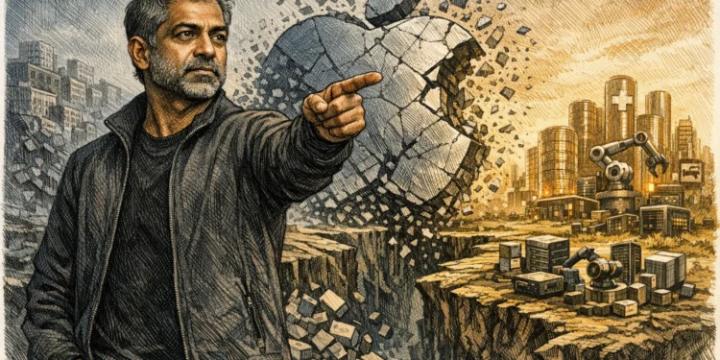
The logic driving Friday's gains was the same as throughout April: earnings reports and Apple.
Apple shares rose about 3% on Friday, translating the after-hours earnings report from the previous night into intraday gains. Alphabet's 9% after-hours surge the previous day had already been partially priced in on Thursday, and it continued to outperform the market on Friday. Qualcomm jumped 15%, pulling up the entire semiconductor sub-sector, primarily due to the statement that "a customized chip collaboration with a leading super-customer is progressing as planned, with the first shipments expected this year." Without naming names, the market understood.
But the divergence was equally clear on this day. Sandisk is the most ironic example: Q1 revenue of $5.95 billion saw a significant year-over-year increase, and adjusted EPS of $23.41 far exceeded the expected $14.51. Q4 guidance of $775-825 million also surpassed the market consensus of $665 million. From any perspective, this was an impressive report card. Yet, the stock price closed down about 5%. The reason is simple: it has already risen over 360% year-to-date, and the market chose to take profits on the good news. Whether the earnings report is good or bad is unimportant; what matters is how much the stock price has risen before the earnings report.
Roblox shares plummeted approximately 17%. The online gaming platform drastically lowered its full-year guidance, blaming its newly launched age verification system. To meet regulatory requirements for protecting minors, Roblox began mandating age verification for its US users, leading to a significant loss of young users due to the friction. This is a story unique to 2026: the first major publicly traded company to suffer a major loss in the triangular game between regulation, child safety, and growth goals.
Both energy giants, Exxon and Chevron, delivered better-than-expected profits, but simultaneously reported lower-than-expected revenue. This was due to the Strait of Hormuz blockade, which disrupted Middle Eastern oil production and transportation, limiting output and negatively impacting sales. Exxon's net profit fell 45% year-on-year, while Chevron's dropped 36%. The irony is stark: while oil prices doubled, their own production was hampered by the war.
The latest data from LSEG this week shows that over 80% of S&P 500 companies have released their Q1 results, with earnings growth expectations rising sharply from 16.1% before the start of this earnings season to 27.8%, the strongest single-quarter performance since Q4 2021. This is the most solid underlying logic for this market rebound: it's not driven by liquidity, but by real profits.
Oil prices: Iran submits new proposal; $108 represents a price discovery of a peace premium.
Friday's oil prices were one of the most interesting trading days since the outbreak of the war.
Before the market opened, Iranian state media reported that Tehran had submitted a newly revised peace negotiation document to the United States through Pakistani channels on Thursday evening. Pakistani officials confirmed to the media that the document had been delivered to the United States and expressed cautious optimism that they were "closer than ever to reaching an agreement."
This news directly triggered the panic premium that Brent crude had accumulated from the previous day's high of $126. WTI crude fell more than 3%, closing at $101.94 per barrel, the first time it had closed below $102 in more than two weeks. Brent crude fell about 2%, closing at $108.17.
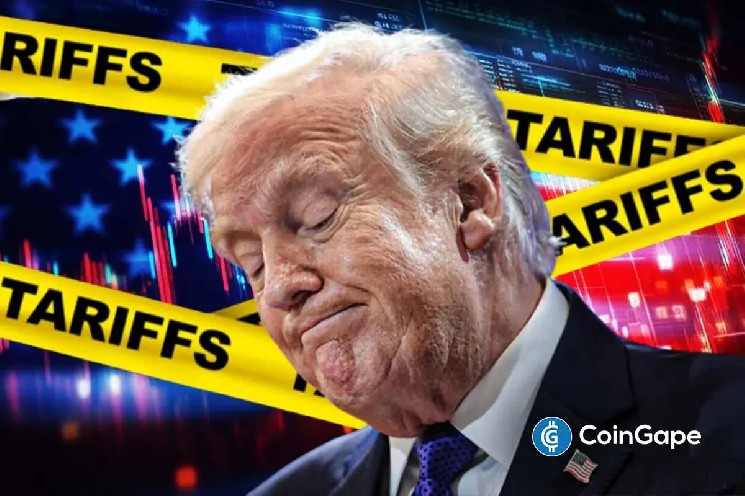
Then Trump appeared.
He told reporters at the White House, "Iran wants to talk, but I'm not satisfied with their proposal. Iran practically has no army anymore." His tone was milder than in previous weeks, and he made no further mention of the "Black Hawk Down" missiles or the intensive strikes. The market interpreted this as a signal that negotiations hadn't ended, but were still in the process of bargaining.
On the same day, Trump publicly stated that he would disregard the 60-day congressional authorization period of the War Powers Resolution, calling the law "unconstitutional" and saying that "every president has exceeded it." Democrats in Congress began discussing whether to launch a legal challenge, but almost no one believed it would constrain the war's progress in the short term.
Oil prices settled in the $102-$108 range, a delicate middle price: $126 was the panic price when the "intensive strike plan" was made public, $95 was the rebound price in the early stages of the war, and $108 was the realistic price of "negotiations not dead but not successful either." On this day, the market completed a meaningful pricing calibration.
Gold rose slightly to $4,625 an ounce on Friday, recovering about 1.6% from the previous two days' low of $4,550. Gold gained some breathing room as oil prices retreated and the dollar index weakened slightly. The 10-year US Treasury yield fell from a weekly high of 4.41% to around 4.38%.
Cryptocurrency: Bitcoin rebounded 2.4%, but the Las Vegas conference's price increase had no effect.
In a season where Bitcoin conferences have historically created price volatility, the 2026 Las Vegas conference offered the market a remarkably sobering lesson.
The Bitcoin 2026 conference was held in Las Vegas this week. The lineup on stage was nothing short of stellar: Eric Trump (Trump's second son, co-founder of American Bitcoin), Michael Saylor (CEO of Strategy), Senator Cynthia Lummis, Senator Bernie Moreno, plus the White House's "AI and Crypto Czar" delegation, a whole row of America's most powerful Bitcoin evangelists taking turns speaking.
Eric Trump's exact words: "I have absolute confidence that Bitcoin will reach $1 million. I don't know if it will be 2030 or 2031, but it will." Saylor's target price is even higher. Everyone who took the stage was talking about "the greatest era," "institutions are pouring in," and "governments will never sell it."
A Bloomberg reporter was present and published what was arguably the most insightful report of the week, titled: "Bitcoin Price Hides Amid Las Vegas Bull Calls." The report noted that while celebrities on stage were shouting prices into microphones, Bitcoin was still hovering around $76,000, indicating that "evangelistic strategies have stopped working on prices."
This is an accurate description of the current situation of this market.
But Friday brought a real shift: oil prices fell 3% due to the Iranian peace proposal, risk appetite improved, and Bitcoin rallied from an early morning low of $76,130 to $78,147, closing up 2.41% for the day. CoinGecko's closing price matched Yahoo Finance's. Ethereum also rose by about 2%, and the global crypto market capitalization recovered to approximately $2.68 trillion. The Fear & Greed Index recovered from 39 (fear) at the beginning of the week to the 43-45 range (neutral to cautious).
The source of this price increase was not the microphones on stage, but an early price signal of the expectation that the Ho Chi Minh Strait would reopen.
What makes this day's Bitcoin price action even more noteworthy is the conclusion of a research report released on the same day. Invezz cited data showing that since the outbreak of the war on February 28th, Bitcoin has risen by approximately 20%, while the S&P 500 has risen by about 8% and gold by about 5% during the same period. This marks the first time in history that Bitcoin has outperformed all traditional safe-haven assets simultaneously during a major geopolitical conflict. The long-term holdings of BlackRock IBIT, Strategy, and other institutions acted as a floor during each panic sell-off caused by oil price shocks.
There's another subtle signal: Morgan Stanley officially launched its Bitcoin ETF (Morgan Stanley Bitcoin Trust, MSBT) this month, publicly recommending that clients allocate 2-4% of their portfolios to Bitcoin. Morgan Stanley, which manages $7.35 trillion in assets, has now become a Bitcoin stock recommender.
Today's summary: The Nasdaq broke 25,000, but the real question is when will the Hormuz open?
On May 1, the first trading day ended with a historic high.
US stocks: The Nasdaq closed at 25,114.44 (first time breaking 25,000), the S&P 500 closed at 7,230.12, and the Dow Jones Industrial Average fell 0.31% to close at 49,499.27. Apple rose 3%, Qualcomm rose 15%, and Alphabet rose again. Roblox fell 17%, Sandisk fell 5%, and Meta continued to digest its gains. More than 80% of the S&P 500 companies have reported their Q1 earnings, with earnings growth expected to rise to 27.8%, the strongest since 2021.
Oil/Gold: Iran submitted a new peace proposal through Pakistan. Brent crude fell 2% to $108.17, and WTI crude fell 3% to close at $101.94, a drop of $17 from a high of $126. Trump expressed "dissatisfaction," but his tone regarding war softened significantly. Gold rebounded slightly to $4,625.
Cryptocurrency: Bitcoin closed at $78,147, up 2.41% on the day, marking its first significant rebound this week. The driving force was a recovery in risk appetite stemming from Iran's peace proposal, not the million-dollar bid at the Las Vegas conference. The global cryptocurrency market capitalization is approximately $2.68 trillion, with the Fear & Greed Index at 43, recovering from the panic zone.
The market is now only concerned with one question: Has Trump actually read or read this new proposal?
Newly released Iranian documents reportedly represent concessions on delaying nuclear talks, the very issue that Trump previously rejected. If substantive negotiations can proceed this time, the reopening of the Hormuz could happen sooner than anyone anticipates; if Trump continues to refuse, in the next 60 days he will face not only Iran, but also the controversy over war authorization in Congress, and the question of whether oil prices can withstand higher levels.
At least by this Friday, one thing was certain: Brent crude at $108 was the market's price for "the negotiations not dead." That $17 difference compared to $126 represents the most expensive breath of fresh air for the global economy.