Written by: The Heart of Computing Power
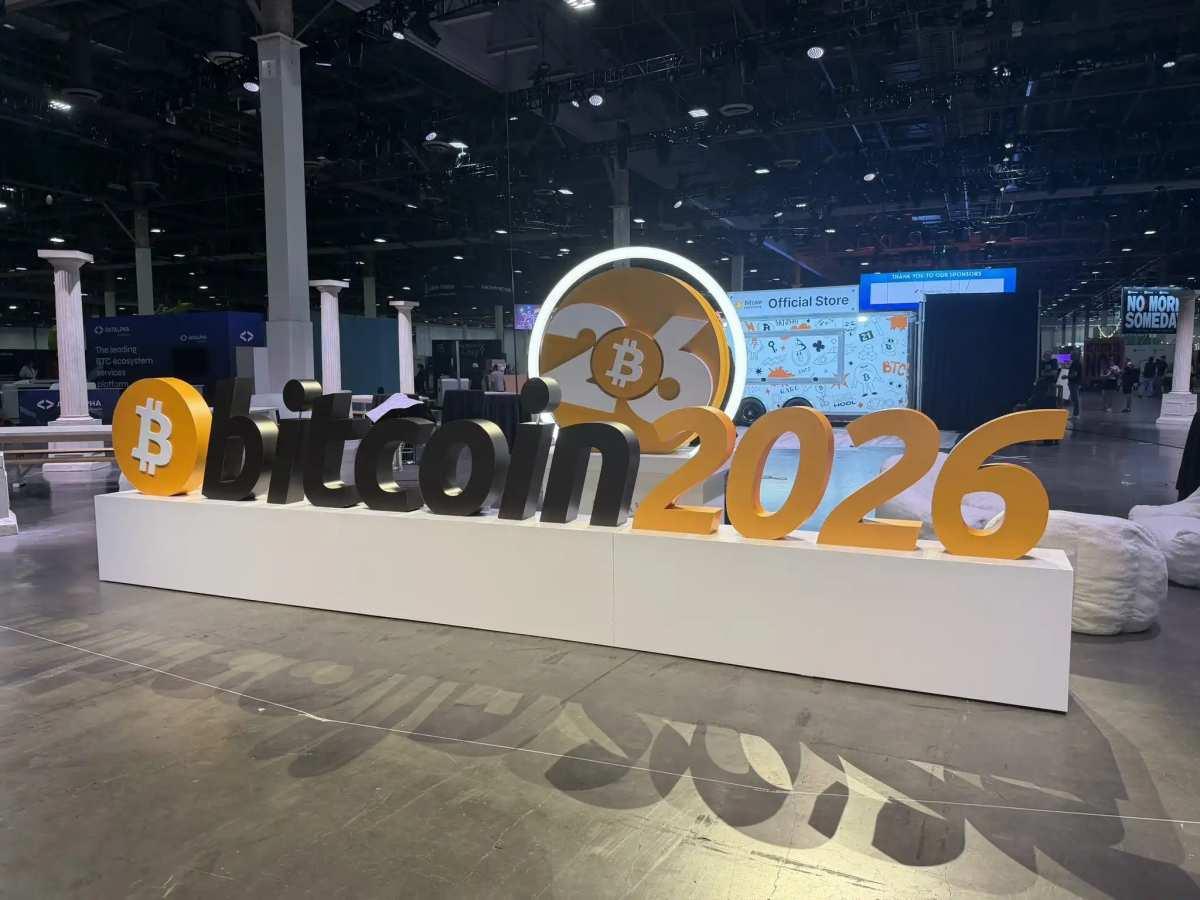
The Bitcoin 2026 conference will be held at the Venetian Macao Convention Center in Las Vegas from April 27 to 29, 2026.
On stage, Michael Saylor, co-founder and executive chairman of Strategy (formerly MicroStrategy), delivered his signature Bitcoin keynote address, stating that digital credit should "drive Bitcoin to $10 million per coin."
BitMEX co-founder Arthur Hayes has given an optimistic year-end target price of $125,000 for Bitcoin.
Eric Trump, the second son of Donald Trump, said, "I am absolutely convinced that Bitcoin will reach $1 million."
Industry leaders such as MARA CEO Fred Thiel and Tether CEO Paolo Ardoino were all present.
Meanwhile, SEC Chairman Paul Atkins and CFTC Chairman Mike Selig made an unprecedented appearance as current regulatory bodies, and White House crypto advisor Patrick Witt even foreshadowed significant progress on the "strategic Bitcoin reserve" plan within weeks.
According to official data, more than 40,000 people attended the event over three days, with over one million online viewers worldwide.
However, upon entering the exhibition hall of the Venetian Convention and Exhibition Centre, a subtle change was permeating the air.
Bitcoin faith remains fervent, but the industry's narrative focus has quietly shifted.
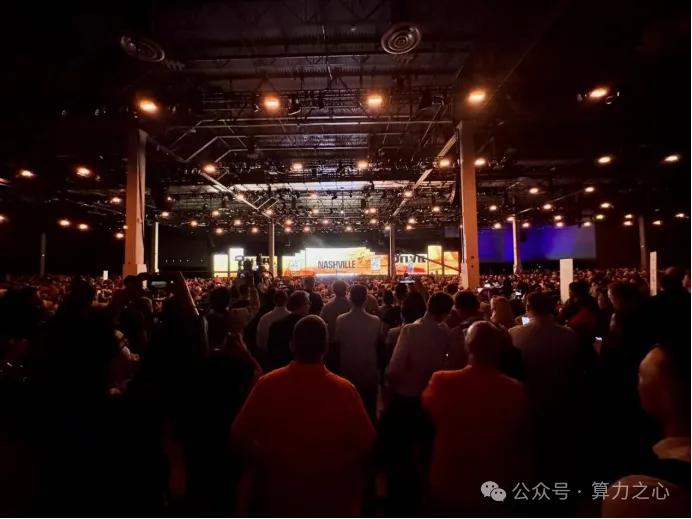
(Figure 1: Michael Saylo delivers a keynote speech at the Bitcoin 2026 main forum, which is packed with attendees)
1. On stage, faith is recharged; off stage, the booths are deserted.
On April 27, 2026, the Bitcoin 2026 conference, with a scale of over 40,000 people, opened at the Venetian Macao Convention and Exhibition Centre.
As an annual trendsetter for the Bitcoin ecosystem, the Bitcoin Conference has always been a core meeting point for miners, mining machine manufacturers, investment institutions, technology developers, and policymakers.
Miami in 2021: 11,000 participants. Las Vegas in 2025: 35,000 participants.
Officials stated that this year's participation reached 40,000 people, with over one million online viewers worldwide.
The official agenda remains fervent.
The agenda included popular topics such as the U.S. strategic Bitcoin reserve, Bitcoin education, Bitcoin network quantum-resistant computing, clean energy mining, Bitcoin mining machine and AI computing power synergy, and mining farm transformation into data centers.
Michael Saylor and Arthur Hayes, Eric Trump, Trump's second son, shill at the main venue, pushing the atmosphere to a climax.
But there is another scene in the exhibition hall.
According to several exhibitors, the actual number of visitors was significantly lower than last year.
An industry insider said, "There were more staff members at the booth than actual customers who came to buy equipment; the rest were Bitcoin enthusiasts who came to learn."
Several exhibitors confirmed that on-site visitor traffic has plummeted by more than 30% compared to last year. Attendance for regular speakers is only one-fifth full, and there are significantly fewer exhibitors than last year.
During last year's bull market, exhibitors were scrambling to find their target customers at trade shows. This year, exhibitors are searching for customers everywhere.
Some clues can be gleaned from the sponsor wall.
The list of sponsors for this conference includes the four major mining machine manufacturers, numerous domestic and foreign container brands, as well as compliant exchanges in the United States and the three major listed mining companies in the United States.
However, compared to the previous year's list, some of last year's major sponsors have disappeared this year, and among the newly emerging brands, there are significantly more related to data centers and AI infrastructure.
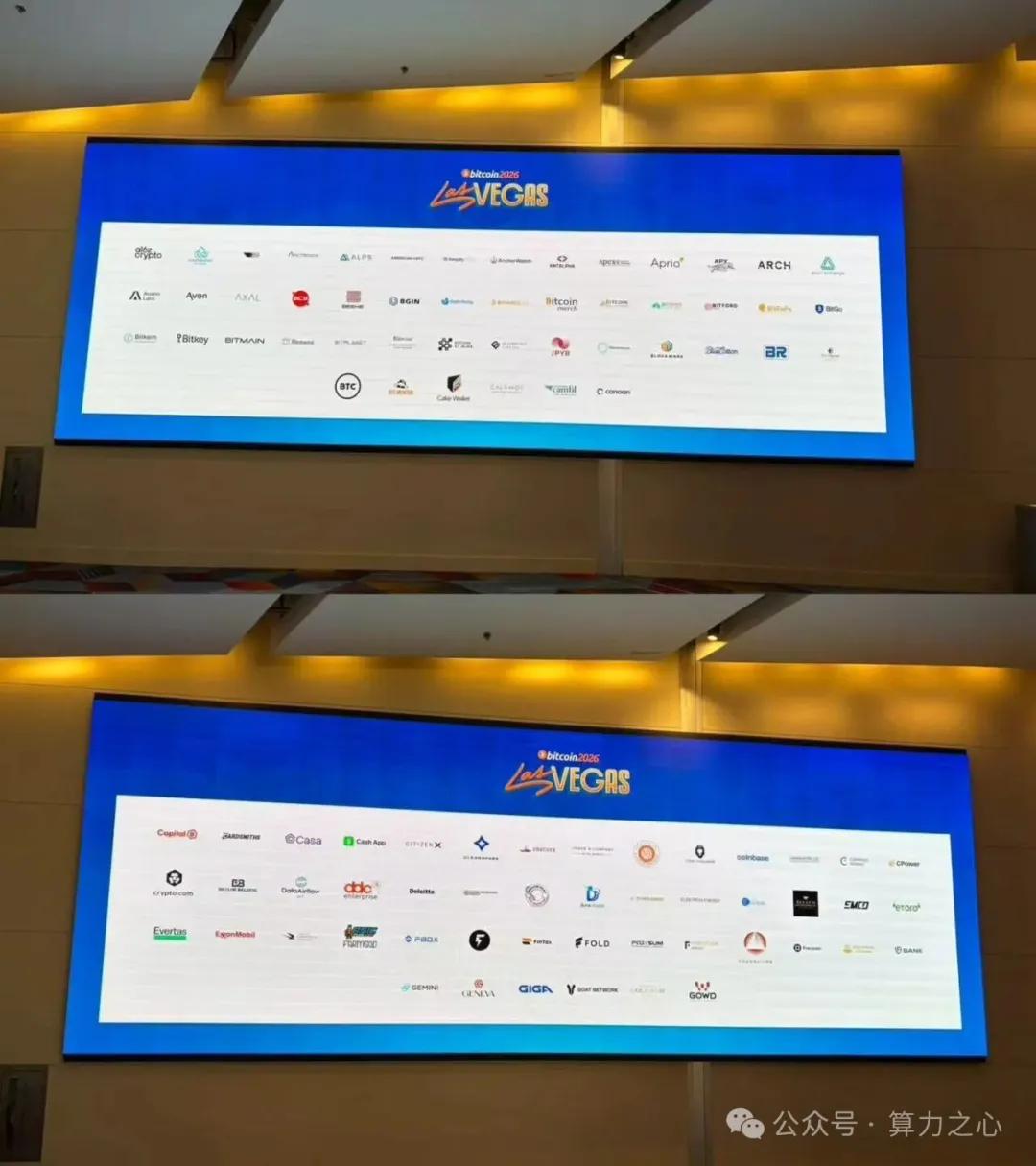
(Figure 2: Bitcoin 2026 Conference Sponsor Display Wall)
On stage, they were still trying to boost faith, but the audience was practically empty.
Money and attention have shifted direction.
II. A Tour of Mining Company Booths – Mining Equipment Remains, AI Has Already Taken the Stage
Despite the harsh conditions in the industry, this year's conference still featured exhibitors covering all aspects of the Bitcoin mining industry chain.
From large mining companies to mining machine manufacturers, from overseas mining box brands to top domestic manufacturers, the brand competition inside and outside the Las Vegas Convention Center is itself a vivid picture of the industry's transformation period.
Among the major mining companies, CleanSpark's booth stood out. This North American mining company, known for its low-carbon hydropower generation, no longer simply promoted its Bitcoin production on its exhibition boards this year. Instead, it displayed the slogan "OPTIMIZING POWER INTELLIGENCE," clearly signaling its strategic shift towards AI/HPC.
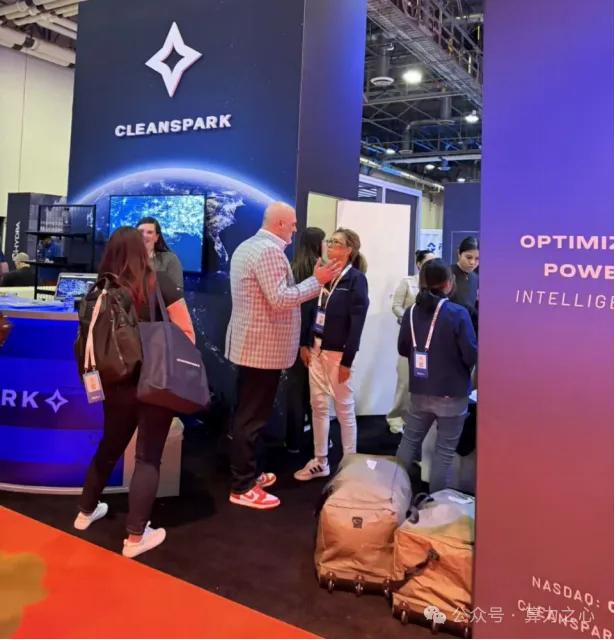
(Figure 3: CleanSpark booth – the slogan “Optimizing Smart Power” signals AI transformation)
In addition, Antalpha, as a BTC ecosystem service platform, recently received investment from Tether and showcased its institutional-grade Bitcoin financial services capabilities at this conference.
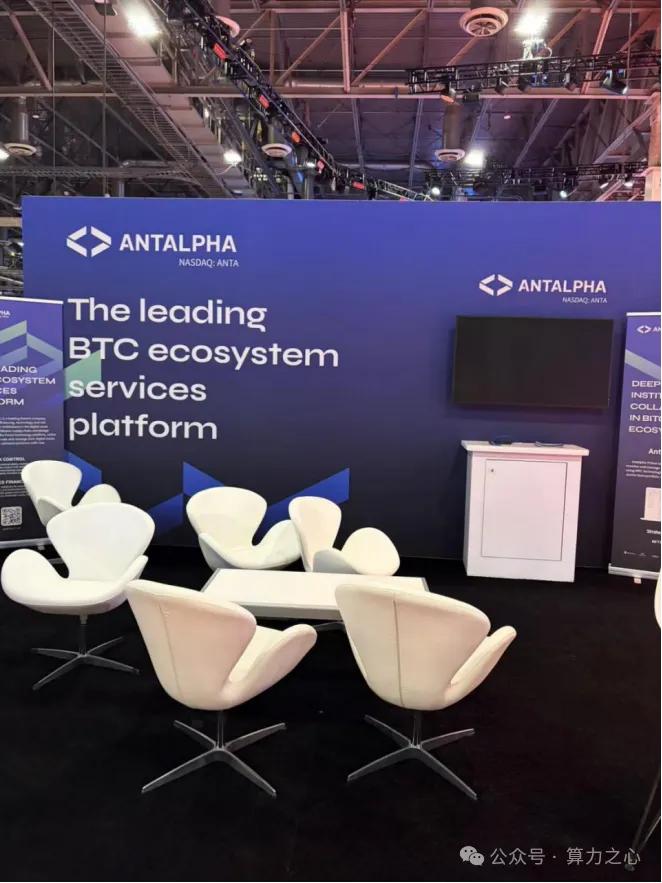
(Figure 4: AntalphaBTC Ecosystem Service Platform Booth)
Mining machine manufacturers remain a key attraction at every Bitcoin conference. At this year's exhibition, Bitmain, as the world's largest ASIC miner manufacturer, continued to occupy a central position, with its latest Antminer S23 series still serving as the technological benchmark of the event.
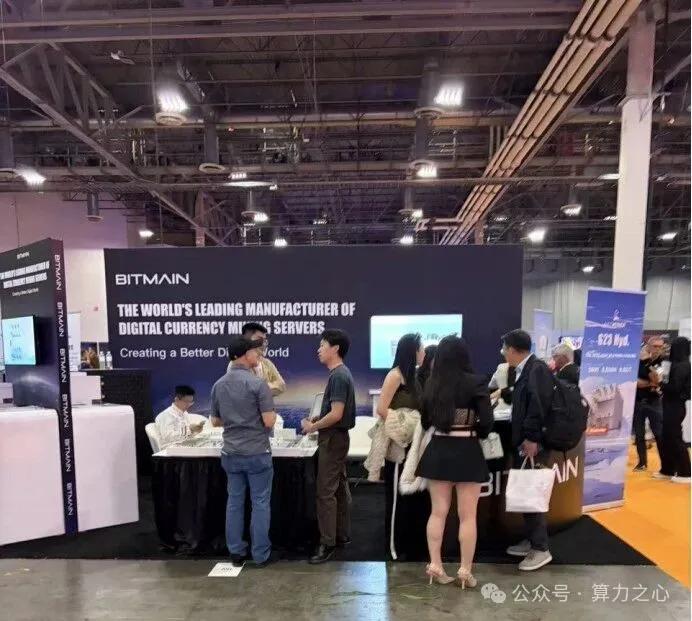
(Figure 5: The lively exchange at the Bitmain booth)
Bitdeer's booth was even more direct—its display board prominently proclaimed "Bitcoin mining & AI Cloud." As one of the pioneers of global cloud computing platforms, Bitdeer unveiled its dual-engine strategy at the exhibition: Bitcoin mining on one hand and AI cloud computing on the other. The booth featured a loop of footage showcasing both traditional mining farms and renderings of data centers being transformed into GPU clusters.
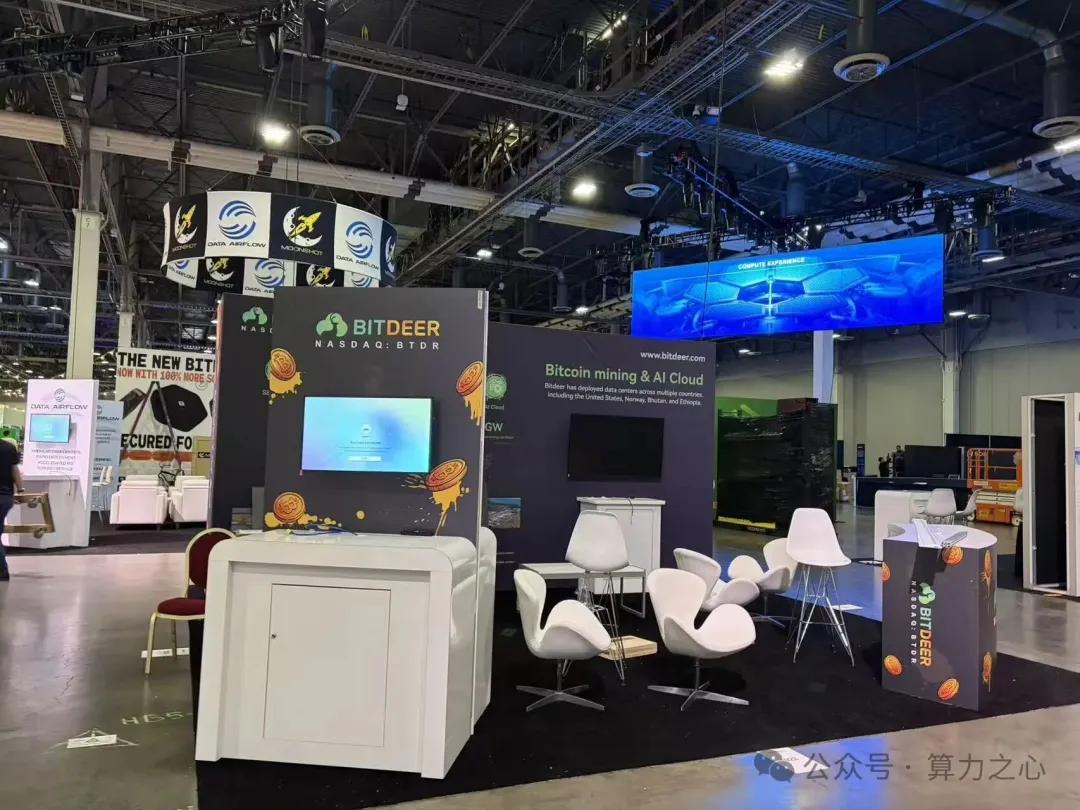
(Figure 6: Bitdeer booth – driven by both Bitcoin mining and AI cloud computing)
Meanwhile, Bitmain's Whatsminer also showcased its integrated water-cooled mining machine and container solution, with the slogan "Mining Forward, Together" on the display board suggesting that the manufacturer is also seeking synergy with the data center business.
In the infrastructure sector, Intelliflex's booth was a real eye-catcher. This brand, which focuses on "Innovative Data Solutions," showcased the core components of its modular data center. From the appearance, its products have transcended the framework of traditional mining machines and are closer to the delivery form of enterprise-level AI data centers.
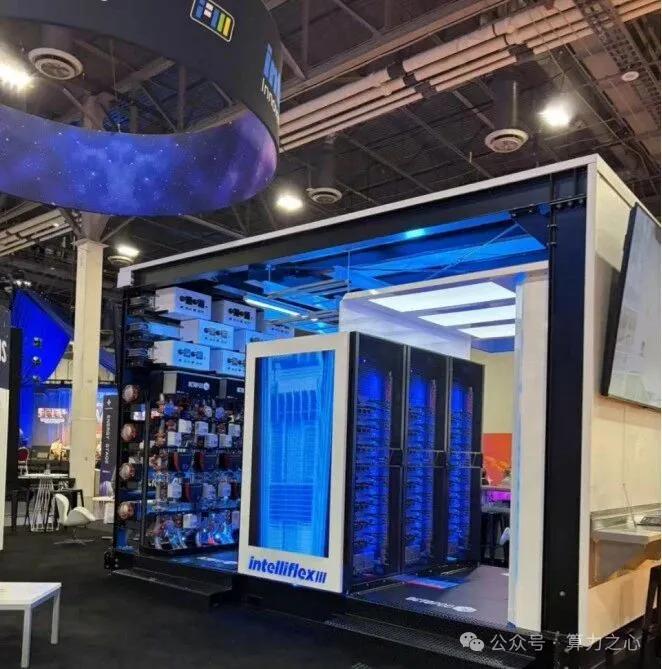
(Figure 7: Physical display of Intelliflex large-scale modular data center)
Moonshot, a brand specializing in data center infrastructure engineering, clearly listed its complete product line on its display board, ranging from UL-certified power distribution cabinets and transformers to modular data centers. This indicates that even traditional "mining farm builders" now see modular data centers as a core growth direction.
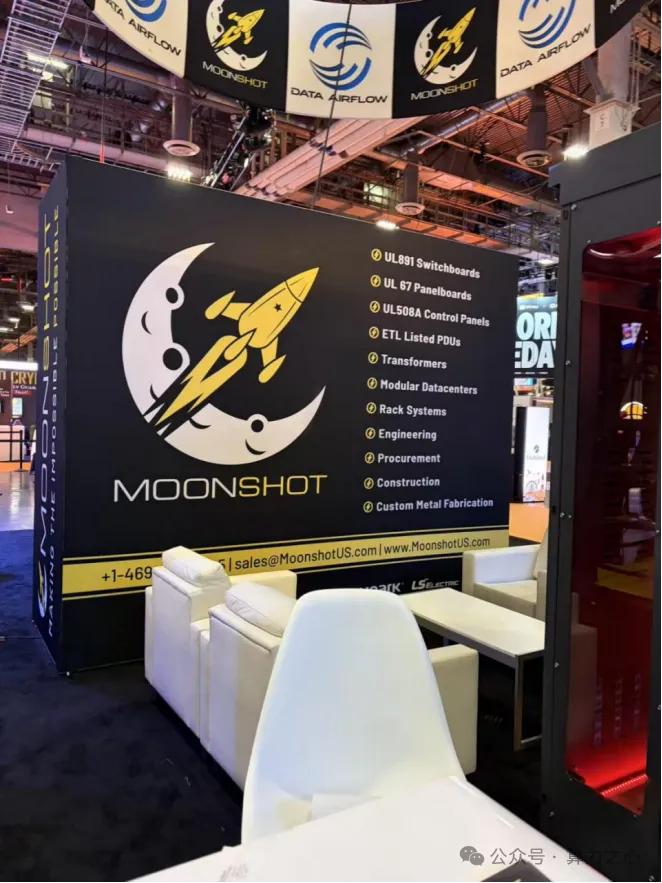
(Figure 8: Moonshot booth – Modular data center and other infrastructure product lines)
III . The Great Reversal of Computing Power : AI's Physical Devouring of the Crypto World
In fact, crypto buyers haven't gone far; they've just changed the direction of their spending.
This is also related to the sluggish Bitcoin market.
In the first quarter of 2026, the average cash cost per Bitcoin for listed mining companies rose to approximately $79,995. Meanwhile, the price of hashrate fell to a historic low of $28-30/PH/day.
High electricity costs have made mining unprofitable a reality.
Therefore, although Bitcoin flags were flying in the Las Vegas convention center, the big players' hearts were no longer there.
In the first quarter of this year, major listed mining companies quietly signed AI computing power contracts worth over $70 billion.
A massive migration disguised as cryptocurrency is tearing miners apart.
All the exhibitors are tacitly shedding their "pure miners" label.
The most ruthless move was made by BitDeer. In February 2026, this giant released a stunning report, emptying its vault of 943.1 Bitcoin reserves, achieving "zero holdings".
They poured all the money they cashed out, along with the newly raised $300 million, into AI.
Computing Power Heart visited BitDeer's booth and had in-depth discussions with the staff about BitDeer's strategies in the fields of mining and AI. Through the exchange, Computing Power Heart summarized BitDeer's current core strategy, which essentially uses the cash flow from Bitcoin mining to pre-position itself in the computing power infrastructure for the AI era.
The underlying logic is not complicated: Bitcoin and AI represent two certain themes for the next decade, and they share only one constraint—electricity, which is the core constraint.
BitDeer has built a three-tiered structure: the bottom layer is power assets—the site selection, grid connection, and operation and maintenance capabilities accumulated from long-term mining farm operations, which are essentially scarce resources acquired over time; the middle layer is cost and efficiency control—continuously compressing energy efficiency boundaries through the SEALMINER self-developed system to lock in the output capacity per unit of electricity, enabling the mining business to have stable cash flow attributes; the top layer is the repricing of computing power value—on the same electricity basis, extending computing power from the production of crypto assets to AI computing power services, realizing a leap in revenue per unit of energy.
In summary, BitDeer is not a single mining company, but rather a platform for building a computing infrastructure centered on electricity—occupying a key position in resource allocation and value distribution between the two major demand sides of Bitcoin and AI.
BitDeer isn't playing chess in a vacuum, because the crust of the entire North American mining industry is already loosening.
Right now, an industry upheaval is taking place in North America, with AI data centers devouring the electricity and server rooms that originally belonged to cryptocurrencies.
Industry insiders pointed out: "Who would be foolish enough to make money solely through mining? The current trend is to lease land and power grids to major AI companies and act as landlords."
The three major publicly traded mining companies in North America, MARA Holdings, CleanSpark, and Riot Platforms, are indeed doing the same thing: turning mining farms into AI data centers.
The most aggressive is MARA Holdings.
They dumped over 10,000 Bitcoins in March, cashing out $1.1 billion in one go. MARA then immediately formed a joint venture with investors to convert all of its power capacity into AI data centers. They even targeted the European market, acquiring related French companies.
CleanSpark's plan is even more shrewd.
This company's net loss widened to $370 million in the first quarter due to cryptocurrency price fluctuations. Interestingly, however, after management touted several major AI deals coming to fruition during the earnings call, the stock price miraculously rebounded. As long as they hold 1.8 gigawatts of low-priced energy assets, the capital market is willing to pay for their AI transformation.
Even losses can be offset by the anticipated benefits of AI. Just how much profit can be extracted from transforming a mining farm into an AI center?
The answer is written in Riot Platforms' contract.
This mining giant recently signed a 10-year lease agreement with chipmaker AMD. If fully leveraged, the contract is worth a staggering $1 billion. To completely lock up Texas's power grid capacity, Riot even spent nearly $100 million to buy the permanent title to 200 acres of land, saving on future rent.
Industry insiders believe that "providing data center hosting for giants like AMD yields a gross profit per megawatt that is 2.5 times that of traditional mining. It's obvious to anyone that you should choose this option."
Therefore, it's not just these three giants.
From Core Scientific to Hut 8, billions or even tens of billions of dollars in AI infrastructure leases are being signed at an alarming rate.
It is projected that by the end of this year, the revenue share of AI business in these listed mining companies will surge from 30% to 70%.
The most valuable thing in the hands of mining companies is no longer mining machines, but electricity.
But turning a mining farm into an AI data center is not as simple as just changing a signboard.
When North American miners were struggling to renovate their old mines, they looked around the exhibition hall and finally stopped in front of a Chinese booth.
IV. An " Outlier " at the Bitcoin Conference : Chinese Modular Data Center
In the vast Las Vegas venue, what amazed the American mining industry tycoons was a Chinese brand, Fourier.
Bruce J, a well-known Twitter influencer and major Bitcoin miner in North America, tweeted after touring the event: "This year's Bitcoin conference in Las Vegas was really lackluster. The only bright spot I saw was this modular AI data center. I have to say, the Chinese are quite impressive when it comes to product innovation."
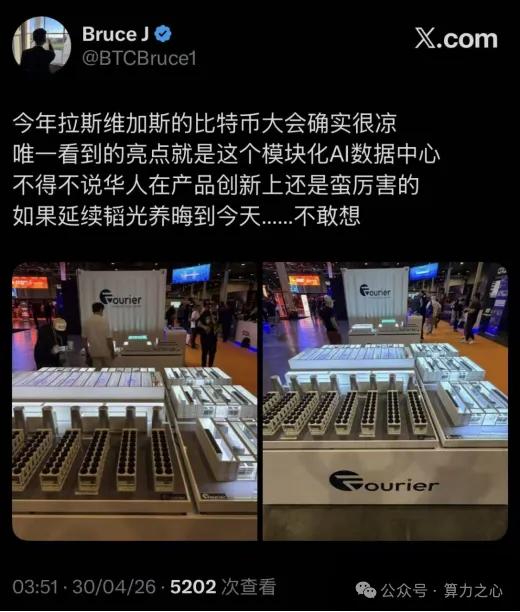
(Figure 9: North American Twitter influencer Bruce J praised the modular AI data center product developed by Chinese companies)
Fourier isn't the only exhibitor making modular data centers.
Even traditional "mine construction companies" are turning in this direction.
Intelliflex showcased modular data center core components, whose product form has broken away from the traditional mining machine framework and is closer to the delivery standards of enterprise-level AI data centers.
Moonshot showcased its complete product line on its display board, ranging from UL-certified distribution cabinets and transformers to modular data centers.
Why are modular data centers suddenly so popular in North America?
In fact, this tweet pinpoints the current pain point of American capital.
The construction cycle of traditional AI data centers typically takes three to five years, while this modular solution provided by the Chinese supply chain reduces the deployment time to just a few months.
For North American conglomerates eager to bet on AI and holding expensive GPUs, time is life.
Whoever can power on the equipment the fastest will gain the upper hand.
The value of modular solutions lies here: they allow sites originally designed for mining rigs to be transformed into AI data centers compatible with GPU clusters at a lower cost and faster speed.
V. Perseverance in the face of adversity, quietly "picking up bargains"
At this point, it seems that Bitcoin's momentum has faded, and everyone is rushing towards AI.
But after walking around the venue and chatting with the people still at the card tables, we discovered there was another side to it.
Zoey from SpiderPool is a frequent flyer, constantly traveling to various industry exhibitions. After a trip to Las Vegas, she shared her most direct impressions with us.
"Everyone is broke."
The result of not having enough money is to cut costs to the bone. Zoey also revealed a harsh detail: "Before, we were the ones looking for clients, but now clients are coming to us. They keep comparing prices between different mining pools just to get the rates down to the lowest possible level."
During this harsh winter, miners are doing everything they can to save every penny.
So, what are the surviving giants doing? The Heart of Computing Power arrived at BitFuFu's booth.
I had an in-depth conversation with the person in charge of the booth about their views on the Bitcoin 2026 conference.
The Bitfufu booth representative stated that this year's BTC conference in the US was not as lively as last year's, but there were also fewer onlookers. Those who came had clearer goals, such as buying mining machines, finding hosting services, or seeking partnerships.
Their rack mining solutions are very popular in the United States.
Currently, mining companies need to rely on more meticulous operations to maintain profits. This includes improving mining output through firmware optimization, increasing energy efficiency with next-generation mining machines, and seeking mining resources with lower electricity prices.
Recently, AI has created a huge demand for data centers, and many mining companies are also shifting to HPC/AI. However, many mining farms and regions are not actually suitable for the high concurrency and low latency requirements of AI. This has given them the opportunity to see some very good mining farm resources when the market is relatively cold.
The BitFuFu booth representative pointed out that although market sentiment is currently low, they will continue to be bullish on Bitcoin and persist in mining.
Their business model of combining self-mining with cloud computing power makes them relatively more resilient and their financial situation more stable.
In the long run, as institutional funds continue to flow in, Bitcoin is decoupling from speculative capital, and its value will become increasingly solid. They are very optimistic about Bitcoin's future.
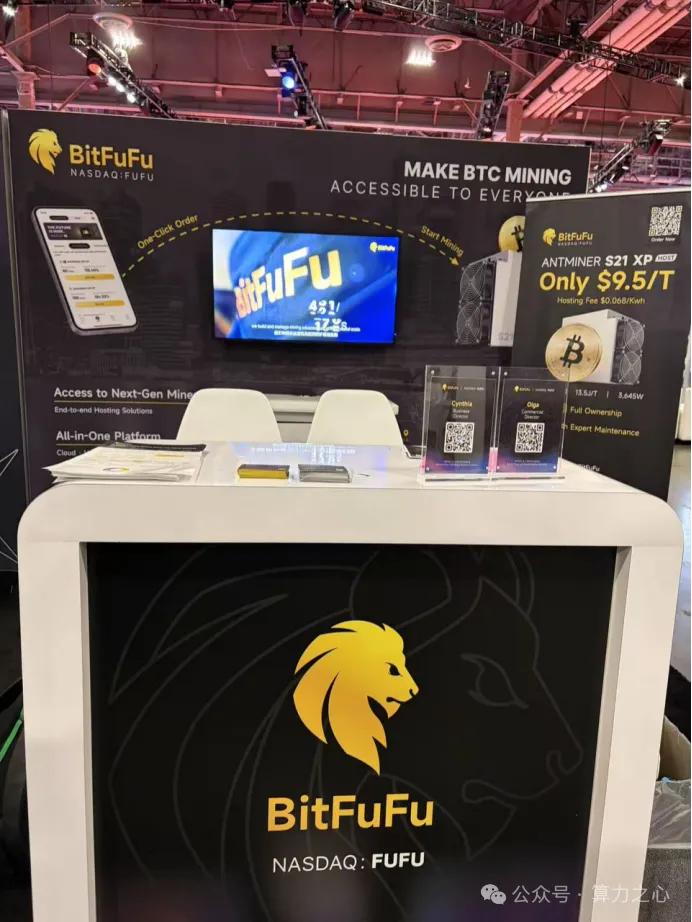
(Figure 10: Real view of Bitfufu's booth - the brand and technological strength of a one-stop mining platform)
At the Bitcoin conference's exhibition area, many American families brought their children to visit the exhibits. The children gathered around the glass display cases, curiously observing Satoshi Nakamoto's installation art and experiencing novel Bitcoin elements such as mining machines and the Lightning Network.
People were taking photos in front of the classic cover wall of Bitcoin Magazine. T-shirts and other merchandise printed with Satoshi Nakamoto's quotes were selling quite well.

(Figure 12: American parents think Bitcoin is a cool thing and are willing to let their children learn about it from a young age.)
Bitcoin remains a spiritual symbol for many, and the smiling faces of children at the exhibition testify to the passing down of faith in Bitcoin between generations.
But mining companies, with their computing power and electricity, are not driven by any beliefs; they are heading towards the new AI battlefield guided by profits.
At this crossroads of industry transformation, the logic of China's supply chain has also evolved.
However, after this noisy migration, those who remained were the true believers.