Chainlink (LINK) network activity surged to its highest level in eight months.
This growth coincided with the migration of decentralized finance (DeFi ) protocols from Layer Zero to Chainlink 's Chain Chain Interoperability Protocol (CCIP).
Why has Chainlink address activity surged?
on-chain analytics firm Santiment recorded 282,170 active addresses on May 9, 2026. The following day, this number rose to 264,090 active LINK addresses. This represents the strongest client network activity since September 2025.
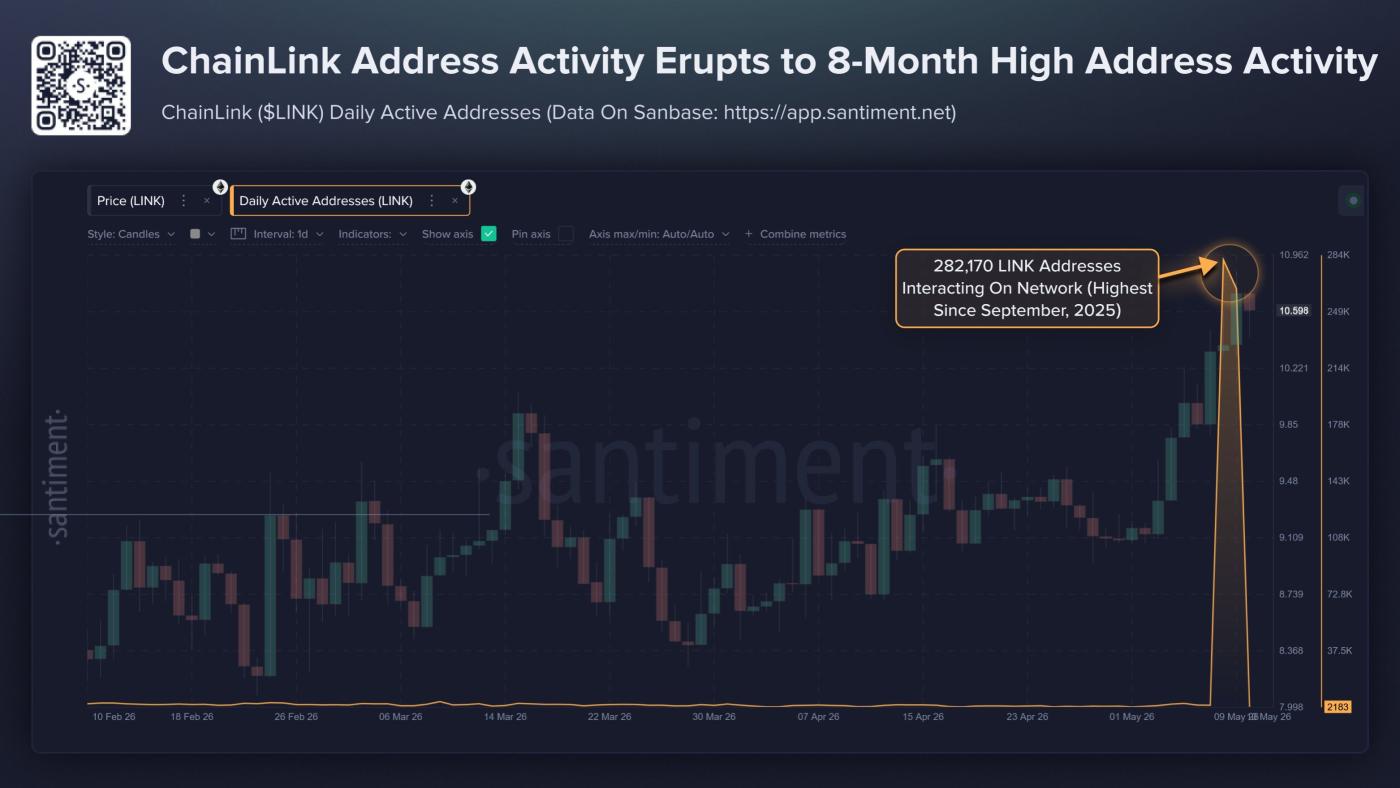 This is a working Chainlink address. Source: X/Santiment
This surge stems from a $292 million attack on April 18, 2026. The attacker stole approximately 116,500 rsETH from the Kelp DAO bridge operating on LayerZero.
This incident prompted the entire industry to reconsider the security of chain configurations. Subsequently, Kelp DAO announced plans to switch to Chainlink CCIP.
Follow us on X for the latest news updates.
Additionally, on May 7, 2026, Solv Protocol confirmed it would transfer over $700 million worth of Bitcoin Token to CCIP.
“These moves represent a major shift of institutional-scale DeFi infrastructure from LayerZero to Chainlink ’s chain ecosystem, which could be the cause of the surge in network activity and smart contract interactions related to the protocol,” Santiment said.
The unit also emphasized that this increase was due to actual demand, not just speculation.
"Historically, surges in the use of physical networks have often led to stable upward price trends, rather than short-term pumps," according to Santiment.
The network activity has also coincided with strong accumulation by whales. As BeInCrypto previously reported , wallets holding between 100,000 and 10 million LINK tokens have purchased an additional 32.93 million Token in the past 30 days.
Additionally, approximately 13.5 million LINK tokens have been withdrawn from centralized exchanges within the past five weeks, indicating increased investor demand and reduced selling pressure.
Subscribe to our YouTube channel to XEM more in-depth analysis from experts and reporters.