Those working in the crypto space over the past two years have likely noticed that scammers are becoming increasingly "professional."
In the past, it might have just been a matter of posting a fake link or creating a group, but now even exchange apps, official websites, and customer service avatars can be imitated one-to-one.
I saw something pretty outrageous a while ago.
Someone created a fake "WEEX-PRO" app, which was even uploaded to the Apple Store for a time before being removed after being reported by the official Apple system.
My first reaction was actually quite direct:
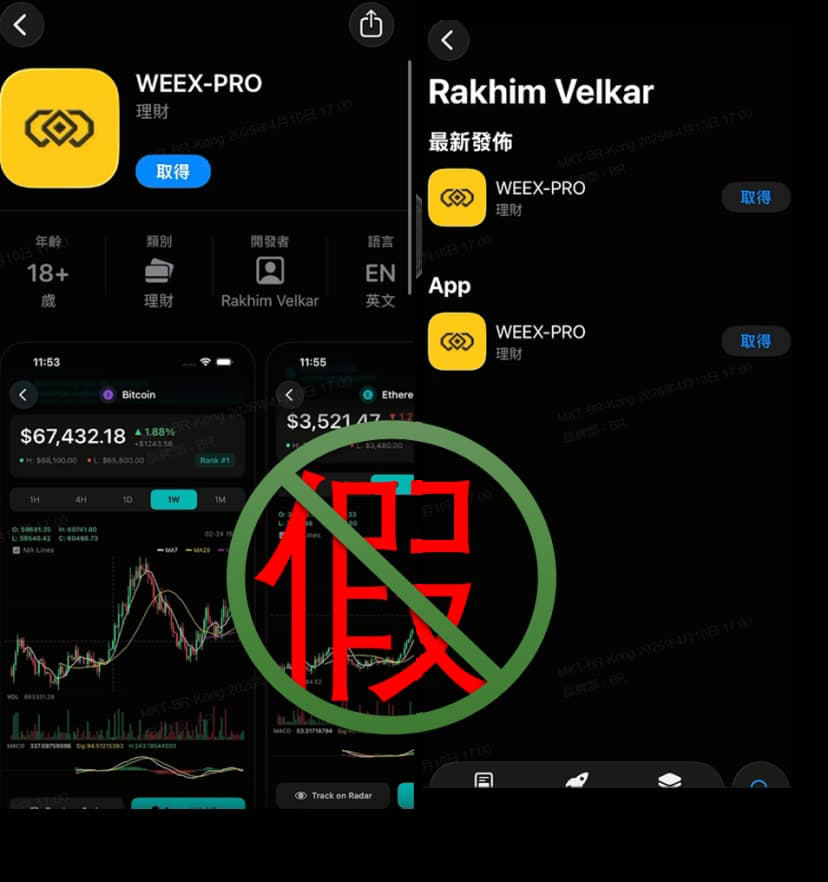
If WEEX is really as "unreliable" as some people online say, why would scammers specifically impersonate it?
Looking back, this logic is actually the same as many things in reality.
Scammers never target obscure, unknown platforms as their favorite targets for imitation.
Instead:
• With a user base
• Brand-recognized
• Frequently searched
• Looks “real”
Only in this way can users easily lower their guard.
Just like in real life, no one would forge the business license of an unknown roadside shop.
However, banks, Alipay, and popular e-commerce platforms are frequently targeted for counterfeiting.
Essentially, scammers are exploiting brand trust to deceive people.
Therefore, sometimes, the fact that a platform is being counterfeited actually indicates that it has at least a certain user base and market exposure.
And then I noticed another detail.
In this fake app incident, Wiki's official response was actually quite quick.
Not only did they issue a notice to remind users, but they also directly complained to Apple about the app being removed from the App Store, and their legal department also got involved.
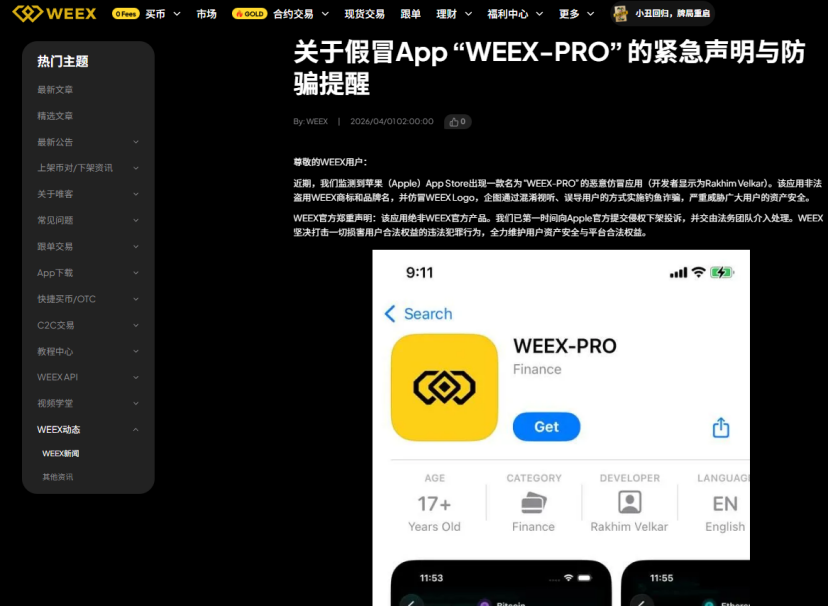
To be honest, if this were a small platform, they probably wouldn't even bother to care.
Dealing with infringements and going through the complaint process is actually quite time-consuming and costly.
However, reputable platforms often pay more attention to these things.
The bigger a brand becomes, the more afraid it is of its users being phished.
Especially for trading platforms, if user assets are involved in problems, it will not only affect their reputation, but also their long-term trust.
I gradually came to a realization:
The real danger often lies not in the "platform name," but in the people impersonating the platform.
Especially now, many phishing websites and fake apps are becoming increasingly convincing.
Some even directly copy the logo, UI, and announcement page.
Many users weren't actually scammed by the platform.
Instead, they were scammed by a "fake platform".
So now, when I download any exchange app, the first thing I do isn't watch ads, but rather:
• Is the developer's name correct?
Is the official website link genuine?
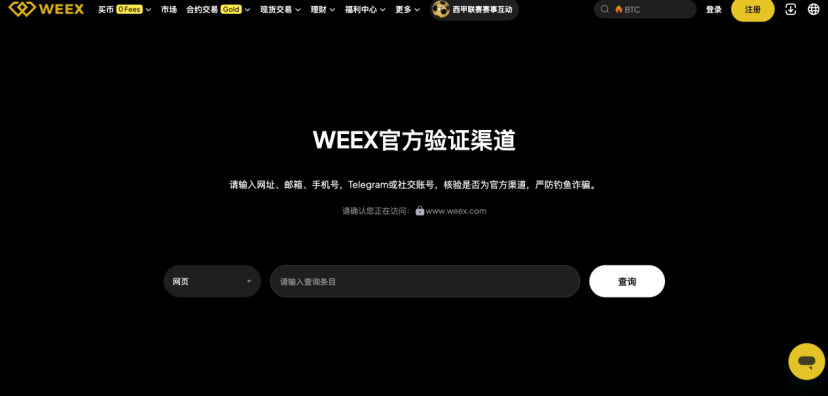
Is there an official verification page ?
Wikipedia has now created an official verification channel , something that many platforms didn't really do seriously before.
Ultimately, whether a platform is reliable or not cannot always be determined by a single online label like "fraud" or "runaway."
Because there is a very real problem with the internet right now.
Those who are truly into fishing often enjoy stirring up trouble in the comments section.