Analysis of the current status and summary of future development trends of the medical big data model.
Article authors: Fan Xiaoyu, Li Chengping
Article source: Arterial Network
After just a few years of practical experience, the medical big data model has successfully navigated its initial and explosive growth phases and is now entering a new stage of industry consolidation, gradually moving towards rational and stable growth. This report, based on surveys and interviews with over ten innovative companies, three investment institutions, and several clinical experts, analyzes the current state of commercial implementation of medical big data models both within and outside hospitals. It examines business models, implementation challenges, and core conditions in different scenarios, summarizes future development trends, and aims to provide a reference for industry participants, helping medical big data models truly empower high-quality development in the healthcare field.
The viewpoints are as follows:
The viewpoints are as follows:
1. From the perspectives of policy guidance, technological iteration, and capital allocation, jointly promoting application implementation and achieving a commercialization loop has become the core theme of industry development.
2. In-hospital IT upgrades are the mainstream approach, but their value is underestimated: Within hospitals, large-scale medical models are mainly commercialized through three models: upgrading traditional IT systems, as medical devices, and as a cost item for health services.
3. Commercialization outside of hospitals faces fewer obstacles and can be divided into three main models: ToG, ToB, and ToC. Among them, the ToB model is the most mature, the ToG model focuses on grassroots and regulatory scenarios, and the ToC model shows a trend of functional aggregation and diversified business models.
4. The future healthcare model will show a trend of in-hospital specialization and diversified integration outside hospitals. Consumer-facing scenarios will gradually shift from single services to full-cycle health companionship, and diversified payment models will become the core support for large-scale implementation.
The medical big data model enters its first year of practical application.
Since the initial exploration and trial of medical big data models began in 2023, the development of big data model-related technologies and applications has continued to accelerate under the combined driving force of multiple factors such as capital investment, technological iteration, policy guidance, talent supply and market demand. Its overall development speed has significantly surpassed the evolution pace of traditional medical technologies, and has continuously promoted the professional field of medical artificial intelligence towards maturity and perfection.
After three years of practical exploration and industry refinement, the medical big model has passed through the nascent stage and the concentrated explosion stage of industry development. It is now gradually clearing out the industry bubble and entering a more rational and calm period of development, thus moving towards a new stage of steady growth and continuous maturity.
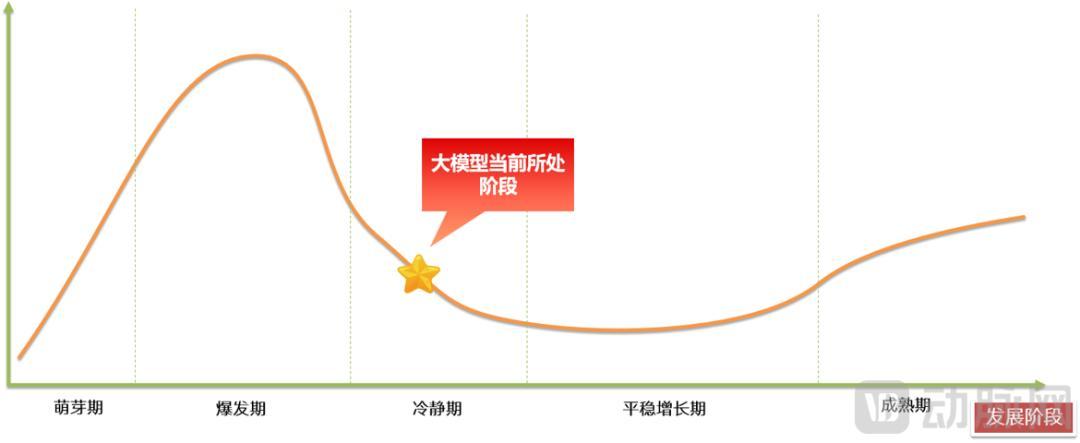
Medical large model development stages
Policy side
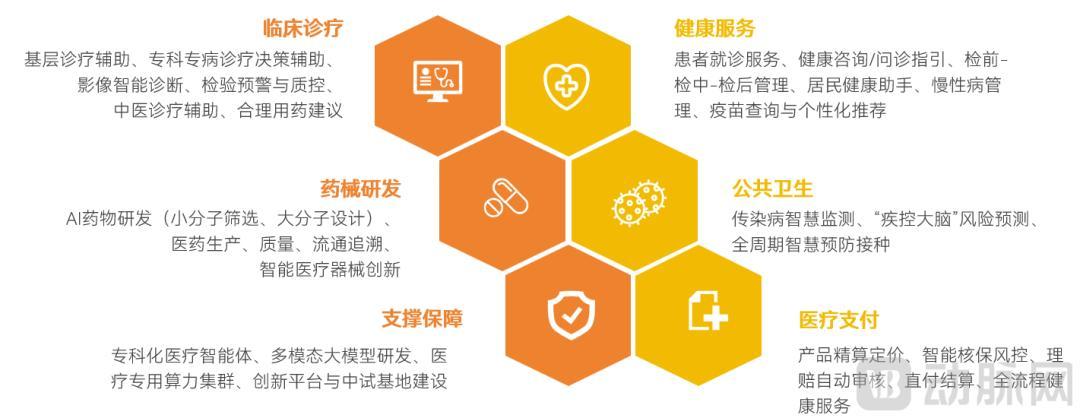
During this crucial development phase, industry policies have successfully shifted from encouraging technological innovation to promoting application implementation and improving the payment system, marking a significant policy breakthrough. Relevant regulatory departments and authorities have successively launched a series of practical application scenarios, while approving and issuing nearly 300 registration certificates related to artificial intelligence medical devices. Furthermore, medical insurance management departments in many regions of China have formally incorporated AI-related medical services into their medical insurance fee codes.
Technical side
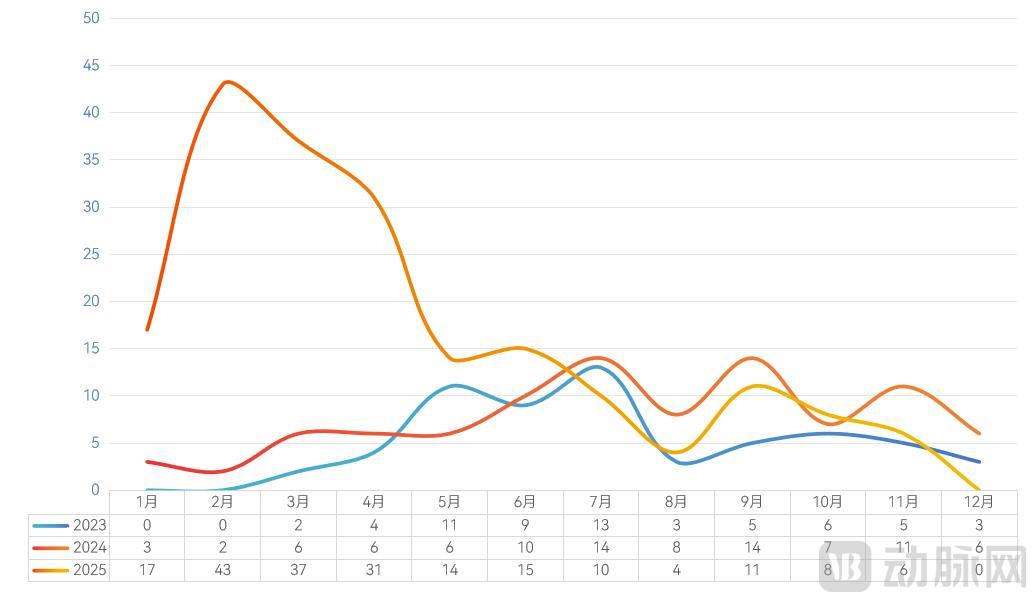
At the same time, the pace of concentrated releases of various medical large-scale models in the industry has also shown a significant slowdown. The explosive release and growth phase seen in the first half of 2025 has passed, and the large-scale model products developed by various participants in the industry have entered a stage of continuous refinement, optimization, detailed iteration and upgrades, and in-depth cultivation. This indicates that the industry gaps that medical large-scale models need to fill are becoming fewer and fewer, and the focus of large-scale models is shifting to becoming "easier to use" and "smarter."
Capital side
From the perspective of the overall capital market, the rapid rise of large-scale medical models has brought a certain positive increase to the number of investment and financing events in the entire field of medical artificial intelligence. As the industry's investment logic gradually shifts from simply focusing on technological R&D capabilities to focusing on application scenarios and actual implementation results, the distribution of related financing rounds exhibits a typical dumbbell-shaped structure, with capital further concentrating on large-scale medical model companies with clear and well-defined application scenarios and strong implementation capabilities and development potential.
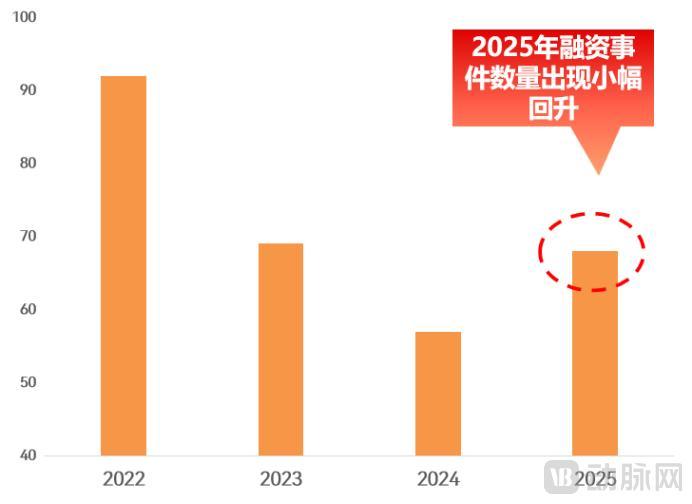
Currently, the entire medical large-scale model industry is at a critical inflection point, transitioning from a period of rational cooling-off to a period of stable growth. Promoting the practical application of technologies and products has become the core theme of the industry's development.
Current Status of Commercial Implementation of Large-Scale Medical Models in Hospitals
The hospital is where medical big data models are most frequently released. According to Arterial Network's "2025 Medical Artificial Intelligence Industry Research Report", similar to the application of artificial intelligence, the application scenarios of big data models in hospitals can also be divided into three categories: clinical departments, medical technology departments, and hospital terminals.
The functions of large-scale medical models in clinical departments mainly revolve around assisting diagnosis, assisting doctors (such as medical record organization and literature search), and scientific research. According to research, the penetration rate of large-scale models for assisting diagnosis and assisting doctors is continuously increasing. Furthermore, with the emergence of intelligent agents based on large-scale models, and the increasingly convenient interface for model access, the commercialization process of large-scale models for clinical research is relatively more mature.
The large-scale model for medical technology departments focuses on assisted diagnosis. This application scenario benefits from clear performance verification standards (such as sensitivity and specificity) and the ability to verify its "effectiveness" through existing medical device approval channels. The commercialization process of the product is relatively advanced in hospital scenarios, but it is still in the stage of waiting for large-scale commercial implementation.
Compared to large-scale models for clinical and medical technology departments, hospital-side models are more service-oriented, and their commercialization loop focuses more on efficiency and cost control. For example, Neusoft Group has made comprehensive, multi-scenario deployments around hospital needs, developing more than 120 "intelligent agents" based on the Tianyi Medical large-scale model, covering areas such as smart clinical practice, smart management, and smart services, and has achieved large-scale application in more than 100 medical institutions nationwide.
The practical application of large-scale medical models usually exists in the form of a technical foundation, which fully demonstrates its intelligent value and core role by empowering various specific medical applications. At the same time, some large-scale medical models adopt the "model as application" model, which is directly applied to various specific medical scenarios to achieve direct connection between technology and scenarios.
The sales methods for four mainstream medical big data models. When medical big data models are promoted to the market, their product forms exhibit diversified characteristics. Based on industry practice and the current market situation, they can be roughly divided into four categories: software, hardware and software combination, service, and industry foundation.

The four product forms of the medical big model
Within hospitals, different product forms correspond to different business models. Currently, in hospital settings, the commercialization of large-scale medical models (including AI applications empowered by these models) has not deviated from existing traditional hospital-based commercialization models, which can be broadly categorized into three types: information systems, medical devices, and health services. Taking health services as an example, this model leverages the medical authority and high-quality physician resources of public hospitals to ensure the professionalism and standardization of health management services. It also utilizes the advantages of health management personnel and services from professional health management institutions to achieve complementarity between medical resources and health management services, promoting the standardization and refinement of health management services.
In this collaborative model, large-scale medical models are often developed by health management companies, rather than sold to medical institutions as products. Instead, they are deeply integrated into their own health management teams to expand the team's service capabilities and achieve cost reduction and efficiency improvement. For example, JD Health, relying on "JD Excellent Medical 2.0," collaborated with the First Affiliated Hospital of Wenzhou Medical University and the National Health Commission's Key Laboratory of Clinical Nutrition and Intervention to jointly release the "AI-Driven Standardized Full-Process Management Solution for Clinical Nutrition." This solution constructs a "clinical nutrition + special medical foods" network, addressing the pain points of inpatient and outpatient nutritional assessment and intervention, and incorporating nutritional therapy into traceable and assessable clinical pathways.
Current Status of Commercial Implementation of Large-Scale Medical Models Outside Hospitals
In the context of out-of-hospital settings, the main business models of large-scale medical models can be divided into three categories: those targeting governments, enterprises, and end consumers.
Large-scale medical model in ToG scenario
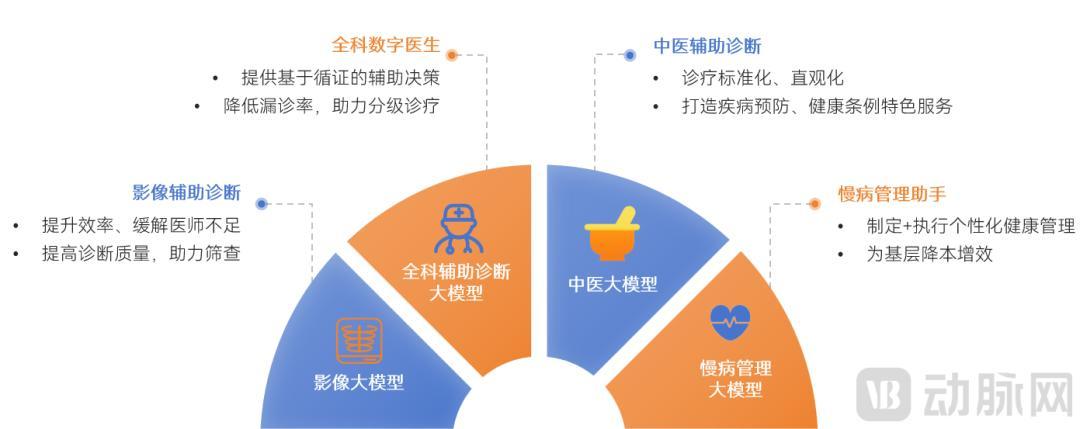
Primary healthcare is a key application scenario for four major medical big data models. The functions of primary healthcare settings are strongly policy-driven, thus providing greater impetus for the implementation of medical big data models applied to key functions. Specifically, image-assisted diagnosis, general practitioners, traditional Chinese medicine, and chronic disease management medical big data models are the most popular applications at the primary level. By the end of 2025, the AI-powered medical assistant, equipped with the iFlytek Spark Medical Big Data Model, had covered 31 provinces and municipalities and 806 districts and counties nationwide, serving over 77,000 primary healthcare institutions. It has provided over 1.1 billion AI-assisted diagnostic suggestions, assisted in generating over 450 million standardized electronic medical records, identified over 120 million irrational prescriptions, and corrected over 1.95 million valuable diagnoses through system reminders. These large-scale implementations demonstrate the core value of AI technology in empowering primary healthcare.
A large-scale medical model for the ToB scenario
Cost reduction and efficiency improvement are strong drivers for the successful implementation of large-scale B2B healthcare models. In application scenarios where large-scale models can significantly improve efficiency and reduce costs, there are already many mature commercial collaborations, even large-scale ones, in the B2B sector. Based on the outpatient application scenarios of large-scale models, this section will break down the models with pharmaceutical companies, outpatient health service providers, and insurance companies as the main payers.
(1) Innovative pharmaceutical companies
Medical big data models are deeply involved in the entire drug development process, empowering the entire chain from target discovery and molecular design to clinical trial optimization, directly addressing the pain points of traditional new drug development such as long cycles, high costs, and low success rates. For example, big data models also play a crucial role in the post-marketing stage. While my country ranks second globally in the number of innovative drugs launched, the problems of "difficulty in accessing hospitals and difficulty in obtaining payment" for high-value innovative drugs remain prominent. Excessively high pricing limits drug accessibility and further hinders the conversion of innovative achievements into funding for continued R&D by enterprises.
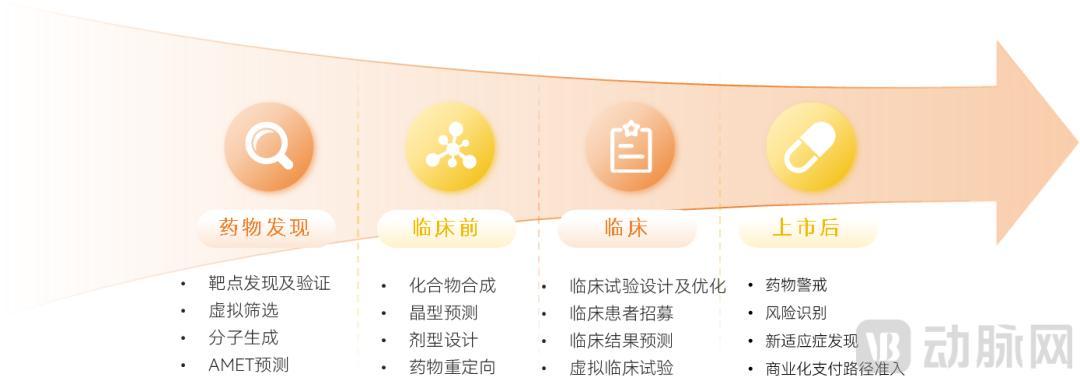
The deep application of artificial intelligence technologies, exemplified by large-scale models, has become a key to solving this pain point. For example, Magnesium Health provides pharmaceutical companies with AI-based "smart medicine" solutions, offering them comprehensive commercialization solutions for the entire drug lifecycle, including market insights, patient management, and channel planning, helping them integrate diversified payment methods for pharmaceuticals. Its prospectus reveals that from January to October 2025, 62.7% of Magnesium Health's revenue came from its smart medicine solutions, and it has partnered with over 140 pharmaceutical companies, including 90% of the world's top 20 pharmaceutical companies.
(2) Outpatient health service providers
The medical big data model is deeply penetrating the entire health service process, organically integrating the entire ecosystem of outpatient health management, and directly addressing the core pain points that have long existed in the industry, such as severe service homogenization, low operational efficiency, and insufficient personalized intervention.
To address the diverse needs of different B2B clients, Zhizhen Technology has developed a tiered, customized solution. On one hand, it provides underlying models and medical tools through an open platform via APIs and tokens, serving enterprise clients with R&D capabilities. On the other hand, it leverages WiseClaw, the world's first medical agent platform, as its core, combining it with technical modules such as MCP, Skill, OpenClaw, and Harness to support enterprises in building configurable, traceable, and governable medical intelligent agents. Furthermore, it meets the lightweight application needs of professionals such as doctors and nutritionists through zero-code products like expert avatar H5. Currently, Zhizhen Technology has partnered with over 300 top-tier tertiary hospitals and over 500 leading healthcare companies nationwide, demonstrating the practical application capabilities and market validation of its medical AI products in real-world business scenarios.
(3) Insurance companies
In recent years, with the increase in national income levels and the growing awareness of health, the proportion of commercial insurance in the payment system has been gradually increasing. Faced with a diverse and complex commercial insurance market, comprehensive service providers covering the entire lifecycle of commercial insurance products have emerged. These providers not only help insurance companies design products but also bridge the gap between users and major insurance companies, offering one-stop services covering sales, underwriting, and claims settlement, effectively solving the problem of matching supply and demand.
In the field of innovative drugs, the value of third-party platforms is particularly prominent. Since diversified payment methods are still an emerging area, third-party platforms, with their mature knowledge and experience, can accelerate the cooperation process between pharmaceutical companies and insurance companies, increasing the success rate. At the same time, facing complex business scenarios across regions, third-party platforms can handle the tedious calculation and evaluation work, significantly reducing the input costs for both pharmaceutical companies and insurance institutions.
Large-scale medical model in the ToC scenario
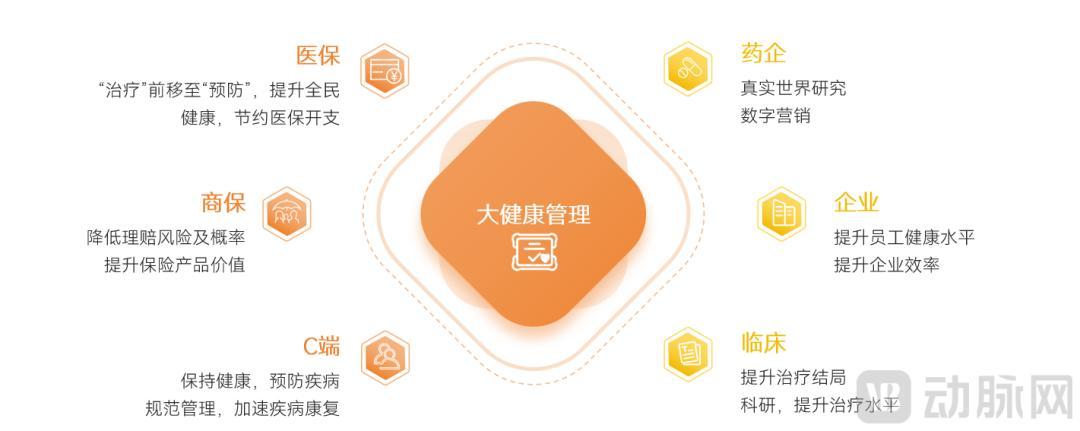
The consumer (C-end) market represents the most diverse scenario for the commercialization of large-scale healthcare models. Taking health management as an example, it is not only a basic health need for people with chronic diseases, but also an urgent and unmet need for medical insurance, commercial insurance, pharmaceutical companies, enterprises, and clinical research. Therefore, the payers and business models for chronic disease management are highly diverse.
Special thanks to the following experts for their strong support of this report (in order of interview):
Wang Feng, CEO of Zhizhen Technology
Li Dongdong, Vice President and General Manager of the Healthcare Business Unit of Dongsoft Group
Dr. Zhang Xia, Dean of Neusoft Group Research Institute and Dean of Neusoft Intelligent Medical Technology Research Institute
Liang Junze, Deputy General Manager of the Healthcare Division of Neusoft Group
He Zhiyang, Dean of Xunfei Medical Research Institute
Ren Haiping, Researcher at the Institute of High Performance Instrumentation, Chinese Academy of Sciences
Experts from JD Health Exploration Research Institute (JDH XLab)
Liu Rongyun, founder of Shengshengji
Zhang Xinyan, founder of Huimei Finance.
Zhang Zhiyun, co-founder of Nandafit
Li Linfeng, Vice President of Technology Innovation and AI Architect at Yidu Technology
Report Contents:
Chapter One: The First Year of Implementing the Large-Scale Medical Model
1.1 Policy: Identify Scenarios, Focus on Vertical Sectors, and Facilitate Implementation
1.2 Technology: The explosive release of large-scale models has come to an end, and the application scenarios are closely aligned with policy guidance.
1.3 Capital: Concentrating on companies with clear application scenarios and strong implementation capabilities
Chapter Two: Current Status of Commercial Implementation of the Medical Large-Scale Model in Hospitals
2.1 Panoramic View of Medical Large-Scale Model Application in Hospitals
2.2 Analysis of the Business Model within a Large-Scale Medical Institution
Chapter 3: Current Status of Outpatient Commercial Implementation of the Large-Scale Medical Model
3.1 Panoramic View of Medical Large-Scale Model Applications Outside Hospitals
3.2 Analysis of Outpatient Business Models in the Large-Scale Healthcare Model
Chapter Four: Future Trends
4.1 A rigorous, large-scale medical model within the hospital, building trust through specialized departments.
4.2 Limited C-end payment options lead to the emergence of more integrated and diversified business models.
4.3 Continuous improvement of infrastructure promotes the implementation of large-scale medical models.
4.4 GBC Innovation Model: Three-Terminal Integration Drives Value Cycle