Google I/O 2026 didn't tell us how cool any particular product was. It told us that the AI competition has entered the infrastructure phase.
Article author and source: 0x9999in1, ME News
TL;DR
- At I/O 2026, Google announced that it was processing 3.2 quadrillions of tokens per month, a seven-fold increase year-over-year, and that the Gemini app had surpassed 900 million monthly active users.
- Google's capital expenditures in 2026 are projected to reach $180-190 billion, almost double the $91 billion in 2025, all betting on AI infrastructure.
- Google's core strategy is "full-stack vertical integration": from self-developed chips (8th generation TPU) to models (Gemini 3.5) to products (Search, YouTube, Workspace), it controls the entire process.
- The Gemini 3.5 Flash emphasizes "agent-first" rather than "chatbot-first," signifying a shift in Google's assessment of the AI interaction paradigm.
- OpenAI is pursuing a "platform + consumer scale" strategy, with a valuation of $85.2 billion and monthly revenue of $2 billion. It is currently integrating ChatGPT, Codex, and API into a unified system.
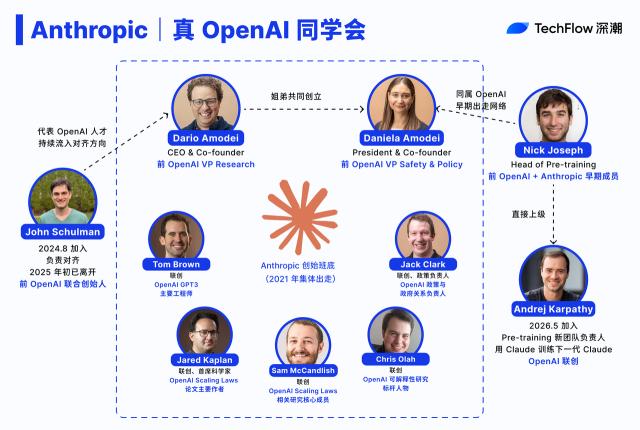
- Anthropic is betting on "security as a competitive advantage," using enterprise-level trust as a barrier to entry. It is valued at $38 billion (as of February 2026) and is currently raising funds in a new round at a valuation of $90 billion.
- The fundamental difference between the three companies is that Google focuses on ecosystem encroachment, OpenAI focuses on monopolizing access points, and Anthropic focuses on trust premiums.
A show with no suspense, but behind it all lies suspense.
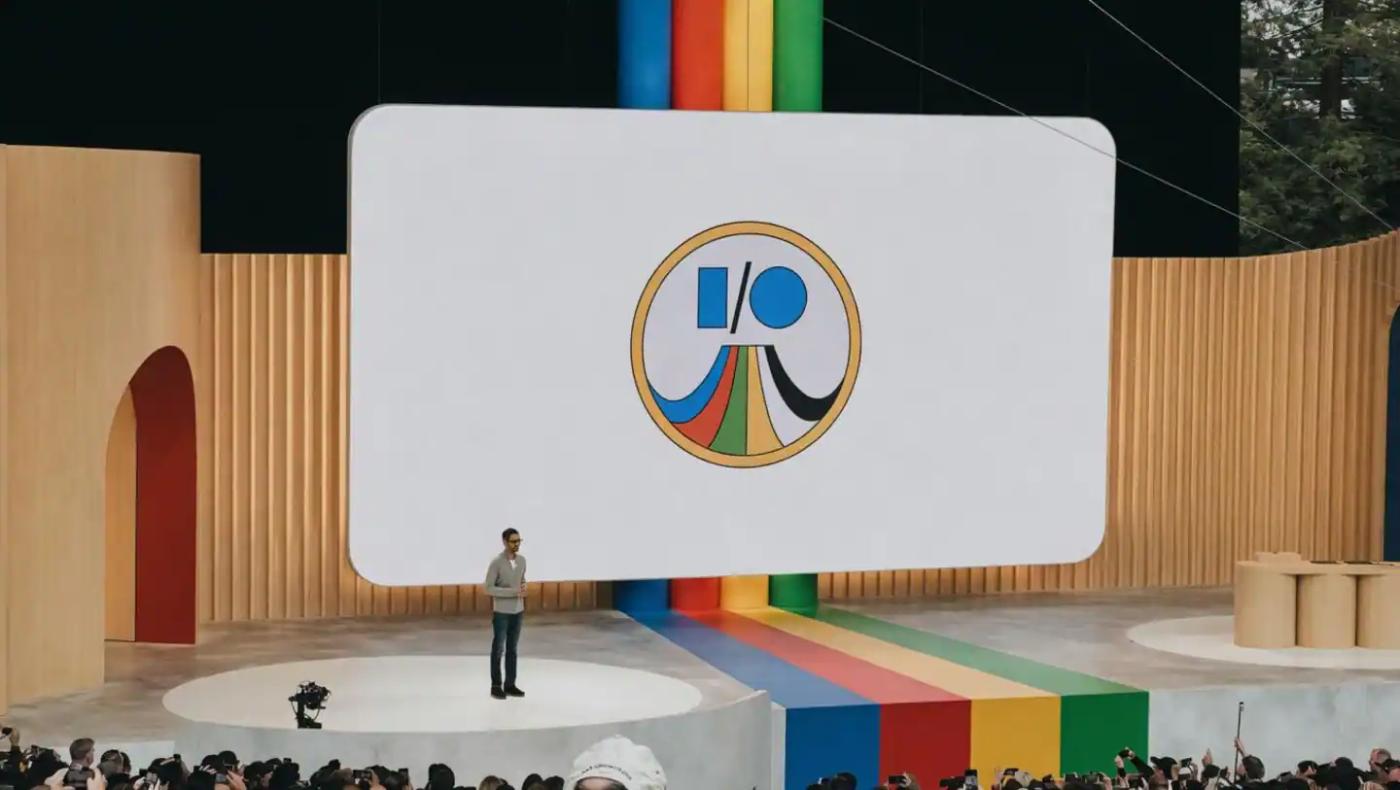
Google I/O 2026, ostensibly a developer conference. But in reality? It was a strategic declaration.
Sundar Pichai stood on the stage and announced a few numbers.
3.2 quadrillion tokens, monthly processing volume. Last year it was 480 trillion. The year before it was only 9.7 trillion. A sevenfold increase.
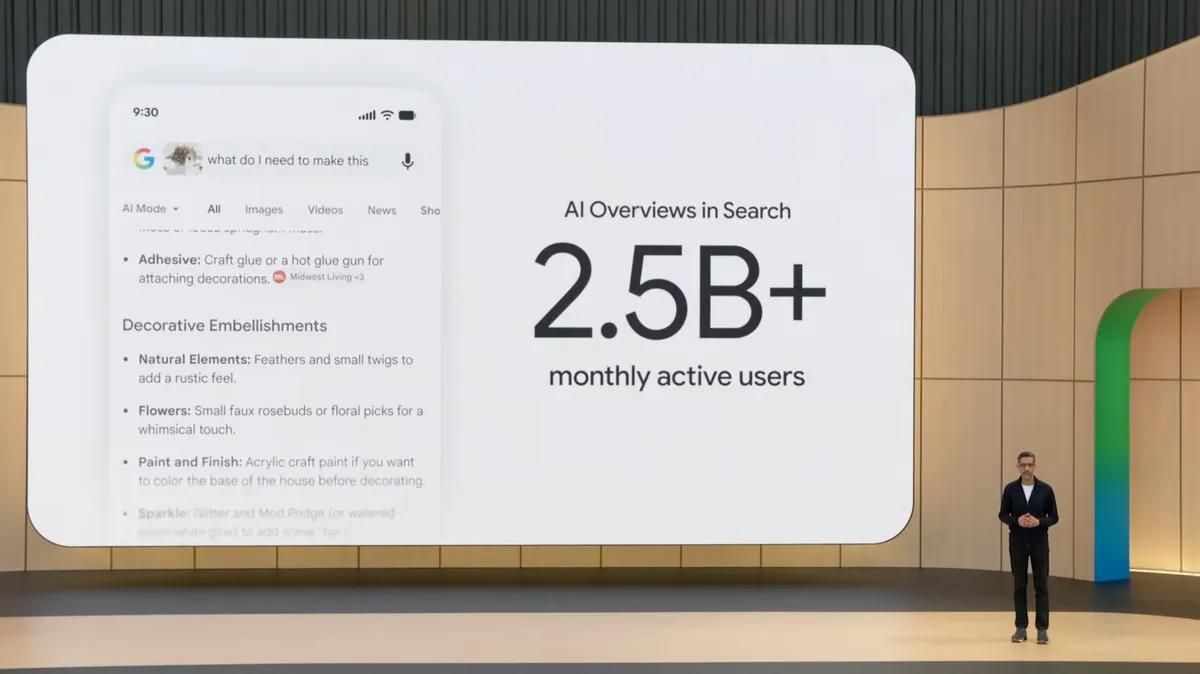
Gemini app has 900 million monthly active users, more than double the previous number. AI Overviews has 2.5 billion monthly active users. AI Mode has over 1 billion users.
This isn't a product launch. This is a muscle demonstration.
Google is saying one thing: our AI isn't a lab toy; it's already serving billions of people every second. What about you?
Full-Stack Devouring: Google's True Strategy
Many people who watched I/O 2026 saw Gemini 3.5 Flash, Gemini Spark, Ask YouTube, and Android XR smart glasses.
These are all superficial appearances.
The real signal is hidden in Pichai's statement: "We are taking a differentiated, full-stack AI innovation path—from self-developed chips and security infrastructure, to world-class research and models, and then to products and platforms that reach billions of users."
Full stack. From chip to model to product.
This is Google's core logic.
Let's take it apart and see:
Underlying technology: Self-developed chips. The eighth-generation TPU features a dual-chip design, doubling training and inference efficiency. Blackstone recently announced a joint venture with Google, with an initial investment of $5 billion and the first 500 megawatts of computing power expected to go live in 2027. Google isn't competing with Nvidia for market share; it's building its own weapons.
Mid-layer: The model. It uses a Gemini 3.5 Flash, outputting nearly 300 tokens per second, with benchmark scores approaching the larger flagship 3.1 Pro, but with four times the inference speed. This model isn't for chatting—it's for agents to run tasks. Speed is everything.
At the top: Product reach. Search, YouTube, Gmail, Docs, and Maps—each of these five products has over 3 billion users. AI isn't being "added" to these products; rather, these products are being restructured by AI. AI Mode isn't an add-on to search; it's becoming search itself.
Top layer: Agent ecosystem. Gemini Spark is a general-purpose personal AI agent capable of cross-application inference and task execution. Antigravity 2.0 is an agent programming platform for developers, having completely shifted from an IDE-based approach to an agent-first architecture.
In short: Google doesn't want to be the "most capable in AI," it wants to be "independent at every level."
How ambitious is this? Just look at the capital expenditures. $31 billion in 2022. $91 billion in 2025. Projected for 2026? $180-190 billion. A six-fold increase in three years.
Plexo Capital founder Lo Toney put it bluntly: Google is probably the best company to monetize AI on a large scale because it controls almost every layer of the stack.
Gene Munster of Deepwater Asset Management added that the benefits of having a full stack are not just about scale, but also speed. Iterating on self-developed chips and scaling in one's own data centers are faster at every step than relying on third parties.
This is Google's gamble: to use the speed advantage of vertical integration to crush competitors with horizontal specialization.
The Agent Era: Google's Paradigm Judgment
I/O 2026 also revealed an important signal: Google believes the chatbot era is over.
The Gemini 3.5 Flash is not positioned as a "smarter conversational AI." Its key word is "agentic." It is designed to perform complex, long-duration tasks—not answering questions, but getting things done.
Gemini Spark is described as: "Taking action on your behalf, guided by you." It can perform inference across Gmail, Docs, and Drive, autonomously executing task flows.
Antigravity 2.0 completely abandons the IDE shell, becoming a pure Agent development platform—desktop applications, CLI tools, SDK, everything is built around Agent.
What is the underlying logic of this judgment?
Because Google has a data advantage.
When your agent needs to understand a user's emails, calendar, documents, search history, YouTube preferences—whose data is the most comprehensive? Google.
In the chatbot era, model capabilities were the core competitive advantage. But in the agent era, data access rights are the true moat.
Google's embedding of its AI Agent into Search (the so-called "intelligent search box") essentially declares that search will no longer "give you links," but "do things for you." This is the most fundamental paradigm shift in search engines in 25 years.
OpenAI: The Anxiety of Gateway Monopolists
Let's look at it from a different perspective.
OpenAI completed a $122 billion funding round in March 2026, valuing the company at $852 billion. It boasts monthly revenue of $2 billion and is poised to become the fastest technology platform to reach 1 billion weekly active users.
The numbers are impeccable. But OpenAI faces a structural problem.
It doesn't own the infrastructure. It doesn't own the ecosystem of end products. What does it own? An entry point—ChatGPT.
Four days before I/O 2026, OpenAI made a significant move: integrating ChatGPT, Codex, and the developer API into a single team, led by co-founder Greg Brockman.
Why? Because the previous three lines—consumers, developers, and enterprises—have become difficult to coordinate at OpenAI's scale. This is an organizational restructuring that "acknowledges that the previous architecture could not keep up with the scale."
OpenAI's strategy is to become the operating system gateway for the AI era.
It doesn't need to make its own chips (it has the supply chains of Microsoft and Nvidia). It doesn't need to build its own search engine (ChatGPT itself is replacing search). What it needs to do is: get as many people as possible and spend as much time as possible within the ChatGPT ecosystem.
GPT-5.5 leads in computer use and autonomous task execution. Codex focuses on developer workflows. ChatGPT Pro monetizes through subscriptions. These three lines ultimately converge on one goal: to become the sole intermediary layer between users and the digital world.
But there is a hidden danger here.
Google has a product portfolio with 3 billion users. When Google directly integrates Agent capabilities into Search, YouTube, and Gmail, users don't need to open another application. They don't need to "go" to ChatGPT.
OpenAI's entry-level advantage is being eroded by Google's distributed embedding strategy.
This is why OpenAI must constantly accelerate product iteration, expand use cases, and create "cooler" demonstrations—it doesn't have the natural distribution advantage of Google, which already has "users here."
Anthropic: Betting on security can turn into money.
The most interesting story among the Big Three is probably that of Anthropic.
In February 2026, Series G, valued at $380 billion, had a $30 billion valuation. By May, it was reported to be raising a new round of funding at a valuation of $900 billion. Its valuation nearly doubled in 90 days.
But Anthropic is taking a completely different path from Google and OpenAI.
Its core assumption is that in a future where AI capabilities are becoming increasingly similar, security and trust will become the primary decision-making factors for enterprise procurement.
Forbes' assessment is spot on: Anthropic is making the riskiest bet—that trust, security, and corporate reputation can become lasting advantages, rather than drags on growth.
How exactly do you do it?
Two lines of development. One is for large organizations: providing tools for enterprises to configure and run the AI Agent (Claude Code, Agent SDK). The other is for medium-sized enterprises: embedding Claude directly into their operations through joint ventures.
Claude Code has already established a strong reputation among developers. Claude Opus 4.7 leads in coding and agent inference benchmarks. Anthropic even launched Claude Code Security, using AI for code vulnerability scanning—a move that directly impacted the stock prices of traditional cybersecurity vendors.
However, Anthropic's approach has a fundamental contradiction.
It aims to be "the safest AI," but commercial competition demands it constantly push the boundaries of its capabilities. In March 2026, a configuration error led to the leak of Claude Code's entire source code (512,000 lines of TypeScript) to a public npm repository. The irony is palpable: a security company itself suffered a security breach.
A deeper issue: Anthropic lacks a consumer product. Unlike Google, it doesn't reach 3 billion users, and unlike OpenAI, it doesn't have ChatGPT, a nationally recognized entry point. Its revenue is highly dependent on enterprise clients and API calls. This means its growth ceiling depends on the variable of "enterprise AI budgets," rather than "consumer attention."
Three routes, three futures
Now let's step back and look at the bigger picture.
Google's logic: I already have billions of users. I have my own chips, my own models, and my own products. All I need to do is integrate AI into everything I already have. I don't need to convince users to come to me—they're already here.
OpenAI's logic: AI itself is the new entry point. I don't need to own all the infrastructure; I just need to ensure that I'm always the user's first stop. ChatGPT is the browser of the new era, the search engine of the new era, and the operating system of the new era.
Anthropic's logic: Model capabilities will converge. Ultimately, the winner isn't the biggest, but the most trusted. Enterprises won't entrust their core business to AI suppliers they don't trust. Security isn't a cost, it's a premium.
Which road is right?
The reality is that all three paths could be correct because they are not targeting the same market.
Google is targeting "everyone, in every situation"—search, email, video, documents, maps, shopping. Its AI strategy is essentially an extension of its product strategy.
OpenAI is targeting "AI native users"—early adopters and creators who don't mind opening a new app and are willing to pay for AI capabilities. It needs to build deep enough user habits before Google completely dominates the market.
Anthropic targets "decision-makers"—CTOs, CISOs, and compliance officers—those who need to explain to the board "why we chose this AI." Security and compliance narratives carry real weight in B2B procurement decisions.
Where does the real risk lie?
Google's risks: Monopoly allegations. When you cram AI into every product that reaches 3 billion people, regulators won't turn a blind eye. The US Department of Justice's antitrust lawsuit against Google is still ongoing. The deeper the integration across the entire stack, the greater the political pressure to break it up.
OpenAI's risk: profitability. Monthly revenue of $2 billion sounds like a lot. But it has no profit—zero profit—and relies on funding to stay afloat. Behind its $122 billion funding round lies a simple question: when will it become self-sufficient? If the gap in AI capabilities continues to narrow, the cost of user migration will be virtually zero.
Anthropic's risk: scalability ceiling. The enterprise market is large, but its growth rate is slower than the consumer market. If Anthropic cannot maintain its leading position in developer tools and the agent ecosystem, its "security premium" story will become increasingly difficult to sustain. Security is a necessary condition, but not necessarily a sufficient one.
A structural turning point in an era
Google I/O 2026 didn't tell us how cool any particular product was.
What it tells us is that the AI competition has entered the infrastructure stage.
In 2023, the competition was about "whose model was smarter." In 2024, it was about "whose product experience was better." In 2025, it was about "whose agent could do more." In 2026, it was about "whose foundation was stronger."
Chips, data centers, power supply, user reach, data access rights—these unsexy things will determine the landscape for the next five years.
Google spends $180 billion a year on infrastructure, not because it has a lot of money, but because it believes that in the agent era, inference cost and response speed are the core user experience metrics, and improving these metrics can only be achieved by investing heavily in hardware.
The Gemini 3.5 Flash outputs 300 tokens per second—this isn't a technical metric. It's a strategic one. It means that the agent can perform multi-step reasoning within the real-time range of human perception—which is what transforms AI from a "tool" into an "assistant" and then into an "agent."
The three giants have already laid their cards on the table.
The next question is not "who will win".
The question is: how deep and how fast can each of them go about their own path? And the market will ultimately tell us which combination of depth and speed can truly translate into irreversible user value.
Reference source
- CNBC, "Google I/O primer: Alphabet's AI showcase is its chance to wow Wall Street," May 18, 2026. https://www.cnbc.com/2026/05/18/google-io-alphabet-ai-wall-street.html
- The Verge, "The 13 biggest announcements at Google I/O 2026," May 19, 2026. https://www.theverge.com/tech/933415/google-io-2026-biggest-announcements-ai-gemini
- CNBC, "Google debuts new AI models, personal AI agents in effort to keep pace with OpenAI and Anthropic," May 19, 2026. https://www.cnbc.com/2026/05/19/google-ai-ultra-gemini-spark-omni.html
- The Register, "Google touts tokenmaxxing, huge capex, and AI agents at I/O," May 19, 2026. https://www.theregister.com/ai-ml/2026/05/19/google-touts-tokenmaxxing-huge-capex-and-ai-agents-at-i/o/5242983
- OpenAI, "OpenAI raises $122 billion to accelerate the next phase of AI," May 2026. https://openai.com/index/accelerating-the-next-phase-ai/
- Anthropic, "Anthropic raises $30 billion in Series G funding at $380 billion post-money valuation," February 2026. https://www.anthropic.com/news/anthropic-raises-30-billion-series-g-funding-380-billion-post-money-valuation
- Fortune, "Google's I/O conference showed how the company is being completely rebuilt for AI," May 19, 2026. https://fortune.com/2026/05/19/google-io-conference-ai-search-smart-glasses/
- TechCrunch, "Google launches Antigravity 2.0 with an updated desktop app and CLI tool at IO 2026," May 19, 2026.