Table of Contents
ToggleAs prediction markets like Polymarket and Kalshi experienced explosive growth in popularity, the issue of "insider trading" hidden behind the exorbitant profits finally attracted strong attention from the U.S. federal government.
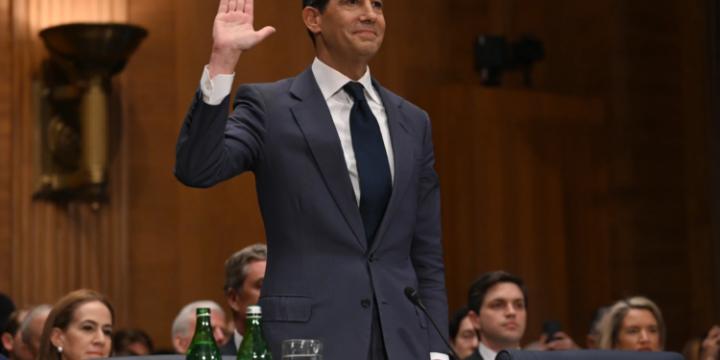
On Friday (22), James Comer, chairman of the House Oversight and Government Reform Committee, officially announced on CNBC that he had sent letters to Polymarket CEO Shayne Coplan and Kalshi CEO Tarek Mansour, requesting the two companies to explain and provide internal records on preventing insider trading.
Outrageous cases abound: the US military earns $400,000 in magnesium through classified information; a candidate bets on himself.
This congressional investigation is not unfounded. Recently, several controversial bets in the prediction market have raised concerns about national security and ethics.
- U.S. military uses classified information for profit: Last month, a U.S. soldier was arrested for allegedly using classified information to accurately bet on the resignation of former Venezuelan leader Nicolas Maduro in January on Polymarket, illegally profiting approximately $400,000 .
- Military Operation Leaked in Advance: According to a recent investigation by The New York Times, more than 80 Polymarket users exhibited highly suspicious trading patterns, including making precise bets "in the hours" leading up to a U.S.-Israeli military strike against Iran.
- Politicians as players and referees: On the Kalshi platform, which is regulated by the US CFTC, despite banning contracts related to war or death, three congressional candidates who were "betting on their own election prospects" were caught and suspended in April of this year.
In his letter, Comer pointedly stated: "The rapid growth of this platform, the infrastructure of cryptocurrency, and the anonymity it grants to users may have created unintended structural conditions that could be exploited by bad actors— particularly individuals with access to national security secrets ."
Congress issues ultimatum: Hand over internal documents by June 5th.
Although Kalshi is headquartered in New York and regulated by the CFTC, and does not allow anonymous betting, while Polymarket is a blockchain-based platform that operates overseas and allows anonymity, both are now facing the same political pressure.
The committee has formally requested both platforms to submit relevant documents and communication records by June 5th , detailing how they:
- Implement Know Your Customer (KYC) verification for domestic and international account holders.
- Strictly enforce geographical restrictions (such as blocking users from restricted areas).
- Detect abnormal trading activity to prevent insider trading on global platforms.
A bill to ban gambling among officials is being considered.
Behind this investigation lies a strong bipartisan consensus. Earlier, seven members of Congress, led by Democratic Representative Chris Pappas, had strongly urged the committee to issue subpoenas to thoroughly investigate the matter.
In the interview, Comer stated explicitly that this investigation was not only to understand the extent of insider trading, but also to pave the way for future legislation. He emphasized, "We must pass some form of legislation. I think it's entirely appropriate to require members of Congress, government employees, or presidential officials to refrain from participating in market prediction ."

 Related reports