From industrial operations to digital finance, from the Hong Kong stock market to global asset allocation, from quantitative strategies to RWA and future financial infrastructure, this event not only showcased the unique value of the Hong Kong market in the global liquidity restructuring, but also further demonstrated the new trend of integrated development of industry, capital and technology.
Article author and source: Desun
Focusing on global liquidity restructuring, digital finance, and new trends in asset export.
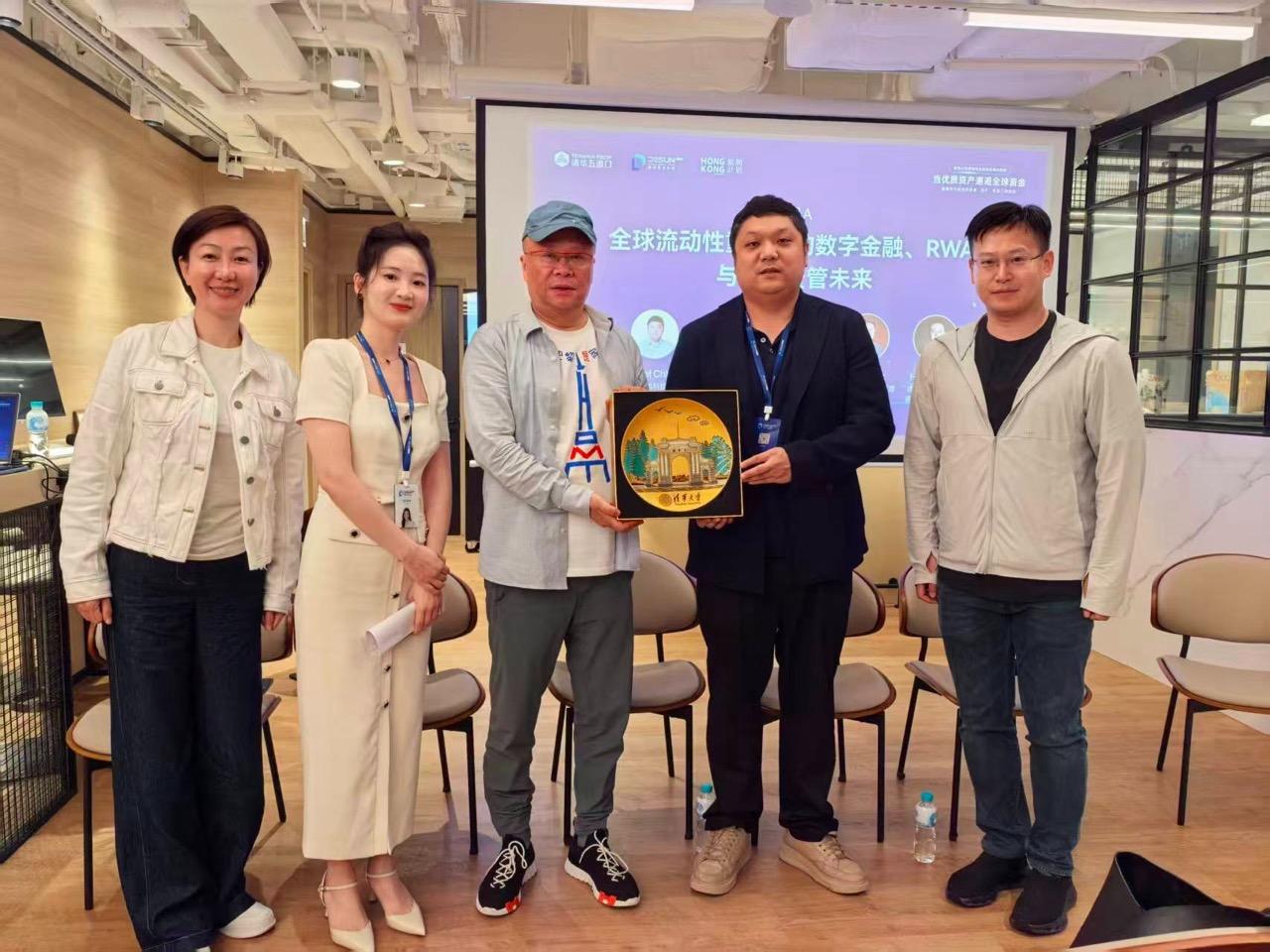
On the afternoon of May 21st, the "First Bauhinia Program Class Visits Singularity Technology" event was successfully held in Hong Kong. Students from the first cohort of the Tsinghua PBC School of Finance's Bauhinia Program engaged in in-depth discussions with several core business leaders from Singularity Technology on topics such as global liquidity restructuring, digital finance, the Hong Kong stock market, RWA (Responsive Weaponization), quantitative strategies, and cross-border asset allocation.
This event, themed "From Industrial Operations to Digital Finance: Deshang's Strategic Leap and Multi-Segment Synergy," systematically presented Deshang Industrial Investment Group's development path from real industrial operations to alternative asset management, digital finance, and global asset allocation. It also further showcased Deshang Qidian Technology's strategic positioning and business layout in the Hong Kong market.
The event covered a wide range of topics, including industry operations, capital markets, digital finance, asset securitization, and future financial infrastructure. The discussions extended beyond digital assets to deeper issues such as global capital flows, AI-driven financial collaboration, stablecoins, RWA (Real-Time Assets Agreement), and cross-border funding structures, with multiple rounds of interaction sparking continuous exchange of ideas and industry reflection.
As an important strategic platform of Deshang Industrial Investment Group in Hong Kong, Deshang Qidian Technology is currently promoting business synergy in three major directions: industrial finance, digital finance and traditional finance, and exploring a more long-term, stable and international connection between Chinese assets and global funds.
This "Bauhinia Project" enterprise exchange activity has further promoted in-depth collision and exchange between industry practices, global capital vision and new financial infrastructure trends.
Finkel: Connecting industry, capital, and digital finance through open communication.
Hong Kong is once again becoming a crucial link between global capital and Chinese assets.
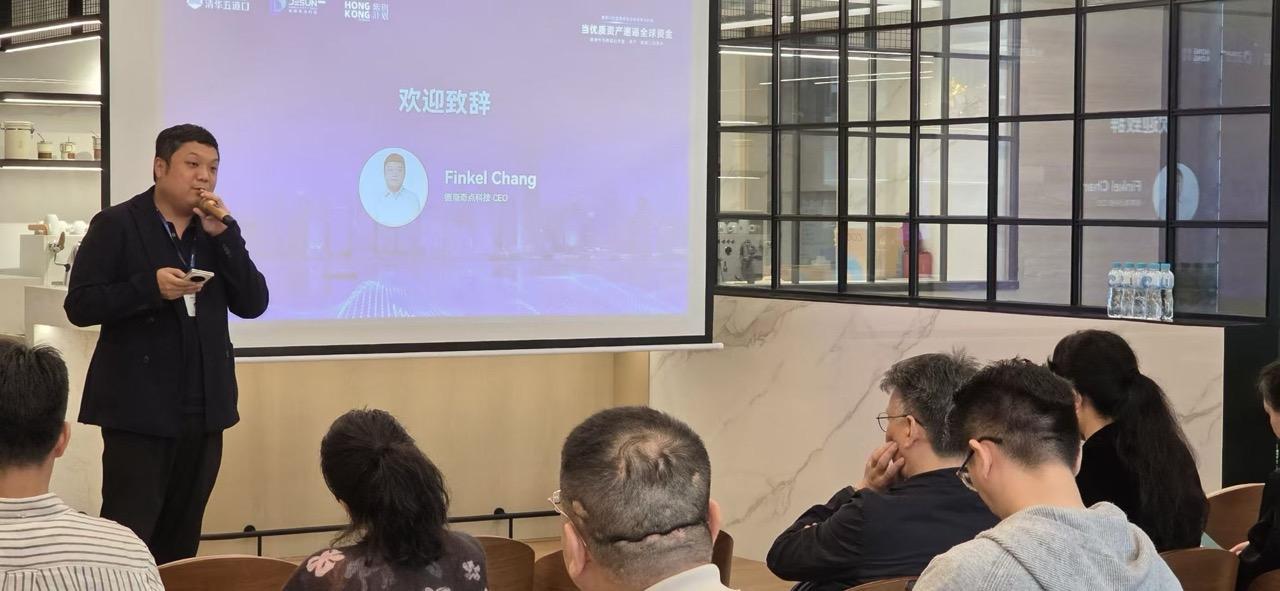
At the start of the event, Finkel, CEO of German Singularity Technology, welcomed the first cohort of students from the Tsinghua PBC School of Finance's "Bauhinia Program".
He mentioned that the global financial market is currently undergoing profound changes, and the boundaries between traditional industries, digital finance, and global capital markets are constantly being redefined. Singularity Technology hopes to leverage Hong Kong's locational advantages as an international financial center to explore more long-term and stable asset management and financial services capabilities, focusing on areas such as industrial finance, digital finance, cross-border asset allocation, and global liquidity coordination.
In his view, Hong Kong is once again becoming an important node connecting Chinese assets with global capital, and the changes in the future financial system will increasingly be reflected in the restructuring of asset structure, liquidity system and global capital coordination methods.
Understanding Future Financial Structure Changes Through Exchange and Collision
In his opening remarks, Finkel briefly introduced the overall agenda for the day's event. The event will feature presentations from various business leaders, covering topics such as digital finance, the Hong Kong stock market, quantitative strategies, RWA, global asset allocation, and cross-border liquidity. These presentations will be shared by key business leaders based on their practical experience.
He stated that this exchange was not merely a one-way sharing session, but rather aimed to facilitate face-to-face discussions among participants from the industrial, financial, and investment sectors, allowing them to explore the future financial system and the changing patterns of global capital flows from different perspectives.
“Many questions don’t have standard answers; what’s truly important is continuous communication and discussion,” Finkel said at the event. “We also welcome everyone to ask questions.”
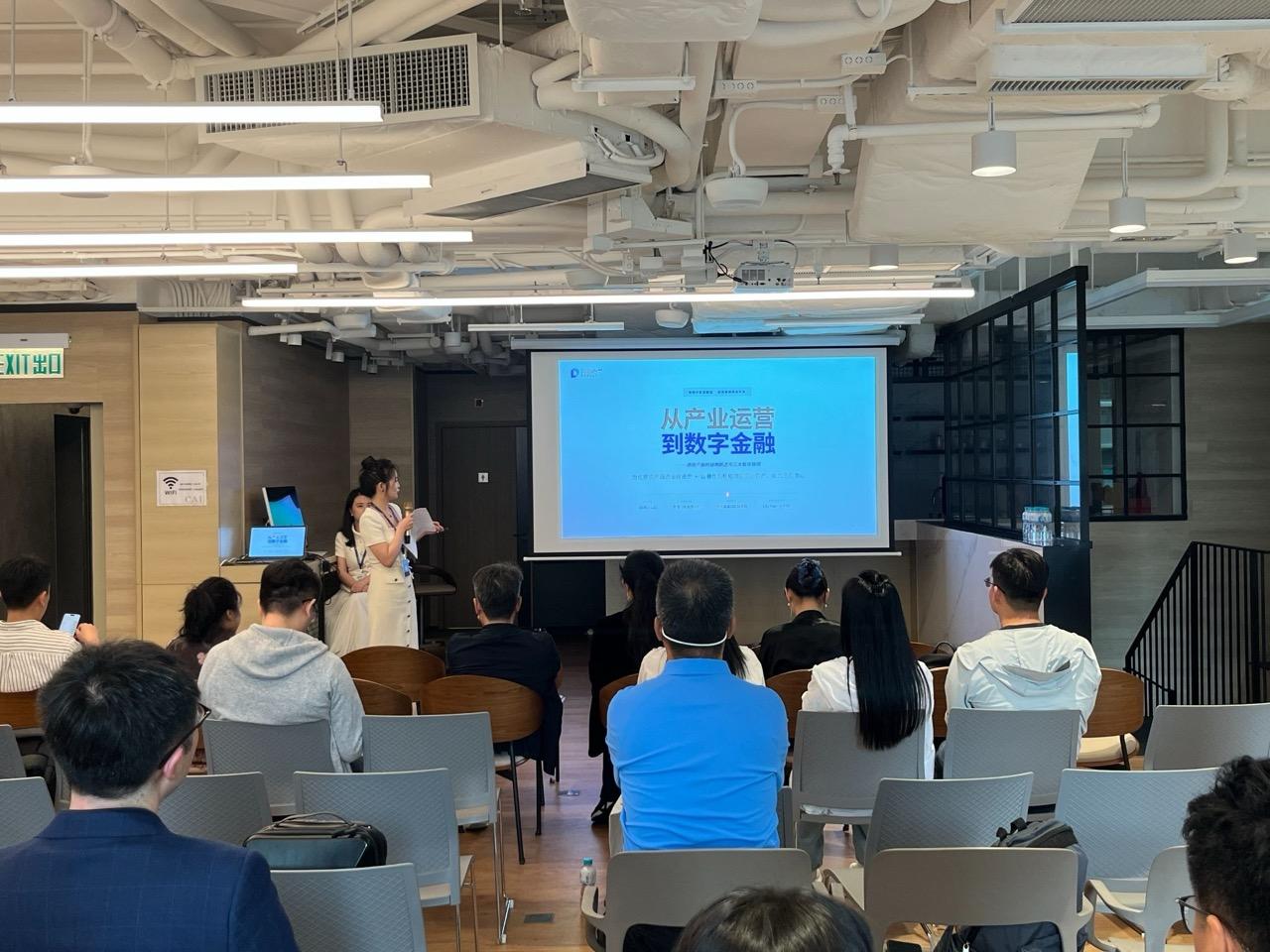
Lily Duan: From industrial operations to digital finance, Deshang is building a new asset synergy system.
Starting from the operation of physical industries, it has gradually expanded into the fields of asset management and digital finance.
At the beginning of the event, Lily Duan, COO of Deshang Qidian Technology, gave a systematic introduction to the development history, business structure, and overall strategic direction of Deshang Holdings Group.
Since its establishment in 1999, Deshang Holdings Group started with the IT industry and then gradually entered the fields of industrial park operation, real estate development, industrial investment and asset operation. In the long-term development process, it has accumulated strong capabilities in the operation of physical industries and experience in asset integration.
Currently, the group has formed a business system with three major segments: industrial finance, digital finance, and traditional finance, developing in a coordinated manner. Among them, Deshang Industrial Investment Services (02270.HK), as a Hong Kong Main Board listed platform, is also continuously strengthening the linkage between industrial assets and financial business.
Compared to understanding assets solely from a financial perspective, the team's long-term industrial operation experience allows them to focus more on the underlying cash flow, industry cycles, and long-term operational capabilities of assets. Whether it's industrial parks, infrastructure, or physical assets with future securitization potential, the core lies in the ability to create stable and sustainable value in the long term.
The development path of German businesses is not simply to enter the industry from the financial sector, but rather to extend from long-term industrial accumulation to financial structure design and global capital collaboration.
Hong Kong is becoming an important link between Chinese assets and global capital.
Focusing on Hong Kong's market positioning and global capital flow trends, Lily further shared German company Singularity Technology's thoughts on cross-border finance and global asset allocation.
The global market is not short of funds, and the Chinese market is not short of high-quality assets. What is truly scarce is a financial connectivity structure that can stably complete global allocation and risk pricing over the long term.
Against the backdrop of global liquidity restructuring, Hong Kong's unique value as an international financial center is being highlighted again. Its mature legal system, international capital network, and offshore financial capabilities make it an important bridge for Chinese assets to access global capital markets.
Focusing on the three main themes of "capital going out, assets going out, and returns coming back," Deshang Qidian Technology is currently continuously expanding into areas such as the Hong Kong stock market, digital finance, RWA, quantitative strategies, and cross-border asset allocation, hoping to gradually establish a more long-term and international asset synergy system.
The development of digital finance does not mean detaching itself from the real economy. What truly matters in the future is how to more efficiently connect industrial capabilities, real assets, and global capital markets through new financial structures.
Mark Deng: The true significance of digital currency lies in reshaping the future financial infrastructure.
The core of Web3's long-term value lies in the restructuring of global financial efficiency.
Mark Deng, CTO of German company Singularity Technology, shared his long-term observations on the digital finance industry from the perspective of technological evolution and financial infrastructure upgrades.
In his view, the digital asset industry is still in a relatively early stage. Market fluctuations, industry differentiation, and periodic bubbles are all normal phenomena in the development of emerging industries.
However, more noteworthy than short-term market price fluctuations is the ability of blockchain and digital currencies to reshape the efficiency of the global financial system.
Compared to the traditional financial system, digital currency has the characteristics of 24/7 global circulation, low-cost cross-border settlement, verifiability, programmability, and composability. These capabilities will not only serve traditional financial activities in the future, but will also gradually become an important infrastructure for collaboration and value exchange between AI systems.
The long-term significance of digital currencies lies not only in creating a new asset class, but also in reconstructing the underlying financial language for future value transfer and global collaboration.
Long-term, stable capital management capabilities are more important than chasing market trends.
In discussing the company's business direction, Mark highlighted the current layout of German Singularity Technology in the fields of digital finance and quantitative strategies.
Compared to short-term market trends, the company focuses more on building a long-term, stable, and sustainable capital management system. Currently, Deshang Qidian Technology is focusing on deploying quantitative funds for digital currencies, using strategies such as Delta neutrality to obtain a relatively stable return structure while minimizing directional volatility risk.
Compared to simply relying on market growth to generate returns, the team places greater emphasis on the long-term compounding potential generated by systematic quantitative models, risk control systems, and capital management capabilities.
Market volatility is ever-present, but what truly matters is how to maintain the long-term stable operation of the system amidst volatility and continuously accumulate replicable asset management capabilities.
Tim: Hong Kong's capital markets are re-entering a structural repair phase.
Hong Kong remains an important capital platform for Chinese companies' internationalization.
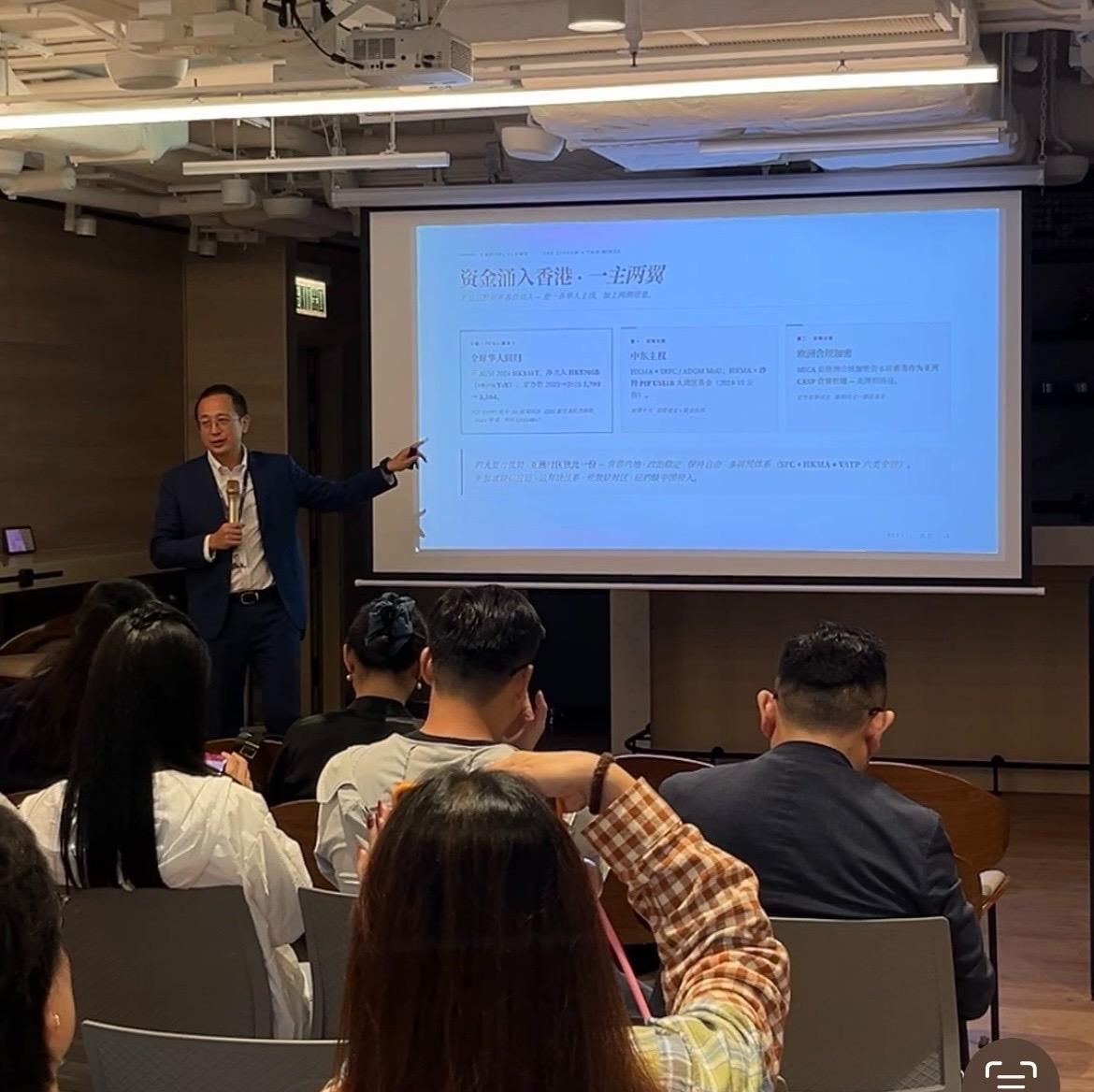
Tim, Managing Director of Ruicheng Securities, shared insights into the current developments and changes in Hong Kong's capital market, focusing on the Hong Kong IPO market and the internationalization trend of Chinese companies.
After several years of market adjustment, Hong Kong's IPO market is gradually regaining its activity. With the continuous improvement of listing mechanisms such as 18A, 18C, and A+H, more and more new economy, technology, and industrial companies are beginning to pay attention to the Hong Kong market again.
Compared to its single financing function, the deeper value of the Hong Kong market lies in its mature international capital system, its long-established global capital network, and its ability to connect with offshore liquidity.
For many Chinese companies, Hong Kong is not only a financing platform, but also an important starting point in their internationalization process.
The recovery of liquidity and the trend of international capital reallocation continue to attract attention.
Regarding the liquidity issue in Hong Kong stocks, which is of widespread concern in the market, Tim further analyzed the changing trends in the current market environment.
Currently, many small and medium-sized companies are increasing market attention through market capitalization management, investor relations, financial public relations, and communication with overseas institutions. As global funds refocus on Chinese assets, the overall liquidity of the Hong Kong stock market is gradually recovering.
In the long run, "access to the Stock Connect" remains an important path for Hong Kong-listed companies to improve market liquidity and international capital participation.
Furthermore, the focus of Hong Kong's capital market is also shifting towards areas such as AI, digital finance, new consumption, and industrial technology. The event further discussed potential new capital opportunities and industry trends, incorporating market case studies.
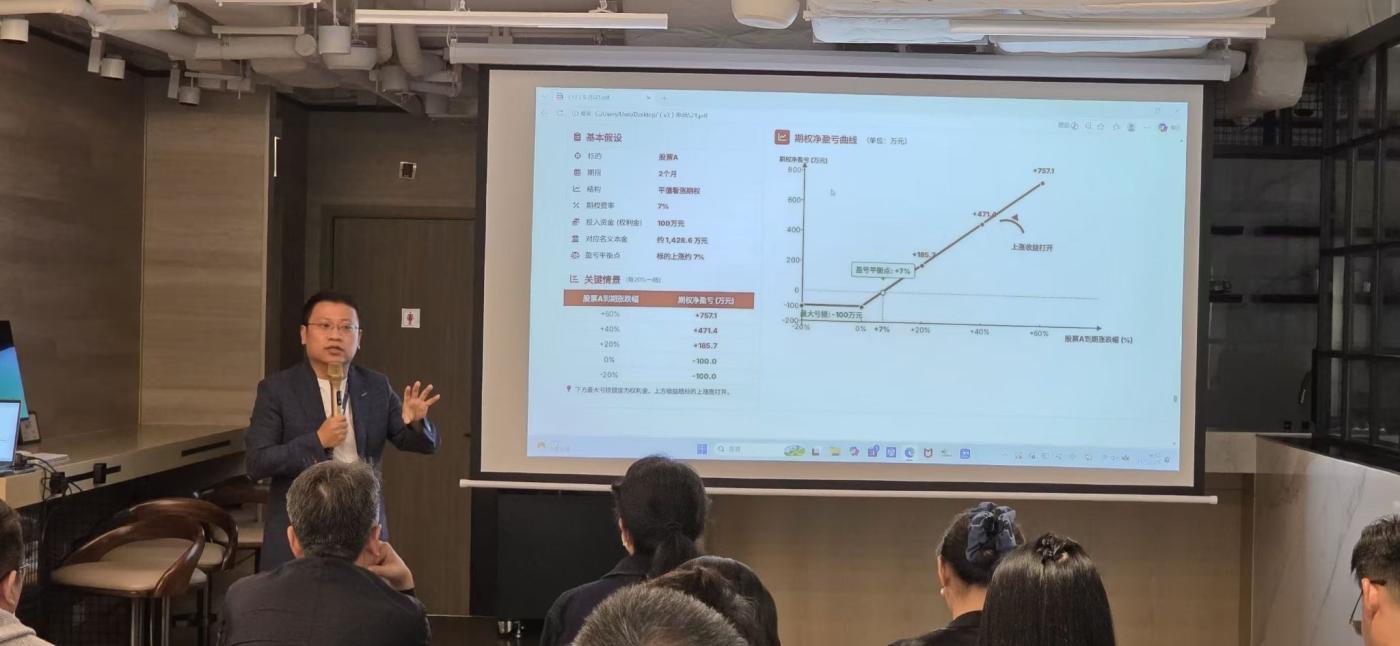
Herman: The essence of derivatives is a redesign of the risk and return structure.
Different market judgments require different financial structures to express them.
During the session on securities finance and structured products, Herman, CIO of Singularity Technology and CEO of Jundao Securities, gave a systematic introduction to the practical application of derivatives and structured financial instruments, using Hong Kong market cases as examples.
In the Hong Kong market, derivatives are not just high-risk trading tools; their core value lies in helping clients to express their judgments on different markets in a structured way.
Whether it's airbags, snowball structures, FCNs, or bull market spreads, they all essentially revolve around different market expectations and recombine risks and returns.
Clients form market judgments, while financial institutions need to match and express the risk-return structure, and help clients develop financial solutions that better suit their needs through product structure design, risk control, and return management.
By combining multiple real-world cases, the on-site analysis further explored the application logic of different structures in volatile, trending, and highly volatile markets, giving participants a more intuitive understanding of the Hong Kong derivatives market.
Compliance capabilities and long-term service systems are becoming core competitive advantages in the industry.
Beyond the product structure itself, the discussion extended to the requirements of the Hong Kong financial market for compliance systems and long-term service capabilities.
As the market environment changes, clients are increasingly focused on risk control, fund security, and compliance transparency. Institutions with true long-term competitiveness are relying more on comprehensive risk control systems, continuous service capabilities, and long-term asset management capabilities, rather than solely on returns from single products.
Currently, all related businesses are conducted within the framework of the Hong Kong licensing system, client funds are managed through compliant channels, and customized service solutions are provided according to different client needs.
At the same time, Hong Kong's advantages in cross-border asset allocation, international financial services, and offshore financial structures also give structured financial instruments a broader space for development in the areas of family offices, high-net-worth clients, and institutional asset allocation.
Roundtable Q&A: In-depth discussion on global liquidity, digital finance, and asset securitization
During the final roundtable Q&A session, a lengthy discussion took place on topics such as "Digital Finance, RWA, and the Future of Institutional Asset Management in the Context of Global Liquidity Restructuring."
Participants from the first cohort of the Bauhinia Program raised several questions based on their industry backgrounds, covering topics such as stablecoins, digital asset regulation, RWA, cross-border financial structures, the Hong Kong stock market, and global asset allocation.
The discussion gradually expanded from digital assets to AI financial infrastructure, international capital flows, global asset securitization, and the future evolution of the financial system.
As AI and digital finance continue to integrate, topics such as whether there will be new infrastructure changes in the financial industry in the future, how high-quality Chinese assets can enter the global capital system more efficiently, and whether RWA may reshape the traditional way of asset flow have sparked continuous exchanges at the event.
Many participants said that the event not only helped them to understand the development logic of Hong Kong's financial market and digital finance industry more intuitively, but also deepened their systematic understanding of global asset allocation and future changes in the financial system.
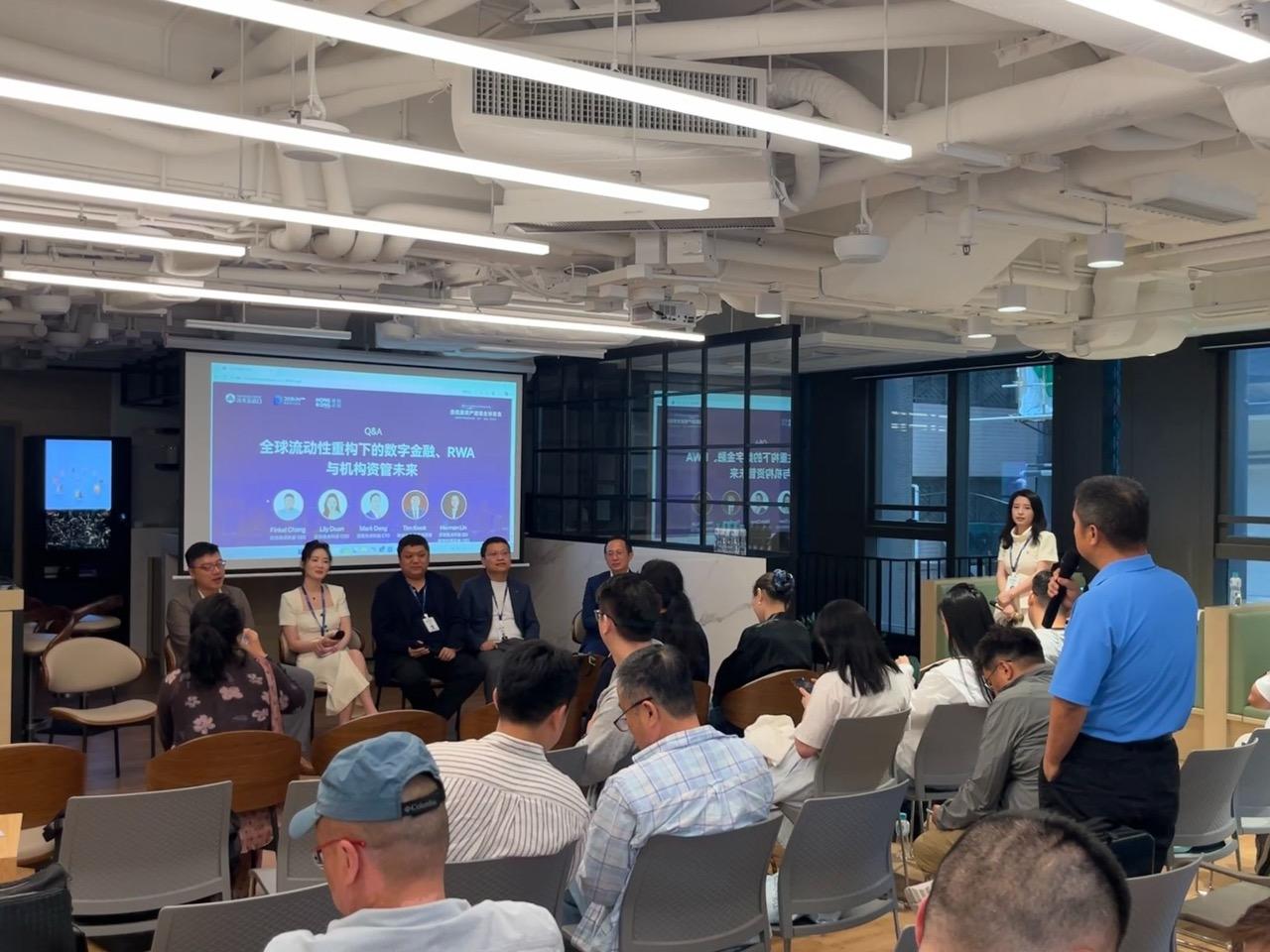
Zou Kang: What truly matters in the future is re-establishing the connection between "capital" and "assets".
The global financial system is entering a new phase of liquidity restructuring.
Zou Kang, Chairman of Deshang Holdings Group, shared his insights during the Q&A session, which became a key focus of the discussion.
The global financial system is currently undergoing a profound restructuring of liquidity. For a long time, the global financial system has operated primarily around traditional credit systems and centralized financial structures. However, with changes in global industrial structures, the development of digital finance, and alterations in international capital flows, the future financial system is entering a new phase.
What is truly scarce in the current market is not the assets themselves, but the financial connectivity that enables global capital to continuously understand, price, and allocate those assets.
Many high-quality assets are not lacking in value, but rather in the ability to be effectively understood, priced, and allocated by global capital. One of the key changes in the future financial system lies in how to re-establish this connection through new financial structures.
RWA, local asset internationalization, and global capital synergy will become long-term directions.
Regarding future development trends, Zou Kang mentioned that, from a fundamental perspective, both traditional asset securitization and the future development of RWA are essentially attempts to solve the problems of asset liquidity and global capital allocation efficiency.
In the future, more and more traditional assets will likely achieve global allocation through new financial structures, and Hong Kong, with its international financial system, mature legal environment and open market mechanism, is becoming an important connecting node in the process of internationalization of Chinese assets.
"What truly matters in the future is not simply discussing traditional finance versus digital finance, but rather how to re-establish a more efficient and long-term connection between funds and assets."
Zou Kang also mentioned that Deutsche Bank will continue to explore areas such as industrial operations, alternative asset management, digital finance, and cross-border financial services, hoping to gradually develop a more systematic and international asset management capability in the next stage of global financial infrastructure restructuring.
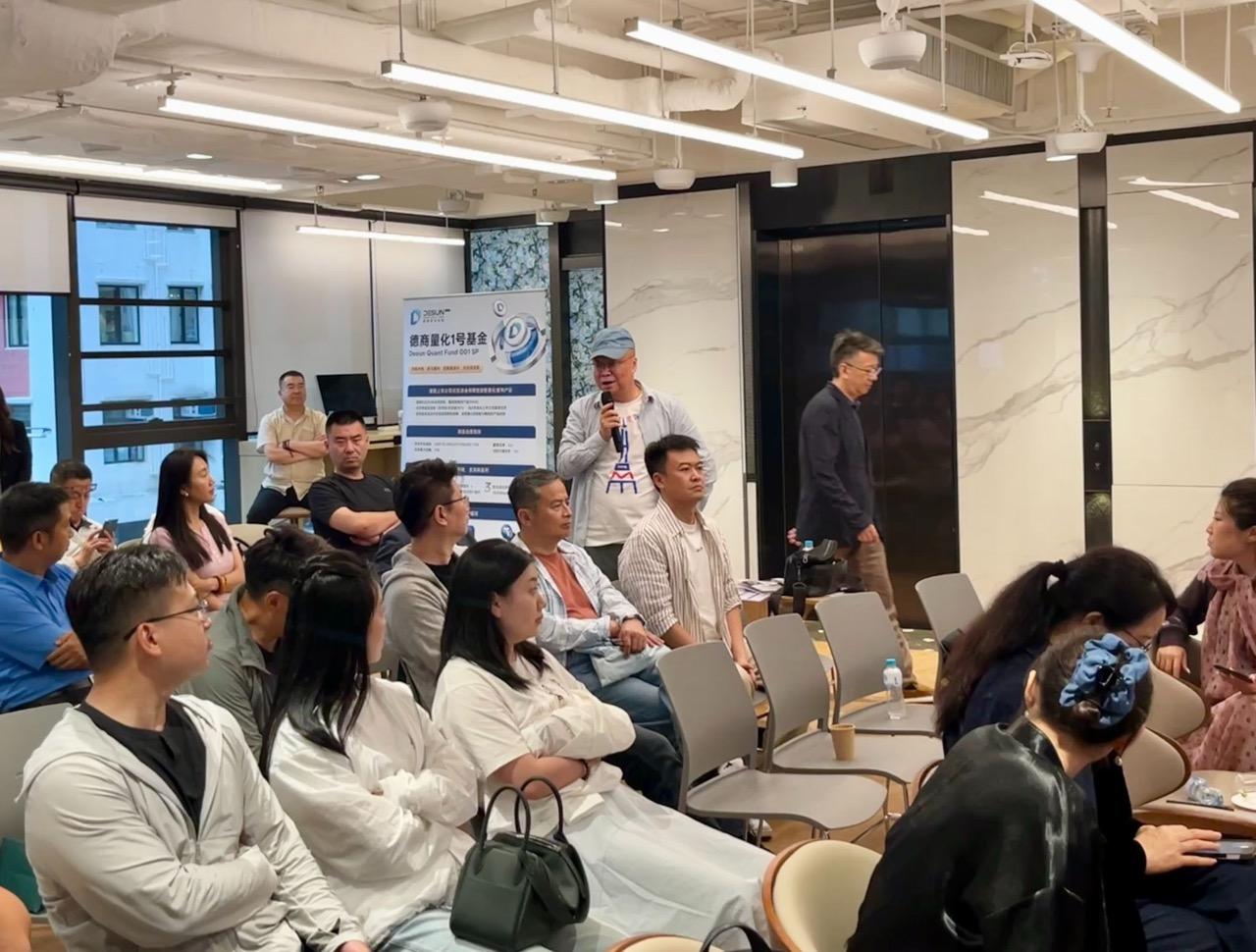
From Assets to Capital: A New Proposition in the Era of Globalized Asset Allocation
As the event drew to a close, the discussions continued.
From industrial operations to digital finance, from the Hong Kong stock market to global asset allocation, from quantitative strategies to RWA and future financial infrastructure, this event not only showcased the unique value of the Hong Kong market in the global liquidity restructuring, but also further demonstrated the new trend of integrated development of industry, capital and technology.
Against the backdrop of continuous changes in the global financial structure, how to establish a more long-term, stable, and efficient connection mechanism between Chinese assets and global funds is becoming an important issue of concern for the market in the next stage.
Hong Kong is once again becoming a key node in this process.
At the end of the event, representatives of the first cohort of the Tsinghua PBC School of Finance's "Bauhinia Program" presented commemorative gifts to the German business representatives, leaving a precious memento of this in-depth exchange on global asset allocation, digital finance, and the future financial structure.