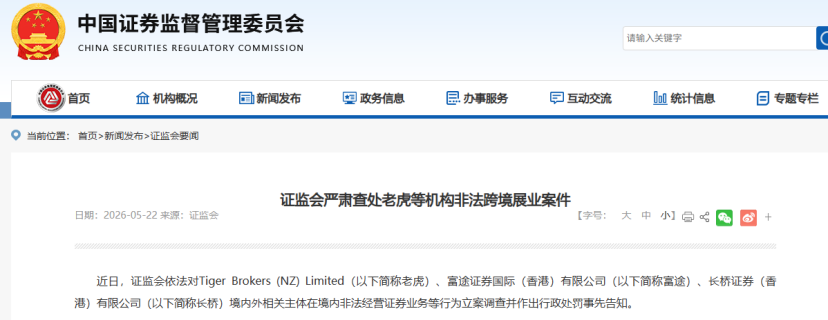
On May 22, 2026, eight departments, including the China Securities Regulatory Commission (CSRC), jointly issued hefty fines to cross-border online brokerages such as Futu, Tiger Brokers, and Changqiao for illegal cross-border business operations , and stipulated a two-year "concentrated rectification and cleanup period." With the regulatory blow of fines and confiscations totaling over 2.2 billion yuan for two brokerages, the entire traditional cross-border securities industry is experiencing an unprecedented upheaval.
Two years of concentrated rectification have marked the historic end of the traditional Web2 cross-border financial business model that relied on gray areas. However, while high walls have been erected over traditional financial channels, the demand has inadvertently opened a huge floodgate for the Web3 and crypto asset sectors. Industry analysts point out that the centralized bottlenecks of traditional cross-border fund clearing and custody are forcing high-net-worth investors worldwide to seek more cutting-edge, transparent, and 24/7 operating alternatives.
Capital outflow and the emergence of "dual investors"
For over a decade, online cross-border brokerages have served as a core channel for mainland investors to access overseas assets, fulfilling a significant portion of the essential demand for global asset allocation. However, as this channel has narrowed considerably due to compliance frictions, investors' core pain point has evolved into: how to continue efficiently participating in the dividends of high-quality global assets (such as US stocks and bonds) while ensuring geopolitical and financial security?
Against this backdrop, Web3 infrastructure, represented by RWA (Real-World Asset) tokenization and crypto multi-asset trading, has ushered in a golden window of opportunity for its development.

Crypto industry observers say:
"These traditional stock market investors who were forced to withdraw have extremely high financial literacy and an international perspective. Their need for asset diversification, inflation protection, and cross-border liquidity will not disappear out of thin air. On the contrary, they are rapidly learning and adopting crypto stablecoins (such as USDT/USDC) as new asset transfer anchors. The transformation of traditional 'stock market investors' into crypto 'coin investors' or 'dual stock/coin investors' is accelerating."
On-chain and Centralized: A Panoramic View of the Web3 World's "Bridge to the US Stock Market"
To accommodate this massive wave of asset migration, the Web3 ecosystem has evolved highly mature solutions across three dimensions: decentralized on-chain protocols (DeFi/RWA), mainstream trading platforms (CEX), and multi-asset instant exchange tools, minimizing the settlement frictions of traditional finance.
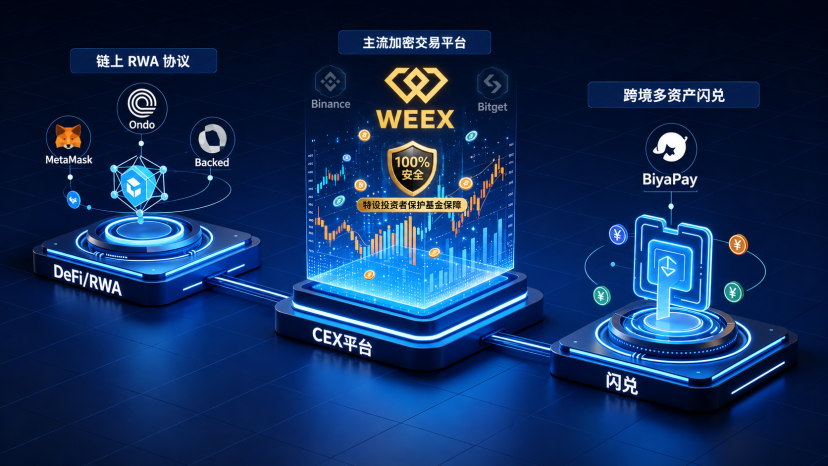
• On-chain native RWA protocol (decentralized solution): In the decentralized world, the RWA (Real-World Asset) tokenization track is experiencing explosive growth. Compliant RWA issuers such as Backed Finance and Swarm Markets have enabled 24/7 trading of US stock assets on the blockchain by holding real US stocks on a 1:1 basis and minting them into on-chain tokens. Even decentralized wallet giant MetaMask, through integration with compliant channels like Ondo Global Markets, allows overseas users to swap various US stock and bond tokens with a single click within their wallets without needing a traditional brokerage account.
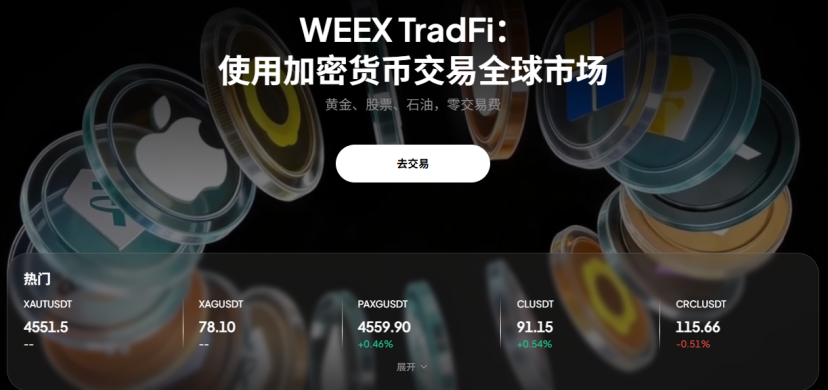
• Mainstream Trading Platforms (CEX Solution): For the vast majority of investors transitioning from traditional stock markets, mainstream crypto exchage(CEXs), with their more Web2-like operating habits and higher liquidity, are clearly the most efficient "first stop." According to third-party data, the quarterly trading volume of tokenized stocks and RWA assets globally is recording significant breakthroughs. In response to this trend, mainstream crypto trading platforms such as Binance , Bitget , and WEEX are deeply embracing this wave of transformation in traditional capital by vigorously supporting RWA infrastructure, listing mainstream related assets , and optimizing high-speed matching efficiency. These platforms, with their unparalleled liquidity depth, rich product portfolios, and ability to withstand extreme market conditions, are becoming the preferred safe haven for high-net-worth traditional stock market investors worldwide to restructure their asset portfolios.
• Cross-border Multi-Asset Instant Exchange Channel (Transfer Solution): In addition to direct trading scenarios, crypto wallet tools like BiyaPay , which focus on multi-asset services, act as a "bridge" between the physical world and the on-chain world for deposits and withdrawals. It allows users to directly exchange global assets using stablecoins (USDT), eliminating the cumbersome wire transfer and verification processes of traditional offshore bank accounts. This has become an efficient tool for many traditional funds to shift to both the crypto and US stock markets.
Security and Compliance: The Core Moat in the New Cycle
However, for stock market investors accustomed to the protection of traditional financial regulations, the biggest concerns about venturing into the crypto space remain platform security, asset transparency, and the ability to repay in extreme market conditions. Traditional brokerages are exiting the market due to friction with centralized regulation, and new crypto platforms must enhance security to reliably absorb this massive influx of funds.
Currently, leading crypto platforms in the industry are introducing more stringent security standards. In addition to actively seeking compliance licenses in major jurisdictions worldwide and implementing a Proof of Reserves mechanism for publicly verifiable on-chain assets, many platforms are also investing significant sums in financial security. For example, the emerging platform WEEX has established a dedicated " Investor Protection Fund " and publicly disclosed its on-chain address to ensure user assets are protected in the event of extreme market volatility or force majeure. This "hard defense," built upon technology and reserves, is accelerating the rebuilding of trust among traditional Web2 investors.
The era of cross-border brokerages has come to a temporary end, precisely reflecting the sunrise of the Web3 and RWA era. As traditional financial intermediaries increase investor trust costs due to geopolitical and compliance frictions, Web3 trading platforms are rebuilding trust with code and smart contracts. In this massive reshuffling of billions of dollars, whoever can provide the smoothest liquidity and the most robust asset security will become the new safe haven trusted by global investors.
About WEEX
Founded in 2018, WEEX is a global cryptocurrency trading platform dedicated to providing users with secure, stable, and user-friendly trading services. The platform supports both spot and futures trading and is equipped with a multi-layered risk control system and a full insurance mechanism to protect user assets. WEEX has already established an official regional brand partnership with La Liga in Hong Kong and Taiwan and continues to advance its compliance and localization efforts in multiple markets, including the Middle East, Europe, Latin America, Africa, and Southeast Asia. With the continuous expansion of its Web3 ecosystem strategy, WEEX is collaborating with global developers and user communities to drive the evolution of digital asset trading towards greater openness and transparency.
For more information , please visit: Website | Twitter | Telegram | LinkedIn