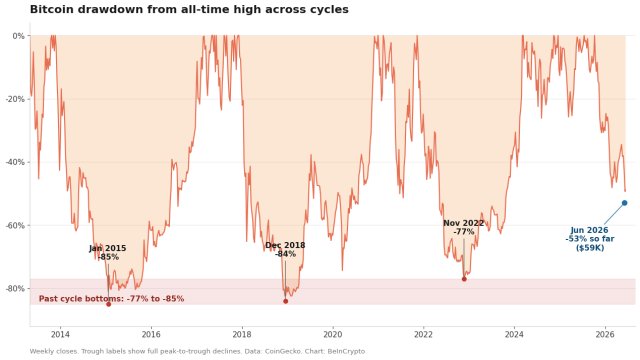
According to BlockBeats, on May 28th, Bitcoin fell below $74,000, Ethereum dropped below $2,000, SOL struggled to stay above $80, and HYPE and ZEC gave back some of their gains. Meanwhile, spot gold and silver fell in tandem with global capital markets, with gold falling below $4,400/ounce and silver below $73/ounce. US stock index futures and Japanese and South Korean stock markets also declined. With several consecutive days of outflows from US spot ETFs, the crypto market is struggling to escape its weakness. Below are BlockBeats' key analytical points before and after this round of decline:
With Kevin Warsh officially sworn in as Chairman of the Federal Reserve, the Fed has entered the "Warsh era." Market bets on further tightening of policy by the Fed have increased significantly. CME's FedWatch tool shows that traders now expect a nearly 70% probability of another rate hike by the Fed in 2026, whereas at the beginning of the year, the market generally expected a rate-cutting cycle.
In terms of news, tensions have reignited, with the US military stating it is deployed and ready to attack Cuba at any time. Furthermore, US President Trump stated that negotiations are hopeless and expressed dissatisfaction with the Iran agreement, prompting Iran to strike US air bases.
Hoffman, co-founder of Bankless, sold off his entire ETH holdings and stated, "I remain bullish on ETH and Bankless. Bankless is entering its second era, and I plan to step back more. I will still be doing a weekly podcast, but I will take a less leading role in content direction and guest interviews. David will be in full control."
Analyst Darkfost wrote that BTC spot trading volume has plummeted by 81% since October 2025, a clear bear market signal, making it difficult to gain upward momentum.
Furthermore, a massive talent migration from the crypto space to artificial intelligence is accelerating. According to developer reports, the number of monthly active developers in the crypto open-source community has fallen from its peak of approximately 45,000 in 2022 to around 23,000. Notably, this talent drain exhibits a clear structural characteristic. The majority of those leaving are newcomers who flooded in during the last bull market and have less than a year of experience, representing a turnover rate as high as 52%. They mostly worked on peripheral tasks highly dependent on market trends, such as NFT minting and DeFi protocol forging, and their code contributions never exceeded 25% of the total.