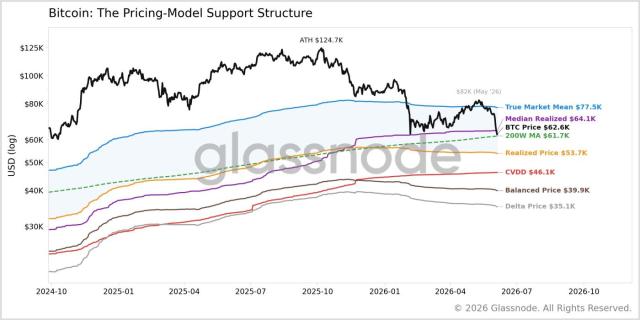
Strategy repurchased $100 million worth of Bitcoin (BTC) in just three days, maintaining an aggressive accumulation strategy even amidst a market 'panic selling' phase. Investors are focusing their attention on the fact that it utilized the sharp decline triggered by small-scale selling as a buying opportunity.
From June 1 to 7, Strategy purchased 1,550 Bitcoins (BTC) at an average price of $65,332 for approximately $101 million (about 154.4 billion won). This increased the total holdings to 845,256 BTC and expanded dollar liquidity to the level of $1 billion.
This purchase follows the '32 BTC sale' that occurred just a few days ago. Strategy sold 32 BTC at a price of $77,135 per coin to pay dividends, which accounted for only 0.0038% of its total holdings. However, following this transaction, a chain reaction of liquidations occurred in the market, causing the price of Bitcoin to plummet from $77,000 to below $60,000.
At the time, the community was flooded with criticism that his "never sell" strategy had wavered, but Michael Saylor did not offer any specific stance. Subsequently, he engaged in large-scale repurchases during the price decline, ultimately securing more Bitcoin at a lower price.
The average purchase price of Strategy is currently about $75,680, resulting in an unrealized loss of approximately $9 billion (about 13.7 trillion won) based on current market prices. While it recorded a massive unrealized profit when Bitcoin surpassed $80,000 in early 2026, it has re-entered a loss zone due to the recent decline.
Bitmine Counters with Ethereum… Defends via Staking
During the same period, BitMine Immersion Technologies, led by Tom Lee, also engaged in aggressive buying. The company purchased 126,971 Ethereum (ETH) for $213 million (approximately 325.5 billion won) at around $1,670.
Bitmine's total holdings currently stand at 5.54 million ETH, representing approximately 4.59% of the total supply. Notably, it stakes more than 85% of this on its own platform, 'MAVAN,' expecting annual rewards of approximately $270 million (about 412.7 billion KRW).
However, the average purchase price is around $3,460, recording an unrealized loss of approximately $9.9 billion (about 15.1 trillion won) compared to the current price. Like Strategy, it is in a loss-making state, but the structure is such that staking profits partially offset the losses.
Bitcoin vs. Ethereum… Different Survival Strategies
The strategies of the two companies differ starkly. Strategy adopts a 'pure holding strategy' that accumulates only Bitcoin by utilizing stock issuance, convertible bonds, and cash flow. It focuses solely on 'increasing holdings' without any means of generating profit.
On the other hand, Bitmine has a structure that secures a continuous cash flow through staking while simultaneously accumulating Ethereum. Its differentiating factor is that it generates profits even during periods of price decline.
This case clearly revealed structural differences to the market. While Strategy's small-scale selling triggered a market crash, Bitmine maintained its accumulation and absorbed the market even amidst volatility.
[Market Analysis] If Even Government Bonds Waver, Which Assets Will Survive?
View full Alpha Report →If a further downturn continues, strategies tied to stock prices and debt for funding are likely to face greater pressure. This is because, as has already been demonstrated, even small sell-offs can deliver a significant shock to the market. On the other hand, Bitmine is securing a certain degree of defense through staking returns.
Ultimately, this "buying amidst the crash" demonstrates that institutional investors have not yet left the market. As long as large-scale accumulation continues, downside rigidity is highly likely to gradually strengthen, even if volatility remains high.
💡 Frequently Asked Questions (FAQ)
Q. What is the reason Strategy sold a small amount and then bought a large amount again?
Q. Why is Bitmine's staking strategy considered important?
Q. How does this institutional buying affect the market?
<Copyright ⓒ TokenPost, unauthorized reproduction and redistribution prohibited>