


Author : Whiter Runner
For a long time, traditional securities firms were seen as a more reliable option by many financial professionals.
The licensing system is well-established, the procedures are clear, and career paths are relatively predictable. People who stay in such a system for a long time become accustomed to the sense of security that comes with clearly defined boundaries: what can be done, what cannot be done, and every step has rules to follow.
However, in the past few years, policies, compliance, and the cross-border business environment have continued to change, and some business boundaries of traditional securities firms have also been adjusted accordingly. Client liquidation, regional restrictions, and tightened customer acquisition—these were once only seen in the news, but have gradually become realities that frontline employees experience every day. Fewer users, narrower paths, and different growth methods.
It was at this time that some traditional financial practitioners began to look outward again.
Ethan, Lily, and Myooi have all held different positions in traditional brokerage firms: growth, operations, creative, product, and advertising. Some are just beginning to understand what "chain" is, some have only followed crypto in the news, while others have long seen the convergence of traditional finance and the crypto industry.
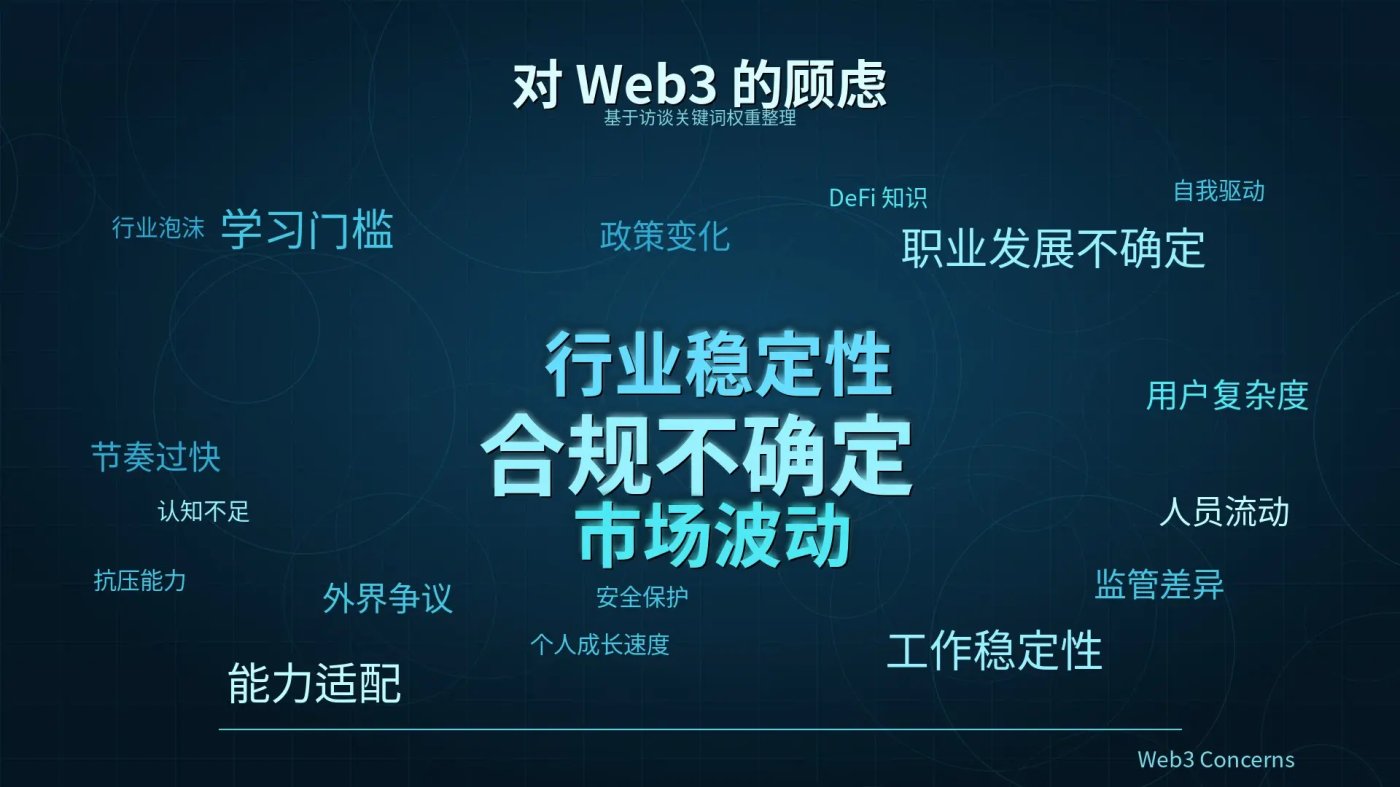
They each have their own concerns: compliance, stability, volatility, career development, and personal fit—each of which deserves careful consideration.
But as familiar paths begin to narrow, new markets open up. For them, Bitget is not just a new job opportunity, but more like a chance to re-understand the financial industry and re-validate their own abilities.
Ethan: Five years on the front lines of overseas finance, he was among the first to sense market shifts.
Ethan worked at Futu for nearly five years, where he was responsible for building regional business teams, developing local markets, managing KOLs , and collaborating with businesses.
This work kept him on the front lines of the market for a long time. He could sense every day where users came from, whether channels were still viable, and whether partners were willing to push forward. Later, the business boundaries of traditional securities firms began to change, and they became more cautious about cross-border business, customer reach, and customer acquisition methods. For those working on growth, this change was sweeping: actions that could be quickly tried before now required confirmation of feasibility, in which regions, and to what extent.
Ethan has always been sensitive to changes in the external market. He says his career has spanned various industries, "from online brokerages to traditional banks and then to Web3 ," but he has always been in the overseas financial sector. While in Hong Kong, he has seen an increasing number of Web3 expos, OSL , HashKey, and other exchange events, and his clients and friends have begun to frequently discuss the current state of the crypto industry, its regulations, and compliance.
He said that during his years working in Hong Kong, he clearly felt that Web3 was "entering more and more into people's daily work and lives." This change made him a little FOMO (Fear of Missing Out), and it also made him start to seriously learn about the crypto industry in 2024 .
His first proactive experience with crypto was due to Trump's coin in 2024. After downloading the exchange's app , his first reaction was quite simple: "What is a blockchain? What are the differences between different blockchains?" He didn't know much about the industry from the start and needed to relearn from the very basics.
But he saw opportunities at a deeper level. Compared to the traditional secondary market, the crypto industry was more like the primary market in his eyes, potentially "a product that could bring about change from the settlement layer."
Later, he spent more than a year observing, trading, communicating, and comparing. It wasn't until he saw Bitget 's UEX concept and direction that he felt aligned with his career development choices, and then he decided to apply to join.
Before making the actual decision, he said he "actually had no concerns." If he did have any, it was only one:
"Do we have the courage to fight?"
For Ethan , joining Bitget was about putting his market acumen, channel capabilities, and team-building experience honed in overseas finance into a faster, newer, and more innovative market where he needed to re-validate his skills.
Lily: The longer I work in operations at Futu, the more I realize that opportunities can't be waited for too long.
Lily worked at Futu for over three years, primarily responsible for community operations and wealth management-related businesses.
She has experience in managing trending market information, activating and converting fund and ETF users, identifying and maintaining KOLs , and participating in investment strategy meetings, official account onboarding for fund institutions, and content collaborations. Those experiences taught her early on that financial operations rely not only on processes but also on timing.
When the market is booming, the content needs to keep up.
Once users are active, you need to capitalize on the conversion rate.
When a hot topic emerges, operational actions must be taken immediately.
Slow down, and the user's anger will subside.
Traditional securities firms provided her with solid training. Standardized processes, mature regulations, and clear user paths gave her a fundamental understanding of financial users and wealth management. However, the longer she worked there, the more she realized the other side: operational actions are easily constrained by compliance and organizational boundaries. Often, the idea wasn't lacking; the question was whether it could be implemented, when it could be implemented, and to what extent it could be implemented.
She later focused on the crypto industry, starting with observations of users and the market.
She found the industry to be "very cutting-edge," with high user transaction frequency, rapid market changes, and a significantly faster flow of information and opportunities compared to traditional finance. Before joining Bitget , her understanding of crypto was not particularly in-depth; she built her knowledge primarily through exchanges , industry news, and her own basic trading experience.
What she cares about most is industry volatility and whether her growth rate can keep up with the company's and industry's development speed.
Crypto exchage operate at a faster pace, with more direct user feedback, demanding higher operational responsiveness and data analysis capabilities. Previously, in traditional brokerages, operational actions might have emphasized prudence and standardization; here, trending assets, user behavior, and market sentiment change much faster, requiring operations to make quicker judgments and act more swiftly.
Lily didn't take this change lightly.
She knew it would be more tiring here, and she knew she needed to brush up on a lot of industry knowledge. But she also saw that the experience she had accumulated in traditional securities firms in community operations, user conversion, KOL maintenance, and wealth management was not outdated. They had simply been placed in a new market with faster feedback and more rapid changes.
For her, Bitget 's appeal wasn't just the new industry itself, but also the faster growth, stronger global perspective, and more frequent knowledge sharing. She later mentioned that one of her biggest takeaways was discovering that "I can also adapt to a fast-paced work environment."
She brought her experience from traditional finance, and in this new rhythm, she is also rediscovering the boundaries of her own capabilities.
Joyce: With the perspective of three years in IT, she transitioned from content creation to value validation.
Joyce worked at Futu for three and a half years in the information business, responsible for the production and organization of stock and financial information content. Every day, she faced users' information needs and the rhythm of market changes. When market trends emerged, users wanted to know quickly what had happened; when assets fluctuated, users wanted to understand the underlying reasons. She learned to explain information clearly within the framework of traditional finance and became accustomed to adhering to compliance rules and defining boundaries in expression.
Initially, her understanding of the crypto industry was limited to news and social media, and she had some concerns about volatility, compliance, and the industry's future. "I knew it was fast-paced and had high staff turnover, so stability was an issue," Joyce recalled. But she also saw it as a new space to validate the value of her content, with direct user feedback and rapid market response. "I wanted to see if my content could be re-validated in this new market."
What ultimately led her to join Bitget was not just seeing industry trends and short-term hype, but also the combination of personal growth opportunities and career judgment. She said, "Let's give it a try and see if my professional experience can be effective here."
After joining the company, her most immediate impressions were the fast pace, direct feedback, and clearer responsibilities. Previously, at a securities firm, completed content often required multiple layers of approval, resulting in slow responses. At Bitget , every piece of material and every output of content provides rapid feedback on user activity, retention, transactions, and repeat purchases. She felt that this was not just a change in her job, but also a reassessment of her professional abilities.
For her colleagues in traditional finance who are still observing, she advised: "Don't just look at short-term trends, but also whether the platform is long-term focused, whether the team is professional, and whether the position can truly enhance your abilities." This statement is also the logic behind her own choice.
Joyce brought the professional skills she had accumulated in traditional finance to a new market with faster feedback and more rapid changes, re-validating the value of content and reaffirming her core competitiveness in financial information and content creation.
Myooi: Creative Director at Futu Japan Market, who doesn't want creative ideas to be trapped in processes.
Myooi worked at Futu for two years, responsible for social media marketing materials and growth creatives during the pioneering phase of POCs in the Japanese market.
This type of work is highly dependent on speed. Whether a trending topic can be captured or whether a piece of material can be successfully released often depends on how quickly the idea can reach the market and how quickly the data can be fed back.
However, in traditional securities firms, the materials must first undergo layers of checks by local legal and compliance departments. She said that many times, "by the timeline has passed, the process is over," and even after repeated revisions, the application still fails to pass.
For those creating growth content, this kind of drain is exhausting. You know an idea might be effective, and you know users are talking about it, but before the material even gets out, the opportunity has already cooled down.
Before joining Bitget , Myooi didn't know much about crypto . She described herself as an "outsider" who only occasionally followed industry trends and was also concerned about the stability of Web3 . Public opinion on the industry was always evenly divided, with both positive and negative views, and she was uncertain about its long-term development.
What truly impressed her was Bitget 's UEX concept and its integration with traditional Web2 . She said that she had previously been dissatisfied with some existing traditional financial systems, and Bitget's advocacy of UEX "deeply moved me."
After joining Bitget , her most noticeable feeling was the increased creative space. With fewer cumbersome approval processes, ideas could be tested more quickly, and data returned faster.
Of course, it's not easy. She says the pace here is very fast, with a strong emphasis on agility and results-oriented approaches. Sometimes, when inspiration strikes, she's so busy she forgets to eat; with more creative space, she also faces the pressure of continuously producing viral content.
But for Myooi , at least the distance between ideas and users has shortened.
Her past experience building a business from scratch in the Japanese market, her understanding of the psychology of traditional financial users, and her judgment in growth materials can all be reused at Bitget . In her own words, bringing these underlying business logics to Web3 and combining them with the high degree of freedom in material expression here "easily creates a chemical reaction."
Abby: With years of experience designing financial products, she has gained a new understanding of "delivery" in a faster-paced environment.
Abby has many years of experience designing financial products and also has experience in the crypto industry.
She first came into contact with the crypto industry around 2018 , when she joined Huobi and had her own investment experience. So compared to some traditional financial professionals who are new to crypto , she is not unfamiliar with this industry. Before joining Bitget , she didn't have too many industry-related concerns. Her decision to join was more out of "career development considerations" and because "the job content felt like a good fit for me."
What truly made her feel the change was the speed.
She said that Bitget 's pace is faster, "For example, a feature that Futu might launch in six months could be required to launch here in a maximum of two months."
When applied to product managers, this means that many things are compressed.
Needs assessment needs to be faster, solution selection needs to be faster, cross-team communication needs to be faster, and delivery and review need to be faster as well. In the past, at traditional securities firms, a wealth management product feature could be refined over a longer period of time; after joining Bitget , market changes and business needs will drive the product forward.
This is not just about increased workload.
For Abby , the bigger challenge is to re-understand financial products within the crypto industry. She mentioned that she needs to learn about Web3 industry knowledge, such as DeFi , which she hadn't had much exposure to before.
But she also approves of the pace here.
She mentioned that Bitget impressed her with "the team's high efficiency" and "the rapid development of the product." Her biggest takeaway was understanding how the crypto industry creates financial products.
Her past product skills and brokerage knowledge were not discarded. This time, however, they were put into a faster system.
For a product manager, this means pressure, but it also means more direct feedback on growth.
Vera: As someone in charge of content at Futu, she began to want to broaden the boundaries of her abilities.
Vera worked at Futu for two years, primarily responsible for investor trading content.
At that time, she was more familiar with the content aspect: when market trends emerged, how to clearly explain the information; when users needed to make judgments, how to clearly explain the trading logic. The division of responsibilities in traditional securities firms was also clearer, with "more employees executing single business lines and clear boundaries of responsibilities."
But she later began to think about pushing her abilities to the next level.
She seriously considered the crypto industry primarily because of "personal development opportunities." She said she "wanted to further broaden her skills" and was also looking for a remote opportunity. Before joining Bitget , her biggest concern was compliance, but she gradually dispelled these concerns through communication with friends and sharing with industry professionals. She felt that Bitget "provided relatively good security protection for its employees."
Her role changed quickly after she joined Bitget .
She started working on event growth operations, responsible for event and product operations for the CFD business. In the past, she was more focused on content output, but now she has to participate in the entire process, from event research and planning to communication with product managers, execution, and post-event review.
This was a very direct change for her.
She said that Bitget has a "fast pace," with each business line consisting of small teams that back each other up ; the team as a whole is also quite open . In contrast, Futu is relatively more conservative, "offering less room for employee innovation."
She likes this more direct sense of result.
In her view, the crypto industry is "very results-oriented and wants to get results quickly," which is very different from the slow pace of traditional industries. She also acknowledges Bitget 's "growth rate and innovative atmosphere."
For Vera , joining Bitget was not simply a change of operations job.
She's still working in finance-related fields, but this time, she's not just focusing on content creation. She wants to get closer to events, products, users, and results, and push the boundaries of her abilities again at a faster pace.
Cecilia: After years in advertising, this is the first time I've discovered that work and life can be balanced.
Cecilia previously worked at Futu in performance advertising. After joining Bitget , she was responsible for the strategy and execution of various advertising test projects in the advertising data product group of the advertising platform.
She has a clear understanding of the differences between the two industries. Traditional securities firms operate within a more mature financial system with a "clear and stable regulatory framework"; the crypto industry, on the other hand, faces greater policy differences across different countries and is still in the development and exploration stage, making its compliance path relatively more uncertain.
She also knows that the market here is more volatile, faster-paced, and has more distinct user segments. The differences between users, from novices to high-frequency traders, are significant in their cognition and behavior. This means that ad placement, creative materials, audience selection, and conversion strategies all require continuous trial and error.
Therefore, Cecilia 's choice was not simply due to being attracted by the "new industry".
She seriously considered the crypto industry, partly because she was optimistic about its prospects, and partly because the remote work style was indeed very important to her. At that time, a family member was seriously ill, and she needed to frequently travel between her long-term residence and her hometown. Remote work gave her the space to continue working while also taking care of her real life.
But what truly made her decide was the position and the team itself.
She mentioned that Bitget 's interview process was "simple and quick," and the communication was very professional; the job description was very clear, which showed that the company had thought deeply about the job suitability, and also demonstrated the leader's professionalism in business.
After joining the company, she felt the differences more directly.
Bitget is "flatter and more open," with a faster pace and a good team atmosphere. Compared to the "reporting culture" and "management upwards" she encountered in traditional securities firms, she basically didn't see any of that at Bitget .
She was also well aware that freedom comes at a price.
She said that what attracts traditional financial professionals to the crypto industry is " 24/7 , global mobility, innovation density, and fairer tools"; what they need to adapt to is "no off-duty hours, self-responsibility, high volatility, and mindset management".
This statement is very much like her own way of making judgments: neither beautifying nor avoiding the issue.
For Cecilia , Bitget offered more than just flexible workspaces; it provided a more intensive work environment. It required faster judgment, stronger self-motivation, and the ability to re-validate traditional user segmentation, data analysis, and refined conversion strategies in a rapidly changing market.
She knew where the risks lay, and she also knew where the opportunities lay.
Ultimately, she chose to enter this place, which had greater uncertainty and higher potential.
As the boundaries of finance shift, talent will also choose new directions.

When these cases are viewed together, it becomes clear that their choices are not the same.
Some of them were the first to sense the shift in overseas markets and financial boundaries, while others saw that opportunities were flowing at an accelerated pace.
Some people want to re-validate the value of their content in new markets, while others need a platform to allow their ideas to reach users more quickly.
Some people hope to move from single content segments to more complete business scenarios, while others are rethinking delivery in a faster product pace.
Some people made a more complex judgment between opportunity, risk, and real life.
They didn't enter the crypto industry because traditional finance is unimportant. On the contrary, it was precisely because they understand finance, users, growth, and compliance that they realized earlier that the financial industry was entering a new phase.
In the past, traditional brokerage firms taught them stability, standardization, and a sense of boundaries. After joining Bitget , they faced faster feedback, a stronger results-oriented approach, a more global user base, and a market with greater uncertainty.
This is not an easier path. It requires continuous learning, rapid adaptation, and the courage to re-examine past experiences in new environments.
But talent mobility is never just about job hopping. It often signifies an industry transformation and the emergence of new opportunities. The influx of talent from traditional securities firms to Bitget is not simply a career move, but rather a group of financial professionals' early choice regarding the next generation of finance.
When rules change, boundaries shift, and markets reopen, truly experienced individuals don't cling to past certainties. They leverage their honed professional skills to seek out the next more worthwhile area to invest in.
The next stage of finance does not belong to those who merely wait for certainty; it belongs to those who see change, understand risk, and are willing to prove themselves again in new markets.


