Written by: Donovan Choy, Bankless Editor
Compilation: The Way of DeFi
Image source: Generated by Maze AI tool
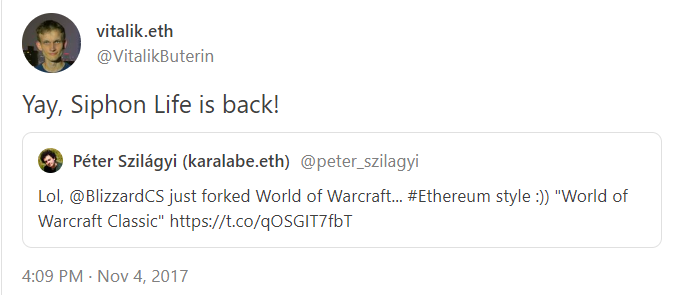
When Ethereum finally went mainstream in 2087 and the Federal Reserve no longer existed, historians will trace Crypto’s origins back to a moment in 2011 when Blizzard nerfed Vitalik Buterin’s World of Warcraft character’s “siphon life” spell (thx blizz!).
As the story goes, this led 15-year-old Vitalik to see the "horror of centralized services," and thus Ethereum was born, which would finally end the madness of centralized video games.
Or at least that's where we're headed.
Unfortunately, most existing blockchain games will still be affected by the aforementioned censorship cases, despite their marketing pages plastered with trendy promises of "permission-free interoperability" and "true ownership."
0 1 The (false) promise of the current blockchain game
Let's review the purpose of blockchain.
The role of blockchain is to facilitate shared consensus in distributed databases. People disagree from time to time — and thus the entire crypto community is constantly forking. Forks realign consensus between irreconcilable differences.
So, why build games on the blockchain?

Same reason: people fundamentally disagree on how the game universe should be structured, just as Vitalik disagreed with Blizzard's decision to cripple his beloved Warlock. The real promise of gaming on the blockchain, then, is to enable divided gaming communities to resolve their differences.
The problem is, most blockchain games do not meet this standard. Games like Axie Infinity or CryptoKitties are minimally on-chain games. Their assets exist as on-chain data, but the basic logic (game rules) and state (history of actions in the game) of the game exist off-chain on centralized game servers.
Of course, your Axie NFTs and tokens exist forever as a piece of data in an immutable smart contract, as long as you keep your private keys safe. But if the company behind Axie, Sky Mavis, shuts down -- the value of your Axie assets will collapse too. Ownership is more than keeping a piece of data safe in your wallet. Ownership is also control and say over the environment in which that data resides, i.e. the rules of the game.
The financial value of these assets is entirely dependent on Sky Mavis' ability to successfully deliver the Axie Infinity ecosystem as a commercial product. They are advertised as web3, but more akin to web2.5 in that players have little control over the underlying rules of the game, which are off-chain and centrally planned.
0 2 True Web3 Game Architecture
How do we start building a truly censorship resistant and unstoppable blockchain game? According to Gubsheep's "The Strongest Encryption Game Theory":
The logic and state of the game is on-chain. The rules of the game — how you act, fight, harvest, and spend — should be embedded as rules in open-source and on-chain smart contracts.
All game data is on the blockchain, so it is interoperable.
The game has nothing to do with the customer. If the core developers disappear tomorrow, players don't have to rely on them to keep playing; people in the community can create their own clients to send player actions on-chain.
When the above is met, something important starts to happen.
de-licensing innovation
When the game logic is on the chain - first, the game world is permanent, even if the company goes bankrupt or gives up development, it will continue to exist, just like the DeFi protocol continues to run forever. As Ronan Sandford puts it, on-chain games offer “realistic independence.”
Second, it opens the door to delicensing innovation. Any player can creatively “modify” the game in the form of smart contracts by introducing a second layer of rules (what Curio calls user-generated logic), “referring” to the underlying game rules (i.e. “digital physics”).
Maybe that sounds confusing, but it’s not — it’s just DeFi composability 101, where developers build new protocols on top of existing protocols’ code, again permissionless.
As long as the second-level rules do not violate the underlying rules, they are allowed. It’s worth noting that layer 2 rules are different from add-ons/mods in existing games, which only change your personal UI and local experience; they are embedded in on-chain smart contracts, affecting the virtual gaming experience shared with all other players .
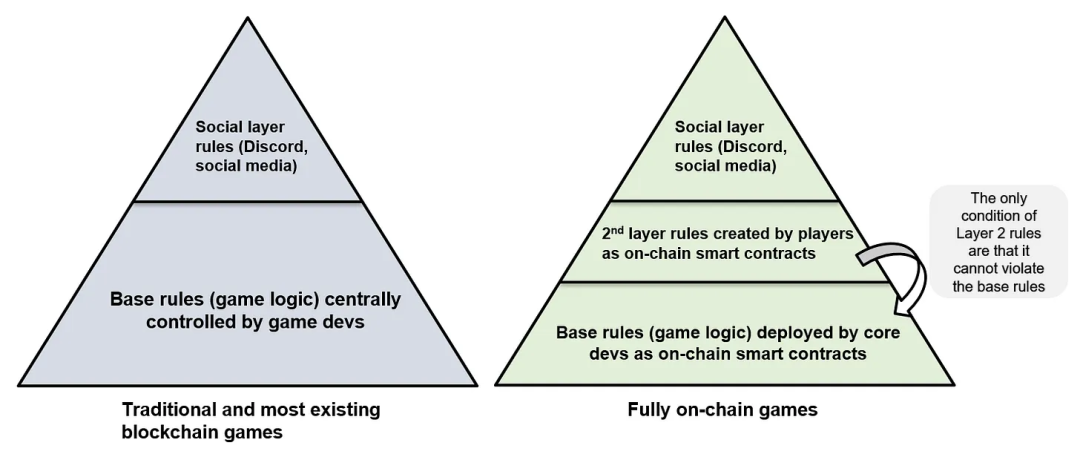
For example, a fully on-chain game determined to preserve the classical rules of chess would enshrine the rules as non-negotiable and immutable rules in smart contracts developed at the core. The knight (horse) can only move in an L shape, and the bishop (bishop) can only cross diagonally.
However, anyone can create new second-layer rules on top of these immutable digital physics. They could be a token, a guild system, an RPG-like questline where instead of capturing your opponent's king to win the game, you can move your king to the other end of the board win. You can also introduce a trading system to buy back dead pieces with the included token currency, or exchange pieces with your opponent. Anything goes as long as the logic of the ground rules allows.
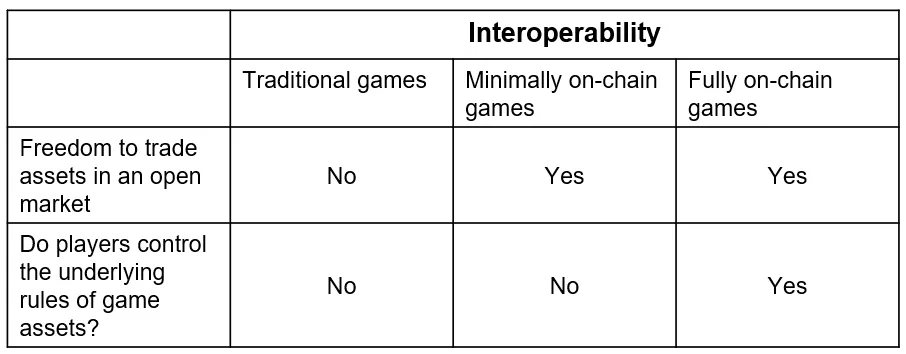
true interoperability
In on-chain games, assets are not bound by a strict set of game logic and have the greatest interoperability in the broadest sense. They often exist as just another token in an ever-expanding gaming universe, just as thousands of tokens in DeFi compete with each other according to their own set of rules, the token economics model.
In contrast, Epic may allow Fortnite game assets to "interact" in its game library, but they are only interoperable if the developer allows it. The same is true for game assets in Web 2.5 blockchain games.
high incentives
The final piece of the puzzle is: motivation. Traditional games have many highly active mod communities, but their operations are constrained by core developers. The history of Minecraft provides a prime example. As I wrote before:
Over the years, Microsoft has used intellectual property laws to allow Minecraft users to modify and create user-generated content but prohibit them from selling officially licensed code for profit, effectively maintaining a gray economy of passionate fans at their service And alive.
From an economic standpoint, these are weak property rights for mods, and thus weak incentives to create. So, mods are often maintained by enthusiasts and amateurs out of altruism.
Fully on-chain gaming solves this problem. In on-chain games, there is a stronger incentive for players to create MODs, as the created MODs are non-censorable, permanent creations (the second layer of rules above) and are encoded into immutable smart contracts. The underlying ownership rules as any tokens, game mechanics, social institutions, or player-created rules in the game are entirely within their control, independent of the underlying permissioned game logic and rules. Most importantly, they compete in the game economy with what other players create.
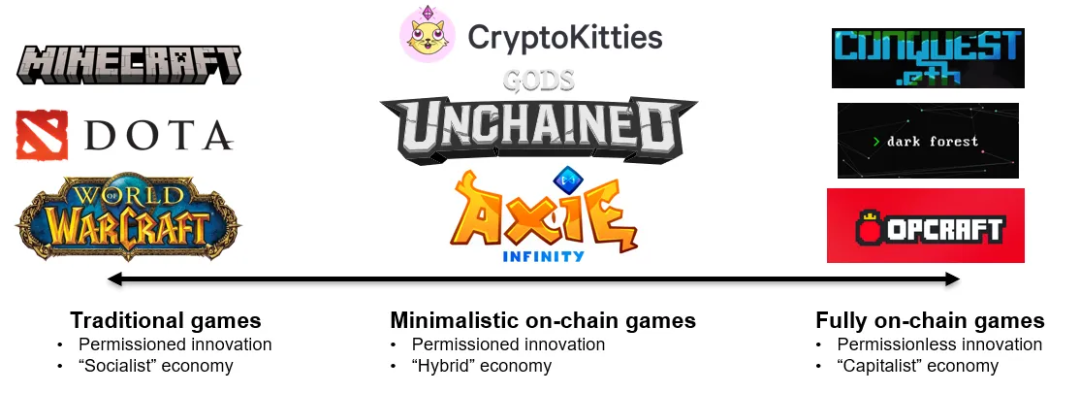
In the world of on-chain games, core game developers cannot unilaterally change the basic rules of the game. This will save the toon in Vitalik's World of Warcraft! Gone are the days of gaming dictatorships.
OK, enough theory, let's look at some examples of blockchain games.
Chain game case
Dark Forest is perhaps the prime example of a blockchain game. Created by Gubsheep at the 0xPARC Foundation, Dark Forest is a space-themed multiplayer strategy game deployed on the Gnosis Chain since 2019.
The entire game logic and state of The Dark Forest is contained on-chain. Unlike traditional online games today, there is no centralized server or database to handle in-game actions or store the state of the game.
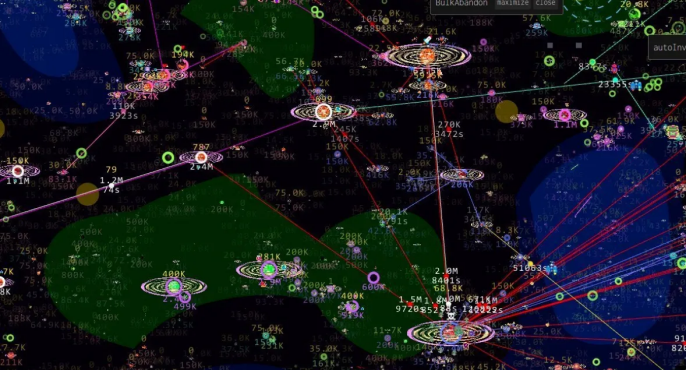
As explained, the magic of blockchain games lies in the emergent rules spontaneously formed by players using their on-chain attributes. "The Dark Forest" has many such examples. Its players create an in-game marketplace that allows the trading of in-game resources without requiring the core developers to roll out patches to the trading system or auction house.
"Dark Forest" does not have a built-in guild system, so a group of players (DFDAO) actively built their own permissionless, on-chain guild system through an external smart contract. This allows many small players to coordinate and pool their resources in a completely trustless manner with the aim of becoming competitive on a leaderboard dominated by experienced players. As documented on the DFDAO blog:
In the fourth round...we deployed The Astral Colossus, a smart contract player that enables other players to contribute [resources] to it as a team. This removes the trust factor between players because the code for everything that's happening is in a smart contract that you can read and know what it's going to do, making the process trustless and permissionless.
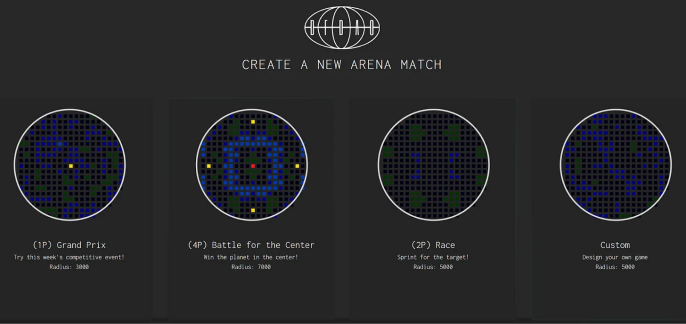
DFDAO also completely forked The Dark Forest onto a different chain. Their fork, called Dark Forest Arena, introduced various new game modes. In any other MMORPG, all of these actions would be considered illegal, black market or "hacking". Whereas in an on-chain game like The Dark Forest, everything is allowed and runs on code.
Examples of community-led emerging rules can also be found elsewhere in OPCraft, the on-chain version of Minecraft built on Optimism by the Lattice team. In early tests of OPCraft, players created plugins to automatically gather resources, chat with each other, teleport around the map, and change the world's color scheme.
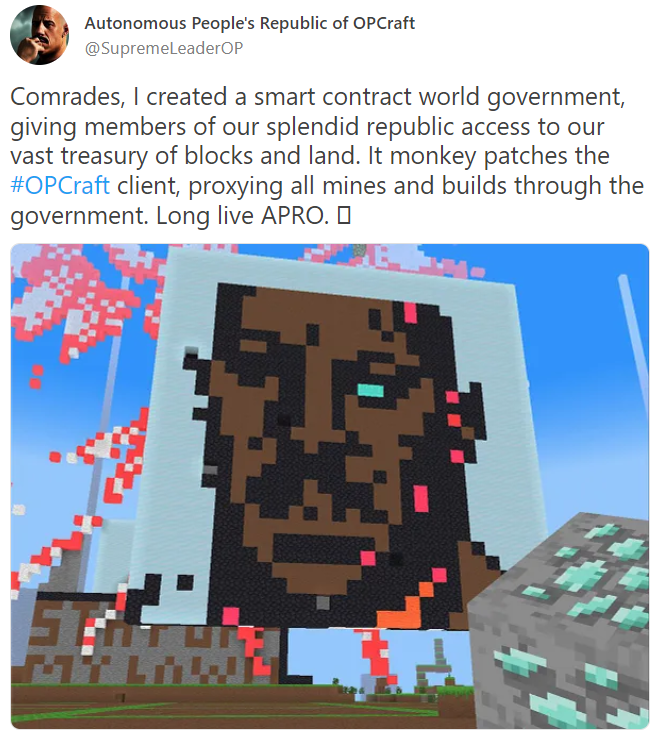
A player named SupremeLeaderOP, by deploying smart contracts on the chain, created a communist republic and formulated a set of corresponding rules. Any player who voluntarily joins the republic will give up all their existing holdings and, in accordance with the socialist philosophy, consolidate their inventories into a collectively shared treasury.
Of course, examples of new rules appearing in games are not new. If game developers hadn't created tools for in-game guilds, Eve Online players would have formed offline social alliances on Discord. Players of Everquest and World of Warcraft developed informal social currency systems -- DKP (Dragon Slaying Points) -- to manage and reward players based on the time they put into the game.
The difference in the chain game creation mechanism is that due to the open composition of the game, they are created without permission and embedded on the chain. OPCraft Communist Republic players don't know who he is, but they don't need to trust him to keep his word.
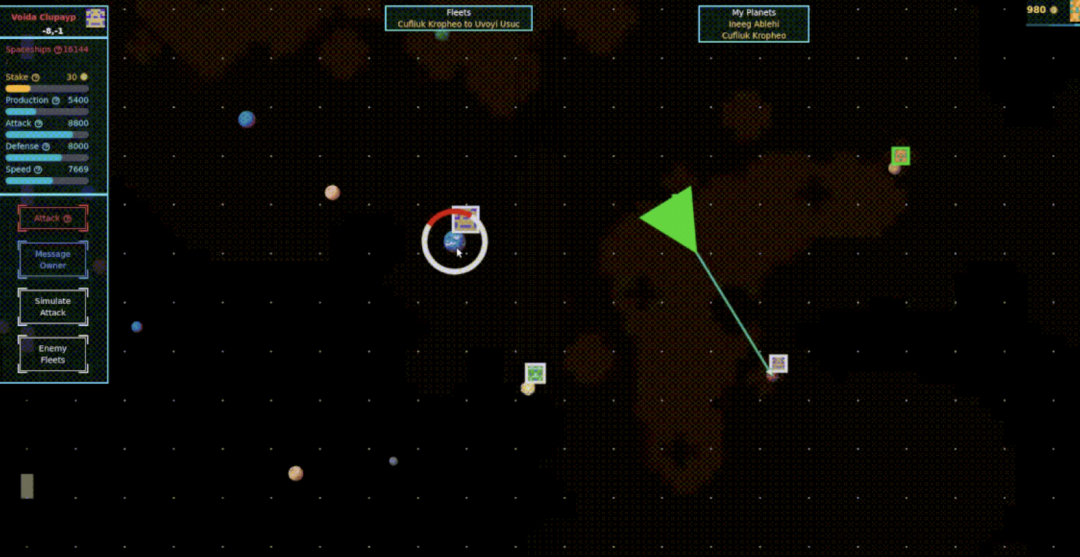
In Conquest, a diplomatic strategy game on the Gnosis Chain, players stake xDAI to produce spaceships, form alliances, and attack each other in Civilization-style. Likewise, the ability to create on-chain smart contracts means that coalitions of players are bound by assets of real value to ensure that players take action and demonstrate trustless interactions between coalitions of players.
0 3 Obstacles of blockchain games
If blockchain games are so amazing, why haven't they gained wider popularity?
The most obvious hurdle blockchain games face is scalability. Sending each player's actions on-chain is computationally intensive, which is why most on-chain games are turn-based and not on the Ethereum mainnet. The immutable code that lives permanently on-chain also means that bugs created by developer negligence will be difficult to patch.
In addition, de-privileging games also means opening the floodgates for opportunistic players and bots. Existing blockchain games, such as Axie and Pegaxy, mitigate this to some extent through costly barriers to entry, while traditional games deal with this through KYC methods and selective bans, but these centralized leverage It cannot be used for on-chain games without permissions.
In a way, the problems of blockchain gaming bear uncanny parallels to imperfect, real-world institutions that are hard to change due to social fixation and collective action problems (think imperial institutions, or democratic politics). These problems must be confronted jointly by the community and core developers, finding entrepreneurial solutions and creative mechanism designs to curb bad behavior, rather than directly censoring them.
0 4Brief description about chain games
Blockchain games still exist largely as a proof of concept. The developers are still trying to figure out the best way to scale, and the terminology is scattered. Lattice calls it an autonomous world, Bibliotheca DAO calls it an eternal game, Etherplay calls it an infinite game, and Topology calls it an "on-chain reality."
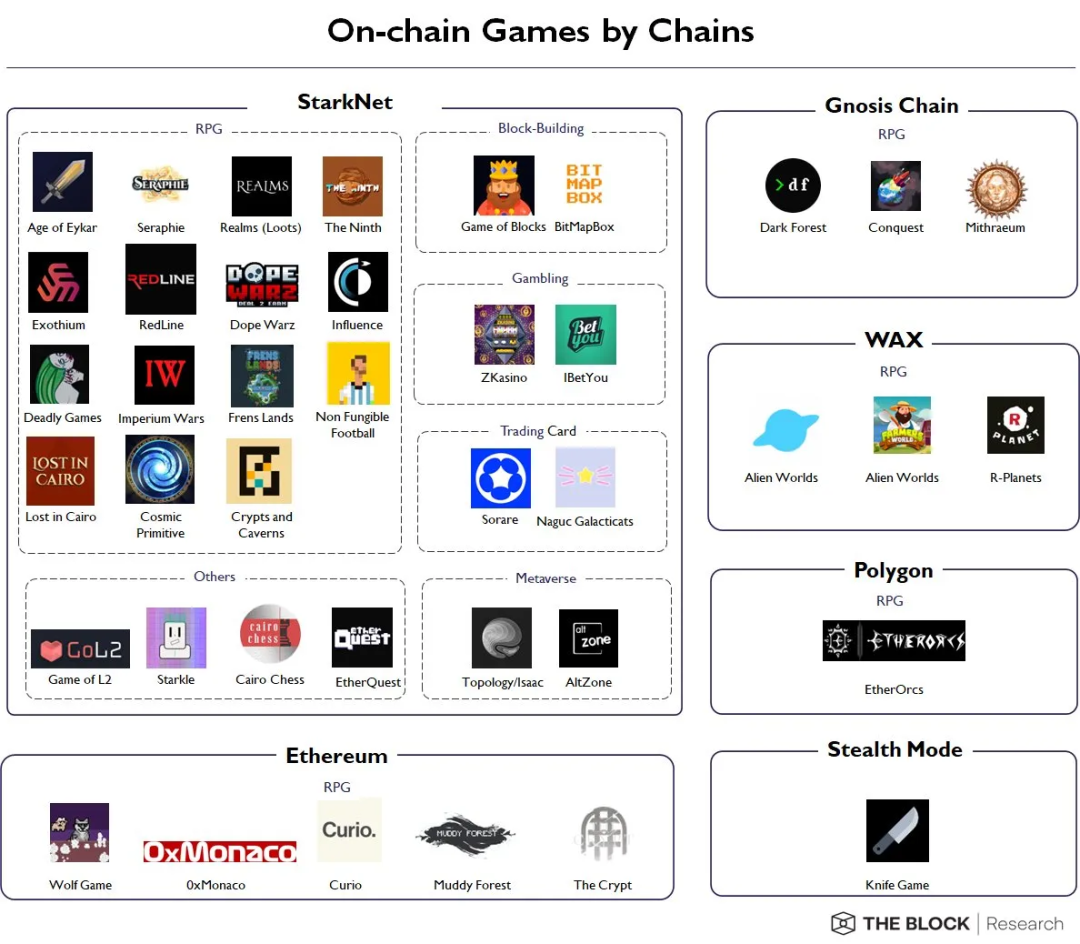
The above are just a few examples of new rules emerging in blockchain games, but the possibilities are endless. Just like the open-source composability of DeFi allows tokens to interoperate and slice and dice in various ways, because the root of each dapp exists on the blockchain as a shared state, so will games that fully embrace the blockchain. so it is.
Create your own ERC20 tokens as in-game currency. Create any social structure imaginable -- religion, nation, faction -- and put it on-chain. Write your own questlines, reward or punish with tokens, and tie them to immutable smart contracts.
Calling this an "in-game economy" would be a misnomer, since they're not as isolated from the real world as traditional games are. These are real-world value economies that blur the lines between creators and players. They exist permanently on the blockchain. They have the ability to evolve continuously from the myriad spontaneous decisions of private individuals, experimenting with new methods of production and trade without restriction, providing players with unlimited ways to obtain economic value.
0 5 last
I've been harsh on existing blockchain games in this post, but it's worth noting that Web2.5 games still offer stronger ownership than traditional games. Web2.5 games at least provide players with the freedom to quit. Unlike traditional games, where assets are protected as intellectual property and cannot be sold, players can sell their in-game tokens and get rewarded for their time.
However, what makes web2.5 games better than traditional games is also what makes them less than fully on-chain games. Off-chain game logic prevents games from fully utilizing the potential of blockchain technology. Only games that are fully on-chain will seriously leverage the human intelligence that open and permissionless blockchain infrastructure allows.
Some of the greatest video game creations and genres are byproducts of an emerging order. They embody a common pattern: gamers and amateurs "play around and find out". The cult MOBA (Dota) and tower defense genre both grew out of the creation of the Warcraft 3 custom game modding community. "PUBG" was originally a MOD of the FPS shooting game "DayZ", and "DayZ" itself was a MOD of another FPS shooting game "Arma 2". Counter-Strike is a mod for Half-Life, one of the most popular games of the 90s.
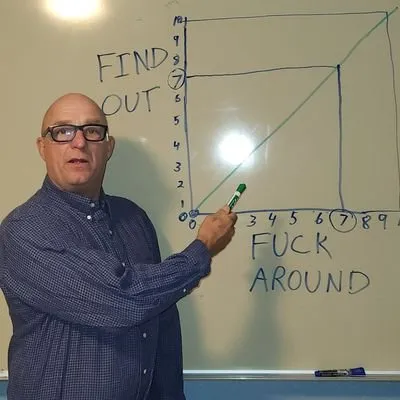
Blockchain games just take it to the next level.
Finally, special thanks to ludens, Ronan Sanford, guiltygyoza, lordofaffew, and cha0sg0d_ for helpful comments on this article.