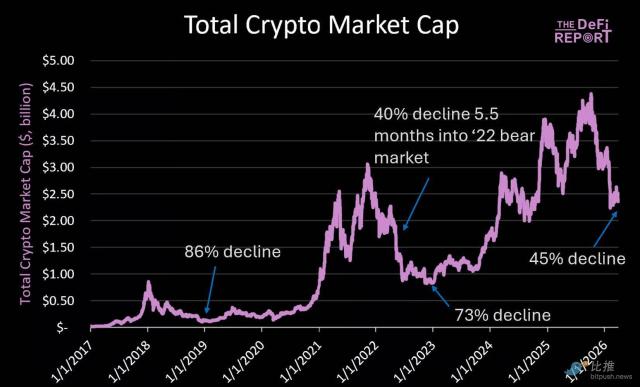
A new year brings a fresh start, as the cryptocurrency market wakes up from late 2022 hibernation and emerges from a bear market, growing 48.9% from a total market capitalization of $831.8 billion on January 1, 2023 to March 2023 1.238 trillion on the 31st.
While the rally has not been smooth sailing, it has reversed previous losses due to the FTX crash and brought the market back to its pre-Ethereum merger highs. Bitcoin (BTC) and Ethereum (ETH) prices are now hovering around $30,000 and $2,000 respectively, with BTC performing particularly well, up nearly 72% this quarter.
CoinGecko's Q1 Crypto Industry Report 2023 covers the crypto market landscape, as well as analysis of Bitcoin and Ethereum, an in-depth look at the decentralized finance (DeFi) and non-fungible token (NFT) ecosystems, and a review of the central The performance of centralized exchanges (CEX) and decentralized exchanges (DEX).

1. The cryptocurrency market has a strong start to the year, up 48.9%, with a total market capitalization of $1.2 trillion
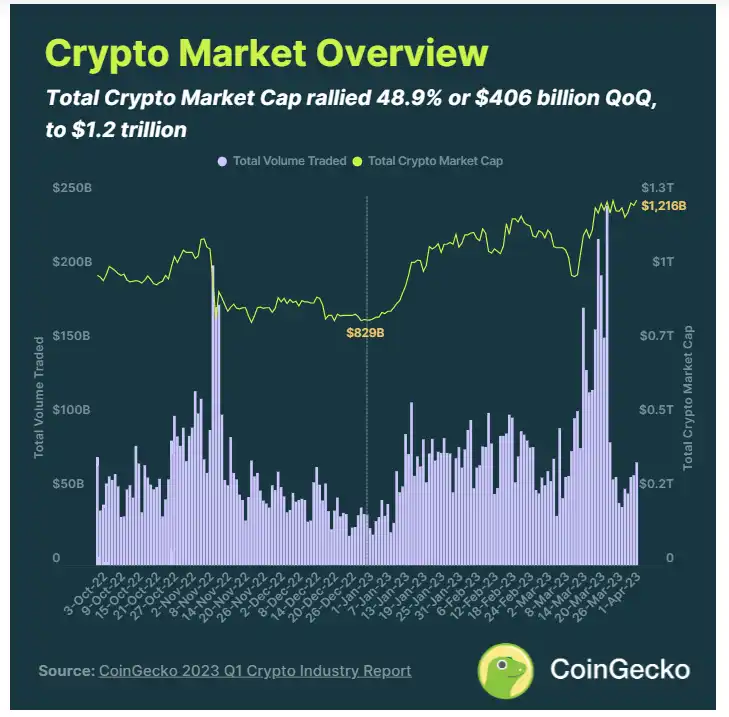
The crypto market is off to a strong start in 2023, ending the first quarter with a total crypto market capitalization of $1.2 trillion. Compared to the end-2022 performance of $829 billion, this represents an increase of 48.9% in absolute terms, resulting in an absolute gain of $406 billion.
At the same time, the average daily transaction volume has also picked up, increasing by 30% quarter-on-quarter, from -33% in the fourth quarter of 2022 to $77 billion in the first quarter of 2023. Trading volumes picked up in January 2023. Due to the increased volatility caused by the banking crisis, trading volumes spiked temporarily in early March, but gradually fell back after Binance canceled BTC zero-fee trading incentives at the end of March.
2. Bitcoin outperformed traditional asset classes, up 72.4%
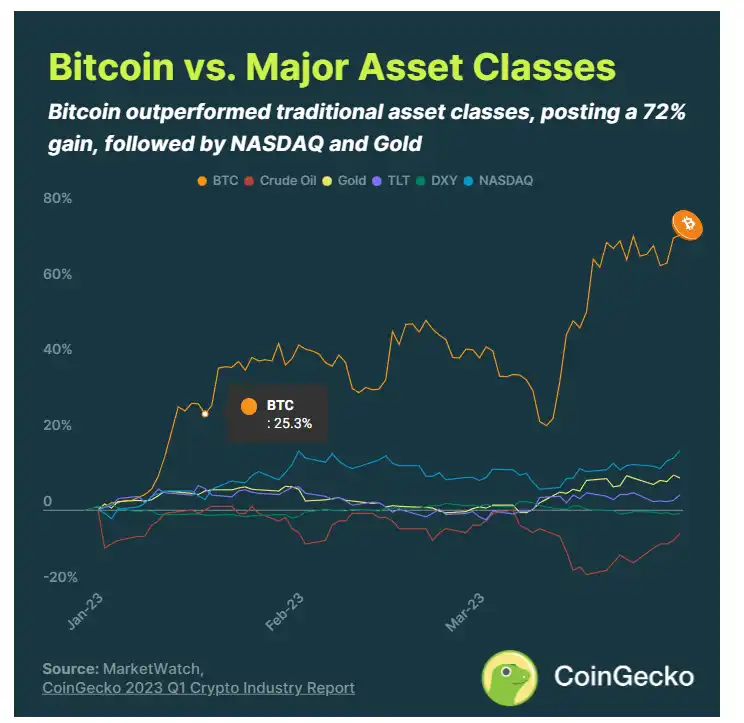
Bitcoin was the best-performing asset in Q1 2023 with a 72.4% quarter-on-quarter gain, followed by Nasdaq (15.7%) and gold (8.4%).
With the exception of crude oil, which fell 6.1%, all major asset classes ended the quarter in positive territory. This result is not surprising, as crude oil is one of only two assets that will rise in 2022. Crude initially fell as low as -17.2% on US inflation reports citing lower oil demand, coupled with the fallout from the US banking crisis, but managed to recover some losses towards the end of March.
The U.S. dollar index (DXY), along with other fiat currencies, remained relatively flat during the same period, as inflation data came in below expectations.
3. Stablecoin lost $6.2 billion, down 4.5%, with USDC and BUSD seeing the largest declines
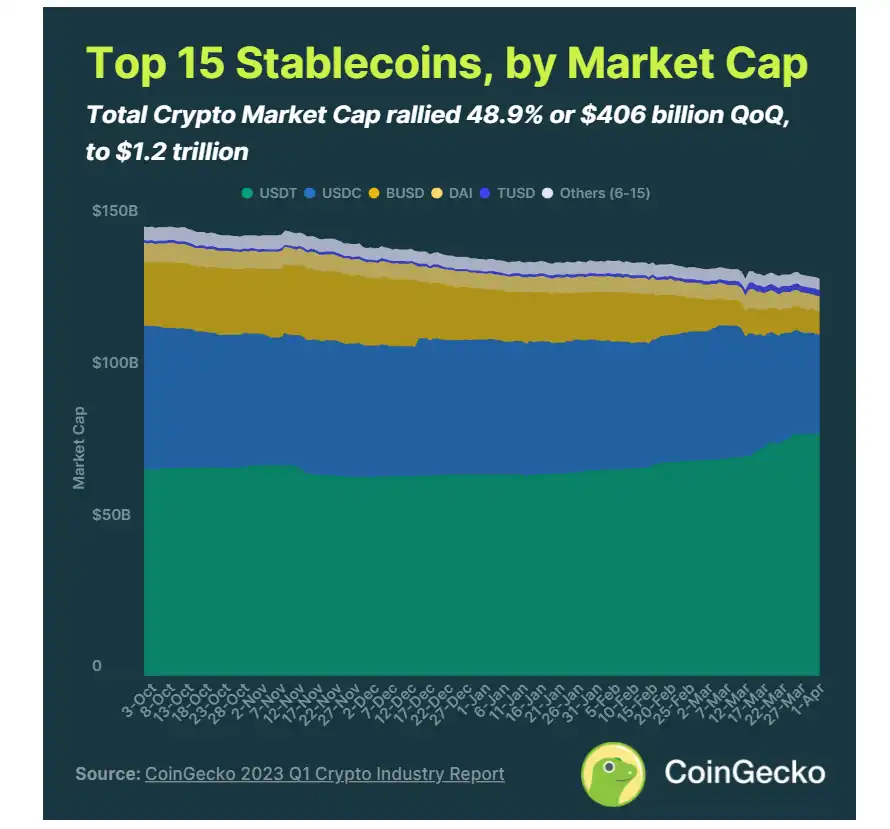
The market capitalization of the top 15 Stablecoin fell by 4.5% ($6.2 billion) due to Paxos’ spinoff of Binance USD (BUSD) and the depegging of USD Coin (USDC) during the SVB crash.
USDT, the largest Stablecoin , further strengthened its position, increasing its market cap by 20.5% ($13.6 billion). In contrast, USDC and BUSD lost 26.9% and 54.5%, respectively, wiping out their 2022 gains.
Meanwhile, True USD (TUSD) entered the top 5, surpassing FRAX. Binance minted $130 million in TUSD, while Tron minted another $750 million, pushing its market cap up 169.3%. In terms of Stablecoin outside the top five Stablecoin , GUSD and USDP are down 32.0% and 12.3%, respectively.
4. The DeFi ecosystem grew 65.2% to $29.6 billion, and the Liquidity staking sector grew 210.9%
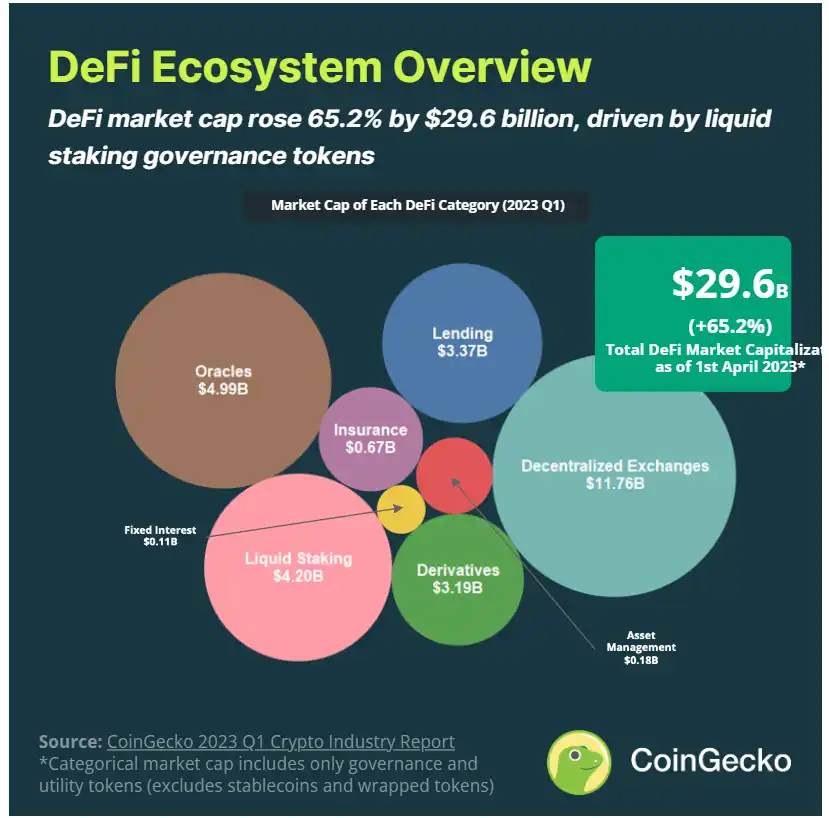
In the first quarter of 2023, the market capitalization of the decentralized finance (DeFi) space surged 65.2%, which is equivalent to an increase of $29.6 billion, mainly driven by the performance of Liquidity collateral governance tokens.
With the Ethereum Shapella upgrade, the Liquidity backed governance token saw a 210.9% increase in market capitalization in Q1. It has now surpassed lending protocols to become the third largest category in DeFi.
Despite a 44.3% increase in market capitalization in Q1 2023, decentralized exchange (DEX) governance tokens are still losing market share and are down -5% since January.
5. NFT trading volume rebounded to $4.5 billion, Blur surpassed OpenSea to become the top NFT market
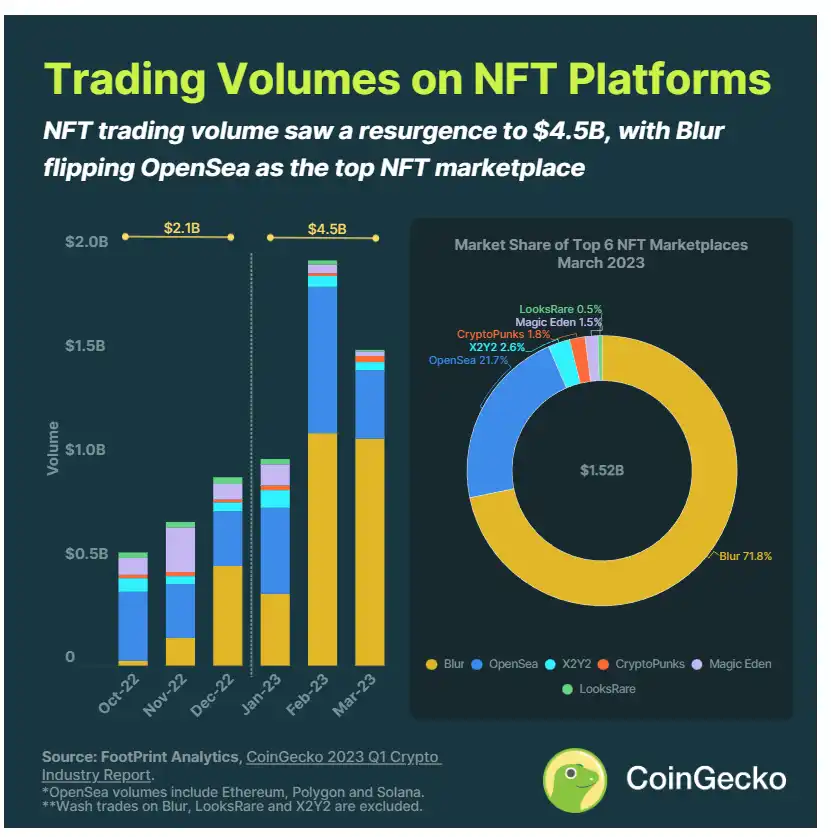
Non-fungible token (NFT) trading volumes have increased significantly, rising 68% from $2.1 billion in Q4 2022 to $4.5 billion in Q1 2023.
Most of the NFT volume comes from Blur, a new NFT platform launching in October 2022. In six months, it has replaced the former market leader OpenSea, and its market share has grown from 52.8% in December 2022 to 71.8% in March 2023, and currently occupies the top 6 NFT markets. Meanwhile, OpenSea's market share shrank from 29.3 percent to 21.7 percent over the same period.
While most blockchains saw an increase in transaction volume in the first quarter, Solana’s ecosystem declined. Transaction volume on Magic Eden, the largest marketplace on the chain, dropped 67.9% from $73.9 million in December 2022 to $23.6 million in March 2023. Well-known NFT y00ts and DeGods also migrated to other chains, further hitting Solana.
6. The volume of cryptocurrency spot transactions in the first quarter increased by 18.1% to reach 2.8 trillion US dollars, and the quarterly growth of DEX exceeded that of CEX
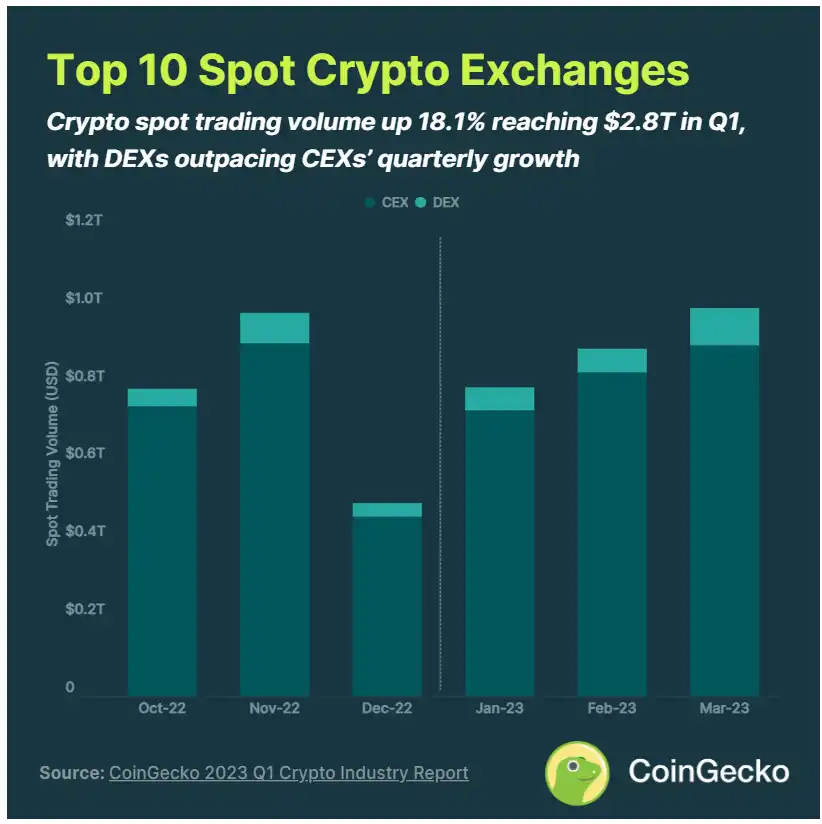
In the first quarter of 2023, the spot trading volume of the top 10 cryptocurrency exchanges totaled $2.8 trillion, an increase of 18.1% compared to the fourth quarter of 2022. Monthly transaction volumes have been on an upward trend since the December 2022 low of $0.5 trillion. However, monthly trading volumes have yet to hit the $1 trillion average, a figure last seen in the first half of 2022.
Decentralized exchanges (DEXs) are growing almost twice as fast as CEXs amid global regulators' crackdown on centralized exchanges (CEXs). In the first quarter of 2023, DEX grew by 33.4%, compared with 16.9% for CEX. Nevertheless, the ratio of CEX to DEX trading volume remained above 90% during the same period.
In addition, CoinGecko also has a 44-page full version of the report, interested readers can visit the link to view.