LayerZero is a chain-wide interoperability protocol focused on chain-to-chain data messaging. The LayerZero product design concept is very innovative in the field of Cross-chain bridges. The data transmission method based on oracles and repeaters makes the protocol more portable, and it also has certain guarantees in terms of security performance. At present, the network adoption rate of the protocol is good, and the ecological aspect has also achieved a certain scale of development. The popularity of the project is high, and the overall situation is good, which deserves attention.
Project Overview
LayerZero is a chain-wide interoperability protocol focused on chain-to-chain data messaging. In the industry, there is currently a saying that such "bridges" are called: "Arbitrary Messaging Bridges (AMBs)", that is, arbitrary information transfer bridges, which allow any data, including tokens, chain status, contract calls, NFT Or governance voting, etc., from chain A to chain B.
In the field of Cross-chain bridges, all we have seen in the past is a single "asset Cross-chain", but now we have seen some projects gradually turn to the exploration of the field of data transmission. LayerZero is one of the pioneers in this field.
The highlights of the LayerZero project are:
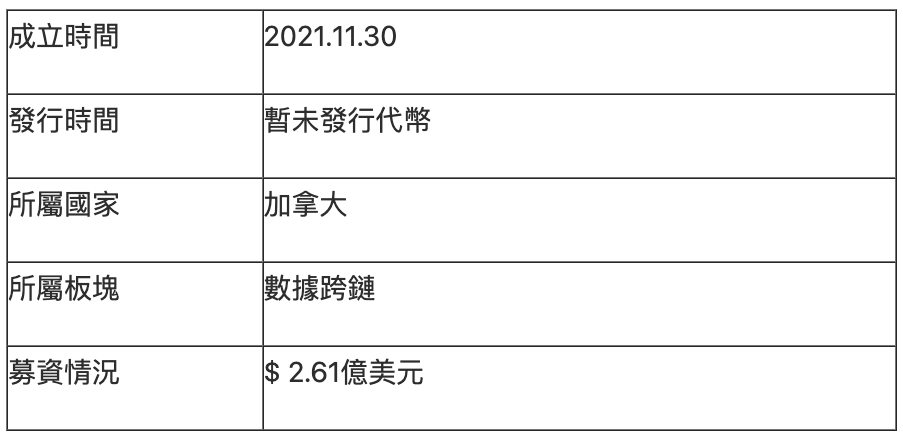
1) The assets currently held by the LayerZero Foundation are worth a total of 261 million US dollars , and the funds are very abundant, which is sufficient for the long-term development and operation of the project.
2) In terms of products, the design of LayerZero is different from the current Cross-chain bridges on the market. It chooses the oracle network to replace the traditional Cross-chain continuous streaming (Continuous Streaming), and outsources the burden of verifying information transmission on the chain. To the third-party oracle machine, so that the protocol is lighter and the operating cost is low.
3) LayerZero's innovative technology coupled with faster deployment speed and certain cost advantages, as well as the promotion of early well-known VCs and influential KOLs in the community, have enabled the LayerZero ecosystem to expand rapidly in just a year or so. And it has made great achievements in DeFi, NFT and Stablecoin. Up to now, 50+ projects (including those not officially launched/online) have integrated or are using LayerZero technology.
4) At present, the number of Arbitrary Messaging Bridges (AMBs) projects that are relatively well developed and have not been attacked in the market is still very small, and LayerZero has a certain first-mover advantage.
The risks of this project are:
1) The security of LayerZero has not been fully verified, the trust assumption that the oracle and the relayer need to operate independently of each other is open to question, and the security risks behind the relay mechanism still need to be vigilant. But on the other hand, the trust assumption that the security of LayerZero is not lower than that of the oracle machine is relatively convincing. The key point may be how to realize the decentralization of the relay.
2) The LayerZero economic model has not yet been launched. Currently, in the field of Cross-chain bridges, the tokens issued by most projects generally have weak performance in terms of value capture capabilities. It remains to be seen how the subsequent LayerZero economic model will be.
On the whole, although LayerZero is still facing some problems, the overall fundamentals are good, so it is worth paying attention to.
Explanation: The [Follow]/[Not Concerned] in the final evaluation of the first-class warehouse is the result of a comprehensive analysis of the current fundamentals of the project according to the first-class warehouse project evaluation framework, rather than the prediction of the future price rise and fall of the project token. There are many factors that affect the price of tokens, and the fundamentals of the project are not the only factor. Therefore, just because the research report is judged as [not concerned], it cannot be assumed that the price of the project will definitely fall. In addition, the development of blockchain projects is dynamic. If a project that we judge as [not concerned] has a major positive change in its fundamentals, we may adjust it to [concern]. If there is a major vicious change in a project marked as [Follow], we will warn all members and may adjust it to [Not Follow].
1. Basic overview
1.1 Project Introduction
LayerZero is a chain-wide interoperability protocol designed for passing lightweight information Cross-chain.
In addition, it should be noted that LayerZero only focuses on message transmission between chains, and can send messages to any smart contract on any supported chain, that is, a message transmission layer for intelligent communication between blockchains. Contract communication, not responsible for Cross-chain assets.
1.2 Basic information
2. Project details
2.1 Team
LayerZero Labs Canada Inc. (Company Number: 1355847-9) was registered in Canada on November 30, 2021 under the Canada Business Corporations Act. Caleb Banister, Ryan Zarick and Bryan Pellegrino are listed as company directors.
According to LinkedIn, LayerZero currently has 29 members, and the details of the core members are as follows:

Caleb Banister, co-founder of LayerZero Labs and Stargate Finance, graduated from the University of New Hampshire in 2010, worked as a software developer at UNH Interoperability Lab from June 2005 to December 2010; co-founder of Coder Den (a software consulting company) from September 2010 to February 2021 Founder; 2018.03 – 2021.02 as the co-founder of 80Trill (an encryption company specializing in writing and auditing smart contracts for blockchain-related projects); 2019.06 – 2021.02 as the co-founder of Minimal AI (a ML/AI company); 2021.02 – So far, founded LayerZero.

BBryan Pellegrino, co-founder and CEO of LayerZero Labs, graduated from the University of New Hampshire in 2008, co-founder and COO of Coder Den from October 2010 to January 2013; CEO of BuzzDraft from June 2011 to January 2013 (acquired in 2013); October 2017 to August 2019 Co-founder of OpenToken; 2016.06-present, chief engineer of Rho AI; Founded LayerZero in 2021 until now. Prior to founding LayerZero, Pellegrino was a professional poker player, successfully sold a set of machine learning tools he wrote to an MLB (Major League Baseball) team, and published journal reports in the field of artificial intelligence . Previously, Mario Gabriele of Generalist also conducted an exclusive interview with Pellegrino, and friends who are interested in his past resume can refer to the link.

RyanZarick, co-founder and CTO of LayerZeroLabs, graduated from the University of New Hampshire in 2011, worked as a software developer and graduate assistant at UNH Interoperability Lab from August 2006 to May 2011; served as CTO of BuzzDraft from November 2011 to March 2013; Co-founder; 2018.01-2020.03 served as the co-founder of 80Trill; 2019.06-2021.01 served as the co-founder of Minimal AI; 2021 founded LayerZero and served as CTO.
Judging from the resumes of the three co-founders of LayerZeroLabs, there is a high degree of overlap, a long-term cooperative relationship with each other, a high degree of team integration, and all three have years of development experience or successful entrepreneurial experience.

0xMaki, former founding member and core contributor of SushiSwap, has now joined LayerZero Labs full-time. 0xMaki played a key role in the early marketing of SushiSwap and became the project leader after Chef Nomi exited. During his tenure, 0xMaki was mainly responsible for determining SushiSwap's daily operations, business development strategies and overall development. In addition, Sushi's Cross-chain Swap project SushiXSwap was completed under the leadership of 0xmaki, adding application scenarios to the two protocols of Sushi and LayerZero.
2.2 Funding
Table 2-1 LayerZero Financing Situation
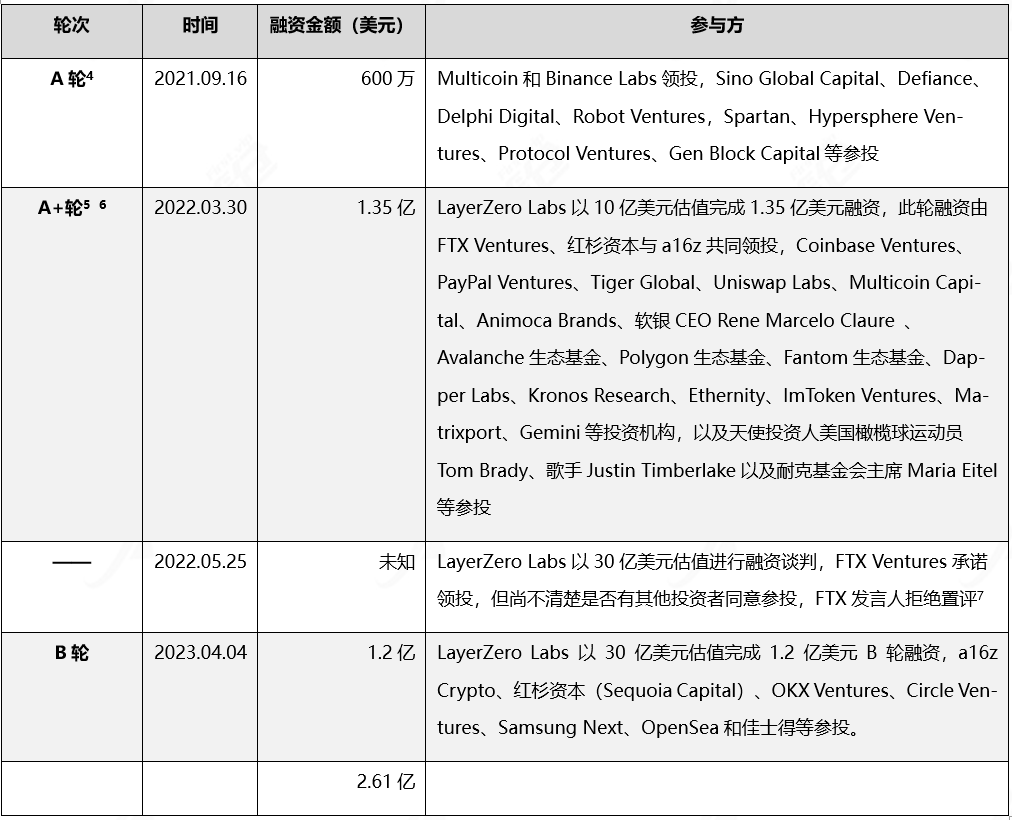
In addition, affected by the FTX thunderstorm in early November 2022, on November 11, 2022, LayerZero officially issued a document stating that it has repurchased 100% of the equity, currency rights and any other assets from FTX/FTX Ventures/Alameda Research. protocol. At that time, the value of assets held by the foundation totaled 134 million US dollars [8] (of which the team deposited 10.7 million US dollars in the FTX exchange, which was not included in the calculation of the appeal). Therefore, it can also be seen that the third round of financing of LayerZero mentioned above has not been completed.
From the above table, we can see that LayerZero, which was born as a star project, has been favored by major capitals from the very beginning. As of now, the known financing amount has reached 261 million US dollars. On the whole, LayerZero currently has sufficient funds, which is sufficient for the long-term development and operation of the project.
2.3 Code
Figure 2-1 LayerZero code library situation
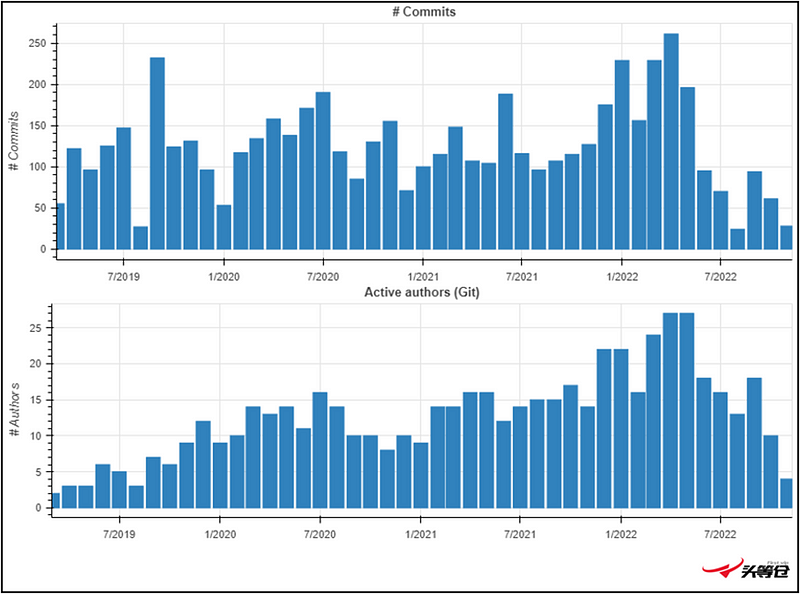
As shown in Figure 2-1 above, the LayerZero code library has been updated since March 2019. On the whole, LayerZero has accumulated 6415 code submissions, and a total of 116 developers have become Git/Issue authors and reviewers of LayerZero Github submitter.
Based on the progress disclosed by LayerZero in September 2022, LayerZero's testnet has currently deployed 7,000+ active contracts, with a very good adoption rate.
In addition, the LayerZero code base has completed 4 audits by Zellic, Ackee and SlowMist (SlowMist). The specific audit report can be queried through this link.
To sum up, in the past three years, the LayerZero project code changes have been good, the developers are sufficient, and several important code bases have been updated frequently.
2.4 Technology
First of all, we need to clear up a confusing misunderstanding. LayerZero is a full-chain interoperability protocol. It only focuses on message transmission between chains and can send messages to any smart contract on any supported chain, and It is a message transmission layer for smart contract communication between blockchains, and is not responsible for Cross-chain assets.
2.4.1 Layer Zero framework
According to the LayerZero Whitepaper, the core of the protocol has three components, namely the endpoint (Endpoint), the oracle (Oracle) and the relay (Relayer).
1) Endpoints are facilities that directly interact with users or applications, or can also be regarded as a series of smart contracts that process logic. These endpoints handle message transmission, validation, and receipt. Their purpose is to guarantee efficient delivery when users send messages using the protocol.
In the LayerZero protocol, each chain needs to deploy a LayerZero Endpoint. Endpoint can be called and used by other apps on the same chain, and is responsible for sending information to the external chain. For example: if a Dapp wants to transmit information from chain A to chain B, he must first call the Endpoint of Chain A and submit the information to be sent.
Each LayerZero Endpoint is divided into 4 modules: Communicator, Validator, Network, and Libraries. The Communicator, Authenticator, and Networking modules form the core functionality of Endpoint, and these modules act like a traditional networking stack. Messages are sent down the sender's (communicator's) stack, validated by validators, delivered to the network, and then sent up the receiver's stack.
And every new chain supported by LayerZero is added as an additional library. These libraries are auxiliary smart contracts that define how specific communication for each chain is handled. Every chain in the LayerZero network has an associated library, and each endpoint includes a copy of each library.
Before introducing oracles and repeaters, we need to clarify a concept. First of all, in order to verify a block on the chain, we need two pieces of information: 1) the block header, which contains the Receipts Root; 2) the transaction proof, which is the Merkel-Patricia proof on the EVM.
LayerZero separates these two parts in the following way: 1) the oracle forwards the block header - any selected oracle; 2) the relay (Relayer) forwards the transaction proof.
2) The oracle is an external component for LayerZero, that is, a third-party service, independent of the LayerZero protocol. The main value provided by the oracle machine is to send the block header to another chain, so that the validity of the transaction on the source chain can be verified on the target chain.
3) The repeater is an off-chain service whose function is to obtain the transaction proof on the source chain and then transmit it to the target chain. LayerZero believes that in order to ensure that transactions can be effectively delivered, oracles and relayers must be independent of each other.
At present, under normal circumstances, the trustless communication method between one chain and another chain is to continuously transmit the block header of chain A to chain B. For example: Relay relay, which submits the block header of BTC through a third party, provides a credible BTC data source for other applications such as Cross-chain on Ethereum, so as to realize the value circulation from BTC to Cross-chain contract is basically a light client. This is the safest way to transmit information, but the problem is that writing to the blockchain is expensive, so the ongoing transmission of these block headers is very expensive.
The biggest improvement of LayerZero is that it chooses the oracle network to replace this continuous streaming (Continuous Streaming).
Currently, according to LayerZero official website documents and team disclosures, the oracles configured on the test network are Chainlink and TSS Oracle. The current oracles are not decentralized and have not been tested in actual combat, which also means that there is a risk of being attacked by hackers. risk. According to the official description, after the LayerZero test is completed, more oracle machines will be disclosed.
LayerZero adopts Chainlink as its oracle machine, which will have several benefits:
1) The function of verifying information is outsourced, and there is no need to run nodes on the linked chain; the oracle machine only allows one-time transmission of block headers to the target chain, which reduces operating costs;
2) LayerZero transmits messages between endpoints on different chains by relying on oracles and relays. Firstly, streaming block headers are transmitted on-demand through the oracle machine to achieve the required synchronization state with more efficient off-chain entities. The block header submitted by the oracle will be cross-validated with the transaction certificate submitted by the relay. Only when the oracle colludes with the repeater, the system will crash, that is, the security is not lower than the oracle.
3) Neither the relayer nor the oracle has formed any consensus or verification, they are just transmitting information. Since all verification is done on the respective source and destination chains, the speed and throughput limits are entirely dependent on the properties of the two transaction chains.
However, there are also flaws: LayerZero outsources the task of verifying information on the chain to a third party, such as Chainlink, which will be adopted later. This is not to say that Chainlink is bad, but LayerZero introduces security assumptions that are beyond the control of the protocol, and in the long run, offloading mission-critical parts of the work to third parties will increase other risks and potential uncertainties.
2.4.2 Security
- An important trust assumption in LayerZero is that oracles and relayers need to operate independently of each other.
In order to ensure the effective transmission of information, once there is any dispute in the transmission of information between relayers or oracles, the smart contract will be suspended and the information will not be submitted to the target chain. That is what we said above, the system will only crash if the oracle and the repeater collude, that is, the security is not lower than the oracle.
Although in LayerZero, the protocol allows each Dapp development team to modify the oracle/relay code provided by Layerzero, and graft it to the application's own server or verifier network, so as to use its own oracle machine Feed the price, or run a relay yourself to ensure that the oracle machine will not collude with the relay to do evil (LayerZero also suggested that the relay needs to be more decentralized in the community).
The current situation is that although everyone knows that "decentralization" is better, most Dapp are forced by cost, operation, user experience and other considerations, as well as the concept of "Dapp is good enough". The oracles of choice are all Chainlink. Similarly, most Dapp will also directly choose LayerZero's own repeaters. Just like almost no users run their own nodes to trade now, people rely on centralized service providers such as Infura and Alchemy.
This way, in the event of a repeater acting maliciously (hacked or not working as expected), the Chainlink oracle will intercept it, preventing any significant loss from occurring on the original chain. The advantages of choosing Chainlink are undeniable, but it is open to question whether LayerZero's trust assumption holds if it is assumed that Chainlink can be an effective and realistic alternative for implementing two functions (oracles and relayers).
The source of inspiration for the appeal point of view is the article "Layer 0 Wars: LayerZero vs Chainlink's CCIP" by Pickle and Aylo. Interested readers can move to the original text to read.
- The security of the oracle machine Chainlink has been verified by the market, and the key to the security function in the current LayerZero protocol is the repeater.
In April 2022, the LayerZero team introduced a method to guarantee the security of the protocol, which they called "Pre-Crime". At present, there is little public information about Pre-Crime. The blog post only introduces the principle of its basic operation. In summary, the Pre-Crime model allows user applications (UA, User Application) to define a specific set of assertions (assertions) , the repeater must verify against these assertions. If the assertion fails, the relayer will not relay the transaction. By introducing Pre-Crime, ensure that repeaters are able to stop hacking attacks before they happen.
At present, the corresponding code library of "Pre-Crime" is not open source, but the LayerZero team has launched a private Pre-Crime beta version together with several teams. The launch time of the subsequent official version has not yet been disclosed, and its effectiveness has yet to be practiced. verify.
- Security risks behind the relay mechanism
Previously, LayerZero updated the verification contract for Cross-chain use without any announcement on March 28. The Cobo security team found that this update is a fix for a previous major security vulnerability by comparing the original verification contract (MPTValidator) and the new verification contract (MPTValidatorV2) code.
The code of this vulnerability is the code of the core MPT transaction verification part of the LayerZero protocol, which is the basis for the normal operation of the entire LayerZero and upper layer protocols. If it is discovered in time, the most serious consequence that can eventually be caused is that on the premise that the LayerZero oracle machine is completely credible, the relay can still unilaterally attack the Cross-chain protocol by forging receipt data, breaking the LayerZero previous security assumptions.
The Cobo security team said that although LayerZero has fixed the current vulnerability, it does not rule out the possibility of other vulnerabilities. The incident also raised community concerns about the security behind the LayerZero relay mechanism.
In summary, although LayerZero has grown to a considerable size, the security behind its protocol has not yet been fully verified.
2.4.3 Operation process
Figure 2-2 Communication flow in LayerZero Cross-chain transactions
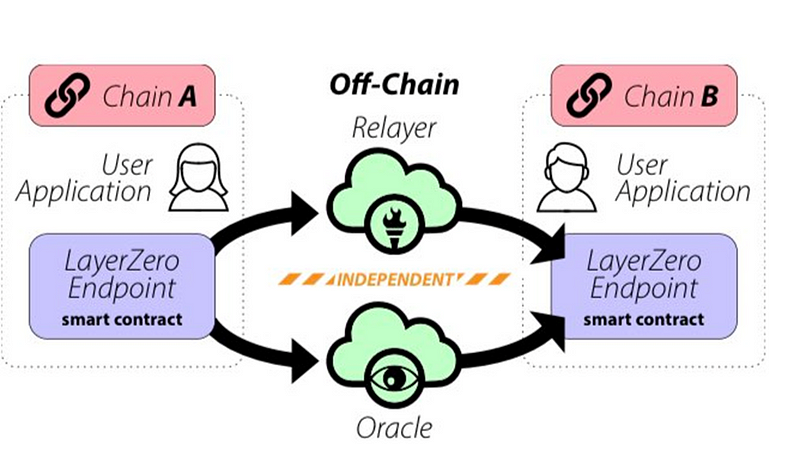
The specific operation process of LayerZero is as follows:
- When User Application transmits a message Cross-chain(such as from chain A to chain B), it first needs to call the smart contract of LayerZeroEndpoint.
- The message first enters the Endpoint of the A chain, and then the endpoint packages the message (transaction proof and block header) and the information to the B chain (target chain) to the oracle machine and the relay (these two entities are independent and are off-chain).
- The oracle machine reads and confirms the block header, and the oracle machine sends the block header to the Endpoint on the B chain after confirming that the block has passed several block confirmations on the A chain. At the same time, Relayer submits the corresponding transaction proof.
- After the target chain verifies the block header and the transaction proof is successful, the message is forwarded to the target chain to complete the Cross-chain communication.
First-class warehouse note: In order to make the above process easier to understand, the editor simplifies some details, such as the situation of endpoints (communicator, validator and network), but the essential logic remains unchanged.
From the above process, it is not difficult to see that LayerZero is only responsible for the delivery of messages, just like A has a message to be transmitted to B, so A calls B to tell him the content of the message, B picks up the phone, accepts the message, and the process ends. This is a very simple logic. So how are Cross-chain assets transferred?
First, a LayerZero Endpoint needs to be deployed on each chain to send and receive information. The Liquidity of asset transactions is balanced by Dapp such as DEX that integrates LayerZero to balance the LPs at each endpoint.
At present, this balancing ability of LayerZero is provided by Stargate Finance. Stargate's Delta (Δ) algorithm ensures that the Liquidity of the whole chain remains balanced and available (for details, please refer to the Stargate Finance research report previously released by First Class Warehouse).
In short, LayerZero is only responsible for dealing with chain-to-chain communication issues, and other additional functions/issues are resolved by the application that integrates LayerZero.
2.5 Ecology
LayerZero is a full-chain interoperability protocol. As a hub between chains and chains, LayerZero can do more than Cross-chain assets. After realizing Cross-chain messaging, LayerZero can also achieve Cross-chain state sharing , lending, governance, etc.
In addition, unlike the traditional Cross-chain bridge model currently on the market, LayerZero does not need to run nodes on each connected chain to monitor the status of the source chain, and hand over the role of the original validator (Validator) to the oracle machine (Oracle) play. One of the intuitive benefits here is that there is no need to deploy a new node on each new chain. From this point of view, LayerZero will incorporate the new chain into the network faster and at a lower cost. As of November 11, 2022, LayerZero has supported a total of 13 chains including Ethereum, BNB Chain, Avalanche, Aptos, Polygon, Arbitrum, Optimism, and Fantom.
LayerZero's innovative technology combined with faster deployment speed and certain cost advantages, as well as the promotion of early well-known VCs and influential KOLs in the community, have enabled the LayerZero ecosystem to expand rapidly in just a year or so, and in DeFi, NFT, and Stablecoin have all made great achievements. Up to now, 50+ projects (including projects that have not been officially launched/online) have integrated or are using LayerZero technology. The details are as follows (only some of them are listed):
Figure 2-3 List of LayerZero Ecological Projects
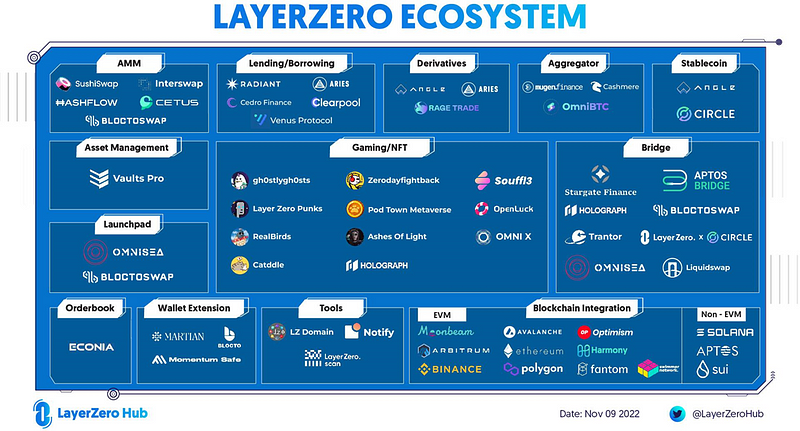
First-class warehouse note: The above picture is compiled by @LayerZeroHub (unofficial). If you want to track LayerZero's ecological projects, you can also follow the list maintained by Luke (Twitter ID: @0x4C756B65) on Twitter.
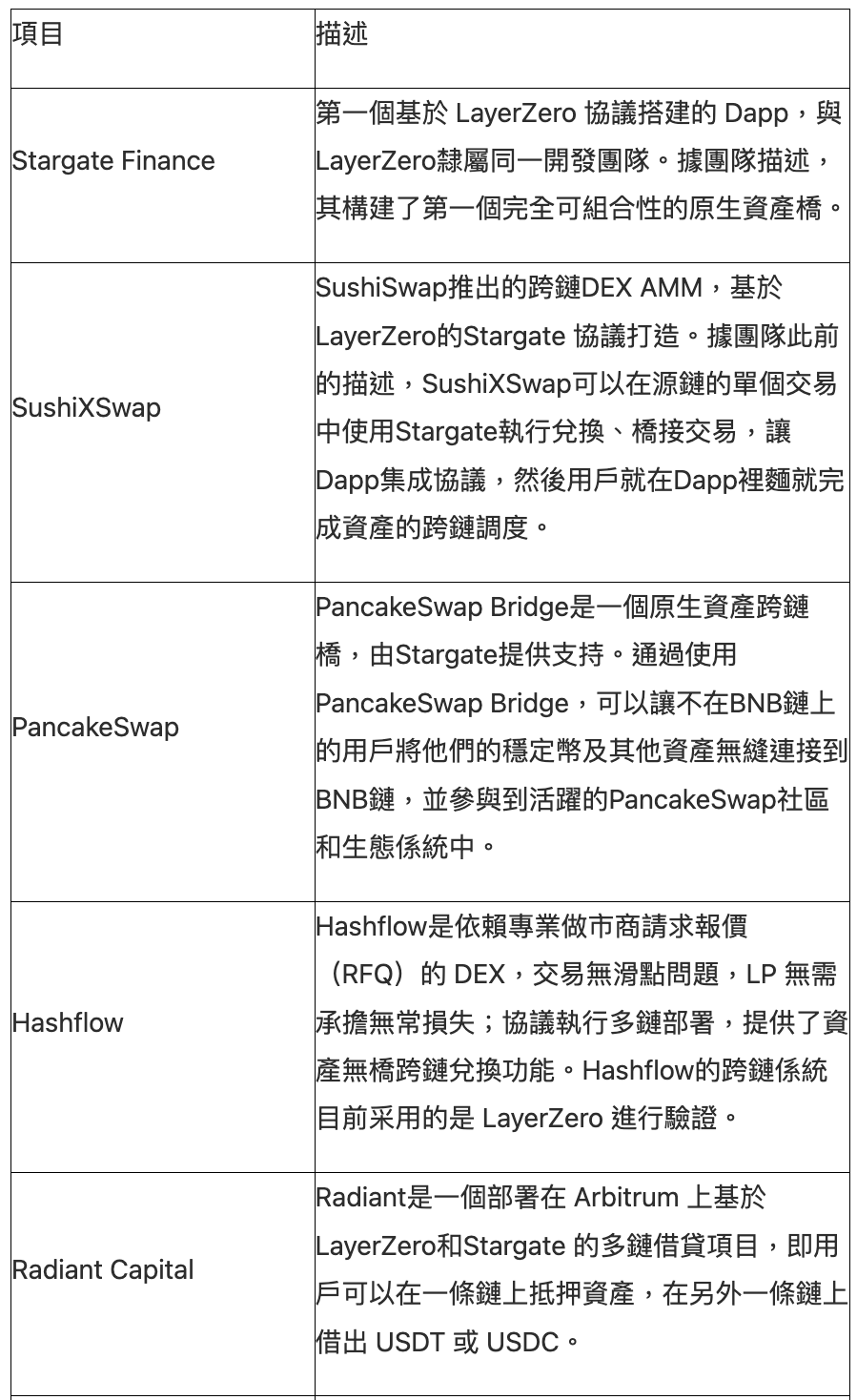
1) DeFi field
Table 2-2 LayerZero Ecological DeFi Cooperation Projects

2) Stablecoin field
Table 2-3 LayerZero Ecological Stablecoin Cooperation Projects

3) NFT field
Table 2-4 LayerZero ecological NFT cooperation projects

Combining the above Figure 2-2 and Table 2-1 to Table 2-3, we can see that the ecological territory of LayerZero has developed to a considerable scale. From DEX blue-chip Sushi, PancakeSwap, to the current hot RadiantCapital, they all use LayerZero’s Stargate for Cross-chain DEX development; in the field of Stablecoin , both USDC and agEUR support the Cross-chain interoperability of their respective Stablecoin through Layerzero technology. So as to upgrade to Multichain native assets; in the field of NFT, although the demand for Multichain NFT is not obvious for now, we have also seen projects such as Gh0stlyGh0sts, tofuNFT, etc., trying in the direction of Multichain NFT. In addition, LayerZero also launched the official browser LayerZero Scan some time ago. Cross-chain transactions can now be bound in a database through LayerZero Scan, allowing users and developers to extract the status, status, and time of transactions.
Through LayerZero's internal and external measures, its Omnichain concept may achieve further development in the future.
Summarize:
LayerZero is a full-chain interoperability protocol designed for the transfer of lightweight information Cross-chain. The overall structure is reasonable and there is no need to run nodes on the connected chains. transfer messages between peers. Although the security has not been fully verified by the market, in theory, the security of the protocol is not lower than that of the oracle machine (Chainlink), and there is a certain guarantee.
At present, the assets held by the LayerZero Foundation are worth a total of 261 million US dollars, and the treasury is very abundant. The code change of the LayerZero project is in good condition, and the ecology has been rapidly expanded in just a year or so. It is currently one of the fastest-growing projects in the Cross-chain field.
3. Development
3.1 History
Table 3-1 LayerZero Major Events


3.2 Status Quo
3.2.1 Network usage
Figure 3-1 LayerZero daily transactions

Figure 3-2 LayerZero Cumulative Number of Transactions
From Figure 3-1 and Figure 3-2 above, it can be clearly seen that the usage of the LayerZero network has shown a steady upward trend in the past year, especially in 2023.03, Arbitrum announced to its community After members AirDrop the governance token ARB, the community's "AirDrop" sentiment was unprecedentedly high, which led to a significant increase in the utilization rate of the unissued LayerZero ecology and zk ecology. Although this phenomenon will not last in the long run, through this "AirDrop expectation" in disguise, more users can learn about LayerZero, thereby retaining a certain base of real users.
In addition, even if LayerZero’s March data is removed, its network adoption rate has doubled from the end of 2022 to the beginning of March. At present, we can also see that many protocols based on LayerZero have begun to land, and initial results have been achieved in ecological construction.
Figure 3-3 Cross-chain bridge Cross-chain asset volume ranking

In addition, according to the data interface of DeFiLlama (as shown in Figure 3-3 above), the bridge asset volume of Stargate under LayerZero currently ranks first among all Cross-chain bridges (including various public chains and official bridges on the second floor) . From the perspective of volume alone, Stargate has become the head project of the Cross-chain bridge track.
First-class warehouse note: At present, the transaction volume and number of transactions of each Cross-chain bridge displayed on the DeFiLlama data port fluctuate greatly at this stage. This data does not represent the long-term competitive advantage of each Cross-chain bridge, and is for reference only.
However, it should be noted that from the perspective of the number of transactions, Stargate far exceeds other Cross-chain bridges, but the amount of Cross-chain funds has not widened the gap. There is not yet enough evidence to show that Stargate’s small transaction operation experience better. Therefore, it can be speculated that a considerable part of its transaction data may be due to LayerZero's potential AirDrop expectations.
Although various project parties do not advocate the behavior of AirDrop, from another perspective, it is precisely because of the potential AirDrop expectations that LayerZero and Stargate have brought higher exposure and adoption rates. Income is also real.
3.2.2 Revenue
At present, there is no threshold for ecological applications to access LayerZero, and LayerZero Labs' current main income comes from the transaction fees of Stargate Finance.
All non-STG token transfers through the Stargate protocol will incur a 0.06% transfer fee. Among them, 0.01% will be allocated to Liquidity Provider, 0.01% will be allocated to veSTG holders, and 0.04% will be allocated to the protocol treasury.
Figure 3-4 Stargate monthly Cross-chain amount

According to the monthly transaction amount dashboard disclosed by Stargate, since Stargate was launched in March 2022 (April 7, 2023), the cumulative Cross-chain transaction amount has reached $6,286,702,699, or about $6.3 billion.
For the convenience of calculation, assuming that the USD 6.3 billion is all non-STG token transfers, then the Stargate treasury can probably obtain: USD 6.3 billion * 0.04% ≈ USD 2.52 million in fee income.
And if it is calculated according to the current scale, according to token terminal statistics, Stargate’s agreement revenue in the past 30 days is about 730,000 US dollars. If the current scale is maintained, the revenue in the next year will reach 8.89 million US dollars (ideally, this data is for reference only) .
Further reading: STG soared 37%! Stargate introduces market maker GSR to enhance LayerZero Liquidity
3.3 Future
LayerZero currently does not have a specific roadmap. The current main work is to integrate with some projects, and it is also expanding to more chains.
Summarize:
The overall progress of LayerZero is rapid, and its network growth rate is particularly obvious in the past 2 or 3 months. However, the detailed roadmap for the agreement has not yet been disclosed.
4. Economic Model
LayerZero Labs has not issued tokens yet, but the team has disclosed the $ZRO token information in the code of its official document. Combining with Figure 4-1 below, we can see that $ZRO may be used to pay for its on-chain Gas in the future Gas fee.
Figure 4-1 Layerzero official document

In addition, the community also speculated that LayerZero will eventually become tokenized, because the LayerZero protocol has pledged behavior during the operation process, and those malicious behaviors from relayers will lose the pledged $ZRO tokens. But this is just speculation and has not been confirmed by the team.
5. Competition
LayerZero is a full-chain interoperability protocol designed for the transmission of lightweight information Cross-chain. It belongs to the Cross-chain bridge track. If it is further subdivided, it is a transmission bridge that supports data messages.
5.1 Industry Overview
In the "Analysis of the Cross-chain Chain Bridge Track" released by the editor in the first-class warehouse last year, in order to facilitate readers' understanding, the Cross-chain bridge is better distinguished from the Cross-chain of Polkadot and Cosmos, and all Cross-chain bridges are summarized as asset Cross-chain. However, Cross-chain bridges have experienced a year of development, and now we have also seen more and more "bridges" that are not limited to basic asset Cross-chain, and are beginning to explore in the field of data transmission.
Now it is actually not difficult to distinguish the difference between Polkadot and Cosmos Cross-chain and Cross-chain bridge. Polkadot and Cosmos are essentially chains using a unified framework, which has high interoperability, and does not have any Cross-chain advantages for chains outside the framework. The Cross-chain between the two is more like Layer 0, and users need to realize Cross-chain based on their own standards; for the Cross-chain bridge, the two chains can have different protocols, which solves the problem between different assets and different networks. asset and data migration issues.
Before we talked about the term "Cross-chain bridge", in fact, it was often limited to the discussion of "asset Cross-chain", that is, a Liquidity network or a trusted third party facilitates the transfer of token X from chain A to chain B.
However, asset Cross-chain is only a function that is easier to realize between chains and chains. Cross-chain bridges can do more than just transfer Tokens from chain A to chain B, which also involves communication at the data level. Following the previous definition of Cross-chain bridges by 1kx research partner Dmitriy Berenzon: On an abstract level, one can define a "bridge" as a system that transmits information between two or more blockchains. In this case, information can refer to assets, contract calls, proofs of identity, or state.
Simply understood, a Cross-chain bridge is a bridge tool that connects chains, allowing tokens, assets, and data to be transferred from one chain to another. Two chains can have different protocols, rules, and governance models, and the bridge provides a mutual-communicating and compatible way to securely interoperate on both sides.
At present, there are three main types of Cross-chain communication methods on the market: 1) asset exchange; 2) asset transfer; 3) general communication.
LayerZero, as a Cross-chain bridge supporting data messaging, belongs to category 3 of the above classification. In the section of competing products, we also focus on comparing such bridges. As for asset Cross-chain bridges currently on the market, we will not do too much comparative analysis in this chapter.
For such bridges that support "data Cross-chain", several development teams working in the field of Cross-chain have called them "Arbitrary Messaging Bridges (AMBs)". This statement will continue to be used. Simply translated: arbitrary information transfer bridges that allow any data, including tokens, chain states, contract calls, NFTs, or governance votes, to be transferred from chain A to chain B.
5.2 Introduction of competing products
At present, in addition to LayerZero, Arbitrary MessagingBridges (AMBs) that are highly discussed in the market include: Wormhole, Nomad, Celer Inter-chain Message (IM), Multichain's anyCall and Axelar, etc.
5.2.1 Axelar
Axelar is a general-purpose Cross-chain basic protocol, which adopts Cross-chain gateway protocol (CGP) and Cross-chain transfer protocol (CTP), and uses its own POS public chain as a witness chain to transmit information between any two public chains. Currently covering a total of 15 public chains such as Ethereum, Cosmos, and Avalance.
Running logic:
The Axelar network is built with an external blockchain through its API. In essence, it builds a smart contract on another chain, and then runs the light node client of the external blockchain through its own network verifier to monitor the relevant information of the smart contract. The information is transmitted to the Axelar Mainnet, voted for verification, written into the block after the verification is passed, and then fulfilled in the smart contract of the target chain. Next, the relevant process is illustrated by the following figure:
Figure 5-1 Axelar network flow chart

The above figure is a relatively simple description of the Axelar network operation process, but it is not specific enough. Next, the editor uses an example to describe the relevant process in depth:
Assumption: Axelar establishes gateways (smart contracts) with both source chain A and target chain B, and users in source chain A want to transfer assets to target chain B. Through the following 5 steps:
1) The user initiates an asset Cross-chain application through the gateway of source chain A, and the information is transmitted to the Axelar Mainnet through CTP ( Cross-chain Transfer Protocol).
2) The verifier of the Mainnet generates a deposit address on the opposite source chain A of the source chain A through the threshold signature technology, and the user deposits the amount of assets that need to Cross-chain into the corresponding address.
3) Axelar Mainnet runs the verifier of the source chain A light node client, verifies the block information of source chain A, and confirms that the assets have been stored in the corresponding address information.
4) Return to the Mainnet to vote through the Dpos consensus mechanism, after more than 90% of the verifiers confirm that they are correct.
5) The light node client of the node running the target chain B lends money to the user's target chain address through the threshold signature technology again.
The above 5 steps are the Cross-chain process of assets in Axelar. As for data Cross-chain, it is roughly the same, but the data Cross-chain is more complicated. The official only discloses that it has simple information transmission. The editor feels that its data Cross-chain can achieve relatively static data verification. For example, the lending platform on the Cosmos chain wants to know your loan usage on Ethereum to judge your creditworthiness. This can be achieved by simply performing a simple scope verification. But this data transfer doesn't do that much. Relatively speaking, dynamic data transmission may not be satisfied. For example, the lending platform on Cosmos wants to use the price on UNI as the liquidation standard, and call this price through Axelar’s Cross-chain gateway protocol and Cross-chain transmission protocol information, but this is actually relatively difficult to achieve, even if it can be achieved, it is not time-sensitive. After all, transmission takes time, and verifiers need to vote for verification.
The first-class warehouse point of view: The overall operation of the Axelar Mainnet is relatively simple, and the process is relatively clear. As a Cross-chain transfer station, it is mainly an ecological Cross-chain based on the Cosmos ecology and EVM. The Cosmos ecology and the EVM ecology cannot directly Cross-chain due to the different network programming languages and key forms. The Axelar network is built on the bottom layer of the Cosmos SDK. It can use IBC to Cross-chain within Cosmos, and connect to the smart contract (gateway) in the EVM-style blockchain through a specific API, which can play a translation role in the middle. The role is to wrap the information shell of EVM into the message structure required by Cosmos. In this way, information transmission between the two networks is realized.
5.2.2 Wormholes
Wormhole is an asset Cross-chain tool jointly developed by Solana and Certus.One, which will be launched on September 22, 2021. As a general messaging protocol, Wormhole can be connected to multiple chains, including a total of 19 chains including Ethereum, Solana, Terra, BSC, Polygon, Avalanche, Oasis, and Fantom.
Running logic:
The operating logic of Wormhole is relatively simple. It is a POS network managed by 19 verifiers, which deploys a Core Bridge contract on all connected networks. Wormhole Guardians run a full node for each connected chain, listening exclusively for any messages from Core Contracts. 2/3 or more supervisors verify and sign the message, and then relay the verified message to the target chain, process the message in the target chain and complete the Cross-chain transaction.
Unlike other bridges, the relay in Wormhole has no special permissions, it is just a piece of software that passes information between the Guardians network and the target chain, and is not a trusted entity.
First-class position point of view: It should be noted that the Wormhole 19 verifier model is relatively centralized, and currently only 18 verifiers are running, and the original FTX node has exited. In addition, Wormhole has a relatively close partnership with Jump Crypto, FTX and the Solana ecosystem. Due to the impact of the FTX thunderstorm, its future development may be affected to a certain extent.
5.2.3 Nomad
Nomad is a Cross-chain communication protocol that uses fraud proofs (similar to Optimistic Rollups) for Cross-chain data relay.
Running logic:
Nomad enables applications to send data (including Rollups) between blockchains, applications interact with the Nomad core contract to queue messages to send, and off-chain agents then validate and ship these messages between chains. To ensure the security of message delivery, Nomad uses an optimistic verification mechanism inspired by fraud-proof based designs such as optimistic rollups.
Figure 5-2 Nomad running process 
Nomad utilizes two contract addresses on different chains (called the master contract and replica contract) and four different off-chain participants who are incentivized to send messages Cross-chain.
Taking a user sending a message from Ethereum to Polygon as an example, the specific simplified process is as follows:
1) A user on Ethereum will first submit a message to the address of the main contract on Ethereum, and the main contract collects this message and puts it into the Merkle tree queue together with other received messages.
2) At this point, the off-chain participants of the Updater sign the message group (Merkle root) to update the status of the main contract. In order to sign these messages, the updater must pledge a security deposit to the main contract, which will be forfeited later if any malicious behavior of the updater is proved.
3) The relay (Relayer) reads this root and forwards it to the target chain Polygon, and then publishes it to the replica contract.
4) After the relay is released, a 30-minute anti-fraud window will be opened. During this period, there will be an observer (Watcher) to monitor the main contract on Ethereum and the copy contract on Polygon to ensure that all messages are correctly recorded and send. Assuming the observer detects malicious behavior, it can prove fraud and prevent the data from passing through.
5) If the observer does not submit a fraud proof within the 30 minute window, the Nomad Cross-chain bridge will assume that the message was recorded and sent correctly. At this time, the processor (Processor) propagates the message from the Polygon replica contract to the final receiver of the message.
First-class warehouse’s point of view: Nomad has introduced a new mechanism for the Cross-chain industry: bridges verified by optimism can trade latency (or speed) for security in the design space, and introduce new trade-offs in the field of Cross-chain bridges. On the whole, it gives people a "lighter" operation experience, minimum trust assumption (the required trust assumption is weaker), low cost, etc., but the price is that there is a fraud proof delay lasting about 30 minutes.
Based on this defect, Nomad cooperates with a solution that provides temporary Liquidity while waiting for the settlement of the Cross-chain bridge - Nomad cooperates with Connext, and will incentivize LPs on Connext to provide short-term Liquidity during the waiting period. But in reality, LPs on Connext need to bear the risk of malicious transactions. In addition, Nomad had previously stolen 190 million US dollars. Although it has now been restarted, for the community, its trust has been compromised after all.
5.2.4 Celer Inter-chain Message (IM)
Celer Cross-chain Message (Celer Inter-chainMessage, Celer IM) is designed as a "plug and play"Cross-chain composability solution for building Cross-chain Dapp.
Running logic:
Figure 5-3 Celer IM running process 1

1) The user initiates a transaction to the Dapp
In Celer IM, instead of directly interacting with existing Dapp smart contracts, users now interact with new Dapp plug-in contracts (flow A above) to express their intention to execute Cross-chain logic. This Dapp plugin becomes part of the overall Dapp business logic and may interact with existing smart contracts on the source chain. This is usually the only transaction a user sends to interact with that Cross-chain Dapp .
2) Dapp Plug-in sends messages and associates Cross-chain transfers
After completing the necessary operations on the source chain, the Dapp plug-in sends the generated funds and related messages to the target chain (process B, C in the above figure). As shown in the figure above, the Celer IM plug-in contract divides user requests into two parts: token information sent to cBridge and message information sent to Message Bus.
The message specifies the action that needs to be performed on the target chain. In the case of DEX, it is "exchange the Cross-chain token B for token C, and give token C to the user". By simply calling sendMessageWithTransfer, the message and funds transfer are automatically associated. Messages are then sent to the Message Bus contract, and funds transfers are sent across asset Cross-chain bridges, in this case cBridge.
3) State Guardian Network (SGN) routing messages and Cross-chain fund transfers
First of all, we need to understand what SGN is - SGN is a PoS blockchain built on Tendermint, acting as a message router between different blockchains. Node providers must pledge CELR tokens to join the SGN consensus process as a validator. SGN uses the same security mechanism as L1 blockchains like Cosmos and Polygon PoS chains. SGN's CELR staking and slashing mechanisms are implemented on the Ethereum L1 smart contract.
SGNStaking nodes continuously monitor transactions happening on all chains. MessageBus and cBridge relay the information to SGN (process D, E), after confirming that both the message and the token transfer have occurred on the target chain, SGN verifies the transaction by signature, sends the transaction to the cBridge contract (process F) and triggers Funds are transferred to the Dapp plugin contract of the target chain (process G).
Validators, on the other hand, will first agree on the existence of the message and simultaneously generate a stake-weighted multi-signature proof. The proof will then be stored on the SGN chain and wait to be relayed to the target chain by an Executor subscribing to the message (process H).
4) Executor executes Cross-chain application logic
The task of the Executor is to read the stake-weighted multi-signature proof from the SGN blockchain and simply relay it to the Message Bus on the target chain (process I). Executors can be run by anyone for any application, since the function is just to relay messages.
The function of the MessageBus is to check the validity of the attested messages and verify that the relevant payment was indeed received by the Dapp plugin (process J). Afterwards, the message (logic execution instruction) is passed to the Dapp Plug-in contract, which hosts the Dapp's Cross-chain business logic on the destination chain (process K).
dAppPlug-in only needs to implement the executeMessageWithTransfer interface. In the DEX example, this function will execute "swap from token B to token C" on the target chain.
In addition, Celer IM does not necessarily use funds transfers to send Cross-chain messages or logically execute instructions. Taking the NFT market as an example, if users participate in an auction held on a different chain, they only need to lock up their funds, without actually transferring assets to the target chain in order to bid. Fund transfers are only required after they win the auction. The flow is as follows:
Figure 5-4 Celer IM running process 2

First-class warehouse note: The above process is excerpted from the official "Celer Inter-chain Message Framework: the Paradigm Shift for Building and Using Multi-blockchain dApps", some content has been deleted, and details can be found in the original text (requires scientific Internet access).
The first-class warehouse view : After the SGN of cBridge 2.0 is used as a public Liquidity pool (2022.03), users who do not want to operate nodes can also provide Liquidity for cBridge, which makes it easier for Layer 2 or other Layer 1 project parties to provide Liquidity on Celer. It is beneficial to increase the Liquidity depth of cBridge. As a node gateway and arbitrator, SGN is also beneficial for Bridge to provide better services. Combined with the dashboard of cBridge 2.0, its TVL did have a wave of rapid growth in March-April 2022, but with the LUNA incident in May and the subsequent market downturn, the current TVL has dropped to 150-200 million US dollars interval.
Overall, the security assumption of Celer IM is based on its PoS chain, and there are two security models: optimistic- Rollup inspired (not introduced above, interested readers can refer to it themselves) and L1-PoS-blockchain security, users and Developers are free to choose and set. It performs better in terms of security. In addition, although the cBridge economic model has been improved compared with v1, but also because of its PoS mechanism, Celer IM relies heavily on CELR through staking. Users of Celer IM must pay CELR to SGN for Cross-chain consensus services. If the price of CELR tokens drops significantly, the security of SGN will most likely decrease as well.
5.2.5 anyCall of Multichain
anyCall is a general-purpose Cross-chain messaging infrastructure for exchanging arbitrary data. It consists of a smart contract system and Multichain's SMPC network, which is a validator network for secure multi-party computation.
Running logic:
In anyCall, the validator network can access contracts on different chains, and verify the information passed between these contracts, and complete the reception and transmission of information, so that any transmission information will be sent to the target chain specified by the business logic , and trigger subsequent smart contracts that implement business logic. The specific process is as follows:
1) The Dapp needs to deploy a sender contract on chain A (source chain), and deploy a receiver contract on chain B (target chain). On the receiver contract, there needs to be an anyExecute function, which will be called.
2) When the Dapp sends a message and calls the sender contract, the anyCall contract verifies the message and relays the message to the target chain.
3) Multichain's MPC network (composed of 24 nodes) is responsible for checking the validity of the messages sent to the anyCall contract by the anyCall function. The anyCall contract exists at the public MPC address of all supported blockchains. When the anyCall function sends a message, the MPC node ensures the security of the message before sending it to the target chain.
4) After the verification is passed, the anyExec function receives the message from the anyCall contract and executes the request on the target chain.
First Class Viewpoint: anyCall's trust assumption is almost entirely based on Multichain's MPC network. Therefore, users need to trust that nodes will not do evil. Compared with similar AMBs in terms of mechanism, it can be said that it is relatively simple and has a high degree of centralization. However, the scale of Multichain has long been at the head level of all Cross-chain bridge tracks. It should be noted that Anyswap has been attacked by hackers before and after iterating into Multichain.
5.3 Competition Analysis
We have listed 5 kinds of arbitrary information transfer bridges (AMBs) above. It can be seen that each type of Cross-chain bridge has different trade-offs.
Axelar, Wormhole and Multichain's anyCall all use external verification methods, and use their own PoS public chain/network as a witness chain to transmit information between any two public chains. The advantages are faster speed, lower cost, and allow Interact with this data on any number of target chains, making it easier to connect to Multichain. However, the downside is that this approach comes at the expense of security, requiring users/LPs to fully trust the funds/data of external validators, relying on the security of the bridge, not the source chain or the target chain.
There are also differences in specific splits. For example, in terms of validator permission, Axelar only allows 50 validators as the only active set in the entire network, and the number of deposited tokens must rank among the top 50 to become an official validator. However, any user Anyone can delegate their tokens to the corresponding node; in anyCall, anyone can run an MPC node by themselves; and in Wormhole, Guardians with authority are required to become validators.
The CelerIM architecture is powered by a combination of on-chain smart contracts for receiving and sending messages and the Celer PoS network. Although the security assumption is also built on its PoS chain, Celer IM has two security models: optimistic- Rollup inspired (as long as there are still An application supervisor keeps honest and normal operation, malicious Cross-chain messages will not be processed) and L1-PoS-blockchain security, users and developers can freely choose and set.
Nomad uses fraud proofs (similar to Optimistic Rollups) for Cross-chain data relay, introducing a new trade-off in the field of Cross-chain bridges, trading latency (or speed) for security in the design space.
Further reading: Nomad Cross-chain Bridge Hacked $190 Million TVL Returned to Zero! Outrageous vulnerabilities make it easy to replicate attacks
In addition, users with different capital scales have different considerations for capital efficiency and security systems. Each bridge focuses on areas that have corresponding user needs. On the whole, the current arbitrary information transfer bridges (AMBs) are still in a very early stage, and it is difficult to directly classify these "bridges" at present. It can only be said that each has its own advantages and disadvantages in different dimensions.
For the comparison of the above AMBs, you can read the article "Navigating Arbitrary Messaging Bridges: A Comparison Framework" written by LI.FI team member Arjun Chand. This article has made a detailed comparison of the above projects from multiple dimensions, so this article does not Do too much description.
- Layer Zero
Compared wit