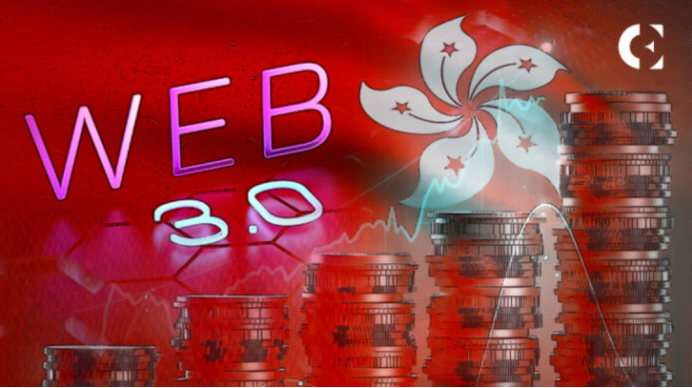
In order to actively respond to the "Policy Declaration on the Development of Virtual Assets in Hong Kong" issued by the Hong Kong Financial Services and the Treasury Bureau on October 31, 2022, to promote the development of Hong Kong into an international virtual asset center. On December 7, 2022, the Legislative Council of Hong Kong passed the latest amendment to the Anti-Money Laundering and Terrorist Financing Ordinance 2022 ( "2022 Amendment Ordinance" ), which means that Hong Kong's new licensing system for virtual asset service providers ( VASP system ) will be officially implemented on June 1, 2023.
On February 20, 2023, the Hong Kong Securities and Futures Commission ( SFC ) issued the "Consultation Document on Proposed Regulatory Requirements Applicable to Operators of Virtual Asset Trading Platforms Licensed by the Securities and Futures Commission" ( VASP Consultation Document ), Conduct consultations and suggestions on the relevant regulatory provisions of the VASP system to prepare for the upcoming implementation of the VASP system.
After the formal implementation of the VASP system, all centralized virtual asset exchanges operating in Hong Kong or actively promoting their services to Hong Kong investors, regardless of whether they provide security token trading services, will be required to be licensed by the SFC and subject to its regulations. Supervision. All virtual asset exchanges must comply with the provisions of the "Guidelines Applicable to Virtual Asset Trading Platform Operators" ( VASP Guidelines ), which were previously applicable to virtual asset exchanges under the Securities and Futures Ordinance No. 1 License (Securities Trading Services ) and No. 7 license (providing automated trading services) will be superseded. At the same time, the VASP guidelines also make transitional arrangements for the relevant virtual asset exchanges.
1. Background of revision of VASP system
In the VASP consultation document, SFC clearly elaborated the background of establishing a new VASP system. In the ongoing encryption winter, crashes occurred one after another, which intensified the risks in the virtual asset market, especially the collapse of FTX, which caused tens of millions of investors to suffer heavy losses. The risks brought about by the current closeness between the virtual asset market and the traditional financial market have highlighted the importance and necessity of effective supervision of the virtual asset industry.
Major jurisdictions around the world are changing their regulatory approach from a looser approach (i.e. regulation from the perspective of combating money laundering and payments) to a more comprehensive approach (i.e. regulation from an investor protection perspective). The SFC is ahead of other jurisdictions and has gradually established a virtual asset regulatory framework as early as 2018, mainly targeting virtual asset service providers that provide security token services. Today, the virtual asset industry has undergone tremendous changes. In order to fully supervise all centralized virtual asset trading platforms in Hong Kong and implement the latest standards of the International Financial Task Force (FATA), the Hong Kong government passed legislation Introduced the 2022 Amendment Regulations and established a new VASP system in order to achieve a more appropriate balance between investor protection and market development.
2. What is a virtual asset
According to the "2022 Amendment Regulations" 53ZRA and VASP guidelines, virtual assets (Virtual Asset, VA) are broadly defined as:
(a) A cryptographically protected representation of value in digital form that:
(1) Expressed in the form of calculation unit or storage of economic value;
(2) Meet one of the following:
A. Being or intended to be used as a publicly accepted medium of exchange for one or more of the following purposes: (I) payment for goods or services; (II) discharge of debt; (III) investment; or
B. Provide the right, capacity or means to vote on the following matters: the management, operation or governance of any matter related to the cryptographic protection of value in digital form, or any change in the terms of any arrangement applicable to cryptographic protection of value in digital form;
(3) can be transferred, stored or traded electronically; and
(4) Possess other characteristics prescribed by SFC from time to time by notice published in the Gazette;
(b) According to the Hong Kong Financial Services and the Treasury Bureau in the form of a notice published in the Gazette as a digital representation of the value of virtual assets.
According to 53ZRA of the 2022 Amendment Regulations, the following items are excluded from the definition of VA: (1) Digital currency issued by the central bank, an entity performing the functions of a central bank, or issued by an entity authorized by the central bank on behalf of the central bank (CBDC ); (2) limited-use digital tokens (non-transferable, non-exchangeable, and non-fungible in nature, such as gift cards, customer loyalty rewards programs, and electronic payment services; (3) stored value facilities (subject to the Payment Systems and Stored Value Facilities Ordinance); and (4) securities or futures contracts (regulated by the Securities and Futures Ordinance).
The definition of VA in the 2022 Amendment Regulations will cover most of the virtual currencies in the market, including BTC, ETH, Stablecoin(Stablecoin), utility token (Utility Token) and governance token (Governance Token), etc. For Stablecoin, in January 2023, the Hong Kong Monetary Authority issued the "Consultation Summary of Encrypted Assets and Stablecoin Discussion Documents", expressing its expectation to implement regulatory arrangements in 2023/24, and will establish licenses and permits for Stablecoin related activities. system.
The attributes of NFT are linked to the attributes of the assets behind it, and there is no clear definition under the VASP system yet. When SFC issued a reminder to investors on NFT risks on June 6, 2022, it stated that if NFT is a true digital representation of collectibles (art, music or movies), activities related to it are not within the scope of SFC's supervision. However, some NFTs cross the boundary between collectibles and financial assets, and may have the attributes of "securities" regulated by the Securities and Futures Ordinance, so they will be regulated.

3. What is virtual asset service
According to Schedule 3 B of the 2022 Amendment Regulations and VASP guidelines, activities related to virtual asset services (VA Service) are defined as: operating a virtual asset exchange :
(a) by means of electronic means, to provide services that comply with the following descriptions:
(1) The service:
A. Offers to buy or sell virtual assets are frequently made or accepted in a manner in which such offers or acceptances result in, or result in, a binding transaction; or
B. Persons are introduced or recognized to each other on a regular basis with a view to negotiating or consummating a sale or purchase of a virtual asset, or with the reasonable expectation that they will negotiate or complete a sale or purchase of a virtual asset in some manner , and the sale and purchase are negotiated or consummated in such a manner that a binding transaction is formed or results in a binding transaction; and
(2) In the service, client money or client virtual assets are directly or indirectly possessed by the person providing the service; and
(b) Any virtual asset trading activities and incidental services outside the platform provided by the platform operator to its customers.
Therefore, for (1) a centralized virtual asset exchange operating in Hong Kong, and (2) an offshore centralized virtual asset exchange that actively promotes its services to Hong Kong investors, if it engages in the above-mentioned related activities, it is a virtual exchange. The scope of asset services. At present, it does not involve other virtual asset services other than centralized virtual asset exchanges (such as payment exchange, asset custody, and DEX, etc.), but it does not rule out that the Hong Kong Financial Services and Treasury Bureau will issue an announcement in the Gazette Incorporate other virtual asset services.
According to the "2022 Amendment Regulations" 53ZRD, any entity operating virtual asset services must obtain a VASP license from SFC. It should be an offense to operate a business providing virtual asset services without a VASP license. Upon conviction, the maximum penalty is a fine of HK$5 million and imprisonment for 7 years; A fine of HK$100,000 is imposed for each day during the period.
4. Requirements for applying for a VASP license
Under the new VASP regime, applicants are licensed and regulated by the SFC in accordance with the 2022 Amendment Regulations and VASP guidelines. According to Article 53ZRK of the Amending Regulations, SFC can only issue VASP licenses to the following applicants:
(1) A company established in Hong Kong with a fixed place of business, or a non-Hong Kong company established outside Hong Kong and registered under the Companies Ordinance (Chapter 622 of the Laws of Hong Kong); and
(2) The SFC is satisfied that:
(a) the applicant is a fit and proper person to be licensed for the relevant virtual asset services;
(b) At least 2 persons apply to be the responsible officer (Responsible Officer, RO) of the applicant, each of whom is a suitable person connected with the business of providing services related to virtual assets;
(c) each of the applicant's directors (other than a responsible officer) is a fit and proper person connected with the business of providing services relating to virtual assets;
(d) the ultimate owner of the applicant corporation is a fit and proper person connected with the business of providing services relating to virtual assets; and
(e) An application has been made to seek SFC's approval of premises for the storage of records or documents.
Applicants need to apply to SFC in accordance with the VASP guidelines and regulations, and apply to SFC for the VASP license application requirements, procedures, and many other requirements similar to the requirements for applying for No. 1 and No. 7 licenses under the Securities and Futures Ordinance. These detailed requirements include: requirements for suitable persons, requirements for competency, requirements for continuous training, general principles, financial soundness, operation of virtual assets on the platform, prevention of market manipulation and illegal activities, transactions with customers, protection of customer assets, Management, supervision and internal control, network security, avoidance of conflicts of interest, record keeping, auditor audit, ongoing reporting/notification responsibilities, etc.
V. Arrangements for the transitional period
The 2022 Amendment Regulations provide transitional arrangements for existing virtual asset exchanges. For exchanges that have operated in Hong Kong and established meaningful and substantive businesses before June 1, 2023, including (1) exchanges that have or are applying for licenses under the Securities and Futures Ordinance, including (2) ) are unlicensed exchanges that carry on business in non-security tokens under the SFO to be eligible to participate in the transitional arrangements. Exchanges eligible to participate in the transitional arrangement must meet the conditions set out in Schedule 3G of the 2022 Amendment Ordinance in order to continue to operate in Hong Kong from 1 June 2023 to 31 May 2024, and will continue to do so from June 2024 It will be subject to the licensing system of VASP from January 1st.
Companies that plan to provide virtual asset services in Hong Kong after June 1, 2023 must apply to and obtain a VASP license from the SFC in advance.

6. Dual License
After the formal implementation of the VASP system, all centralized virtual asset exchanges operating in Hong Kong or actively promoting their services to Hong Kong investors, regardless of whether they provide security token trading services, will be required to be licensed by the SFC and subject to its regulations. Supervision. The SFC will supervise the security token exchanges conducted by virtual asset exchanges in accordance with the Securities and Futures Ordinance, and will also regulate non-security token exchanges conducted by virtual asset exchanges in accordance with the 2022 Amendment Regulations. Supervision.
Considering that the nature of virtual assets may evolve over time, such as from non-security tokens to security tokens, in order to avoid violations of any licensing regime, virtual asset exchanges should also comply with the Securities and Futures Ordinance " and the 2022 Amendment Ordinance to obtain dual licensing and approval from SFC. For this purpose, SFC has simplified the application procedure by submitting a comprehensive application form online and indicating that the two licenses are being applied for at the same time.
7. VASP Consultation Document
After the VASP system is officially implemented, all virtual asset exchanges must comply with the VASP guidelines. The VASP Guidelines are prepared in accordance with the requirements applicable under the Securities and Futures Ordinance, in particular the Terms and Conditions Applicable to Operators of Virtual Asset Trading Platforms in 2019, with some amendments to the old conditions.
SFC hopes to solicit public comments on the VASP guidelines, the main contents of which include: (1) Suggestions on allowing retail investors to use licensed virtual asset trading platforms, the premise of allowing the platform is to comply with a series of investor protection measures, such as KYC , Token Governance (Token Inclusion and Review Committee), Token Due Diligence and Inclusion Guidelines (General, Specific), Other Due Diligence, Information Disclosure; (2) Recommendations on Insurance/Compensation Arrangements; (3) Virtual Transactions of asset derivatives; (4) Other adjustments to the current regulations in the VASP guidelines; (5) "Guidelines for Combating Money Laundering and Financing of Terrorists (Applicable to Licensed Corporations)"; transitional arrangements for the VASP system; (6) Dual license; (7) external assessment report.
8. Conclusion
The deadline for the VASP consultation document has expired, pending the release of the follow-up consultation conclusion by the SFC, it is not expected that there will be any major changes in general. The time until the implementation of the VASP regime is very short, regardless of whether it is: (1) a virtual asset exchange already operating in Hong Kong; (2) an offshore operating virtual asset exchange that actively promotes its services to Hong Kong investors; Whether it is (3) planning to operate a virtual asset exchange in Hong Kong; (4) traditional financial institutions involved in virtual asset exchanges, VASP license applicants should prepare for business compliance and related license applications in advance.

——END——
This article is for learning and reference only, and I hope it will be helpful to you. It does not constitute any legal or investment advice, not your lawyer, DYOR.