What is the zk-SNARK that Vitalik spares no effort to promote? What current blockchain problems can zk-SNARK technology solve?
Written by: Haotian
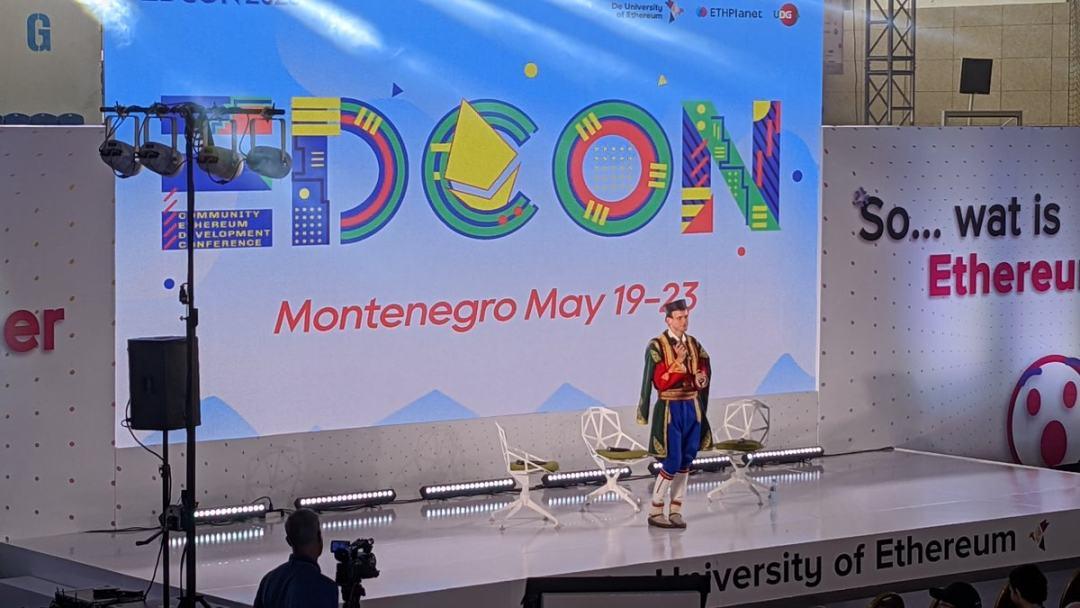
At the EDCON conference in Montenegro, @VitalikButerin V God systematically explained the technical challenges of the Ethereum network in terms of expansion, privacy, security, etc., and finally concluded that zk-SNARK will be as important as the blockchain in the next 10 years.
What exactly is the zk-SNARK that V God spares no effort to push? What current blockchain problems can zk-SNARK technology solve?
In the next Thread, let me discuss it together.
The full name of SNARK is (succinct non-interactive argument of knowledge), which is succinct non-interactive argumentation of knowledge. Its core is to build a proof system through mathematical algorithms, so that the verifier can verify the correctness of the data itself without knowing the original data.
The implementation process involves complex technologies such as verifiable circuits, elliptic curve cryptography principles, hash functions, and encryption algorithms, so I won’t go into too many details here.
Since SNARK can compress the original data into a very small proof to verify the correctness of its input data, coupled with the technical foundation of zk zero knowledge, zk-SNARK can greatly improve blockchain scalability, privacy, security, etc. Stretch your fists.
Especially after Ethereum launched the Makarov Stochastic Algorithm (MAST) in 2018, zk-SNARK can be directly integrated into the Ethereum system to solve the current bottleneck problem of the Ethereum network.
This is why, although the zk-STARK technology native to @Starknet can handle more complex computing problems (avoiding quantum computing attacks, etc.), zk-SNARK has been placed with greater expectations.
In particular, some of the blockchain paradoxes that everyone is confused can be effectively resolved after replacing the bottom layer of zk-SNARK, such as: potential hacker money laundering for privacy protection, centralized agency interference that social recovery cannot escape, and so on.
Let's talk about scalability first. zk- Rollup technology is highly ahead of OP- Rollup, and it is a final solution for the second layer of Ethereum.
OP first assumes that all transactions are optimistic, and after submitting them on the chain, there will be a 7-day fraud proof challenge period, while zk can quickly and safely ensure that every transaction on the chain is legal based on mathematical algorithms. ( For details, please refer to a previous Thread )
Here zk-SNARK solves a paradoxical problem of Ethereum scalability, the contradiction between scalability and centralization.
Although the actual landing scenario of the OP- Rollup solution is more mature, it still has the potential risk of centralization in the process of verifying the sequencer and optimistic challenges.
Of course we can be "optimistic", but in the end we must have SNARK to achieve an absolutely decentralized Rollup.
Let's look at privacy. Based on the existing blockchain technology context, we will fall into a logical paradox in the development of privacy technology. Will privacy be a wedding dress for hackers in the end?
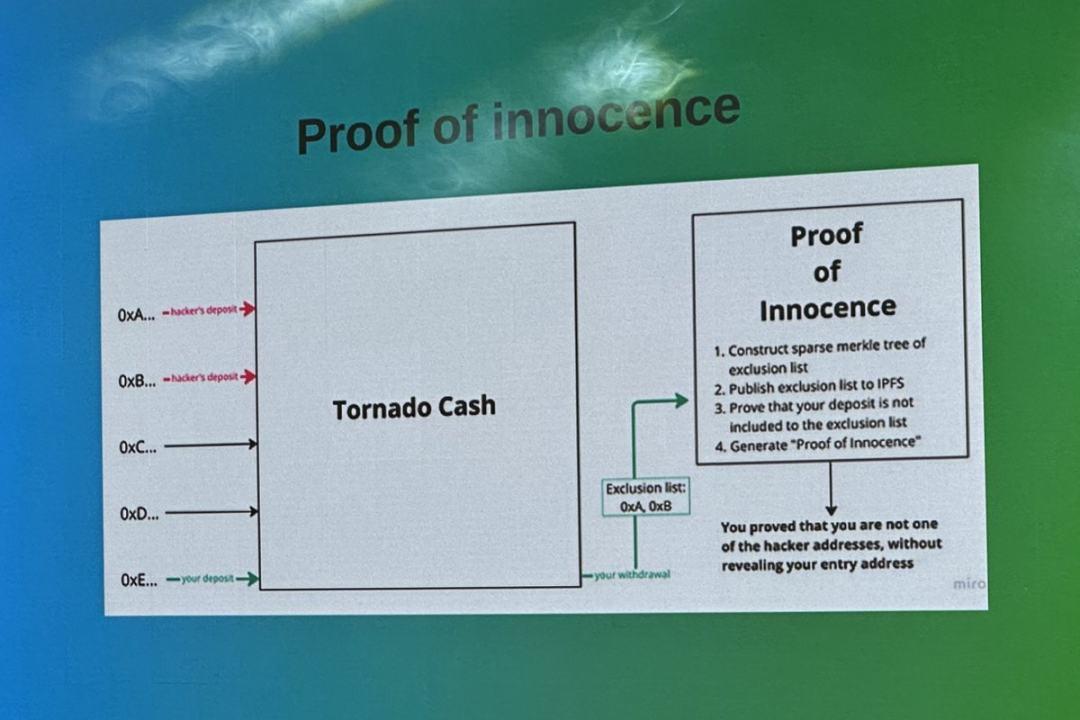
However, if it is based on zk-SNARK, a Proof of innocence (POI) solution can be made to protect users from depositing and withdrawing funds through privacy while avoiding criminals from using it to do evil.
Specifically, POI technology can be applied to Tornado-like protocols.
POI technology provides each user with a digital fingerprint generated based on the history of the blockchain state and the private key. When a hacker tries to launder money through Tornado’s mixed currency transaction pool, if the address of the withdrawal request he provides is inconsistent with the address of the deposit ( different private keys), it will be intercepted and returned to the original mixed currency address.
Unknown assets equal to hackers cannot escape tracking through the currency mixing system.
Of course, it is also possible to directly construct the exclusion list Merkle tree as V God’s speech pointed out, which is equivalent to adding a blacklist mechanism to the Tornado protocol.
If the deposit of a normal user is not in the list, the proof of innocence can be generated and Tornado can be used normally, and vice versa.
Although blacklisting is effective, there is a risk of centralization. Personally, I think it is more meaningful to block transactions with inconsistent private keys for deposits and withdrawals.
Finally, let’s talk about the anti-censorship paradox (security) issue of third-party parties.
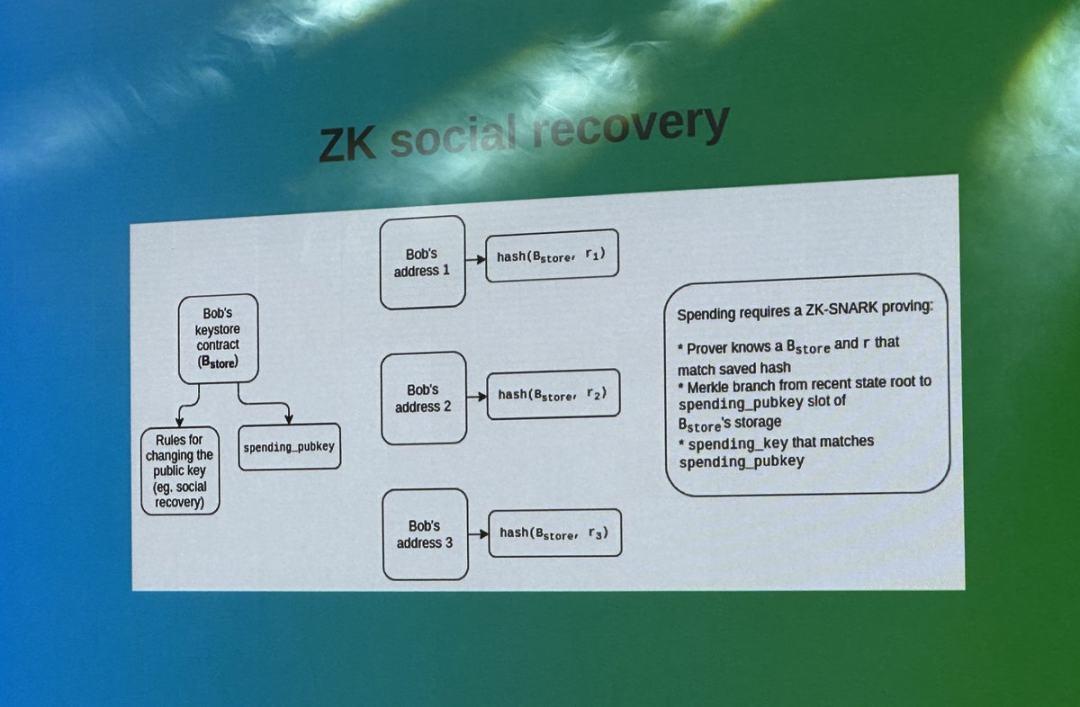
The Social Recovery function is undoubtedly the way for large-scale blockchain applications (Mass Adoption must go, but from the community protests that @Ledger opened this function two days ago, it is not difficult to see that Recovery cannot be established at the center of the Third party.
In simple terms, when users generate multiple private key fragments, they can encrypt the fragments and use the zk-SNARK proof system to generate proofs, and then distribute the proofs to trusted institutions or friends.
If the user's private key is lost, a third party can be requested to provide fragmented data certificates, and then use zk-SNARK to verify the accuracy of these certificates, thereby realizing the function of social recovery without revealing private key fragments.
After the above content is fully understood, it is not difficult to see the importance of zk-SNARK technology for the blockchain system. It can solve various problems in the current Ethereum network, such as scalability and centralization, privacy and evil, security and anti-censorship. The developmental paradox problem.
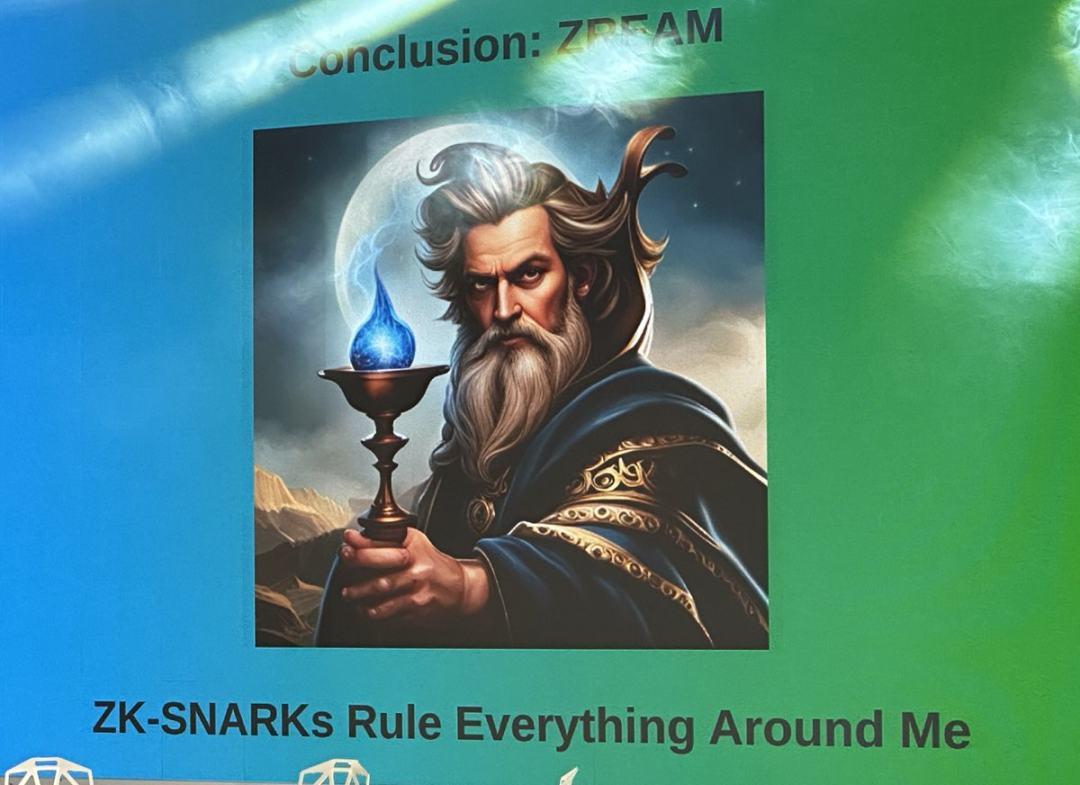
So V God said that zk-SNARK will be as important as the blockchain in 10 years, maybe Ethereum will also be zk-SNARK in the future, um, zk-SNARKS Rule Everthing Arround Me.