



Investing in meme is, after all, a superb skill that emphasizes "short, smooth and fast".
Written by: Alex Xu
This issue of Clips comes from a discussion between the author and other investors on the topic of Meme in an encrypted community. The author narrates his views in this article to fully express his views.
The content of the following article is the author's staged opinions as of the time of publication. There may be errors and prejudices in facts and opinions. They are only for discussion purposes, and we also look forward to corrections from other investment and research peers.
Buy the dips in the bear market, don't choose the Meme project.
That sounds like nonsense, doesn't it? Who would choose a dog with a life cycle as long as a few months and as short as a day for long-term configuration?
However, the memes discussed in this article are "blue-chip memes" with huge market value such as Doge, Shiba, and Pepe, which have been registered in major firms.
There are some views that the already influential "new generation of small-cap Meme" like Pepe will replicate Doge's trend in the next bull market cycle and achieve the goal of a market value of 10 billion.
But in my opinion, when doing cross-cycle allocation, it may not be a good variety to buy at the buy the dips during a bear market.
Source of Value of Meme Token
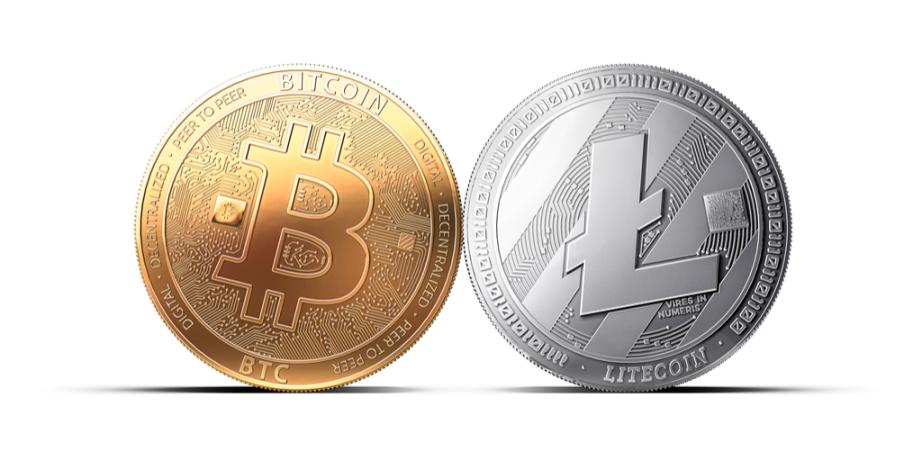
Meme is a phenomenon in which culture and information self-reproduce, replicate and spread, and Meme tokens are the tokens of encrypted projects with meme properties. One of its characteristics is that the token itself generally has no direct value capture, and projects are often parasitic or derived from meme IPs outside the encrypted world, such as Doge's Shiba Inu, Pepe's Pepe Frog, or the recently popular, token name Harry Potter, Obama, and Sonic for Bitcoin (4 stacks of Buffs). In addition to well-known figures and popular pop culture, some widely accepted opinions can also be a source of meme. For example, compared to BTC's positioning as "digital gold", LTC was once considered "digital silver". As a financial Meme, it has inherited the dual cultural power from the precious metal silver and BTC.
Unlike other commercial encryption projects such as DeFi and web3Game, Meme does not seem to have a business model, but its business model and PMF (Product Market Fit, products that match user needs) are very clear, namely: for the public encryption investors Provide a speculative medium with great imagination.
The so-called "providing for public investors" means that the concept of Meme is simple and fresh, and its concept may be weird or conflicting, so it is easier to capture the attention of the public in the mass of information.
The so-called "extremely imaginative" means that they have no actual business as the gravity of the currency price, and only the valuation of the word "consensus" can be higher than the sky.
No matter how serious an encryption practitioner is, it is impossible to deny that "speculating to make money" is an important or even the number one driving force in the encryption world, and the endless Meme projects are PMFs that respond to such needs.
The advantages of encrypted Meme tokens over other traditional speculative targets are also very obvious:
- Unprecedented "accessibility". As long as you have an encrypted wallet and network, people anywhere in the world can participate in its speculation, no KYC, no registration, no review, no identity threshold, and the transaction time is 7×24. In the traditional financial world, it is very difficult for you to participate in the speculative frenzy of Gamestop in 2021
- Information transparency. Although it is still possible to be manipulated and influenced by Meme issuers in terms of code, funds, and rules, the transparency of encrypted Meme's token information, capital flows, and algorithms has greatly increased. Compared with the traditional black-box Ponzi, people's speculation "Information starting point" is more fair
- There are many varieties, and there is never a shortage of targets. The hard cost of initiating and creating a meme project is very low, and the projects emerge in endlessly, "there are always many opportunities"
Unlike conventional web3 business projects (such as DeFi), the growth of the intrinsic value of Meme tokens comes solely from the attention of future speculators (no derogatory meaning) and the marginal inflow of funds. For the former, we mainly predict the growth of its business. Or minus, for the latter we need to guess the future vote of speculators' attention and money in the market.
This also means that the main homework of the operators of the Meme project will be to win over and tease the public's attention, direct the attention to the correct narrative direction, and do their utmost to promote the spread of Fomo's emotions.
The problem is that not only is it difficult, but it may not be in the long-term interests of the new generation of meme project operators.
Meme tokens lack a moat
The development of the Meme project has obvious stages:
- Conception and design of narrative: to challenge the mainstream, to stimulate fighting emotions, to be absurd and to break through the rules, but not too far away from the masses.
- Early promotion: Attracting the attention of early speculators, whether you can get recommendations from influential people at this stage is the turning point of success or failure
- Shaping and amplifying Fomo: stories of early adopters’ fortunes spread widely, greed attracts more, people believe their current selves are not the last stick
- Larger-scale adoption: log in to a large exchange, get rid of the label of a dog, and become a real public speculation target
- Sustaining Attraction: Defending Pre-existing Attention and Market Share of Speculative Money
The memes that are still in the early stage are weak in vitality. Under the premise of large-cycle configuration, this article mainly discusses the "meme blue chips" that have entered the 4th and 5th stages.
As mentioned earlier, the operation of the Meme project is actually the attention of the public, but the shift of public attention is inevitable. The transfer of attention is much easier than users' funds, product usage habits and preferences for specific brands.
What's more, the cost of trying to create a meme is so low, which means that existing memes face an endless stream of subsequent projects competing for the attention and resources of speculators.
However, in the face of the attention competition of latecomers Meme, the existing Meme can actually maintain the existing attention share is quite limited. Take Shiba as an example. It was born as a meme in the bull market, and gained the attention of the market by airdropping 50% of its tokens to Vitalik, which is both novel and topical. Lost the status of "dog prince".
However, after landing on the major head CEX, the gradual reduction of its topicality and attention-gathering ability has become inevitable. Although the Shiba project side made frequent moves later, there was no shortage of "doing" achievements such as self-built Dex, self-built L2, issuing NFT, engaging in metaverse and games, trying to transform from a pure meme to a business-oriented project, but both business performance and currency prices are still unreliable. Disappointing, its DEX Shibaswap only has a TVL of 21 million US dollars, and the currency price has far underperformed the market in a year.
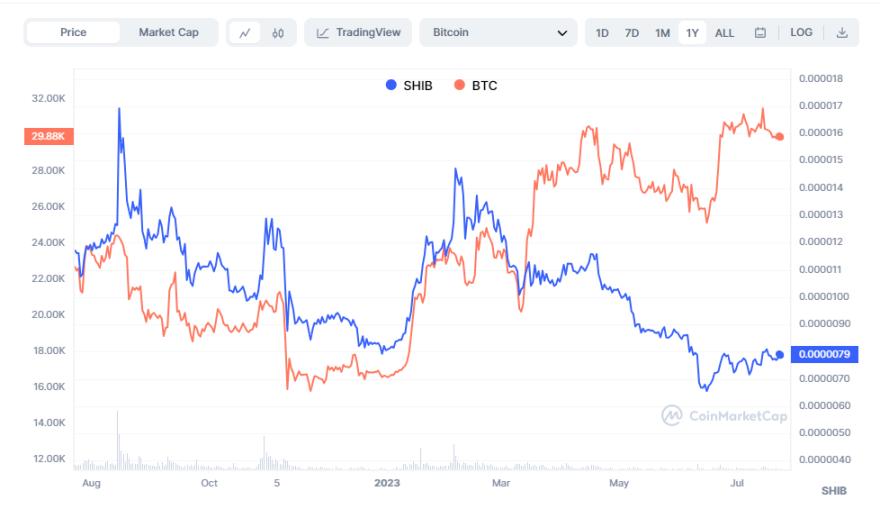
Comparison of the price trend of shib and BTC within one year, source: coinmarketcap
It is not easy to transform Meme projects into business projects. On the one hand, business projects have more detailed strategies, products, and technical steps that need to be planned and executed, and the challenge is project operation capabilities in different dimensions. More importantly, the clumsiness of "working hard" does not appear sexy, which is contrary to the anti-mainstream, evil, subculture and high-profile at the beginning of the Meme project, and further disintegrates the charm of Meme, which is already gradually dissipating.
Different from business-type projects that can somewhat build certain barriers to competition based on the business model, Meme-type projects often lack the means to maintain their own intrinsic value. The dissipation of attention from speculators is inevitable, and hard work often results in opposite effect.
The team behind the meme also lacks the motivation to maintain it in the long run
In this year when speculative attention is extremely scarce, the success of the new generation of Meme is rarely accidental, and most of them are planned and promoted by centralized cluster forces. Most of this power comes from the collusion of multiple forces. In addition to funds and exchange resources, it also needs the boost of KOL at the right time and the access of powerful business resources (the PEPE project was born less than a month ago and was opensea access as one of the means of payment), etc.
However, after a meme is successful, the cost of maintaining its consensus and attention is getting higher and higher, and it is smarter for the meme team to use the money earned from the last Pepe in a horse race to make more differences The "meme experiments" of different styles and narratives are looking forward to the birth of the next Pepe, and these new "Pepes" that they recreated and introduced to the market constitute a competition for the attention of the "old Pepe".
Since the core team of the Meme project is mostly anonymous, their stay in a project is far less burdensome than the founders of other commercial projects. The real control team's golden cicada escaped the shell, further deteriorating the situation of the old Meme project.
Counterexamples: Dogecoin and Bitcoin
Seeing this, maybe you have to give a counterexample. "Doge, which was born in 2013, can be rejuvenated in the last bull market. Why can't Pepe, as a new generation of meme?"
Doge is just a positive example of the life cycle of most memes decaying. Because Doge's outstanding performance in the last bull market was the result of the injection of Musk's huge personal influence. "The project of the world's richest man, Musk, is a new meme for Doge to take off. If you exclude Musk's support for Dogecoin from 2019, I believe that the meme element of Dogecoin itself has already faded in the ever-changing encryption narrative. dim.
So the question is, how many charismatic figures like Musk in this world will inject their influence into the Pepes in the next cycle, so that the old Memes will be reborn in the bull market? There are only a handful of people in the world who have the same level of influence as Musk. In addition to the condition of "standing up and calling out for a Meme", the list of people who meet this double standard is empty.
Litecoin, which was born in 2011, occupies the powerful meme of "bit gold and lite silver", but in the absence of other new memes and influence injections, the trend of each cycle is also weakening day by day.
In fact, the best counterexample to "Meme currency cannot cross the cycle" is not Doge, it should be Bitcoin. As the originator of memecoin, it is still the favorite of old and new crypto investors and the ballast stone of asset allocation. However, as the first Meme in the history of crypto investment, Bitcoin is the starting point for the birth of all crypto projects. The power of its Meme comes from its unique and scarce "orthodoxy".
This kind of "orthodoxy" is not possessed by all other Memes, so they are destined to face the attention competition of generations of new Memes in the future.
Difficulty in captive attention, the inevitable departure of the initiator team, and the mass production of competing projects.
Investing in meme is, after all, a superb skill that emphasizes "short, smooth and fast".
About Meme, you can also read: " Everything is Meme "






