Original author: @Minta, PSE Trading Analyst
Original source: mirror
TL;DR
- Basic concepts and significance of full-chain games
- Value chain dismantling-Web2 game value chain VS Web3 game value chain
- Infrastructure layer - game public chain, game engine, communication structure, rendering layer, etc.
- Middleware - SDK integration, service integration, communication protocols, monitoring tools, etc.
- Distributors - Analysis of different distribution strategies and case introductions
01Overview
Full on-chain game (Full on-chain game) refers to a game that completely stores game logic and data on the blockchain, and this kind of game relies on smart contracts to implement when running and interacting. Corresponding to this is a partial on-chain game, which only stores some game elements on the blockchain. Some on-chain games can be divided into core logic on-chain, asset on-chain, achievement on-chain and interactive on-chain according to different on-chain content.
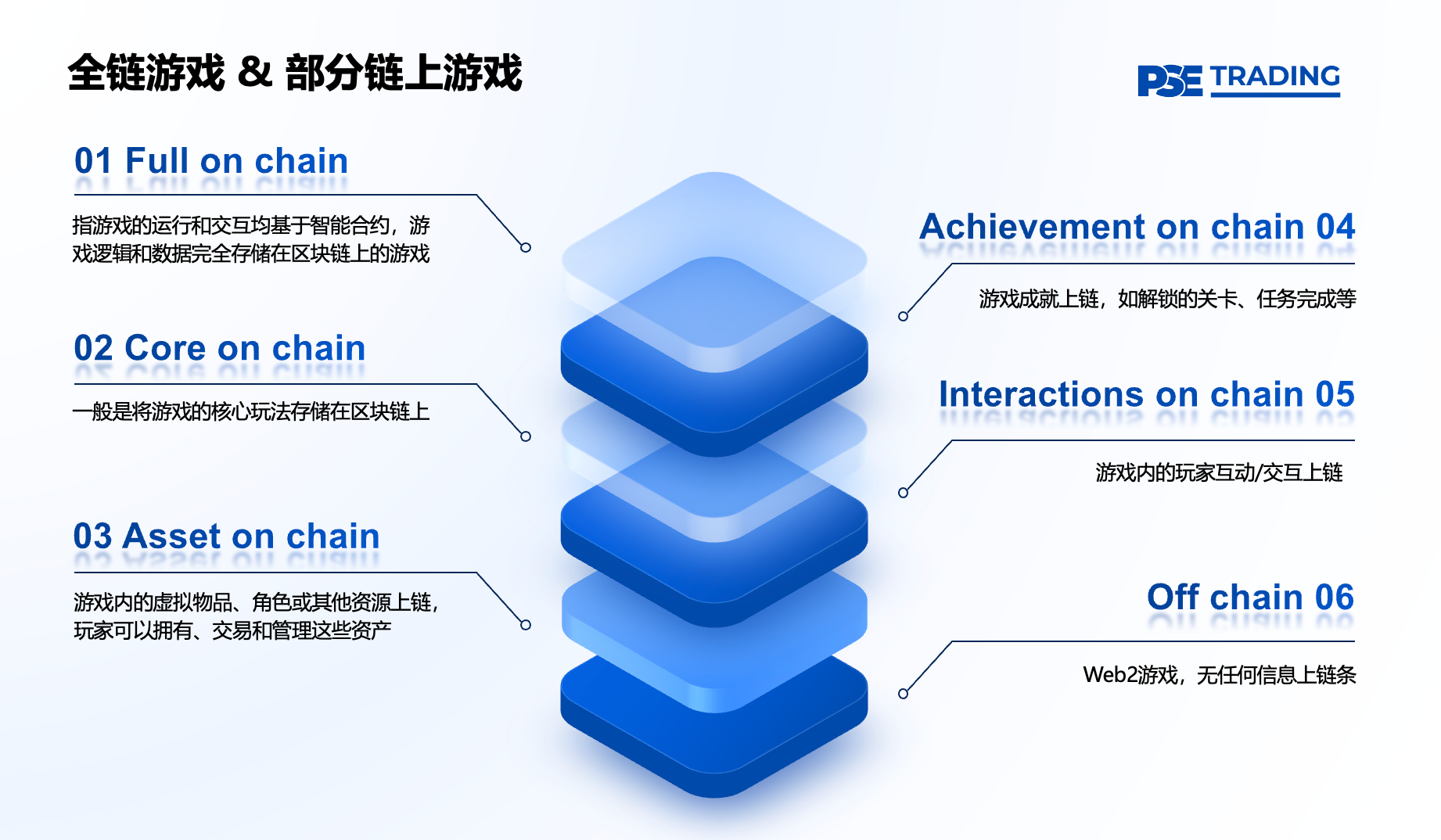 The core logic is on the chain, and the algorithm and core data of the game are generally stored on the blockchain. For example, in a chess game, the basic rules of chess are placed on the chain, and the state of the chessboard and all core data related to the game process are recorded on the chain. The movement of each chess move and the judgment of victory or defeat are all carried out on the blockchain through smart contracts. Asset on-chain refers to placing virtual items, characters or other resources in the game on the chain, so that players can fully own, trade and manage these assets, provide players with economic benefits, and encourage players to participate in the construction of the game ecosystem. An open economy offers possibilities.
Achievement winding is also an interesting concept. Players' achievements in the game can be recorded on the blockchain as their glorious record in the game world. This allows the player's achievements not only to be limited to the game, but also to be recognized on the chain.
Expanding further, there is interactive chaining. This is not just the player's achievements, but also the record of the player's interaction in the game community, such as chatting with other players, participating in community activities, etc. These are all recorded on the chain, like an interesting game resume, making every participation of players meaningful.
Of course, full-chain games are still an emerging concept and are currently in the early stages of development. What is clear is that by abstracting the various modules in the game and placing them on the blockchain, more innovative possibilities are created. However, the entire industry is still in the stage of trial and error as to what specific impact will be produced after the game is fully on-chain. From a qualitative analysis point of view, the most powerful reasons for migrating the entire game to the blockchain can be summarized in the following two points:
-
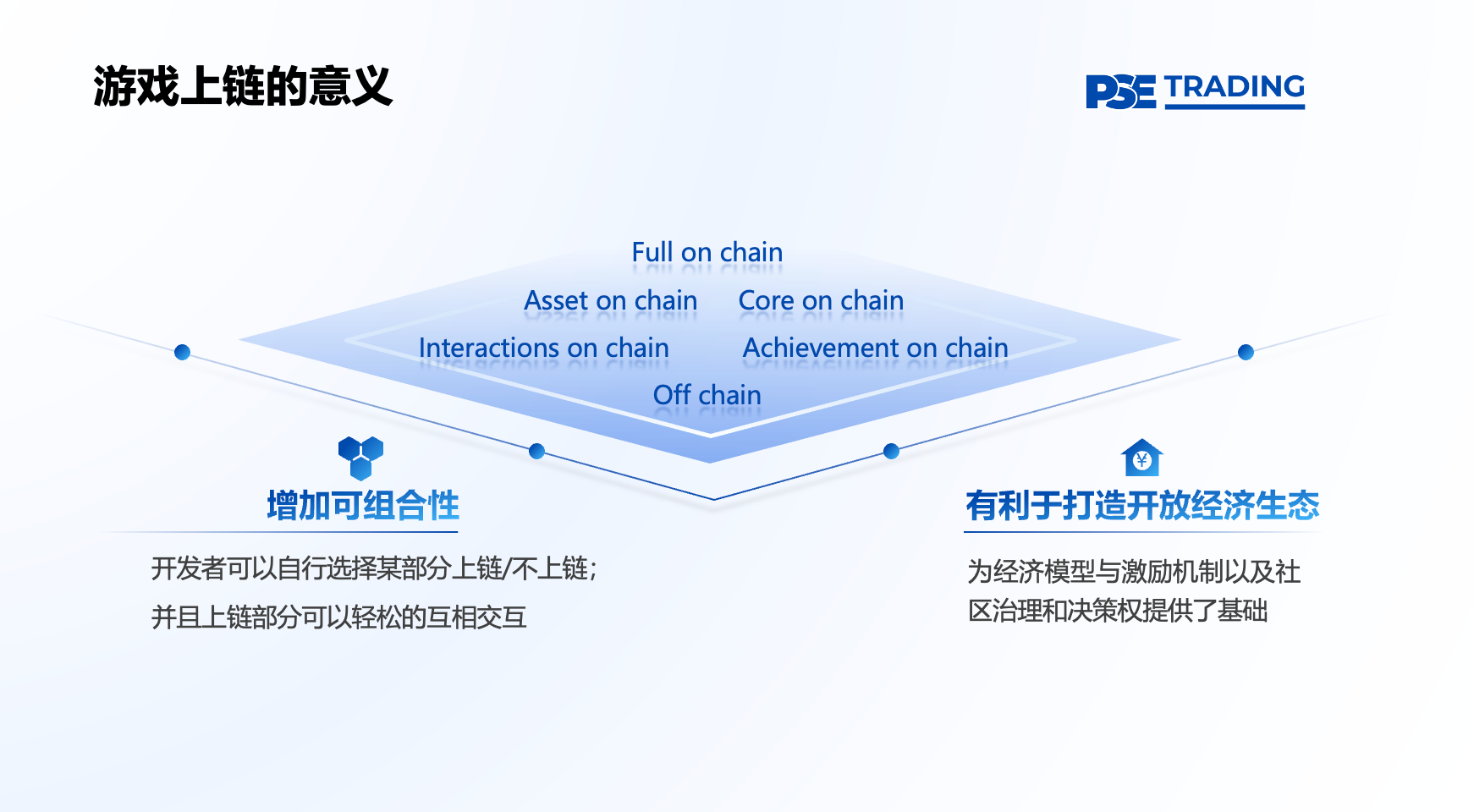 Increase composability:
Build more game modules through smart contracts, including security auditing, access control, and resource metering. Traditional games have a hard time adapting to this environment, and even harder to rearrange around composable modules. At the same time, smart contracts can also be used to create more UGC (User Generated Content) modules, thereby lowering the threshold for game content production, promoting the creation of UGC, and improving the playability of games and the composability of content.
- Open economy:
With the increase of Web3 players and the enhanced interoperability of various ecology, this makes the game economy more open, and players can participate in the economic activities in the game in a more flexible way.
The follow-up articles of the same series of PSE Trading will explore the rationality of game on-chain in more detail. This article focuses on the combing of the concept of full-chain games and the presentation of a panorama of the value chain, aiming to give readers a clearer understanding of all links in the full-chain game industry chain.
02Value chain
2.1Web2 game value chain
When discussing the value chain of the Web3 game industry, we can learn from the experience of the Web2 game industry. The Web2 game industry can be roughly divided into four key layers: infrastructure layer, middleware layer, service layer and application layer.
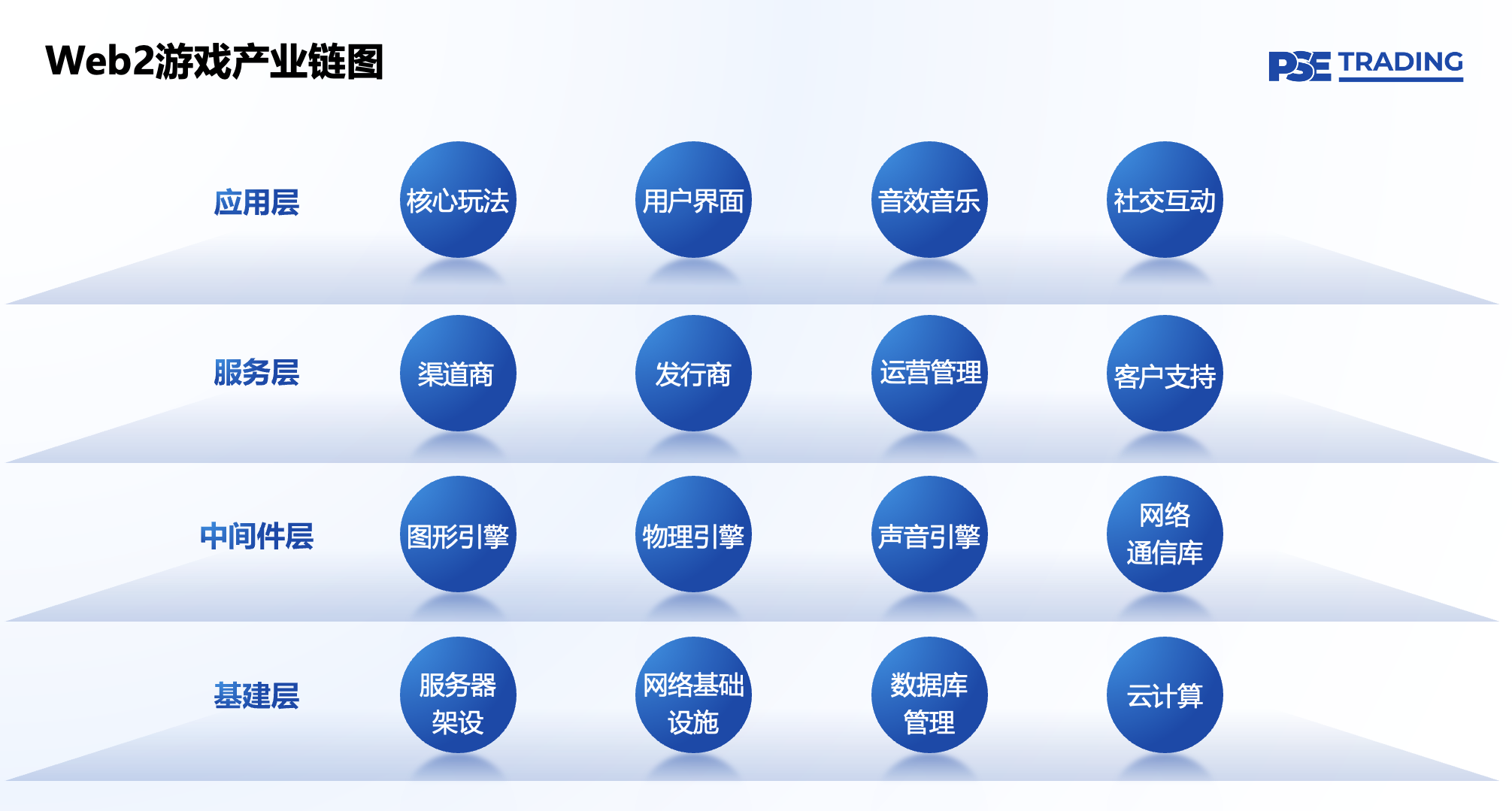 The infrastructure layer is the foundation of the entire game ecosystem. It covers the infrastructure and key technologies necessary to build a game operating environment. For example, games need to be run on servers, such as Amazon Web Services (AWS), Microsoft Azure, etc., which provide the basis for server construction. Another example is network infrastructure, which is mainly used for online functions of games, such as network hosting services.
The middleware layer mainly focuses on solving the technical complexities in the game development and operation process. For example, the graphics engine is responsible for processing the graphics rendering of the game and presenting players with exquisite game graphics. The physics engine can be used to simulate the physical behavior of objects in the game, adding a more realistic interactive experience to the game; for example, Havok and PhysX are well-known physics engines that inject vivid elements into the physical effects in the game.
The service layer is responsible for multiple key processes between the game and the end user. This includes game distribution, operations, customer support, and terminal services. Taking distribution as an example, channel providers play an important role in introducing games to the market and ensuring that the games can reach a large number of players. Operationally, various marketing strategies and promotional activities are implemented at this level to ensure the visibility and appeal of the game.
The application layer is the core content and user interaction that the game ultimately presents to players. At this level, the core gameplay, graphical interface, sound effects, music, and social interaction of the game are displayed.
In short, the value chain of traditional Web2 games is interrelated from infrastructure, technical middleware to game application design. But at the same time, as a highly industrialized track, Web2 games have a value chain with a fine division of labor, and each scenario/requirement has a specific tool/team to complete. By learning from the value chain of Web2 games, we can better understand the composition of the Web3 game ecosystem.
2.2Web3 game value chain
Compared with the maturity of the Web2 game track, the full-chain game field is still in the early stages of development. Therefore, the granularity of the full-chain game industry chain is not as fine as that of Web2 games. However, the relationship between the upstream and downstream of the full-chain game industry chain and the Web2 game industry chain still have similar logic.
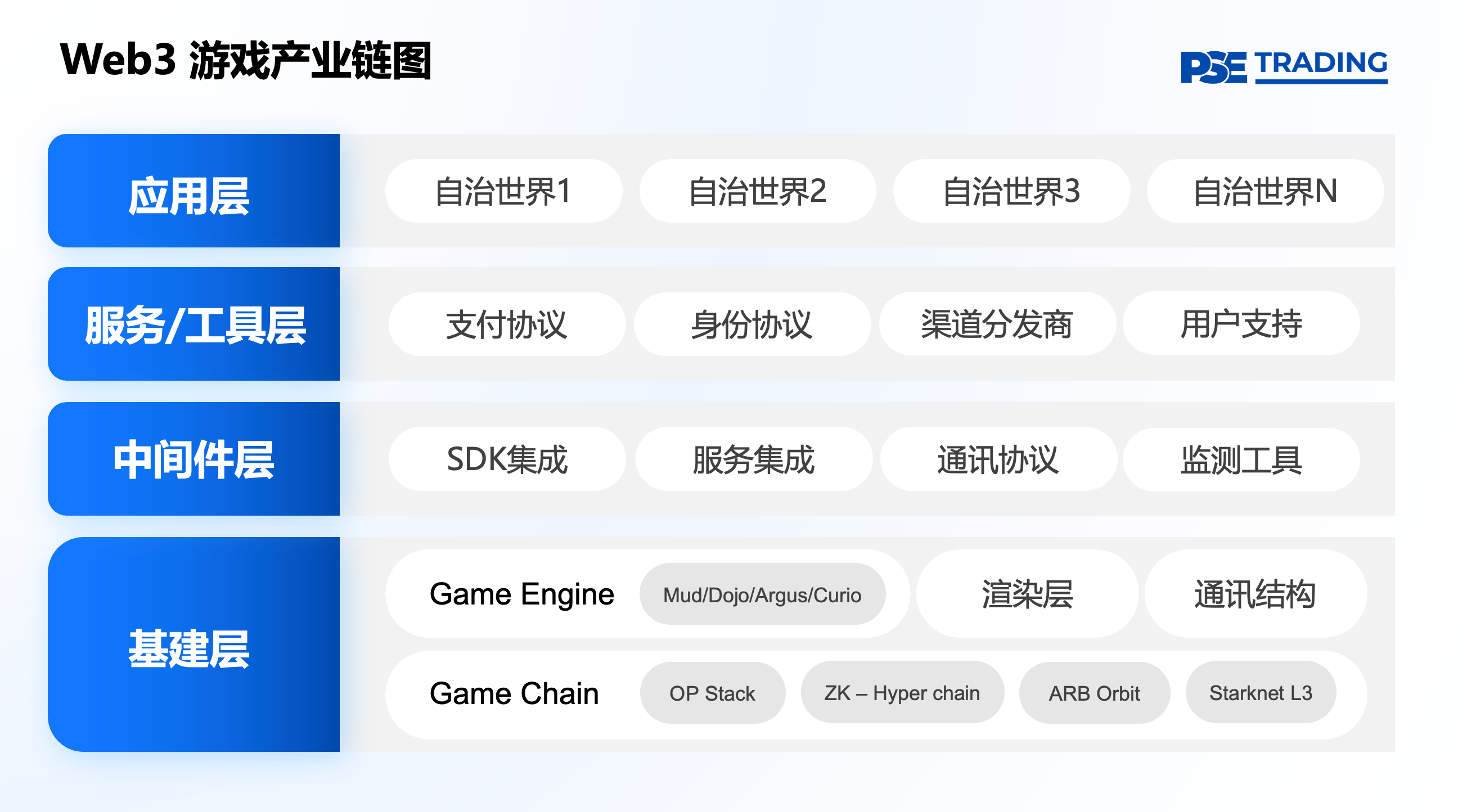
The industry chain of the full-chain game can still be divided into four key levels, which echo the levels in the Web2 game field: infrastructure layer, middleware layer, service/tool layer, and application/game layer.
 03 Infrastructure layer
On the stage of the game industry, the infrastructure layer is like a solid pillar. From server operation to network connections to player data management, various components of the infrastructure layer work together to build the virtual world of the game.
As mentioned earlier, the biggest difference between Web3 and Web2 games is that Web3 full-chain games involve on-chain. At the same time, in the game ecosystem on the chain, the biggest network effect comes from the composability and scalability of the game, as well as the combination of game assets and other games based on the same ecosystem and engine. Therefore, in the Web3 full-chain game infrastructure, two very important parts are the public chain for games and the on-chain game engine for scalability.
3.1 Game public chain
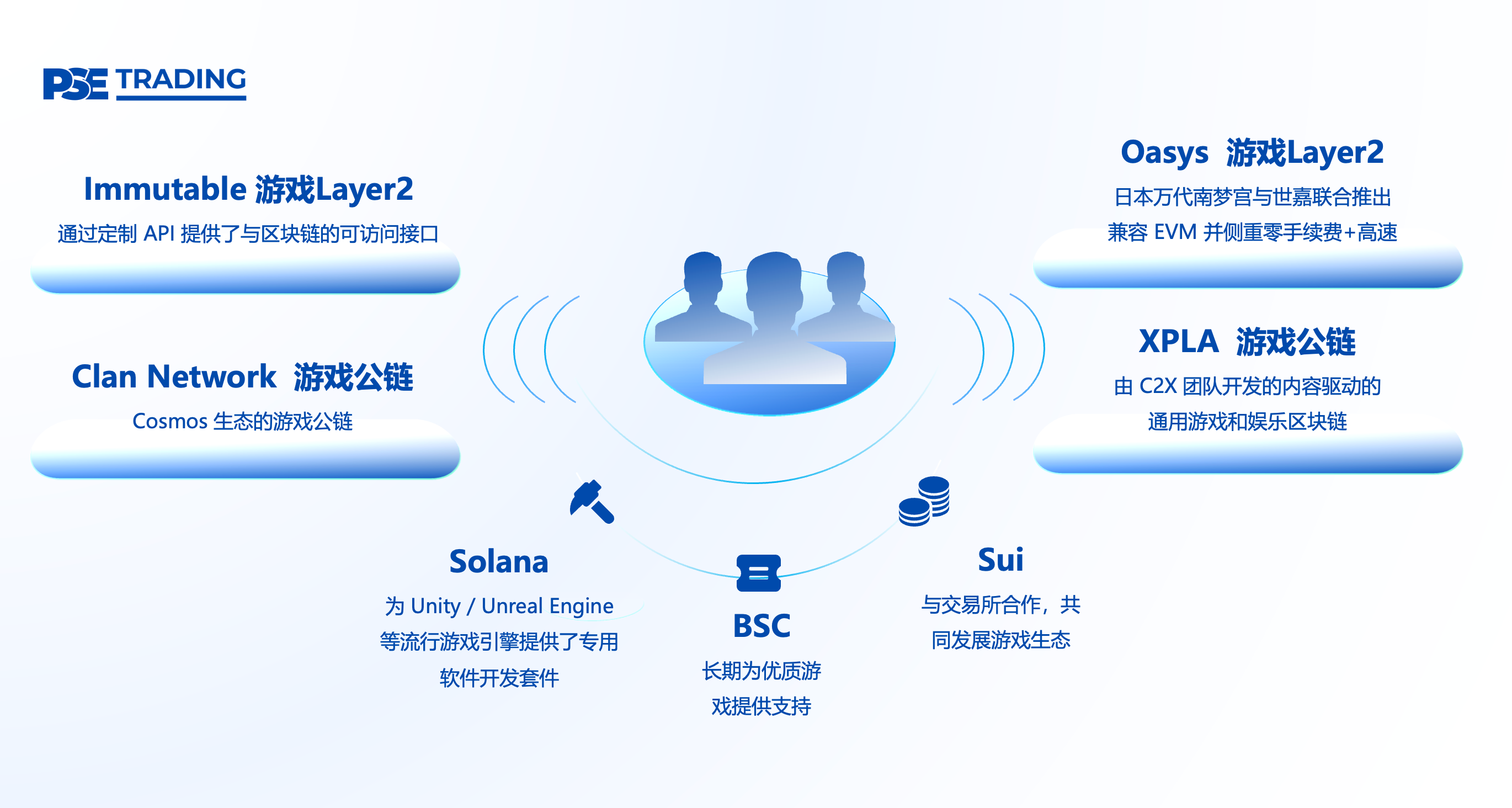
There are currently two main types of game-related public chains, one is Layer 2 that is specially built for games, and the other is Layer 1 that encourages game ecology. This article lists some cases as follows:
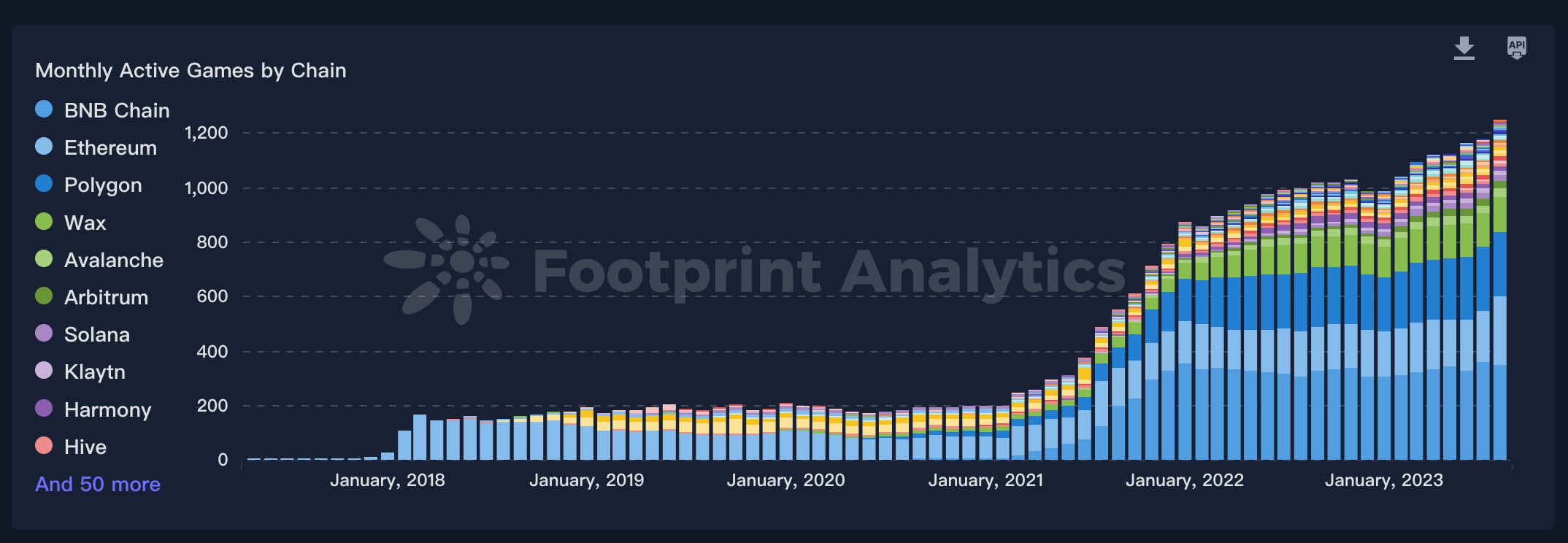
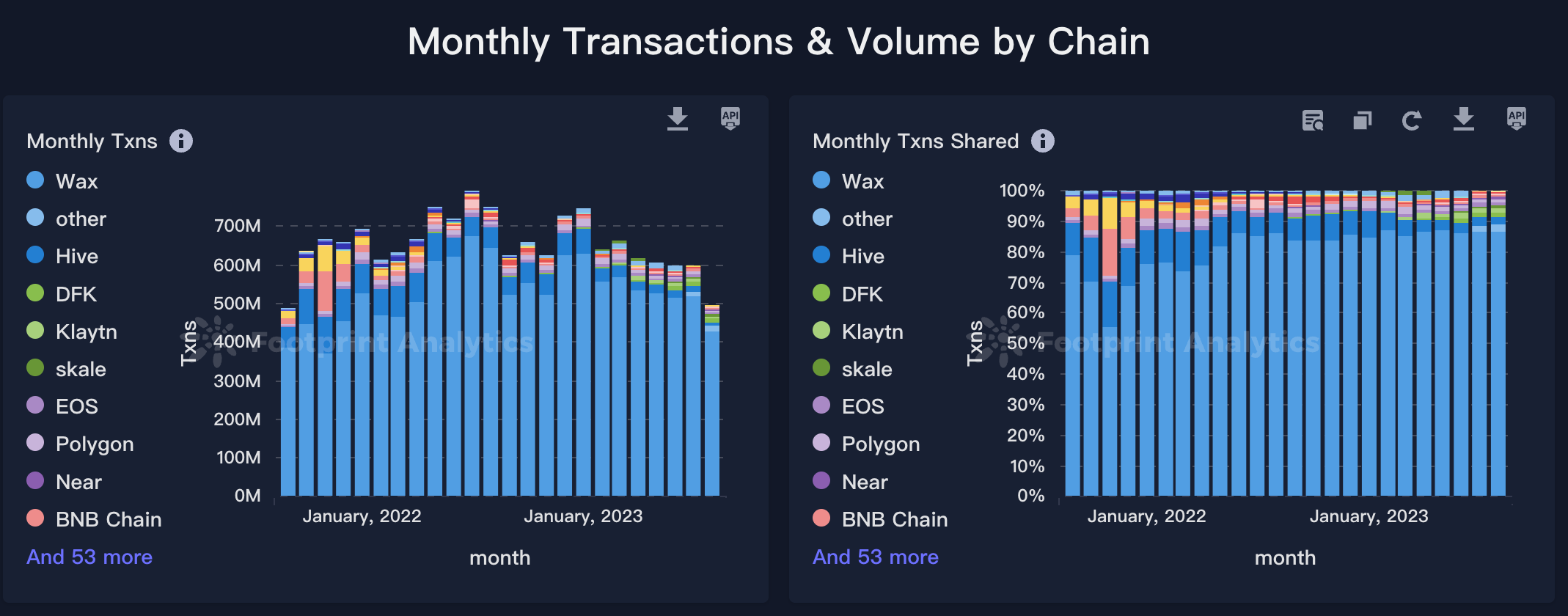
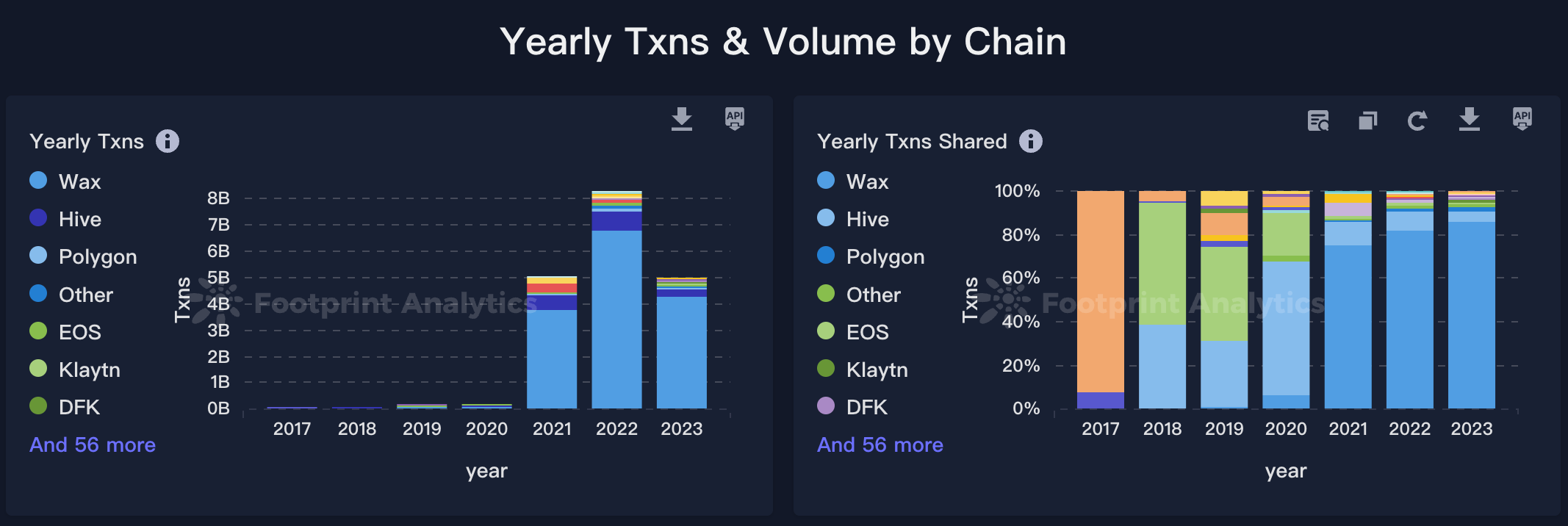
 From the perspective of data, referring to the data of Footprint , the four ecosystems of BNB Chain, Ethereum, Polygon and Wax are still in the leading position in the GameFi field, and more than 80% of the games on the chain are deployed on them.
 Referring to the monthly data of game transactions on the Footprint chain (note: the data is as of August 2023), the transaction volume of the Wax ecosystem has been in an absolute leadership position in 23 years. Among them, as of the time of writing, the number of Wax transactions in August 23 was 429.24M, accounting for 86.56% of all on-chain game transactions.
 Referring to the annual data of game transactions on the Footprint chain (note: the data ends in 2023), Wax has occupied an absolute position in transaction volume since 2020. During this period, the ranking of public chain game transaction volume has not changed significantly.
 3.2 Game engine
Many codes and graphics materials in game development can be reused, so game developers integrate the codes and assets required by most games into a set of development tools (SDK) to improve development efficiency and optimize the development process. This set of SDK is called a game engine.
For example, Unity provides developers with a wealth of tools and resources to enable developers to create 2D and 3D games; another example is Unreal Engine (Unreal Engine) is very powerful in graphics rendering and special effects, and is widely used to develop high-quality AAA game.
Some Web 3 game studios, such as Planetarium Labs and Lattice, are also developing their own Web 3 game engines, enabling Web3 game developers to write complex game logic and interactive content.
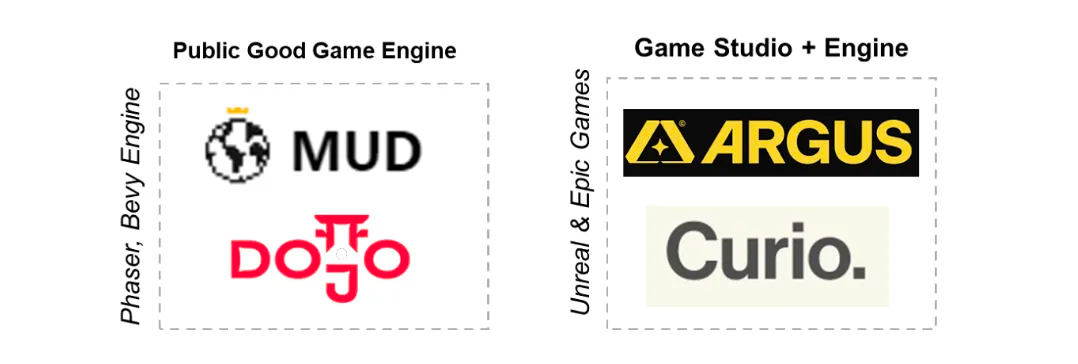
Refer to IOSG Ventures - Ishanee's roundup of Web3 Game Engines, where Mud and Dojo are public products, while Argus and Curio were built by past commercial teams by raising funds:
 Summarizing the summary of Web3 Game Engine by IOSG Ventures - Ishanee , the functional comparison of the four Game Engines is as follows:
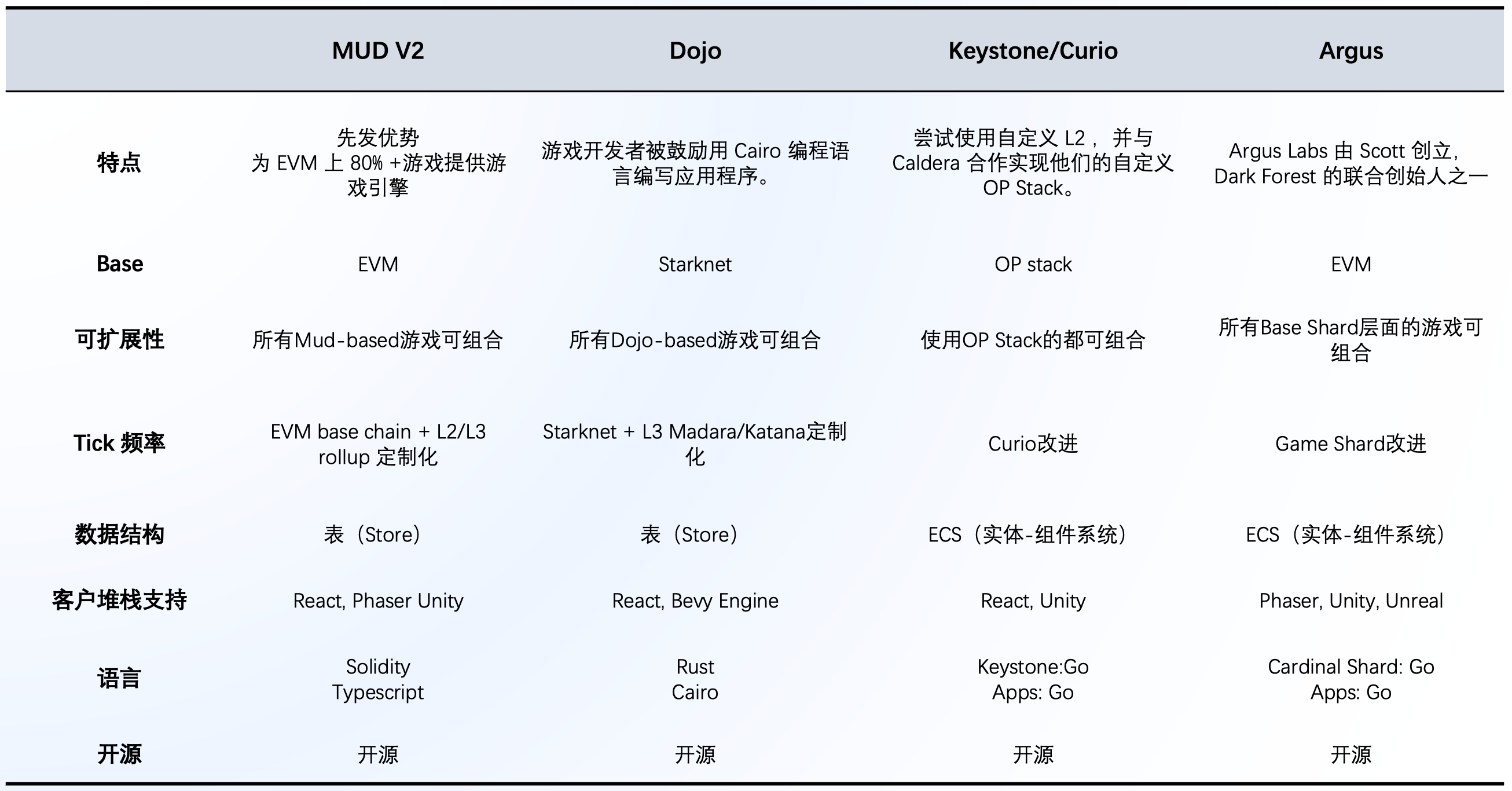 Among them, MUD is the pioneer of the Web3 game engine, has first-mover advantages, and has a huge player community. Curio’s Keystone is also building a game design engine focused on adding blockchain ticks. Argus focuses on various extension solutions and building different frameworks to design games. Dojo focuses on building a game where all logic can be proven to have been executed off-chain.
In addition to the engine itself, there are also tools that focus on building specific modules, such as:
- Endless Quest: can generate consistent narratives in AW, such as metadata and art, etc.
- MUDVRF: MUD module that generates on-chain random numbers in the game
- DeFi Wonderland: Use the wallet’s account management module through the burner client
- MUD Scan: Ranking of MUD Games
- Argus: There are also plans to introduce EVM layer 2 that plugs into the data availability layer, with customizability at its core.
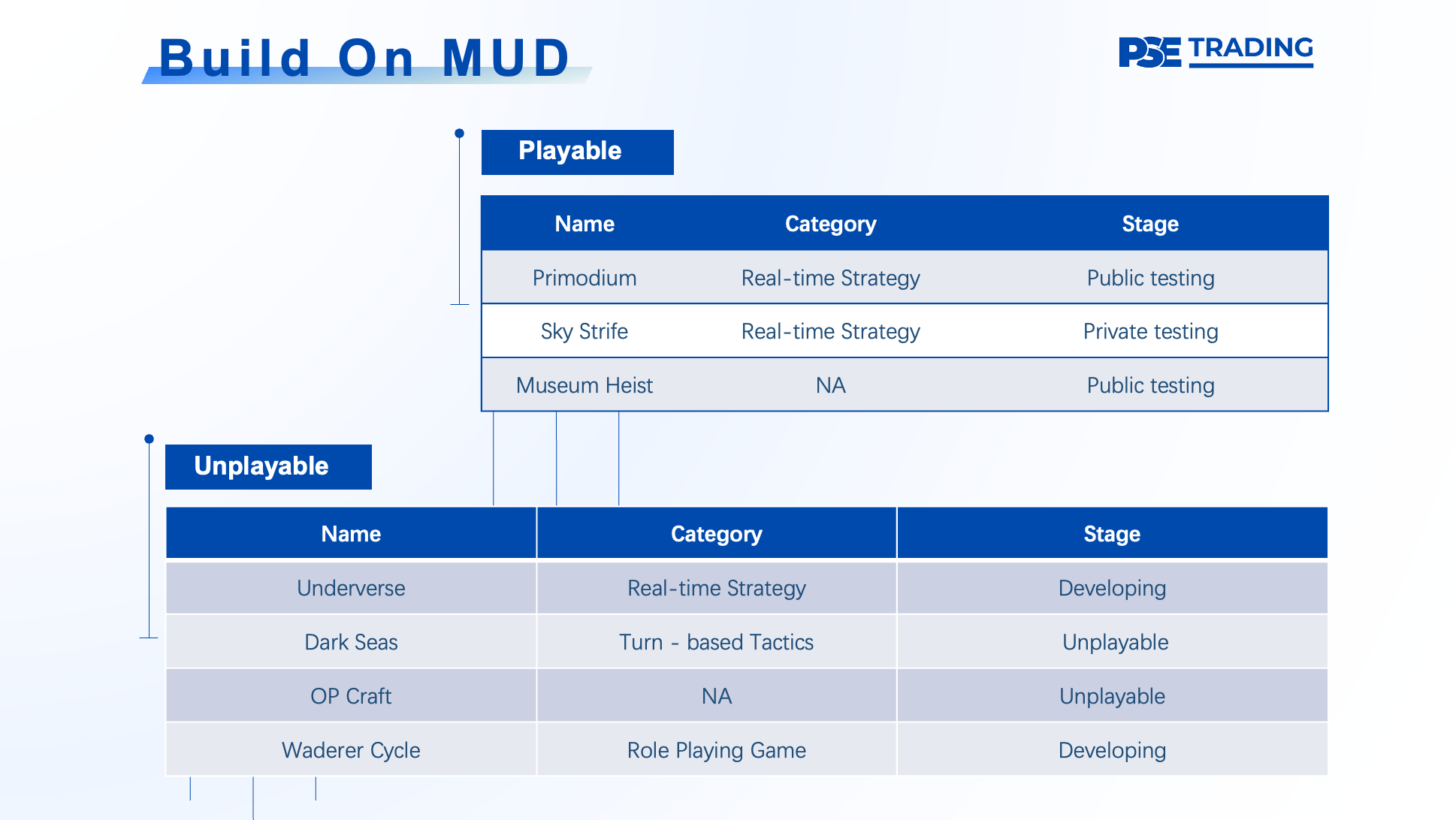
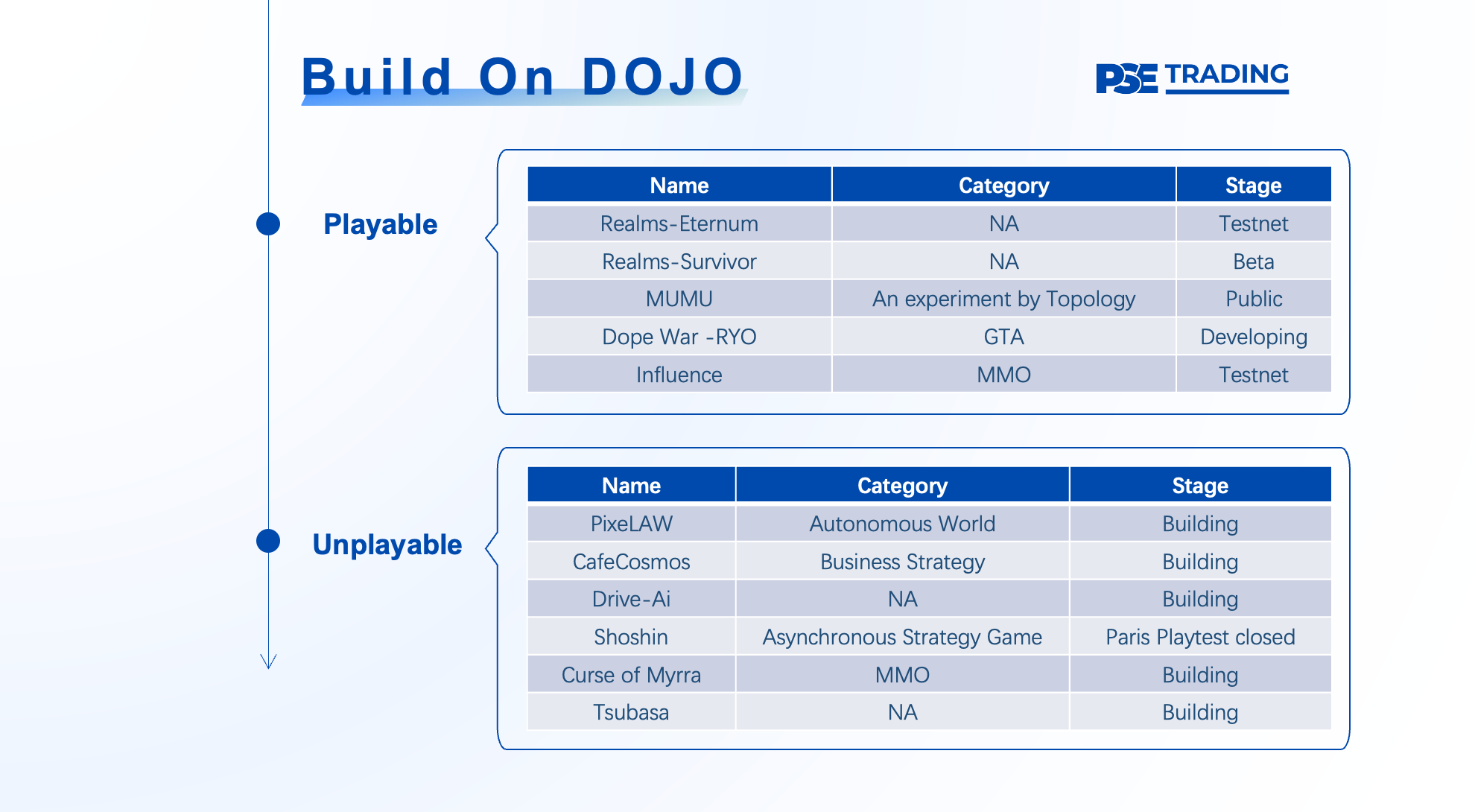
Among them, MUD v2 and Dojo are the two engines with the fastest development progress. At present, several full-chain games using MUD and DOJO have been launched. This article summarizes them. See the table below for details:
 In general, every engine is now trying to improve the tick rate and expand the network, aiming to allow the blockchain to carry more complex game interactions.
However, the biggest problem of the current full-chain game engine is the lack of unified construction standards. With reference to the development of web2 games, the game engine has a strong Matthew effect, and there will only be 1-2 leading players in the future, and will set standards for the track.
According to the general development trend of the industry, the first to find the Product-Market Fit (PMF) engine of the full-chain game hits will gain a significant advantage in the competition.
3.3 Communication structure
There is a classic problem with the module communication structure in traditional game development, which is the interrelationship and hierarchical structure between different characters or objects in the game.
Take "aquatic life," "terrestrial life," and "amphibian," for example. For aquatic organisms, which exist directly in the water layer, characteristics and behaviors related to the water environment can be processed and implemented relatively easily. Likewise, terrestrial organisms can be placed directly on the land layer, and functions related to the properties and behavior of the terrestrial environment can be managed with relative ease. However, amphibians are a special case in that they need to survive and operate in two different environments, which raises difficult questions. Placing an amphibian in water or on land, or how to switch between the two environments, involves complex logic and interactions. Traditional modular communication structures may have difficulty handling this situation, as it needs to account for transitions and transitions between different environments, as well as the behavior and characteristics of amphibians in those environments.
In order to solve this problem, Web2 game developed a framework called ECS, that is, Entity-Component-System (Entity-Component-System), ECS is a more flexible module communication structure, which combines data (component) and behavior (system) Separation makes data storage and processing more flexible and efficient. For example, in the above example, using the ECS architecture can allow amphibians to seamlessly switch between water and land, and be able to automatically adjust their behavior and attributes according to the current environment. This involves technologies such as state management, environment detection and dynamic attribute changes.
Web3 games refer to the ECS architecture and develop Web3's Communication Infra - ARC, whose full name is Action Registry Core. The core technology consists of three parts:
- The object is Action;
In ARC, the core units of the game are considered Actions. This means that the characters, events, decisions, etc. in the game are abstracted into the form of actions, making the interaction and logic of the game more flexible and scalable.
- Only the game results are stored on the chain;
- Other data is stored offline and retrieved through data indexers and data relay infrastructure.
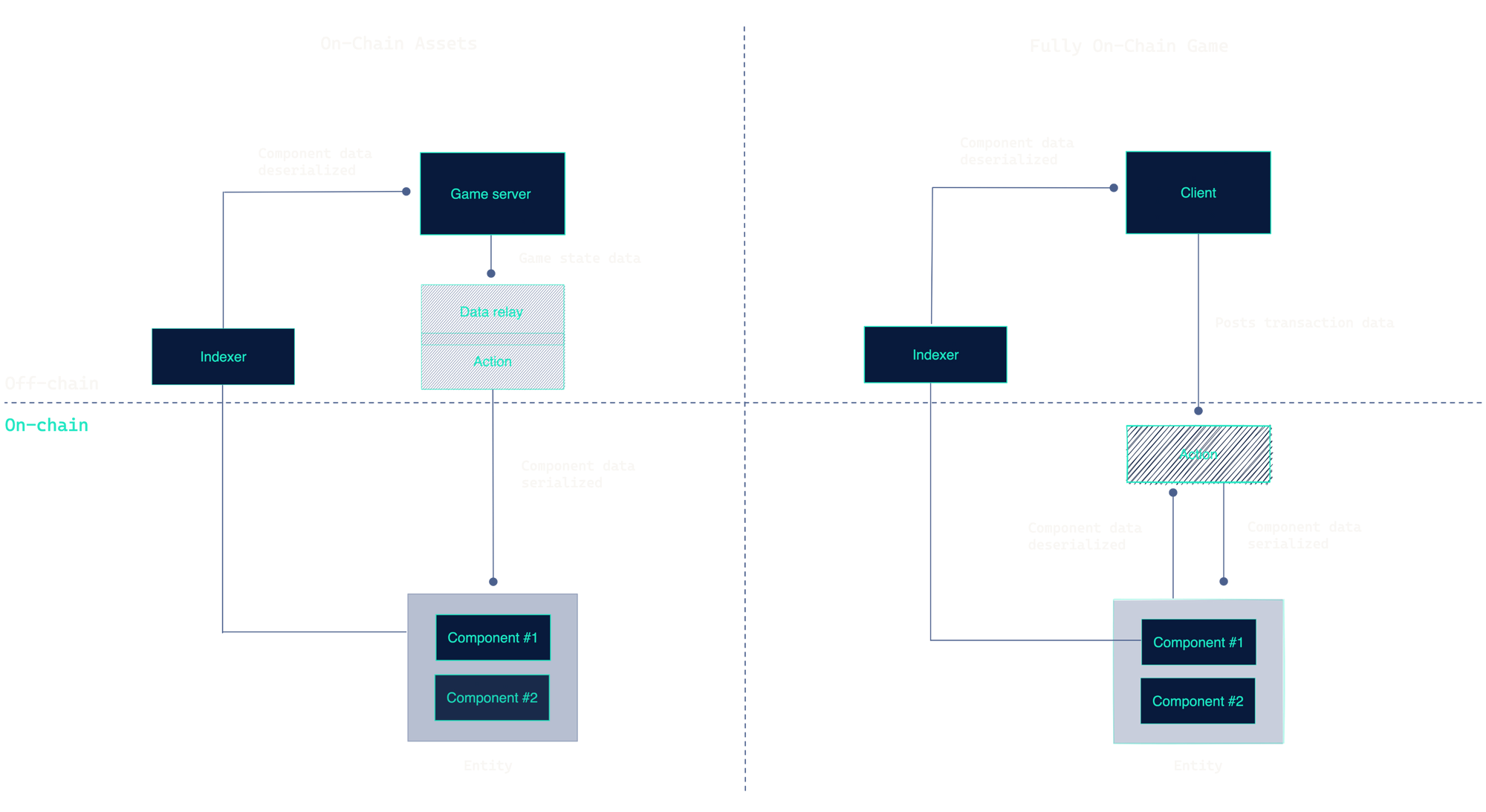 To sum up, ARC, as the communication infrastructure in Web3 games, fully draws on the idea of ECS architecture, and provides Web3 games with higher flexibility, scalability and efficiency.
There is currently no separate project to develop the ARC communication structure, but several major Game Engines and some independently developed Web3 Game Studio are committed to this.
3.4 Rendering layer
Web2's most famous rendering infrastructure is Unreal Engine. Web3 combines the decentralized features to build a distributed rendering protocol - RNDR.
The project behind RNDR is Render Network, a protocol that uses a decentralized network to achieve distributed rendering. OTOY.Inc, the company behind Render Network, was founded in 2009, and its rendering software OctaneRender is optimized for GPU rendering. For ordinary creators, local rendering takes up a lot of machines, which creates a demand for cloud rendering, but if you rent servers from AWS, Azure and other manufacturers for rendering, the cost may also be higher—this is The Render Network was born. Rendering is not limited to hardware conditions. It connects creators and ordinary users with idle GPUs, allowing creators to render cheaply, quickly and efficiently, and node users can use idle GPUs to earn pocket money.
 For Render Network, participants have two identities:
• Creator : Initiate a rendering task and use fiat currency to purchase Credit or RNDR for payment. (Octane X is the tool used to publish tasks, available for Mac and iPad. 0.5-5% of the fee will be used to cover network costs).
• Node provider (idle GPU owner) : idle GPU owners can apply to become a node provider, and decide whether to get priority matching based on the reputation of previously completed tasks. When the node completes the rendering task, the author will review the rendered file and download it. Once the download is complete, the fee locked in the smart contract will be sent to the wallet of the node provider. This arrangement allows node providers to fully utilize their idle GPUs to earn additional revenue while increasing the efficiency of the overall network.
In short, through its unique architecture, Render Network not only solves the performance problem in the rendering process, but also provides a win-win opportunity for creators and users with idle GPUs.
04Middleware layer
4.1SDK integration
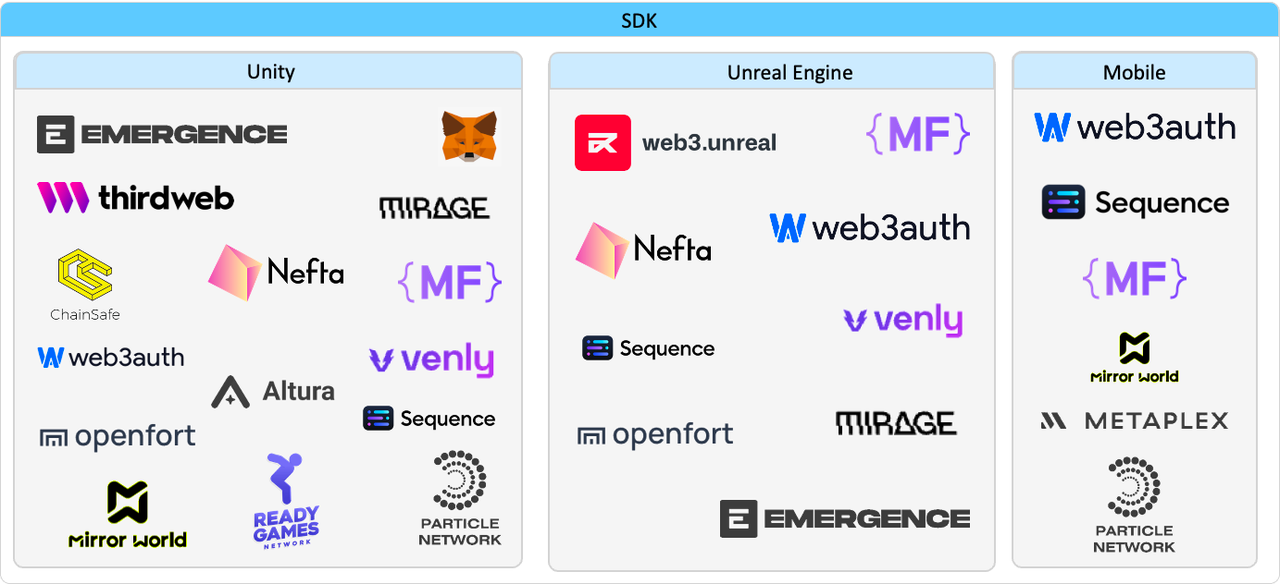 Similar to Game Engine, it is convenient for developers to deploy with one click by providing an SDK, but this type of SDK is aimed at more subdivided functions.
The project party cuts into the integrated SDK track from different angles. The following summarizes the three common GTM strategies:
Case 01 - SDK Store
The first category is the SDK store, which is similar to an app store. The project party aggregates all SDKs on the market, and then developers can directly search for the SDK they want in the SDK store on demand.
For example, the Unity Asset Store SDK package provides verified SDKs from MetaMask, Magicblock (Solana), Tezos, Nefta, Immutable, etc. Chainsafe Gaming's Web3.Unity is also a popular open source option outside of the Asset Store. Unreal Engine developers might consider Game7, Emergence, or Mirage's Web3.Unreal.
Case 02 - Segmentation function
SDK for specific functions, such as:
- NFT Market:
- No-code solution: Altura or Recur could allow developers to create external web-based NFT marketplaces with no code.
- In-game market: The in-game market has a higher demand for customization. Existing solutions often provide APIs or Unity/Unreal SDKs to simplify common market functions on the blockchain. These functions include actions such as listing NFTs, viewing inventory, or making purchases.
Eg: Nefta, Particle Network, Venly, Sequence, Mirror World, Fungies, and Chainsafe Gaming.
- In-game services:
There are also companies such as Aqua that provide no-code/low-code in-game markets as a service. By embedding the system directly into the Unity game client, players can directly access the virtual market within the game to purchase decorations, character appearances, etc. Items without leaving the game. Through its integration with Unity, Aqua provides an easier way for game developers to create rich in-game transaction experiences for players.
- In-game store system SDK:
Although this is not strictly a drama track, there are also some providers, such as Ready Games, MetaFab, etc., that provide customized in-game store system SDK/solutions.
4.2 One-stop service provider
One-stop service providers usually have the most comprehensive blockchain integration technology stack and provide related services for developers and publishers.
Case 01-Forte
Forte is a blockchain gaming platform that provides a range of services aimed at building a barrier-free blockchain gaming ecosystem for developers, communities and players. These services cover the entire life cycle of game development, including market making, compliance, tool development, player services, game creation, and economic model design. Forte also provides funding funds for game creators to encourage game creation.
In addition, Forte has also introduced Defi and NFT to create new revenue streams for game creators. The Forte platform builds marketplace and trading services, simplifies the digital asset wallet experience, and provides built-in compliance components including anti-money laundering (AML) and KYC. Through these features, Forte helps existing games build a scalable token economy, thereby enhancing the sustainability and profitability of the game.
Case 02 - One-stop consultation
Many game studios, such as Bigtime's Open Loot and Horizon (skyweaver)'s Sequence, provide consulting/incubation services. They use their extensive experience to help Web 2 developers and games enter the market.
For example, Open Loot provides marketing support, payment processing, and comprehensive game analytics in addition to technology integration. Horizon (skyweaver)'s Sequence helps Web 2 games transition to Web 3, including NFT-based virtual items and ownership transactions on the blockchain. These services not only expand the market, but also help developers obtain new business opportunities and growth in the digital field.
4.3 Communication protocol
Case 01-XMTP
XMTP is an early Web3 communication protocol project whose goal is to build a unified decentralized receiving system to provide communication infrastructure for all Dapps. It can be simply understood as a decentralized version of XMPP (Extensible Communication and Presentation Protocol) in the blockchain field. Using the built-in XMTP client, users are able to send and receive encrypted XMTP messages within the application and authenticate via wallet signatures. Through this protocol, messages can be effectively encrypted and can resist bad behaviors such as spam. However, currently the protocol only supports point-to-point messaging, that is, only supports one-to-one communication. Even so, XMTP still laid a preliminary foundation for Web3 communication, making decentralized communication more practical and possible.
 Case 02 - Web3MQ
Web3MQ is an open source decentralized secure communication protocol dedicated to becoming a cryptographic native communication infrastructure. It extends and improves the form of XMTP to provide an all-in-one communication solution including push, chat and community functions.
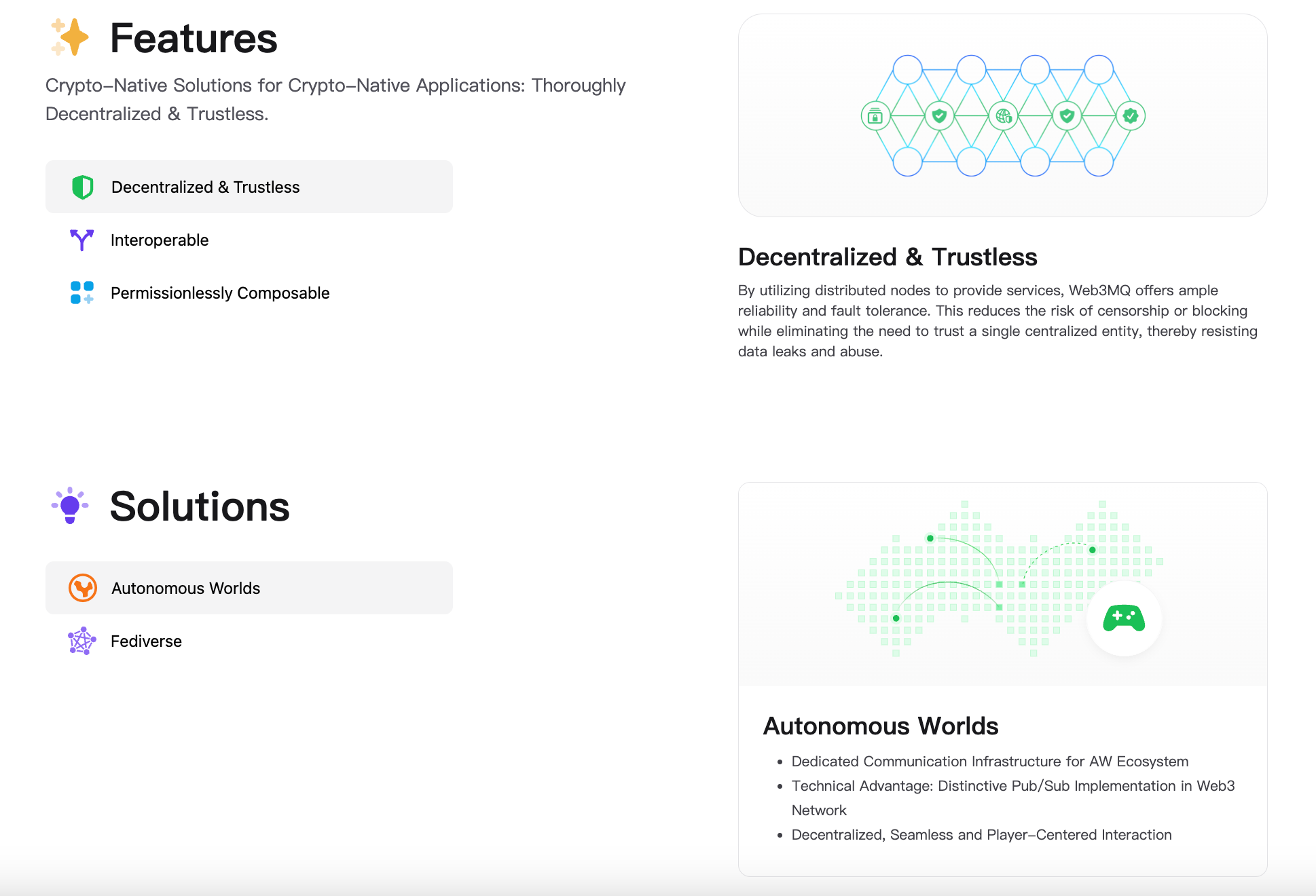 At the same time, Web3MQ is also compatible with a wide range of social identity and social graph protocols, using communication protocols as a bridge to unlock the potential of each social relationship, and also introduces the existing Web3 ecosystem, including web3 storage (such as IPFS) and computing (such as Internet computers) As a supplement to the messaging ecosystem, users can achieve higher levels of privacy protection and other personalized features through customized configurations. Compared with the current web3 communication protocol, Web3MQ is a protocol project with relatively mature ideas and functions.
4.4 Economic system monitoring tools
Most Web3 games will have a built-in economic system, so the economic cycle is very important for Web3 games. Therefore, the need to simulate, test and monitor the health of the gamefi system is derived.
Machinations provides game developers with a visual way to design and optimize the economic cycle of games; currently, more than 20 Web 3 games have cooperated with Machinations to enhance the economic design of their games by using this tool.
Specifically, imagine a Web 3 strategy game where players need to collect resources, build cities, and recruit troops. The resources in the game include wood, stone and gold coins, and these resources interact with each other in the game, affecting the player's decision-making and strategy. Using Machinations, game developers can create a chart that graphically represents factors such as resources, production, and consumption. They can set the rate at which resources are generated, how players use them, and how resources are linked. For example, developers can set wood and stone for building cities, and gold coins for recruiting troops. They can also set the cost of different actions, such as constructing new buildings, recruiting troops, or conducting trade.
Through Machinations, developers can simulate the operation of the in-game economic system and see how the flow and changes of resources affect the entire game ecology. If a certain link is too scarce or excessive, the developer can adjust the value to optimize the allocation of resources, making the economic cycle of the game more balanced and interesting.
 4.5 Others
With the development of web3 and blockchain technology, there are also some new protocols dedicated to deriving a certain small section of the game or certain functions of NFT, and then empowering the in-game Token.
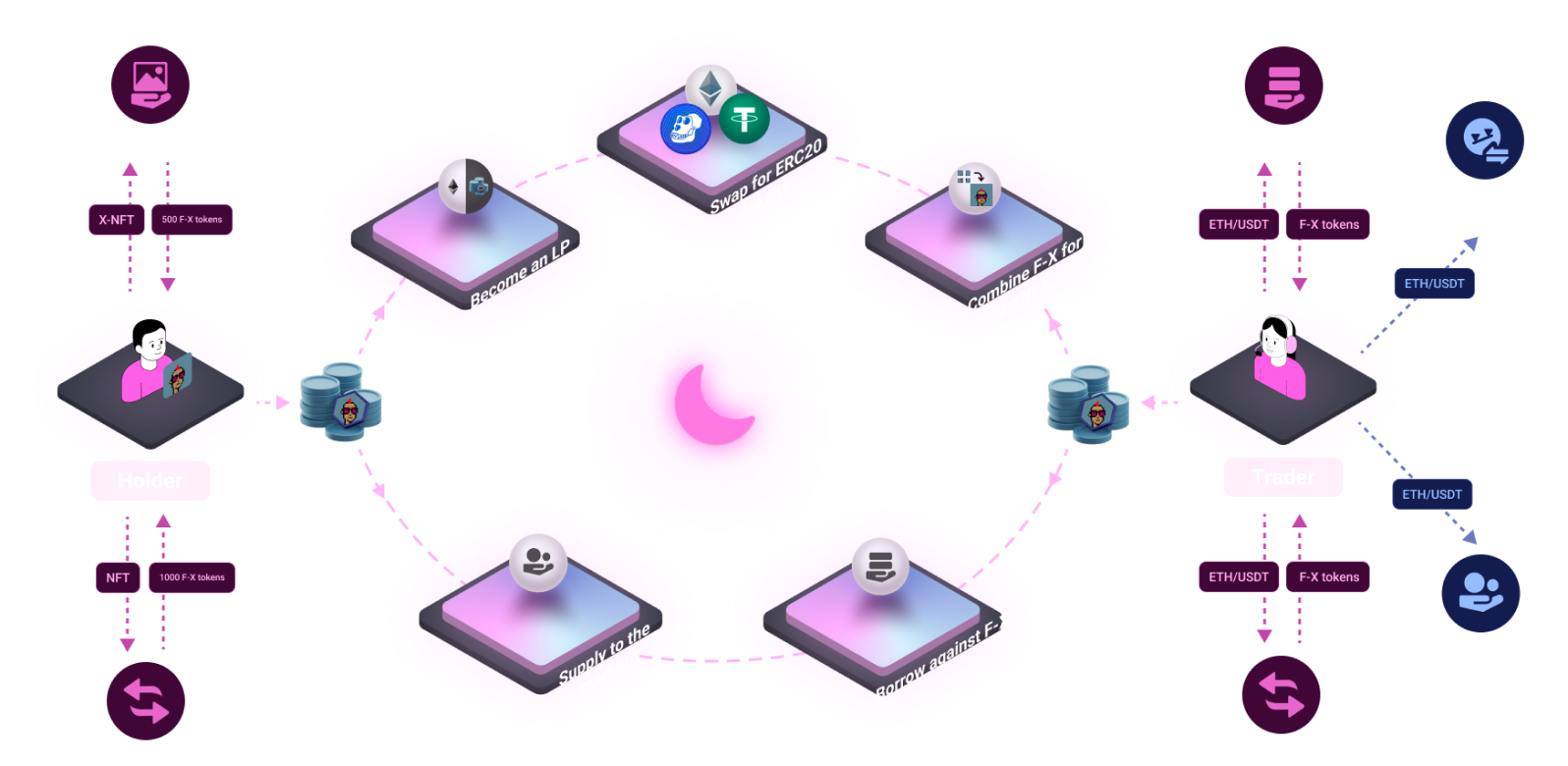
For example, Furion is mainly used to divide non-fungible tokens (NFTs) into corresponding ERC20 tokens. These tokens can be freely traded and circulated on the Furion platform, and support various financial operations, such as borrowing, lending, and leverage. Long and short.
To give an example, suppose an artist's digital artwork is converted into an NFT, and Furion's platform can help split this NFT into corresponding ERC20 tokens. These tokens can represent different parts or shares of a work of art and can be freely traded on Furion's platform. Art lovers can purchase fractions of these ERC20 tokens, thereby sharing ownership of digital works of art. In addition, Furion supports financial operations such as borrowing and lending, enabling users to invest and trade using the ERC20 tokens they hold.
This also provides new possibilities for Gamefi's token model. For example, Gamefi can choose not to issue coins directly, but first issue NFT and give NFT usage scenarios; then use NFT as the underlying asset to issue Token, etc.
 05Channel/Distributor
In the gaming industry, channels and distributors play a key role. Looking back at the game distribution in the Web 2.0 era, it can be divided into two main modes.
The first is game platform distributors, such as Steam, Epic, Nintendo, etc., whose core success factor (KSF) is platform traffic. Several games and unique well-known IPs from these distributors that ignited the market began to emerge. Continuous hit games have accumulated a large number of users for them. They gradually transformed from a game publisher to a distribution platform, and then continued to expand services, functions and social interactions to become a comprehensive game platform, further improving user stickiness and building a brand moat.
The other category is hardware and terminal manufacturers, such as Huawei, Apple, etc., which still use user traffic as KSF. They attract users by launching high-quality devices and increasing device penetration. When users purchase and use hardware, they not only obtain the hardware itself, but also come into contact with the ecosystem and services provided by the platform, making it a very important game distribution channel.
Whether they are game platform distributors or hardware/terminal manufacturers, they all play an important role in the game industry. Through strategies such as accumulating user traffic, owning well-known IP, and building a comprehensive ecosystem, these distributors have promoted the development of the game industry at different levels. At present, the Web3 field has not yet formed a mature distribution channel system. The following summarizes several distribution strategies adopted in the current stage of the Web3 game track.
5.1 Road One - Classic Web2 Route
Its overall path is similar to Steam/Nintendo/TapTap in the Web2 era. It aims to become TapTap in the Web3 field, rely on high-quality games to obtain user traffic, and then gradually develop into a distribution platform.
The advantage of this strategy is that it has been proven in the Web2 field, but the disadvantage is also obvious, because the implementation of this model is quite heavy and requires extremely high funds and capabilities of the team. In addition, it is not yet clear who are the first TAs of Web3 games? The debate over whether we should pay more attention to Web3 native users or divert traffic from Web2 traffic has never stopped. This also makes the target audience of the distribution platform unclear, which poses a challenge to the team's GTM and product matrix.
Case 01 - XterioGames
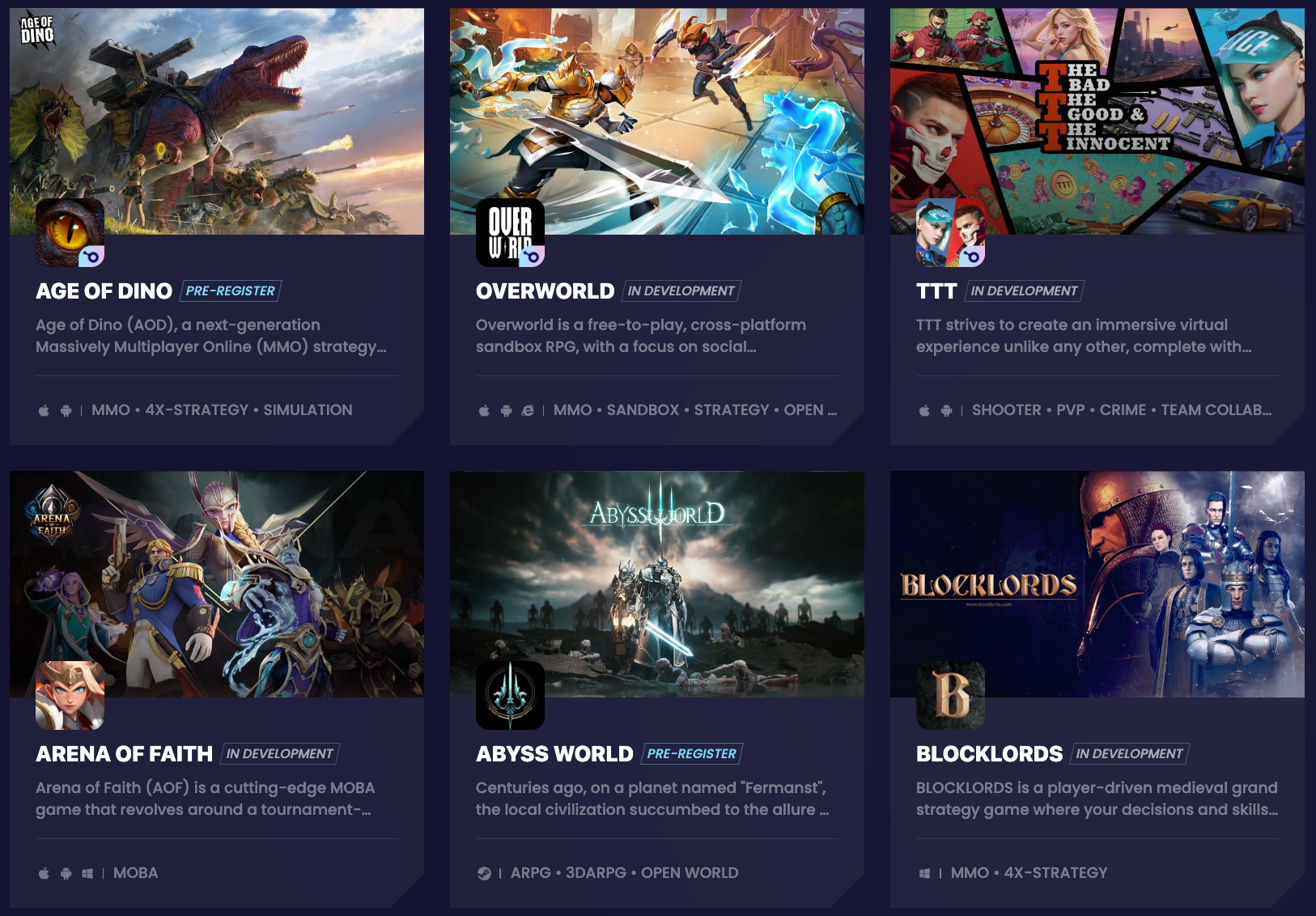
XterioGames received a US$15 million investment from Binance Labs in July 2023. Xterio is a Web3 gaming platform and publisher that is expected to release a variety of cross-platform games on PC and mobile devices, and the ecosystem will also distribute digital collectibles through Xterio's web platform and marketplace.
For players, Xterio will be equipped with a game gallery, NFT market, on-chain operation interface, decentralized identity system, as well as wallet and community applications. For developers, Xterio provides solutions to reduce the burden of on-chain programming. Help developers obtain funding and promotion, and create a seamless path from development to launch to ecosystem.
Generally speaking, XterioGames is also a project that is constantly trying on the road. Xterio has several core games under development and has also released several games through acquisitions and cooperation. The picture below shows some of the games published by XterioGames.
 Case 02-Cartridge
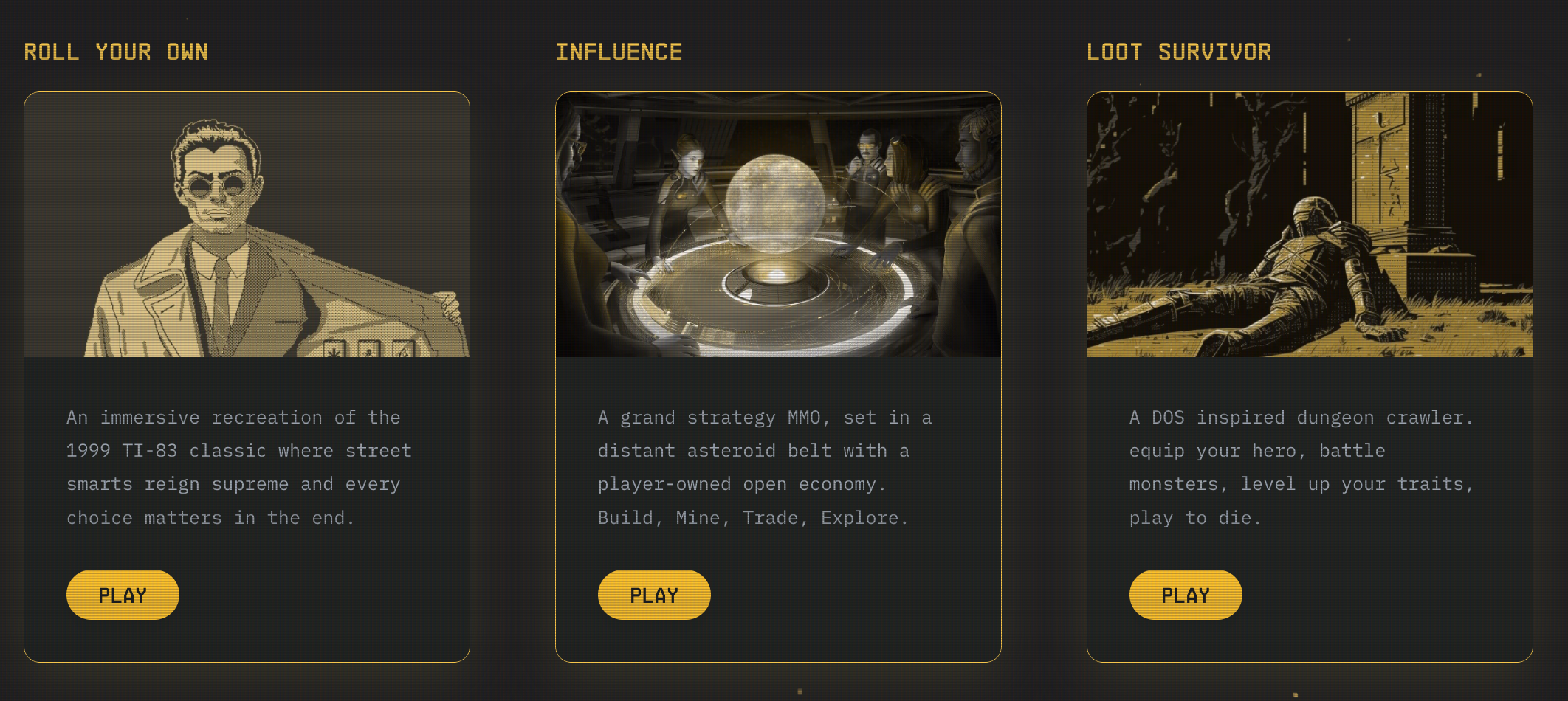
Cartridge is a Starknet ecological game integration platform, positioned as Web3's Steam.
For developers, Cartridge has launched Cartridge Controller and Dojo Engine, which simplify the development process and lower the development threshold through a unified framework. For players, they can quickly find games on Cartridge. Cartridge currently provides several games available for play. The image below shows only some of the games that can be played.
 Case 03-Createra
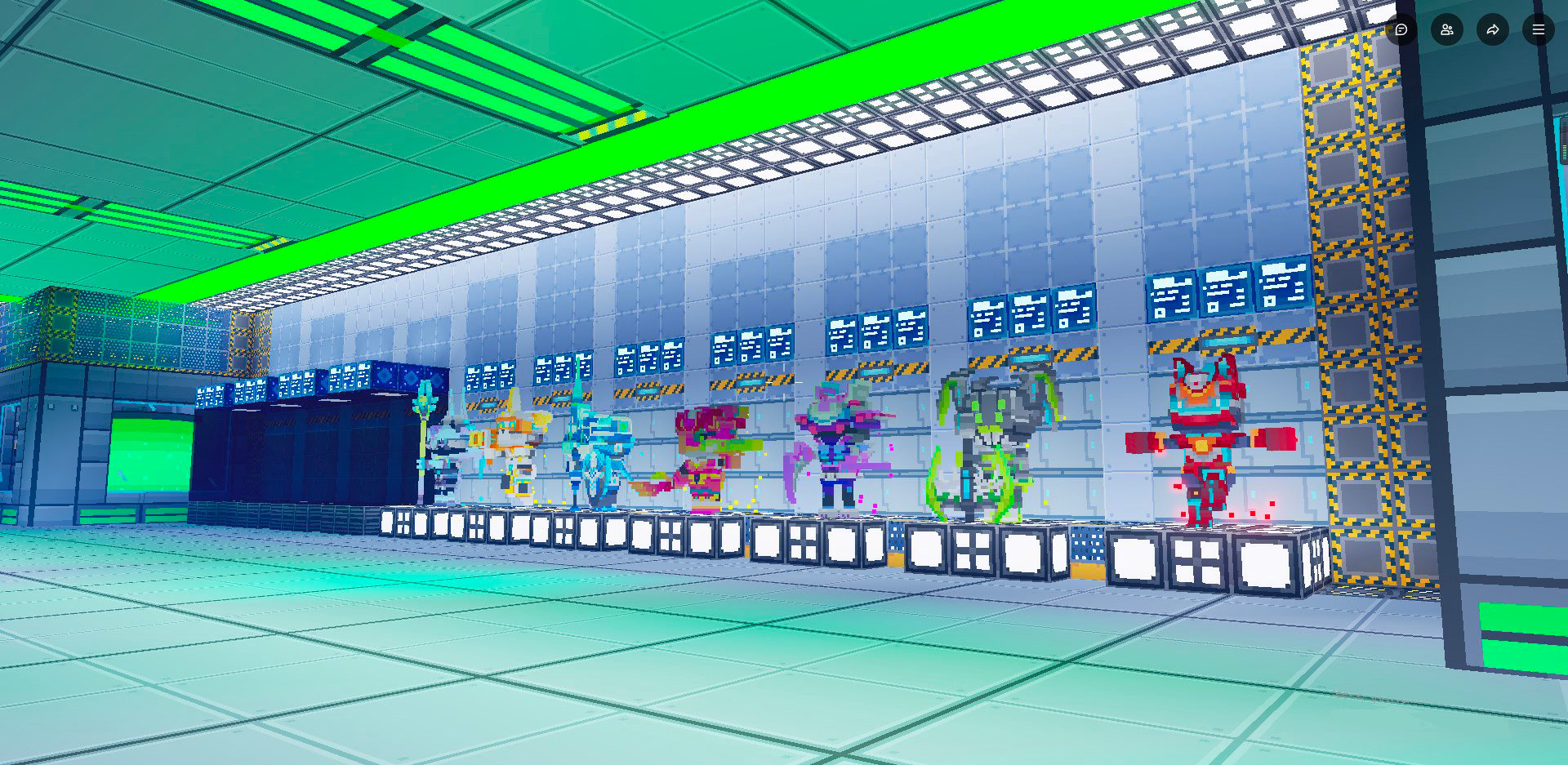
Createra is a user-generated content (UGC) metaverse engine invested by a16z that enables creators to create, distribute and MetaFi games. Createra offers users an exclusive crypto-native autonomous world with features including cross-play and instant access. In addition, everything built on land within the platform is tradable, including models, games, APIs, etc. Projects are also focused on integrating ERC-6551 with gaming, such as in the field of decentralized identity (DID).
Overall, Createra can be considered a Web3 version of Minecraft to some extent. By cooperating with popular IPs such as BAYC, Web3 users are encouraged to enter the game world, create personal virtual environments, and interact within the entire ecosystem. The project continues to add more features and services to the ecosystem, such as mapping player achievements to DIDs, or embedding other games in the world, making it a gamified comprehensive distribution platform.
 5.2 Road Two - Exploration of the Crypto Native Road
The second path is a more exploration of Crypto Native, gathering users through players’ interactive behaviors and becoming the focus of traffic. Currently, there are many attempts to explore this field, including building an achievement system, aggregating airdrops, building an education system, and building a decentralized identity (DID), etc.
Compared with Path One, Path Two is more Crypto Native and has a lighter model. It requires lower financial strength of the team, but requires higher user operation capabilities of the team. In this route, the team needs to be able to quickly capture the interaction methods that Web3 users are currently most interested in, and embed these trends into their own platform in a timely manner, so as to achieve effective user drainage.
However, it is worth noting that the current exploration of Road 2 has not yet been fully verified by the market. Among the different development paths, which one is the final choice of the market is still highly uncertain. Therefore, the team needs to maintain keen market insights, constantly adjust strategies to adapt to market changes, and pay close attention to changing trends in user needs. The following summarizes some cases related to choosing path 2.
Case 01-Carv
Carv is a GameID platform that starts from the achievement system. What is very interesting is that it will calculate the user's reputation score based on the user's past on-chain data. The presentation of its overall GameID is also based on this reputation score + received SBT. The platform will capture on-chain data to verify the user's achievements. Once the conditions are met, the corresponding Soul Token (SBT) can be received.
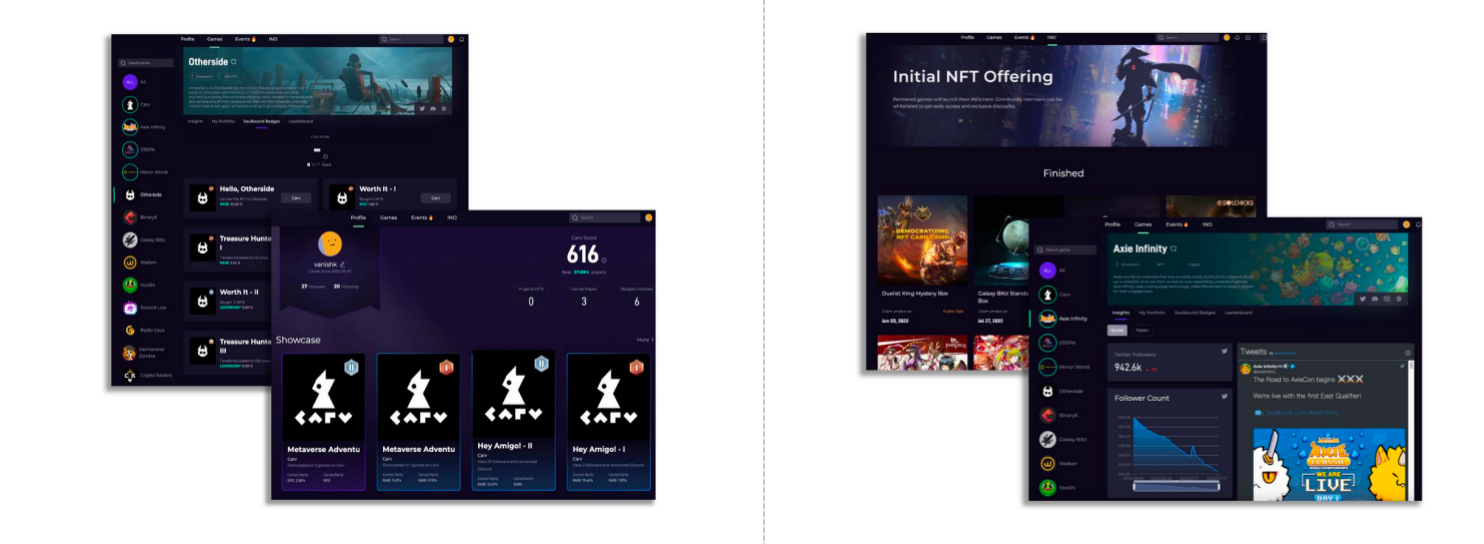 The platform provides a social data analysis for List projects, allowing players to quickly discover potential and highly popular games. At the same time, they can also track the latest social dynamics of the games they care about, which is very helpful for players. . At the same time, the platform also has an INO section, which allows games to launch NFTs. However, this content relies more on the BD capabilities of the project side, and has only been released 10 times so far.
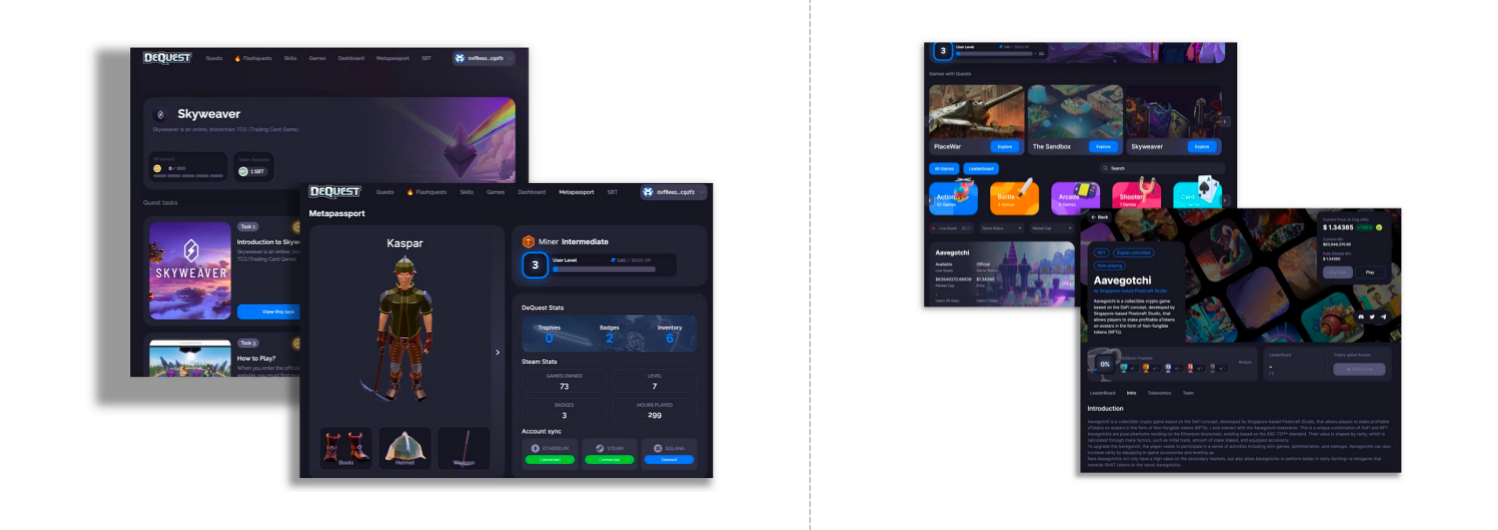
Case 02-DeQuest
DeQuest is a GameID platform based on the Quest system. It has a gamification design so that the user's GameID is presented in the form of a virtual image (the image can be used to enter the sandbox in the future), and equipment and skills can be unlocked in the process of completing tasks.
 Case 03-Parami
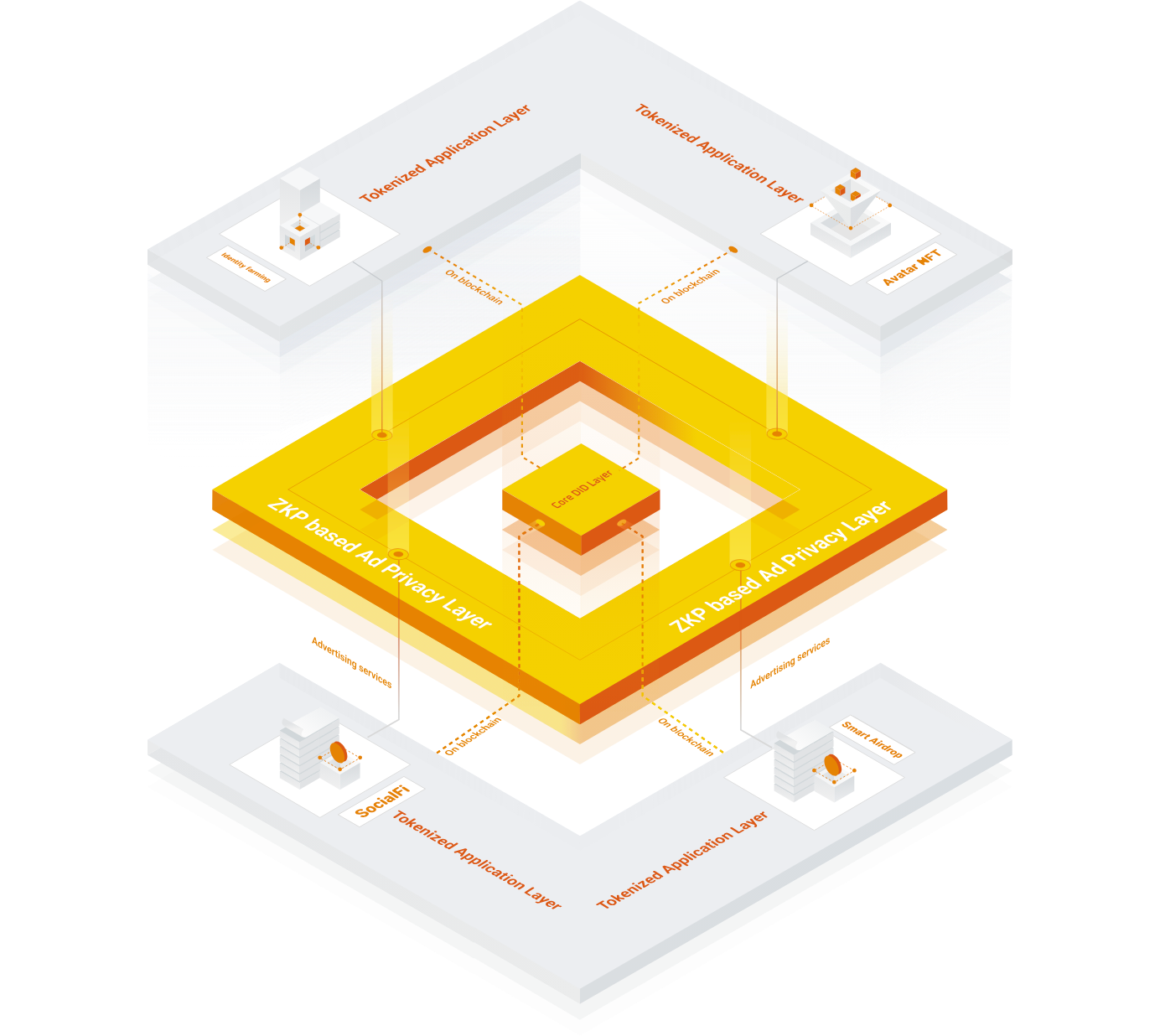
Parami Protocol is an ERC5489 protocol that can revolutionize the creator economy of the Internet and turn NFT into a gateway for Web3 content discovery. For example, assuming there is a social media platform, users can use Parami Protocol to upload their social data, posts, photos and other information to the chain. The data will be securely stored and encrypted, and users can authorize the data to allow other users or organizations to access and use the data with permission.
In addition to applications in the fields of data sharing and privacy protection, Parami Protocol is also actively cooperating with many game projects, creating broader possibilities for users. For example, a game based on Parami Protocol can allow players to map their achievements in the game, item ownership and other information to NFT, so as to realize richer asset value transfer and interaction in the Web3 ecosystem. This collaboration takes gamers’ experience to a whole new level, connecting the virtual and real worlds more closely.
In short, while Parami Protocol opens up new data governance and content discovery methods, it also provides the possibility to become a traffic portal for the game track.
 5.3 Road 3 - public chain, exchange incubation
In the Web2 ecosystem, many content providers (CP for short), such as game developers, usually pay fees to the distribution platform to obtain traffic and exposure on the platform. However, currently in the Web3 ecosystem, due to the lack of high-quality content, the phenomenon of platforms paying for high-quality CP has emerged. More specifically, hackathons organized by some public chains and exchanges are typical cases. In these activities, excellent content creators will be selected, and then given resources and training support, so as to promote the emergence of more high-quality content in their own public chain/exchange ecosystem, thereby promoting the development of the entire ecosystem.
For example, Stepn, the leader of Gamefi in 21 years, is a very typical case. Referring to the Space speech of Stepn Co-Founder, its very critical step from 0 to 1 was winning the Solana Hackathon, which condensed the morale of the team and obtained initial resources.
At present, many public chains and exchanges are holding hackathons, and there are even public chains and exchanges cooperating to incubate projects. This provides great opportunities for industry development and outstanding projects.
write at the end
This article focuses on the combing of the concept of full-chain games and the presentation of a panorama of the value chain, aiming to give readers a clearer understanding of all links in the full-chain game industry chain. Subsequent articles in the same series of PSE Trading will discuss full-chain games in more detail from different angles.