
The goal of Polygon 2.0 is to create an infinitely scalable blockchain infrastructure that enables developers to create and scale trustless applications.
Compiled & organized: TechFlow TechFlow
In this issue of Empire, Polygon co-founder Sandeep Nailwal details Polygon 2.0's bold approach to achieving infinite scalability in blockchain networks. This conversation explores the various components of Polygon 2.0, including the pillars of innovation and governance of the zk EVM. Nailwal also outlined the perspective in the Polygon paper, which sees 2.0 not just as a scalability solution, but as a fundamental "Internet value layer."
5 minutes to read podcast notes, saving you 60 minutes.
The following is the main content of this dialogue, which was translated and organized by TechFlow, and the main points were output:
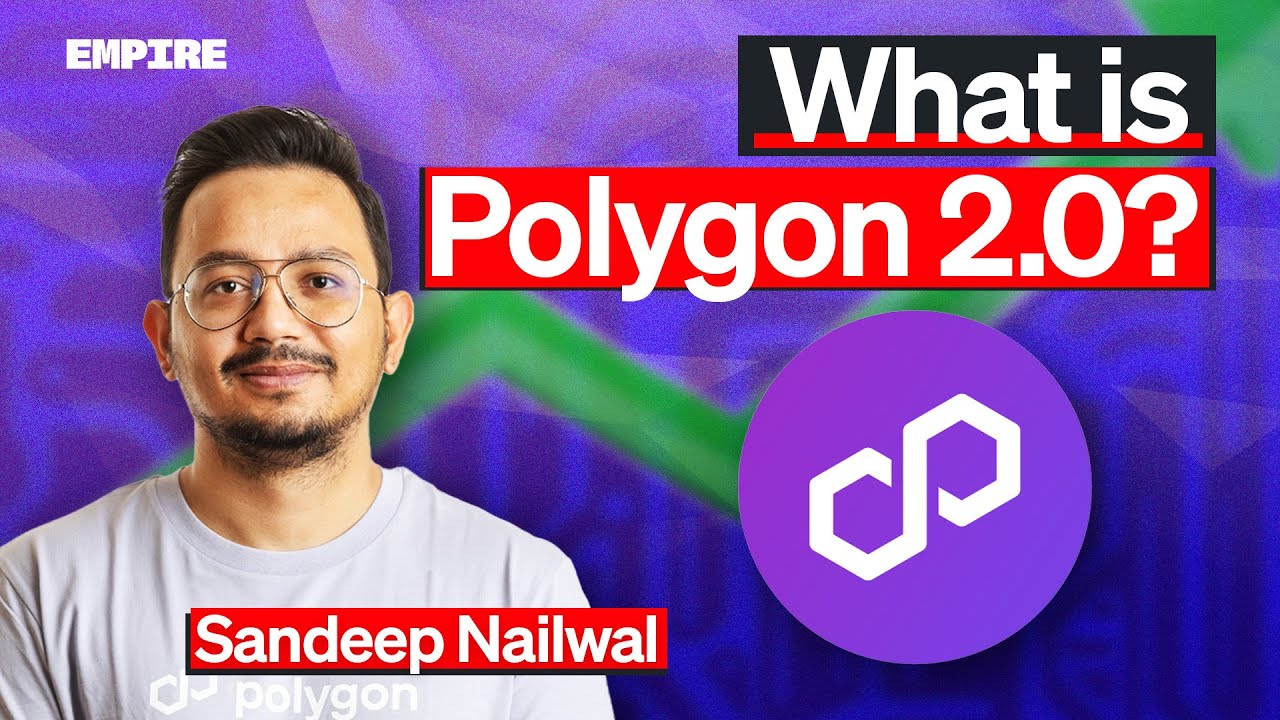
Host : Jason, Empire Podcast
Speaker : Sandeep Nailwal, co-founder of Polygon
Play source : Empire Podcast
Program: link
Original title : Inside Polygon 2.0: Sandeep on L2 Wars and Business Model
Release date : September 5
Polygon's goals and the importance of Web3
Nailwal pointed out that Polygon has been committed to building a solid infrastructure for the widespread use of Web3. He believes that current blockchain applications have not yet achieved true scaling, and no application or chain can handle millions of daily active users without crashing.
Nailwal believes that people’s digital lives were previously controlled by intermediary institutions, and these institutions have lost everyone’s trust in the past decade or so, resulting in the formation of a low-trust environment, while Web3 aims to provide a trustless environment where people’s Digital life is based on a decentralized trust mechanism and is no longer controlled by intermediaries. In order to achieve this goal, an infrastructure that can accommodate hundreds of millions of daily users is needed.
Nailwal pointed out that the goal of Polygon 2.0 is to create an infinitely scalable blockchain infrastructure that enables developers to create and scale trustless applications. Web2 has been described as the “Internet of information,” focusing primarily on the sharing of data and information, while Web3 is viewed as the “Internet of value,” focusing on the creation and exchange of value in a decentralized environment.
Although Polygon 2.0 allows the addition of unlimited chains and scalability, its liquidity is still carried out through Ethereum's settlement layer. Multiple chains can run in parallel, but all transactions and liquidity will be settled on Ethereum.
Nailwal reviewed the development history of Polygon technology. Polygon initially started with Plasma's early scaling solution, then explored another scaling method, State channels, then moved to a more advanced scaling solution, State channels, and finally decided to use ZK technology.
Nailwal explained that ZK technology allows you to prove the calculations you do by providing a constant-size proof without providing all the transaction data. This proof requires the same amount of computation for each verification, making ZK technology very efficient and scalable.
Nailwal and many researchers in the industry believe that ZK is the ultimate solution to provide scalability and security for blockchain and decentralized systems, while optimistic rollups are only a short-term solution.
Nailwal explained that the way optimistic rollups work is based on the optimistic assumption that all transactions on the chain are correct unless someone raises objections. This approach is technically relatively simple, but it also poses challenges. For example, when a user wants to withdraw funds from the rollup chain to the main chain, they need to wait for a long withdrawal period of seven days. This period allows anyone to check the transactions on the chain and raise objections if any improper behavior is discovered.
The core of optimistic rollups is to perform calculations in an off-chain environment. Compared with the main chain, it can handle more transactions and operations to improve scalability. Although the calculation is completed off-chain, all transaction data and proofs of state transitions must be submitted to the main chain, which ensures the correctness and transparency of off-chain calculations.
Nailwal described a future where there are tens of thousands of chains running on the same system, and these chains can adopt different technologies and structures, including Layer 1, validiums and rollups. This multi-chain structure will provide developers and users with greater flexibility and choice, allowing them to choose the most appropriate chain based on their needs.
Nailwal explains the main difference between validiums and rollups. Rollups are those chains that put their data back on the main chain (like Ethereum), while validiums keep their data off-chain. Both approaches have their advantages and limitations, but the key is that they both interoperate within the same ecosystem.
Nailwal emphasized that although we often discuss the decentralized nature of blockchain, the real goal is to achieve trustless computing. Users and developers can trust the system’s calculation results without trusting any intermediary entities or third parties. In this environment, decentralization is just a means to achieve trustless computing, not the end goal.
Nailwal mentioned that different chains (such as Bitcoin and Ethereum) provide solutions for different trustless calculations. For example, Bitcoin provides a trustless payment solution, while Ethereum allows users to perform any type of universal program.
Nailwal believes that any platform that provides trustless computing is a competitor to each other. This includes ZK, optimistic rollups, and other technologies that may emerge. He emphasized that the goal is to provide trustless computing for those who want to build in DeFi, games or other fields.
For startups, Nailwal advises them to choose the most suitable chain based on their needs. If they are building DeFi, they should choose a chain with more liquidity; if they are building a game, they should choose a chain with more gaming communities.
Nailwal said that in order to support a multi-chain environment, the Polygon 2.0 architecture will support validiums, rollups and other possible chains, such as Cosmos, which can all interoperate under a unified framework.
Polygon will move from a fixed supply of 10 billion to an inflation model, increasing by 1% per year, in order to incentivize validators to participate and continue to fund the community. In addition, in order to further develop the ecosystem, 1% of the treasury has been set aside for the next 5 to 10 years, which can be used for the growth of the ecosystem.
Polygon’s three pillars of governance
Nailwal discussed Polygon’s governance structure in detail:
Protocol governance involves decisions about core protocol and client development. Unlike Ethereum and Bitcoin, Polygon's core protocol and client development are not community-governed. For core technology decisions, Polygon does not rely entirely on votes from token holders or the community.
Nailwal believes that the governance models of Ethereum and Bitcoin are very successful, especially when dealing with technical details and core development decisions. This model allows the technical team to make decisions without too much external interference, ensuring the stability and security of the protocol.
System smart contract governance involves the governance of smart contracts running on the Polygon network. This governance model allows the community to conduct broader review and decision-making on smart contracts, ensuring the transparency and fairness of the contract. Smart contracts are core components of blockchain networks, and their behavior and functionality must be trusted and supported by the community.
**Community financial governance,** involves the management and distribution of Polygon community funds. Community members can vote on how community funds are used and distributed, ensuring transparent and fair use of funds. To ensure the continued development and expansion of the Polygon ecosystem, the correct and fair management of community funds is crucial.
Nailwal pointed out that although Polygon has achieved significant growth in both the NFT and DeFi fields in recent years, it still faces fierce competition from other blockchain projects.
Nailwal mentioned that a major challenge for Polygon is the narrative that develops within the community. He believes that despite Polygon’s success in both technology and practical applications, it still faces competition from other, more influential blockchain projects in terms of narrative formation.
Polygon’s business model
Nailwal emphasized that Polygon is a protocol, not a company. Polygon Labs, as a non-profit organization, does not generate profits.
Nailwal introduced the core function of the Polygon protocol, which is to provide trustless computing services to third-party developers. Developers can perform operations on the Polygon network without worrying about the intervention or improper behavior of middle parties.
When developers perform operations on the Polygon network, they pay transaction fees. These fees are intended to compensate validators who maintain and secure the network. Validators are key participants in the network who ensure the security and integrity of the network by validating and confirming transactions.
Nailwal explained that in order to participate in the network and receive transaction fees, validators need to stake or "stake" tokens, and the number of these staked tokens determines the proportion of transaction fees the validator receives from the network.
Tokens are more than just a way for validators to earn transaction fees. They also provide incentives for validators to act with integrity and honesty, as their staked tokens may be punished or confiscated if they misbehave or act evil.
Nailwal expressed his appreciation for traditional business models, especially those based on actual capital and revenue. He believes these models are more stable and reliable compared to the speculative nature of the crypto space.
Nailwal mentioned that despite their efforts to build a decentralized ecosystem in the crypto space, most community members are still interested in speculation rather than real value creation. He believes that if the encryption field is still mainly focused on infrastructure rather than applications in five years, it will be a failure.
https://www.youtube.com/watch?v=YaOVpVxazhY
TechFlow is a TechFlow-driven in-depth content platform dedicated to providing valuable information and thoughtful thinking.
Community:
Subscribe to the channel: https://t.me/TechFlowDaily
Telegram: https://t.me/TechFlowPost
Twitter: @TechFlowPost
Add assistant WeChat to WeChat group: blocktheworld