Author丨Carl
Edit丨C
Techub News original (ID: TechubNews)
The Hong Kong Securities and Futures Commission has taken another step forward in promoting a new licensing system for virtual asset exchanges.
On September 13, the Hong Kong Securities Regulatory Commission issued an announcement stating that the virtual asset trading platform JPEX is not subject to supervision and has not submitted a license application to the Hong Kong Securities Regulatory Commission. The Hong Kong Securities and Futures Commission has issued risk warnings for unlicensed exchanges before, but this is the first time it has targeted a specific exchange.
Affected by this news, the JPEX exchange platform token JPC fell by more than 30%, and JPEX staff at the Token2049 event in Singapore also evacuated early.
Currently, Hong Kong’s virtual asset licensing system is also facing difficulties. On one side, there are unregulated crypto exchage, and on the other side, virtual asset exchanges are beginning to lose enthusiasm for licenses. Compared with the high cost of applying for a license, everyone has little interest in Hong Kong. The market outlook is not optimistic.
In addition to compliance, the future of Hong Kong's Web 3.0 may require more innovation and exploration.
1. The Hong Kong Securities Regulatory Commission issued a warning and JPEX gave up its application.
On September 13, the official website of the Hong Kong Securities and Futures Commission issued an announcement "Warning Statement Regarding Unregulated Virtual Asset Trading Platforms" stating that the virtual asset trading platform JPEX is actively promoting Hong Kong through social media influencers and over-the-counter virtual asset currency exchangers. The public promotes the services and products of this platform, but JPEX is not licensed by the Hong Kong Securities and Futures Commission and has not applied for relevant licenses from the Hong Kong Securities and Futures Commission.
The announcement also pointed out the suspicious aspects of JPEX, such as providing extremely high returns, claiming to have obtained a virtual asset license from overseas regulatory agencies but not being true, and user complaints.
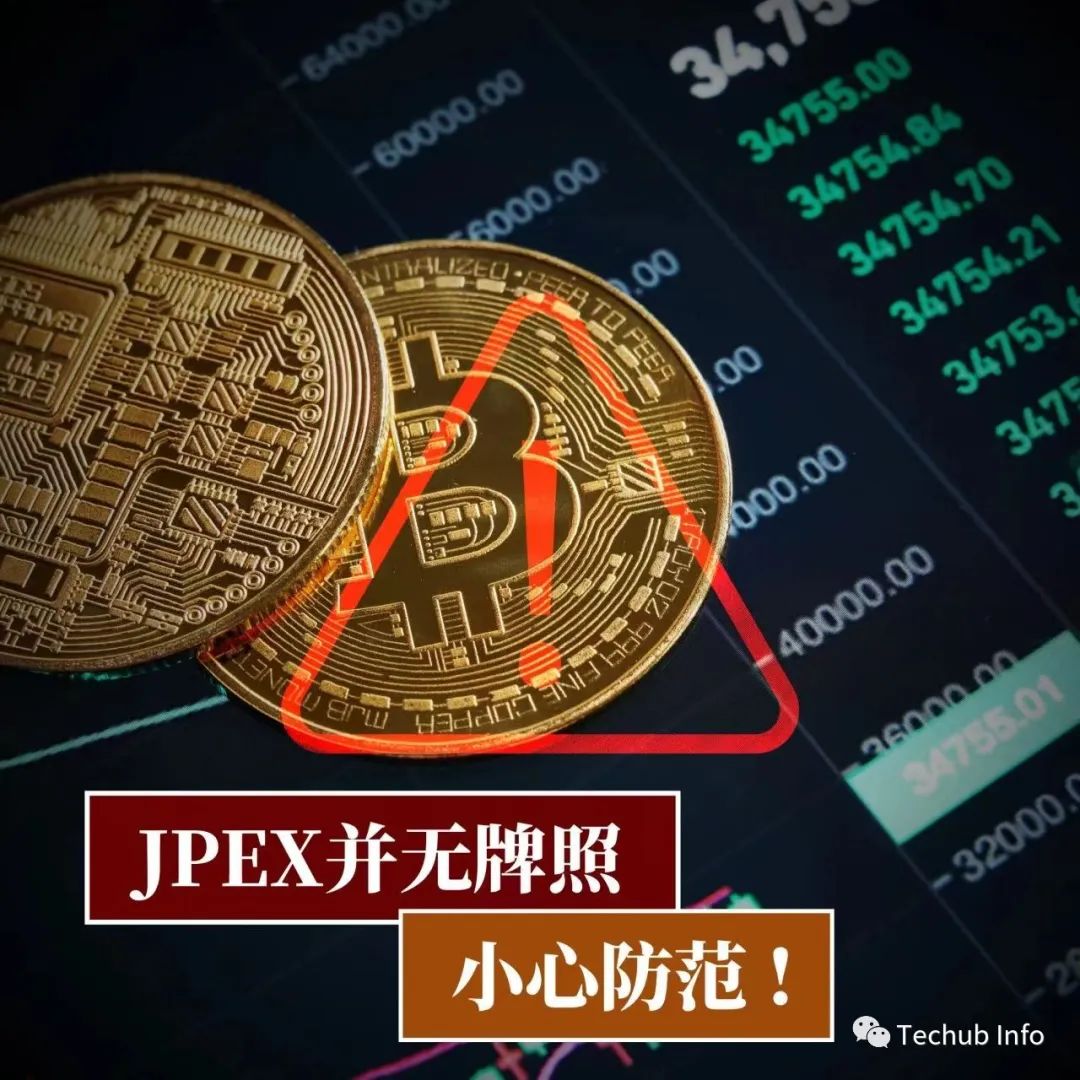
On the same day, the official public account of the Hong Kong Securities Regulatory Commission issued an article "JPEX does not have a license, be careful!" 》Remind investors to remain highly vigilant and take precautions. Trading on unlicensed platforms may result in loss of money.
This is the first time that the Hong Kong Securities and Futures Commission has named a virtual asset exchange since Hong Kong's new virtual asset trading licensing system came into effect on June 1 this year. Prior to this, the Hong Kong Securities and Futures Commission had reminded the public of the related risks.
On August 7, the Hong Kong Securities and Futures Commission issued an announcement stating that it has noticed that some unlicensed virtual asset trading platforms have falsely claimed that they have submitted license applications to the Commission, but this is not true. This will mislead the public into thinking that these platforms comply with the Securities and Futures Commission’s requirements. Regulation. At the same time, the Hong Kong Securities Regulatory Commission also announced a link to check the platform’s licensing status.
According to Techub News inquiries, the only licensed virtual asset trading platforms currently are OSL Exchange and HashKey Exchange.
In response to the Hong Kong Securities and Futures Commission's announcement, JPEX issued a document on the same day stating that JPEX intends and plans to apply for a license in Hong Kong, but due to the time required for application deployment and legal document preparation, it has not yet formally submitted the application.
JPEX believes that the CSRC’s announcement conflicts with the Hong Kong government’s intention to create a Web 3.0 city image, and will consider canceling the application for the licensing system in Hong Kong and adjust future policy development.
According to people familiar with the matter, JPEX is a virtual asset exchange opened by Chinese people. It has indeed carried out promotional activities in Hong Kong before, and promotional advertisements for the platform can also be seen on the streets of Hong Kong.
On September 14, KOL killthewolf.eth posted a message on There will be no staff at the booth at the Singapore Token2049 event.
According to an on-site person at Token2049, JPEX staff evacuated the site early on the 14th, but there were still display boards left at the booth.
According to the JPEX official website, on the morning of September 14, the JPEX platform token JPC fell by more than 30% in 10 hours.
2. Enthusiasm for license applications is declining
On June 1 this year, the "Guidelines Applicable to Virtual Asset Trading Platform Operators" were officially implemented in Hong Kong.
According to the guidelines, centralized virtual asset exchanges that operate business in Hong Kong or promote services to Hong Kong investors must be licensed and regulated by the Hong Kong Securities and Futures Commission, and have previously obtained licenses No. 1 and 7 from the Hong Kong Securities and Futures Commission. Virtual asset trading platforms that are licensed and operate in Hong Kong have a one-year exemption period and need to supplement the original license.
Industry analysts said that JPEX does not fall into the above two situations. Therefore, continuing to conduct business in Hong Kong is indeed suspected of violating relevant regulations.
"From issuing warnings, announcing compliance lists, to naming warnings, the Hong Kong Securities Regulatory Commission is tightening supervision step by step and implementing relevant policies previously formulated. There will be a lot of unlicensed exchanges still carrying out business in Hong Kong. risk," the analyst said.
Since Hong Kong issued a declaration on the development of virtual assets in October last year, many virtual asset exchanges and traditional institutions long in Hong Kong and announced their embrace of Hong Kong’s new virtual asset licensing system.
According to media reports, virtual asset exchanges such as OKX, Binance, Huobi, Xinhuo Technology, HKVAX, Bitget, HKbitEX, Bullish, and Gate.io have announced their applications for Hong Kong virtual asset licenses, as well as Fuqiang Securities, Lion Group, Traditional institutions such as Victory Securities and Sunco Technology. Lily Z King, chief operating officer of Cobo, said in an interview with the media that there are 140 companies in Hong Kong applying for virtual asset licenses.
On August 3, Hashkey and OSL announced that they had obtained virtual asset license upgrades and could provide related services to retail users.
However, industry analysts said that the user growth of Hong Kong's compliance exchanges is not ideal. Hong Kong's user market size is limited, and due to the bear market, ordinary people in Hong Kong do not have high expectations for the encryption industry.
A Web3 practitioner who has obtained Hong Kong identity through the Hong Kong Talents Program told Techub News that Hashkey’s account opening still has a high threshold. Although he has obtained Hong Kong identity, he is still unable to open an account because it requires proof of renting a house in Hong Kong. .
"My work requires traveling between Shenzhen and Hong Kong, but the rent in Hong Kong is too expensive, so I chose to live in Shenzhen. Unexpectedly, I couldn't open an account in Hashkey." The Web3 practitioner said.
Currently, various exchanges are less enthusiastic about applying for virtual asset licenses.
Industry analysts said that the exchanges mainly focus on the importance of the Hong Kong market and the development prospects after compliance, and the development of the two compliance exchanges has made everyone doubt their previous expectations. On the other hand, applying for a license is costly and comes with uncertainty.
Previously, according to media reports, the cost of applying for a virtual asset license in Hong Kong was about HK$100 million.
HashKey Group COO Weng Xiaoqi said in an interview with the media that it is expected that the number of exchanges that will eventually obtain a Hong Kong license will be only 5-8, and it is expected that 80% of the exchanges that are applying for licenses will withdraw their applications later.
Industry analysts say that compliance and innovative development need to be balanced, and it will be difficult to develop if you are too compliant with the rules. He suggested that Hong Kong needs to appropriately open up some space for innovation and development on the basis of compliance, and compliant exchanges should also have more innovation and exploration, such as lowering the threshold for user registration, promoting Web3 to more Hong Kong people, Allow exchanges to open more trading pairs and functions, etc.