Written by: THE DEFI SAINT
Compiled by: TechFlow TechFlow
To get the most bang for your buck in the crypto market, you must get ahead of the narrative:
$GMX dominates the derivatives narrative;
$LDO dominates the LSD narrative;
$LBR dominates the LSDFI narrative.
After LSDFI, the next big narrative will be LPDFi (Liquidity Providing Derivatives Finance), an area Logarithm Finance is pioneering. Is it too early for us to understand this narrative?
Very early as Logarithm Finance does not have a token yet, but its token has been confirmed as $LOG.
Here’s everything we need to know about LPFi narrative and Logarithm:
LPDFI (Liquidity Providing Derivatives Finance) Just like LSDFI derives maximum value from LSD, LPDFI derives maximum value from LPD.
LPD uses users' LP positions to build products (options, income, perpetual contracts, etc.) on top of them. It opens up entirely new opportunities for users' LP positions in Uniswap V3 (or similar types of AMMs), rather than letting users' LP positions sit idle.
In short, the Gamma strategy is to LP what Logarithm Finance is to the user's LP position. A deeper look into Logarithm's approach to LPDFI reveals that Logarithm Finance aims to be a liquidity center for LPD.
It aims to achieve this by leveraging delta-neutral strategies while minimizing the volatility and maximizing returns of these LPs.
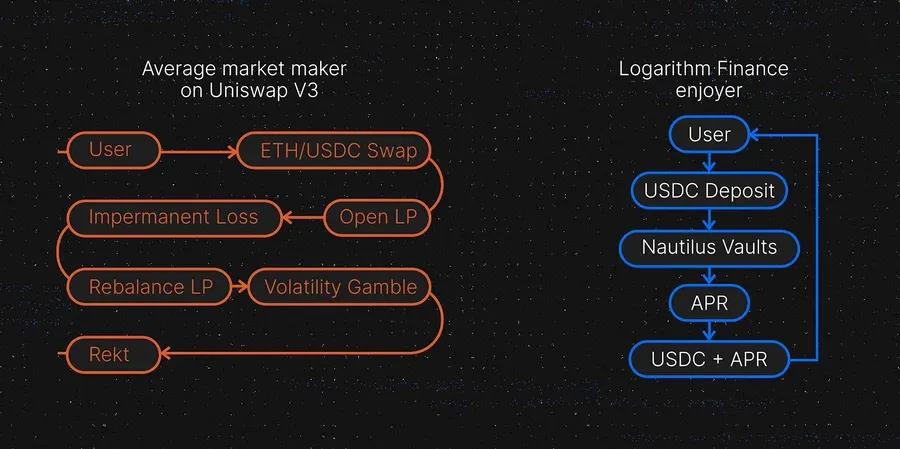
Logarithm Finance routes LP tokens through other LPDFI protocols to gain enhanced yields and bootstrap liquidity for these protocols. Logarithm Finance Liquidity Shell is making this a reality.
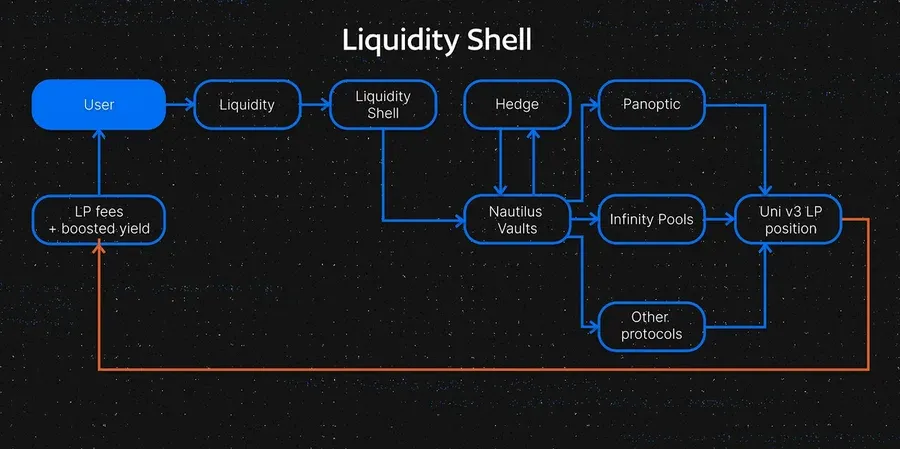
Like a yield aggregator, Logarithm Finance captures value from different LPDFI protocols to maximize yields for users, in turn creating seamless liquidity access for these LPDFI protocols and Uniswap V3.
These LPDFI protocols include:
panoptic;
smilee;
Infinity Pool;
Limitless.
Let's take a closer look at Nautilus Vault, Logarithm Finance's core product and one of the features of its Liquidity Shell, which enhances its vision of providing market making as a service.
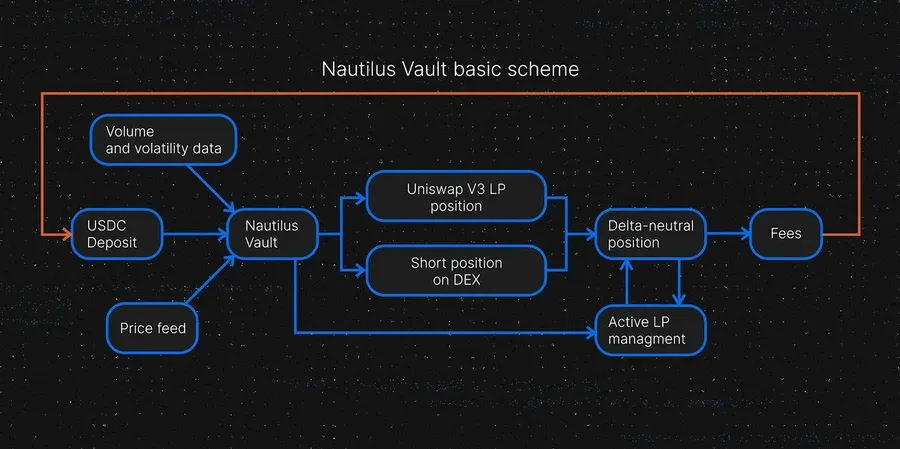
The Nautilus vault manages uni v3 CL positions and opens short positions on perpetual DEX (GMX) to hedge volatile assets and earn fees while ensuring no IL.
From an LP perspective, Logarithm Finance is also suitable for LAAS (Liquidity as a Service), just like CLMs such as Gamma Strategies, Dyson, and DeFI Edge.
In the future, Nautilus Vault will be expanded to other centralized liquidity AMM DEX, such as Chronos, etc., and will also be expanded to other chains. When it comes to how Logarithm Finance will bring these real yield to users, it’s key to understand where these benefits come from:
LP fees from Uniswap V3;
LP fees from the LPDFI agreement;
Logarithm incentives given to LP in the form of $LOG;
Token issuance from the LPDFI project.
Logarithm Finance has proven the authenticity of these returns through its backtesting, with annualized returns of 11.8%.

It is worth noting that the Logarithm Finance Beta version has been announced and will be launched soon.
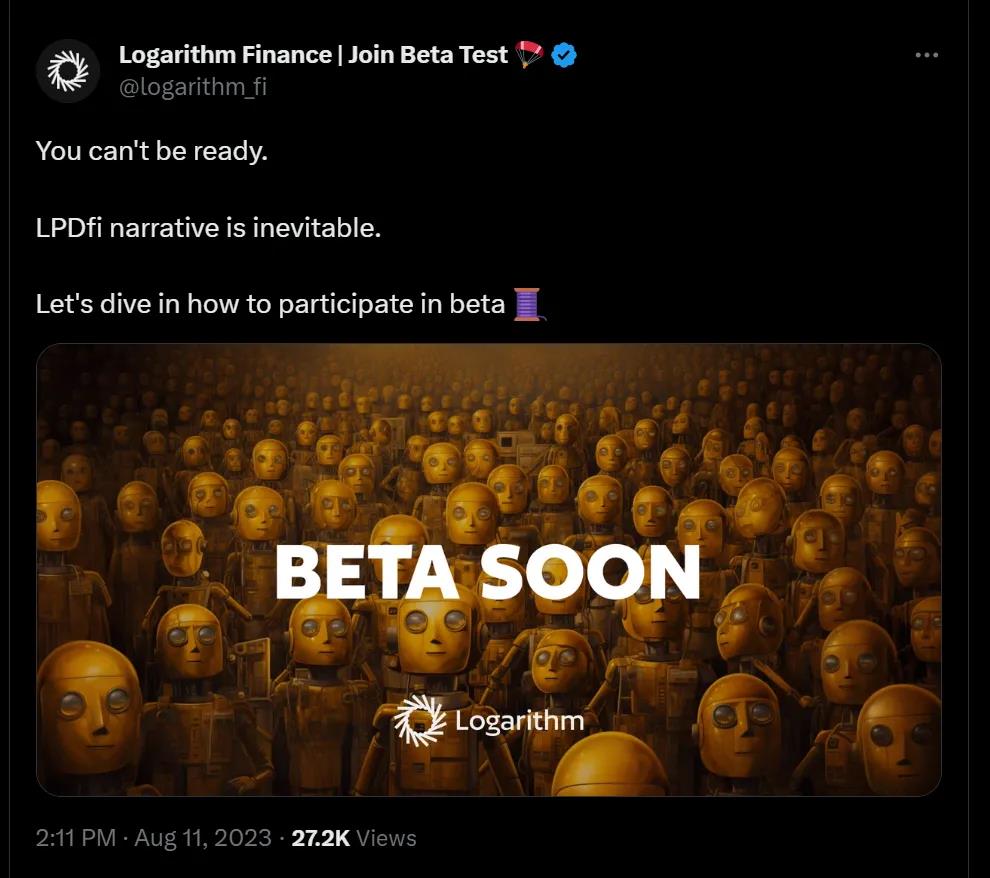
Logarithm Finance token $LOG has also confirmed that Logarithm Finance will conduct a private sale of its token, although there are not many details on the economics of the token distribution.
So, why is Logarithm Finance worth paying attention to? Because it does lend itself to multiple narratives;
LPDFI;
MMaaS (Market Making as a Service);
LaaS (Liquidity as a Service).