



This article will give users a detailed explanation of the development status of each new protocol in the Ordinals ecosystem, as well as better ways to participate.
Written by: Wuhai, PANews
Looking back on the past six months, the Bitcoin Ordinals ecology started from a bud at the beginning of the year, flourished from March to May, and then the sentiment calmed down. Market sentiment has also changed from the previous definite prediction that Ordinals will become the engine of a new round of bull market, to the current doubts and confusion.
But a real fact is that the development of the Ordinals ecosystem has never paused. Many new new protocols and projects based on Ordinals have been born here. For example, brc420 and arc20, newly launched in the past two days, have attracted widespread attention and discussion in Mingwen Ecology with opening prices that are more than 10 times higher than the cost price.
In this article , PANews will explain to users in detail the development status of each new protocol in the Ordinals ecosystem, as well as better ways to participate.
Brc20: Deploying token contracts on the Bitcoin chain and continuing to be active
On March 8, 2023, domo proposed using Ordinals inscriptions in JSON data format to deploy token contracts, minting and transfers, and the Brc20 protocol was born. The first token in its ecology, ORDI, has increased by more than 10,000 times relative to its cost price, making Ordinals completely out of the circle.
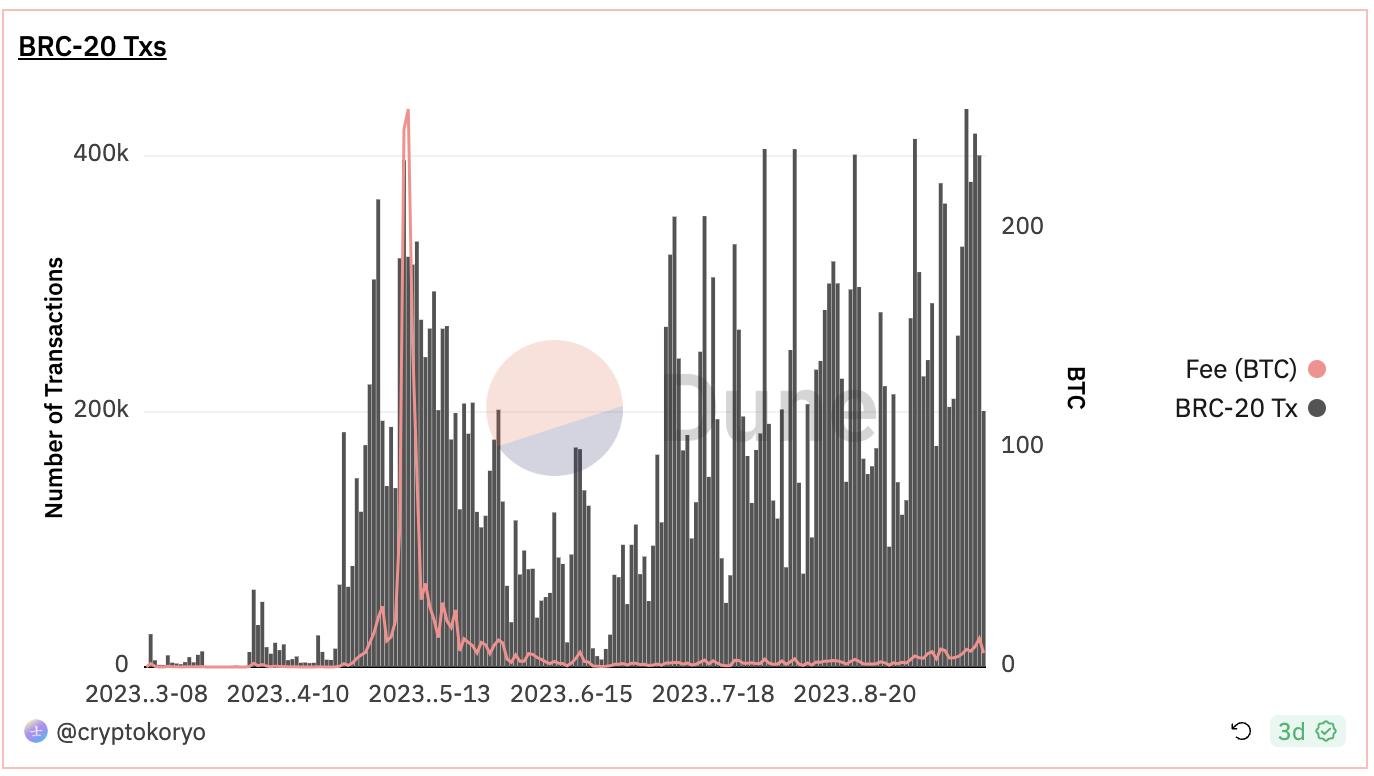
According to Dune data, as of September 23, the number of transactions generated by the Brc20 protocol was 28.6 million, and the handling fees generated amounted to 1,590 Bitcoins, totaling US$42.4 million. Observing ORDI as an index, its daily trading volume exceeded US$100 million at its peak, and its current daily trading volume has dropped to a minimum of US$8 million.
Since the birth of the Brc20 protocol, although community users have been paying close attention to it, there have been almost no technical updates. The only major progress currently is that unisat, which integrates wallets, engravings, and trading markets, is developing brc20-swap in the hope of improving the current lack of liquidity of brc20 tokens.
Orc20: Make Brc20 more flexible, no update
Orc20 was created by OrcDAO to enhance some key features of BRC20, improve adaptability, scalability and security, and eliminate the possibility of duplication of consumption.
Its official documents mentioned that OIP 1-11 will be updated to improve the Orc20 protocol, but since late July, the OrcDAO official Twitter has stopped updating and there has been no further progress. According to Dune data, the Orc20 protocol generated a total of 370,000 transactions from its birth to its inactivity, consuming handling fees worth 24 Bitcoins.
Bitmap: Bitcoin chain metaverse, with over 20,000 addresses
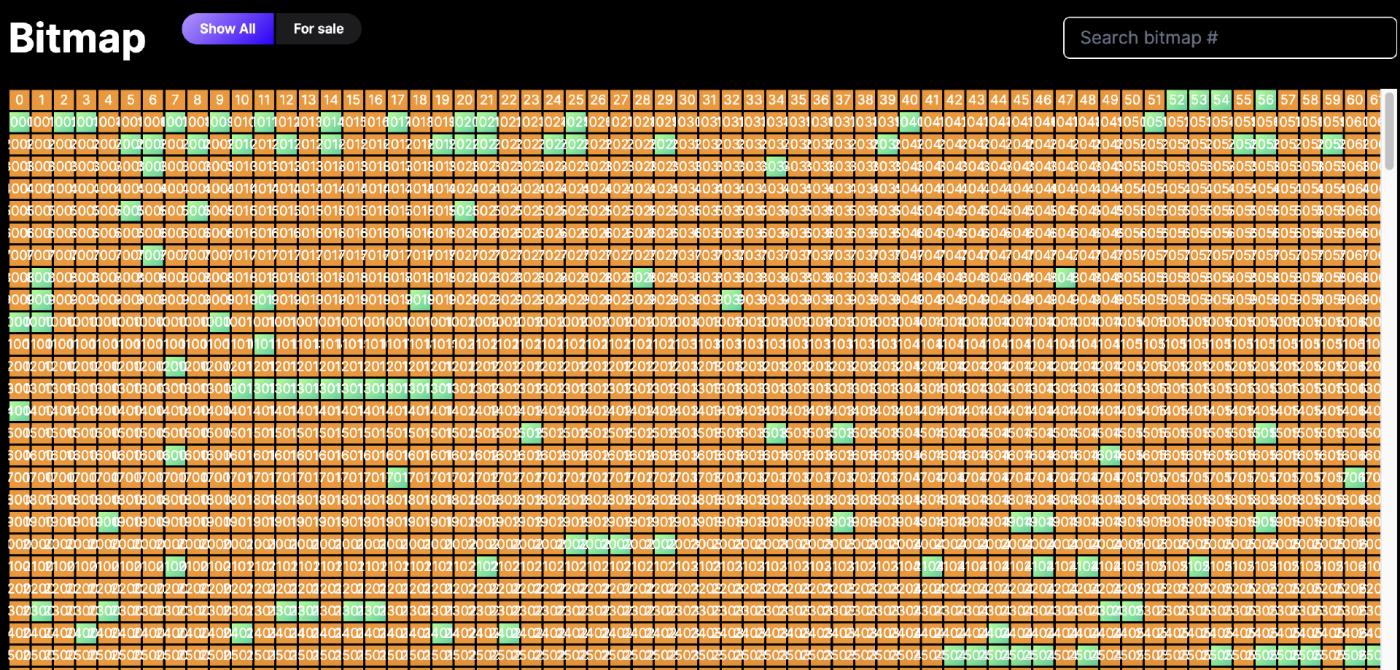
The developer of the Bitmap protocol is blockamoto. The protocol intends to use Ordinals and Bitmap theories to build a metaverse based on the Bitcoin chain, allowing anyone to inscribe the space assets of Bitcoin blocks, and the distribution process is decentralized and fairly distributed.
After the launch of the protocol, Ordinalswallet officially developed a map based on Bitmap for plagiarism checking and inscription. Later, some developers built bitmap.land, which serves as a portal website for the Bitmap protocol and also has tool documentation such as bitmap-directory. In addition, projects continue to build content based on the Bitmap protocol.
Up to now, the incomplete statistics of the transaction volume on the Bitmap map have reached 120 Bitcoins, and there are more than 22,000 holding addresses. Its community discussions are more rational, mainly focusing on how to extend and enrich the Bitmap protocol.
gBRC721: Optimize block space, weak successor
The full name of the gBRC721 protocol is generative-brc-721, and the developer is 0xJerry543. Jerry is also the initiator of the Bitcoin NFT project DogePunks. The protocol aims to save on-chain resources and achieve 50%-90% block space optimization to accommodate more creators and promote innovation.
The agreement has attracted much attention because the relative cost of its ecological project OrdiBots has increased by a thousand times. The transaction volume of its representative project OrdiBots totals 37 Bitcoins and holds 550 addresses. It has not yet been displayed by the Magicden analysis front-end. At first, the enthusiasm of the community was extremely high, but due to the lack of follow-up and the lack of more applications of the protocol, the community also fell into silence.
Recursive inscription: Making it possible for the Metaverse to run on Bitcoin, the current situation is bleak
Recursive inscriptions were proposed by Ordinals creator Casey Rodarmor. The intention is to allow the inscription size to break through the 4MB block size limit of Bitcoin, and to fully chain complex 3D video games to Bitcoin. Let the community believe that smart contracts similar to ERC20 may be able to run on the Bitcoin chain, thereby making scalability and interoperability on the Bitcoin chain possible.
Although market attention and sentiment are high, few developers use recursive inscriptions to build projects, and most of them imitate existing projects to improve them.
Looking at the increase and trading volume alone, the representative Recursive Punks and Recursive Frogs only have a total trading volume of 30 Bitcoins. Now almost no one in the community mentions recursive inscriptions, and no project continues to operate.
Trac: Ordinals decentralized index, a rising star
The developer of the Trac protocol is Beny, which aims to solve an unsolved problem in the current inscription ecology - decentralized indexing. Because its concept is novel and it hits the pain points of the community, its governance token TRAC has performed extremely well in the secondary market, with a relative cost increase of more than 100 times, and the transaction volume so far is US$2.1 million. Trac has partnered with projects such as Bitmaps and Inscribed Handles.
Beny then developed the Tap protocol, which is the OrdFi-enabling protocol for the Ordinals service. The tokens of this protocol have different functions, including transfer confirmation mechanism, batch transfer, tokens can be set from 3 characters to 32 characters, etc. Developers can create their own tokens more flexibly. The OTC price of TAP, the protocol’s representative token, also performed reasonably well.
Last week, the Tap protocol launched the specification and index of a new feature "token-auth", which allows third parties to authorize sending tokens from authorized wallets. This provides support for games on the TAP protocol, the metaverse, token bridges, cross-chain markets, etc.
ORC-CASH: A token system like a cash system
The creator of the ORC-CASH protocol is Sonic, which intends to implement a token system like a cash system on the UTXO network. The protocol's first token, OSH, has risen to a maximum of $100 since inscription, with 10 Bitcoins traded on the Magicden platform excluding initial OTC volume.
It has been observed that since the birth of the ORC-CASH protocol, developers have been actively developing and operating it, from indexing to listing on the market, in an orderly manner. The community is also fairly sticky, and most discussions and exchanges are from a development perspective. There are also occasional on-chain proposals for the community to propose and vote on. Recently, its creator Sonic also attended the Singapore 2049 Conference to communicate with Ordinals ecosystem developers.
Brc420: Give inscription royalty function
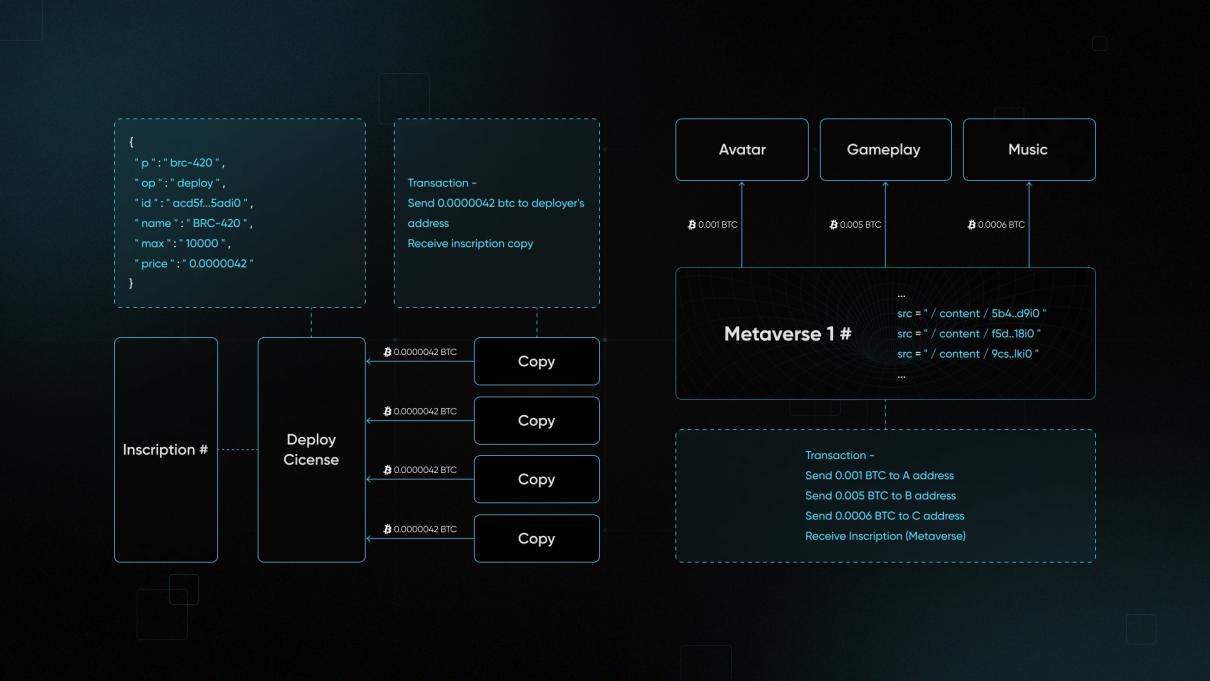
The launcher of Brc420 is Recursiverse, which was born in the period of recursive inscription. Brc420 defines more complex asset formats recursively and is completely open source so that anyone can create their own metaverse inscriptions. At the same time, Brc420 establishes a binding relationship between usage rights and royalties on the basis of a single inscription. When users own an inscription, they can allocate its usage rights and set a price for it, which can encourage more innovation in the Ordinals ecosystem.
The first experimental token of the Brc420 protocol has also been launched, and its off-site enthusiasm is acceptable. Its launcher, Recursiverse, continues to expand its ecosystem and cooperates with many protocols and project parties in the Ordinals ecosystem. According to official information, it also funded the recent OrdinalsSummit conference in Singapore.
Arc20: The easiest and most powerful way to create digital objects on Bitcoin
The Arc20 protocol solves the problem of how to represent any fungible token asset on the Bitcoin blockchain. The ARC20 fungible token standard finally brings colored coins to Bitcoin and uses 1 Satoshi to represent the unit of ownership of a deployed token. This means that the value of each token will never be less than 1 satoshi.
The project Twitter has been in operation since the end of May 2023, and it was only discovered by the community and started minting nearly two days ago. Since the Arc20 protocol tokens are minted through GPU mining, certain technical thresholds are required. Under this premise, the community still minted ATOM, the first token of the Arc20 protocol, in just one day.
Once ATOM was minted, over-the-counter transactions abounded. Its price opened at US$30 per piece, then briefly stayed at US$50, then jumped to US$100, and has now fallen back to around US$80. The attention and fomo sentiment it has spread has swept away the long-dormant Ordinals ecosystem. Users on social media and various communities have mentioned the Arc20 protocol. Whether it can operate sustainably remains to be seen, like many previous agreements, which experienced a wave of popularity and then died.
Summarize
According to the data analysis platform geniidata, as of September 23, more than 33.9 million inscriptions have been generated, more than 600,000 addresses hold inscriptions, and nearly 45 million transfers and transactions have occurred. According to Dune data, the handling fees generated by the Ordinals ecosystem also exceeded 2,000 Bitcoins, equivalent to a value of US$53 million.
According to the above, it can be seen that the Ordinals ecology has gradually calmed down after experiencing the peak of emotional and financial attention from the entire network since its birth. From an investment perspective, every new protocol, no matter how it ends, has experienced a round of FOMO after being launched on the secondary market. Therefore, you can look for projects with new protocols and zero-cost or low-cost inscriptions, then enter them at a low cost, and then sell the chips in batches during the FOMO period of the secondary market.
In addition, new ecological protocols and new projects have been emerging one after another. Developers have been constantly developing and improving them, and users have not hesitated to pay attention to and invest in new protocols. In the long term, the Ordinals ecosystem is also worthy of attention.






