On September 27, Binance officially announced that it had sold all of its Russian business to the crypto exchage CommEX. To ensure a smooth exit for existing Russian users, the exit process will last one year. A portion of new Russian KYC user registrations will be transferred to CommEX immediately and will be expanded over time. Over the next few months, Binance will cease all exchange services and business lines in Russia. Binance will not receive an ongoing revenue share from the sale and will not retain any option to repurchase shares in the business.
According to the official description, the sale of all businesses in Russia was due to "conducting business in Russia is not in line with Binance's compliance strategy." However, the official did not give a clear explanation of the compliance strategy.
What’s even more amazing is that the Russian business buyer CommEX selected by Binance is a crypto exchage that was officially launched on September 26. Its social platform X account, Telegram community, etc. were all registered around September 25. According to the official website of CommEX, CommEX is a centralized cryptocurrency exchange "supported by top crypto VCs". The team is committed to providing convenient, safe and innovative services to "global users". In addition to spot trading business, CommEX also provides futures and P2P services. Its futures market provides perpetual contracts with up to 200 times leverage and simple futures with up to 500 times leverage. In addition, at present, its spot trading market only provides USDT trading pairs in more than 20 currencies, and P2P legal currency transactions only support the Russian ruble (RUB). According to the official staff of the CommEX Russian channel community, the team is gradually improving more currencies. However, other fiat currency businesses are not yet online.
Binance chose to sell its business in Russia to what looked like a newly established exchange, which caused the public, especially Binance users in Russia, to question whether a new exchange can guarantee the security of assets and whether the trading depth can be achieved. Accommodate Binance Russia users? But more voices point to “CommEX or a substitute for Binance’s Russian business.”
Why is Binance rushing to exit its Russian business?
Russia was once one of Binance’s largest trading markets, and its legal currency business was also one of its important businesses. But after the Russia-Ukraine war, Binance’s business in Russia became awkward.
As the United States imposes widespread sanctions on Russia’s financial industry. Many Russians are unable to wire rubles to bank accounts abroad or exchange money for other currencies, and cryptocurrencies have emerged as one way for Russians to escape from this restriction. Last April, Binance began limiting crypto wallet balances for Russian users to no more than 10,000 euros and blocked several accounts linked to relatives of high-ranking Kremlin officials due to international sanctions against Russia.
Extended reading: Binance announced that it will cooperate with the EU to "sanction Russian accounts with more than 10,000 euros"
In March this year, Binance closed the channel for users in Russia to buy and sell US dollars and euros through its P2P service. EU citizens are also prohibited from buying and selling rubles through P2P.
However, in April this year, some media broke the news that Binance had lifted the 10,000 euro deposit limit for Russian users. Subsequently, Binance officially responded that all current restrictions related to sanctions against Russian citizens fully apply to the platform and its legal entities in the EU.
In May, the U.S. Department of Justice began investigating whether Binance was illegally used to help Russia move funds while evading U.S. sanctions.
In August, the Wall Street Journal broke the news that Binance is still processing a large number of ruble transactions. Users in Russia can still transfer funds from sanctioned Russian banks to Binance accounts through layers of intermediaries. Binance also supports ruble transactions against digital currencies. P2P trading of tokens, which often involve banks that are blacklisted in the West. A recent review of the Binance peer-to-peer service website revealed that Binance has recently offered Russian customers at least five sanctioned Russian banks, including Ross Bank and Tinkoff Bank, as options for processing payments. At the same time, people familiar with the matter revealed that the U.S. Department of Justice is still investigating whether Binance may have violated U.S. sanctions against Russia. However, after this report, the Binance website immediately removed the five Russian lending institutions. A Binance spokesperson said that the system will be regularly updated to ensure compliance with local and global regulatory standards.
Subsequently on August 28, Binance stated through the media that due to disputes in Russia, Binance may "fully" withdraw from the Russian market. At the same time, Binance’s Russian Telegram channel has also been updated, announcing several new rules for P2P exchange users: Russian users can only trade in ruble (RUB) legal currency on the P2P platform, and this The option is limited to users who live in Russia and have undergone KYC verification.
At the beginning of this month, Gleb Kostarev, Binance’s head of Eastern Europe and Russia, and Vladimir Smerkis, Binance’s general manager of Russia and CIS, announced their resignations on Facebook.
Therefore, Binance’s choice to withdraw from the Russian region is mainly due to the ongoing investigation by the US Department of Justice. In addition, in addition to this investigation, Binance has become the focus of U.S. regulatory authorities this year. Not only was it sued by the U.S. Commodity Futures Trading Commission (CFTC) in March, claiming that its founder CZ and the three Binance entities he operated, Repeated violations of the Commodity Exchange Act (CEA) and CFTC regulations.
Subsequently, Binance Holdings Co., Ltd. and founder CZ himself were charged with multiple securities law violations by the U.S. Securities and Exchange Commission (SEC) in June. These include accusations that the overseas company operated an illegal trading platform in the United States and misused customer funds.
Therefore, in order to operate compliantly, Binance had to take countermeasures.
Digging deeper into CommEX: Its ambitions may not be limited to Binance’s business in Russia
Currently, CommEX’s Telegram community has opened Russian, English and Korean channels. According to the administrator’s response on the Russian channel, CommEX is registered in Seychelles, not Russia. It is a company focusing on multiple markets (including the CIS countries). As a global platform, it will also focus on business in Asian countries and regions, so it also opened a Korean community in the early stages.
Although the official stated that this is an exchange supported by many "top VCs", no relevant information was disclosed. Users who entered the community repeatedly asked questions such as "Where can I find information about the exchange?" "Who is the founder and CEO?" but were ignored by the administrator. The latter only responded, "The team will hold a meeting." AMA to focus on answering questions.”
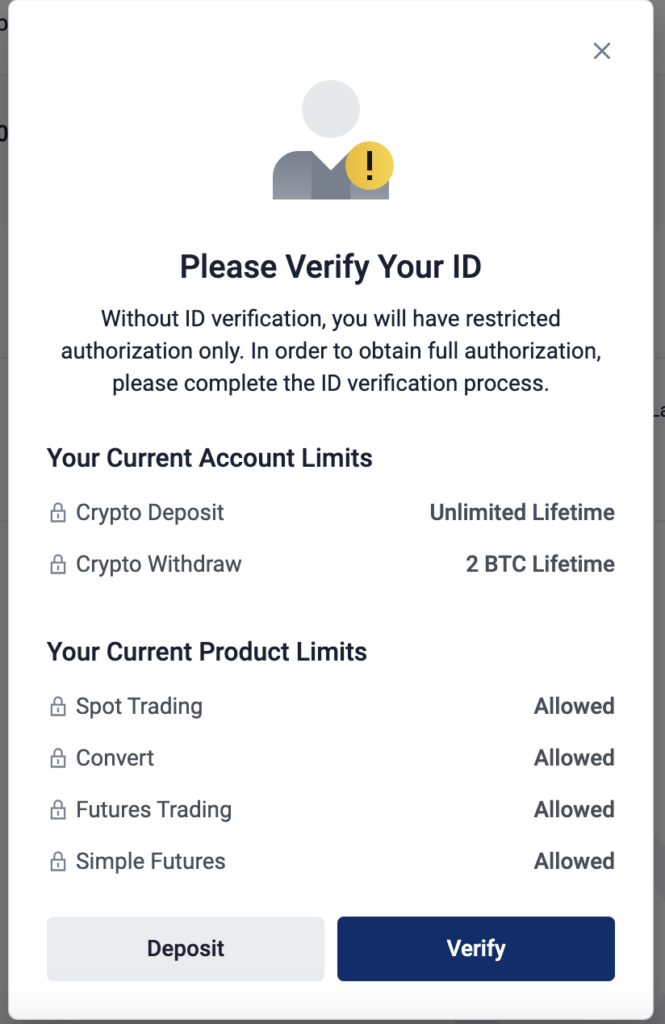
The CommEX official website shows that it currently supports four languages: Russian, English, Japanese, and Simplified Chinese. First-time registered users can choose to register using their existing Binance accounts. The rights of newly registered users include exchange, spot trading, contract trading and simple futures. For transactions, etc., there will be a 2BTC withdrawal limit without KYC. In addition, ChainCatcher reporters found that the exchange’s KYC is for multiple regions and countries, including China. The reporter used a Chinese regional ID card to conduct KYC and successfully passed the verification within 12 hours.
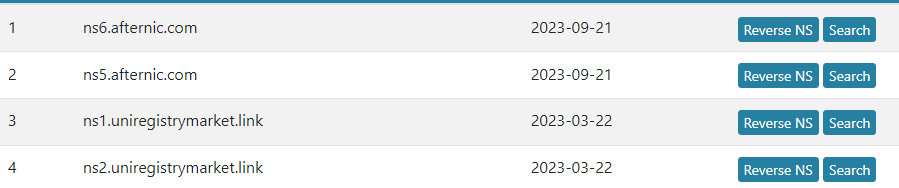
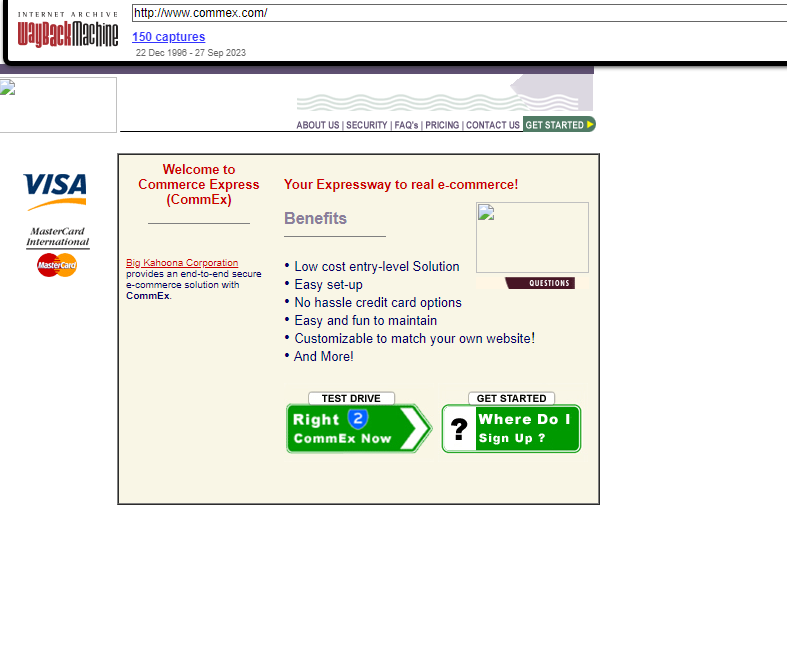
In addition, many users have questioned the relationship between CommEX and Binance. According to crypto KOL @Adam Cochran , according to the name server history on the domain name, https://www.commex.com/ was first used by a commercial credit card company, and its server was only updated on the 21st of this month.
CommEX's availability using Binance login indicates that it is executed on Binance Cloud, which was shut down in 2022 along with the Connect product. Therefore, general partners do not have permission to execute on Binance Cloud, and even Binance partner WazirX has lost the permission to "log in with Binance". And exchanges operating on Binance Cloud can share liquidity with Binance, which is why the BTC/UST trading volume on this newly launched website reached $1 million on the first day alone, and the bid spread between the two sides of the market is good... …
The author believes that the above evidence is not very sufficient to prove that "CommEX is a shell company of Binance". However, there are many doubts that Binance sold Russia to such a newly launched exchange and did not disclose relevant information. We will continue to track more developments of CommEX in the future, so please stay tuned.