CZ was born in Lianyungang, Jiangsu Province. He learned the value of humility in a multicultural environment, devoted himself to his career, invested in Bitcoin , and joined Blockchain.info and OKCoin. His life partner He Yi is China’s top Bitcoin evangelist and co-founder of Binance . In 2017, CZ founded Binance and raised Binance Coin 's ICO. Sequoia set a valuation of 500 million yuan for Binance and invested 60 million yuan. In the end, Sequoia invested in Binance, and Binance achieved great success.
Original author: CaptainZ
Original source: xlog
"Those people taught me how to play chess and how to think"
In 1977, in a little-noticed corner of Lianyungang, Jiangsu, the story of CZ began. He was born in an ordinary family, both of his parents were teachers, but his father, Zhao Shengkai, as a teacher at the University of Science and Technology of China, was labeled a "capitalist roader" intellectual during the Cultural Revolution. This label brought him endless trouble. suffering. He was forced to leave urban life and move to remote villages, where he experienced the most difficult years of his life.
At that time, rural schools were simple and scarce, with only simple stone tables in the classrooms, which was very common in rural areas with limited resources. In winter, learning conditions are even more difficult. In this environment, CZ not only experienced a life of poverty, but also learned the power of seeking knowledge in adversity.
At the age of ten, CZ and his family left the countryside and moved to Hefei, a small city that is also home to the University of Science and Technology of China. This new environment is like an oasis of knowledge for CZ. Here, his world begins to change. CZ often sits and listens to debates among senior students, who discuss everything from campus life to political issues. These senior students sometimes teach CZ how to play chess and Go. Through these games, CZ not only learns strategy and thinking, but also gradually broadens his horizons.
CZ recalled: "Those people taught me how to play chess and how to think. Being with people who were seven to ten years older than me made my way of thinking different from children of the same age." In such an environment, CZ's way of thinking A shift begins to occur. Not only did he learn to think critically, he also learned how to find his place in the wider world.
In 1984, in search of a better future, Zhao Shengkai left China and went to Canada to study for a PhD at the University of British Columbia. Five years later, in 1989, the Tiananmen Square Incident broke out and Zhao Shengkai once again felt the threat of political unrest. For the future of his family, he decided to take his family to immigrate to Vancouver, Canada, and start a new life. When applying for a visa, CZ recalled, "I remember the queue outside the Canadian Embassy was three days long. We had to take turns staying in the queue at night to maintain our position."
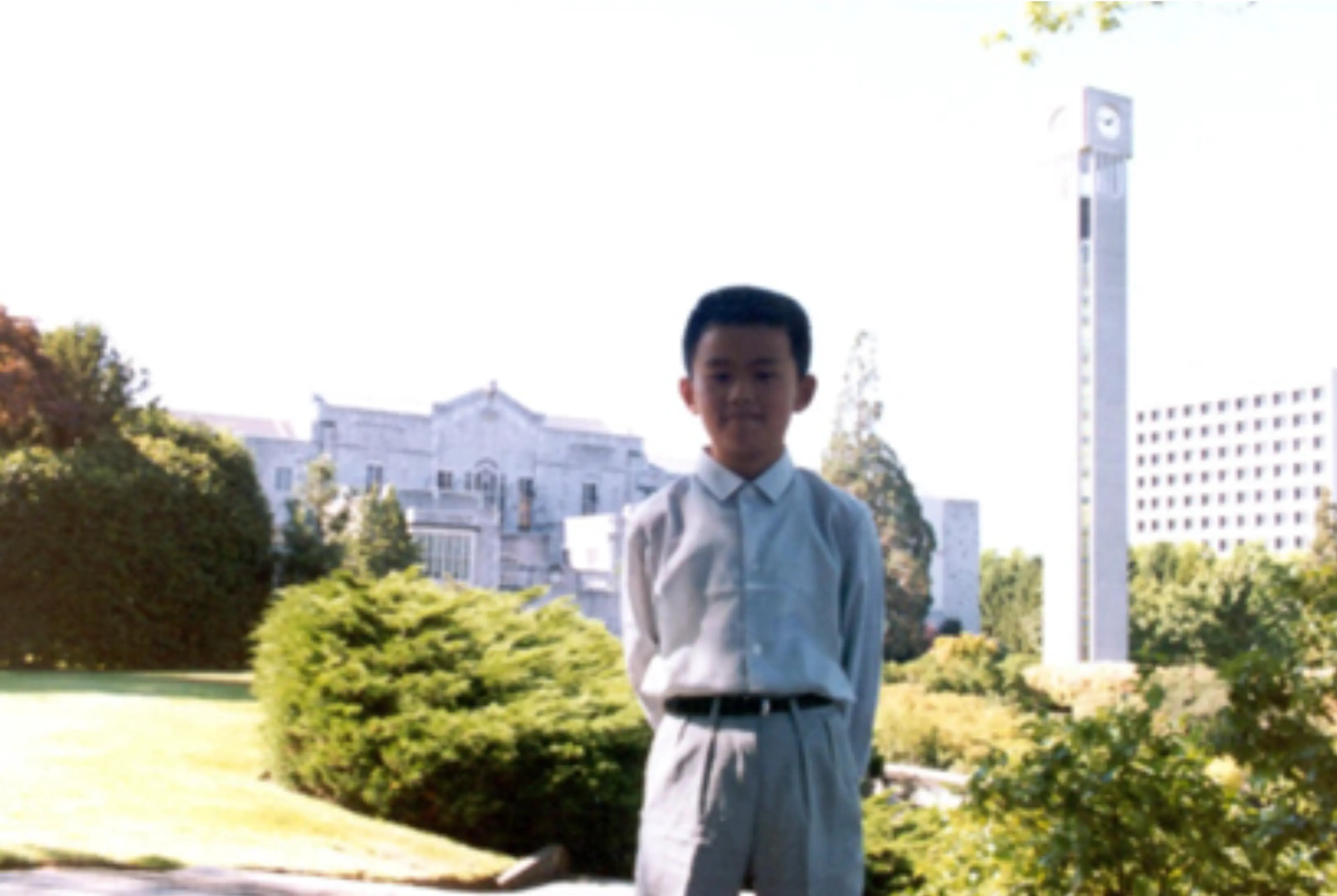
On the campus of the University of British Columbia, Zhao Shengkai continued his academic journey, pursuing a PhD in geophysics. This decision was not only for my own academic pursuits, but also to provide a better educational environment for my children.
Growing up humbly in multiculturalism
In the multicultural environment of Vancouver, Canada, CZ's teenage years were unique. The high school he attended was a microcosm of racial integration, with students coming from diverse cultural and economic backgrounds. Although he is surrounded by many Asian classmates, CZ is one of the few students from mainland China. Most of his classmates come from Hong Kong and Taiwan, which are more economically developed, and their lifestyles are significantly different from CZ.
CZ deeply felt the wealth gap between himself and other students. He recalled that children in Hong Kong pursued brands and fashion, while their classmates in Taiwan, although equally wealthy, showed a more humble attitude. These experiences gave CZ a deeper understanding of different cultures and values, especially the value of humility he learned from his Taiwanese family, which played an important role in his subsequent life and career.
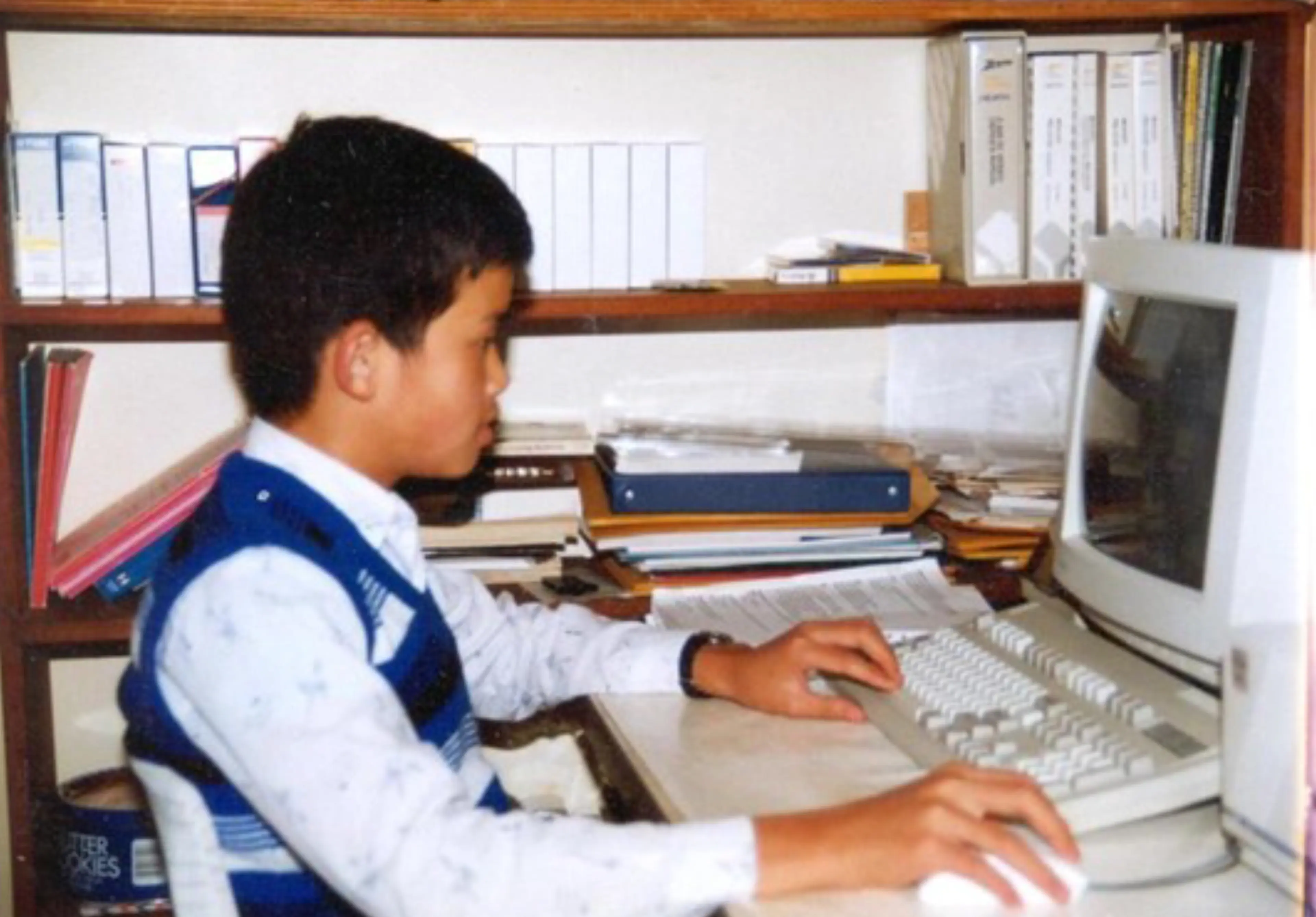
CZ's father, Zhao Shengkai, is his technical and academic mentor. The IBM 286 computer he spent a huge sum of money to buy was not only a tool for Zhao Shengkai's research, but also became the starting point for CZ programming learning. On this computer, CZ not only learned the basics of programming, but also inspired his interest in technology, which played a key role in the technical foundation for his future creation of Binance and development of trading systems.
At the same time, CZ's work experience in high school also had an important impact on his character shaping. Rather than working to try new things or meet his parents' expectations, he truly relied on these part-time jobs to make ends meet. From Chevron gas stations to McDonald's, these experiences not only tempered his independence, but also cultivated his dedication to his work.
Despite going on to become a major figure in the cryptocurrency space, CZ has never forgotten where he started. He publicly shared photos of himself working at McDonald's, demonstrating his respect for the past and his commitment to the value of humility. This attitude stands in stark contrast to the grandiosity and showboating of some in the cryptocurrency community.
During his days in Vancouver, CZ's life, although ordinary, was full of color. As the captain of the volleyball team, he participated in the Canadian National Mathematics Competition. These experiences not only enriched his high school life, but also laid the foundation for his future leadership and problem-solving abilities, and he won the "Champion" (pronounced Changpeng and Champion similar) nickname. For CZ, this period of life was not only a stage of growth, but also an important period in the formation of his personal values and worldview. In this multicultural background, CZ learned how to find his place in different environments, which laid a solid foundation for his future success on the global stage.
Rich dad, poor dad
In 1995, young CZ bid farewell to the mild climate of Vancouver, moved to McGill University 3,000 miles away, and entered Montreal, a French-speaking country with bitterly cold winters. The city's underground tunnels seem to indicate the circuitous and tortuous life path that CZ is about to embark on.
At McGill University, CZ's academic life was not eye-catching. He switched from biology major to computer science, a shift from dealing with people to talking with code. College life seemed to go by peacefully, with his free time spent mostly roller skating and having pho with friends. At night, the computer lab on campus became his safe haven, and the entry-level Apple desktop computer witnessed his initial exploration of programming.
However, it was here that CZ began to show his extraordinary talent. In 1999, he collaborated with professor Jeremy Kuberstock and published an academic paper on artificial intelligence - a cutting-edge topic that had not yet received widespread attention at the time. In a café in Montreal, Cooperstock recalled that CZ was the only undergraduate in his graduate seminar, and that this special status and his intelligence made a deep impression on people.
At this turning point in his life, CZ read a book that changed his life - "Rich Dad, Poor Dad". This book reveals the different paths of hard work and wealth creation through the stories of two fathers. After reading it, CZ began to question his father's traditional ideas about finding a decent job. He began to aspire to own his own business and not just seek professional respect.
CZ's father is a geophysicist with extraordinary talent. While working at GeoTech in Ontario, Canada, he worked for six years with geophysicist Jean Legault, creating unforgettable achievements. It was the original code he wrote that enabled GeoTech to use software to create three-dimensional inversions of geophysical data, which became an extremely valuable tool for engineers. Even years later, companies still use the user manuals he wrote. Legault believes that Zhao Shengkai is fully capable of achieving great success in academia or business, but his humility and focus on the work itself prevent him from reaching higher career peaks.
CZ recalled that his father would study complex mathematical equations every day in front of the desktop computer in the laboratory or at home, fully focusing on his academic research. However, due to the huge changes in history and his status as an immigrant, Zhao Shengkai has always been able to work on the fringes of academia, unable to enjoy the fame and achievements that he would have achieved if he had been born in a different era or place.
Zhao Shengkai, as an intellectual, has always emphasized the importance of studying hard and getting a decent job. The book "Rich Dad, Poor Dad" changed CZ's way of thinking. He began to realize that although professional respect is important, material wealth cannot be ignored. This change in thought prompted him to make a major decision: to give up his studies and devote himself to his career.
In 2021, Zhao Shengkai died of leukemia in Toronto. When CZ mentioned his father, there was deep regret in his tone, which seemed to remind him of his boyhood. Zhao Shengkai has been immersed in his laboratory and computer world all his life, which caused him to miss every wonderful moment of his son's volleyball game. "I was the captain of the volleyball team and there were two games every week, but my parents never watched one." CZ recalled.
Against this background, CZ began to reflect on what his rich dad and his poor dad had in common - their full concentration on work. Even for a billionaire, this focus comes at a cost. CZ worries that in his own role as a father, he may unconsciously repeat his parents' "neglect". "I do have that quality," he admits.
Heading to Shanghai
In 2000, after a summer internship at the Tokyo Stock Exchange, CZ chose not to return to McGill University. Although many media outlets incorrectly reported that he was a graduate of McGill University, in fact, CZ began his career before completing his studies. His mathematical and programming abilities were quickly recognized in the financial community, especially in New York, where he demonstrated his technical talents by developing futures trading software for the Bloomberg trading company.
However, even financial centers like Tokyo/New York cannot satisfy CZ growing ambitions. The center of gravity of the global economy is moving eastward, and Shanghai has become a new business focus. He decided to return to China - setting foot on mainland China for the first time in more than ten years.
When CZ arrived in Shanghai in 2005, the city had become the locomotive of China's economic growth, and its energy and business opportunities were completely different from the tranquility of Vancouver, Canada. CZ's return coincides with the advent of the country's golden age of technology. With the rise of domestic technology companies and industry leaders such as Robin Li, Jack Ma and Ma Huateng, he sees endless possibilities.
Despite some challenges, CZ quickly achieved success in Shanghai. In 2005, he co-founded Fusion Systems, a software-as-a-service (SaaS) company that provides high-frequency trading systems, with several other expatriates. At Fusion Systems, he not only used his math and coding skills, but also learned to "think like a salesman," using his status as an overseas returnee to build a bridge between East and West.
However, a late-night poker game in 2013 completely changed CZ's fate. At this poker game, he met Li Qiyuan, China’s top Bitcoin evangelist, and Darong Cao, an American-educated Chinese venture capitalist, who introduced CZ to the world of cryptocurrency. CZ went all-in. He sold his apartment in Shanghai and invested $1 million in Bitcoin (market price of $600), but lost half of it in the bear market the following year.
“I am the one who brought CZ into Crypto trading”
The future billionaire left Fusion Systems in 2013, first joining cryptocurrency startup Blockchain.info — which started out as a website that tracked Bitcoin transactions — as head of technology. A year later, he was hired as OKCoin’s chief technology officer.
CZ was able to join OKCoin because he was invited by He Yi. What everyone never expected was that He Yi would later become the co-founder of Binance and CZ's life partner. In theory, He Yi's status as a cryptocurrency pioneer precedes CZ. She later said in an exclusive interview with Bloomberg, "Even regardless of personal relationships, I was the one who introduced CZ into the cryptocurrency trading business."
He Yi was born in a remote rural village in Sichuan Province in 1986. His parents were both teachers. While children of the same age were still in kindergarten, He Yi had already entered the first grade of elementary school early. He Yi was lonely during her childhood. This loneliness allowed her to spend more time reading at home and reading various books from her parents. It can be said that He Yi is somewhat precocious. Not only does she like reading, but she also always ranks first in exams. In 2006, 20-year-old He Yi was studying for a postgraduate degree in psychological counseling in Beijing, preparing to take the psychological counselor qualification examination, but soon discovered that this was an unprofitable industry. So I joined a friend's university as a class teacher. In 2012, after finishing her career as a teacher, He Yi encountered a turning point in her life. A friend who was a director suggested that she try being a host. Miraculously, He Yi stood out among the models, actors and hosts and was selected as the location host of Travel TV's "Beautiful Destination" and "How Far", and followed the program crew all over the country. . Later, she went to Beijing Satellite TV to be the host of "Beijing New Discovery".
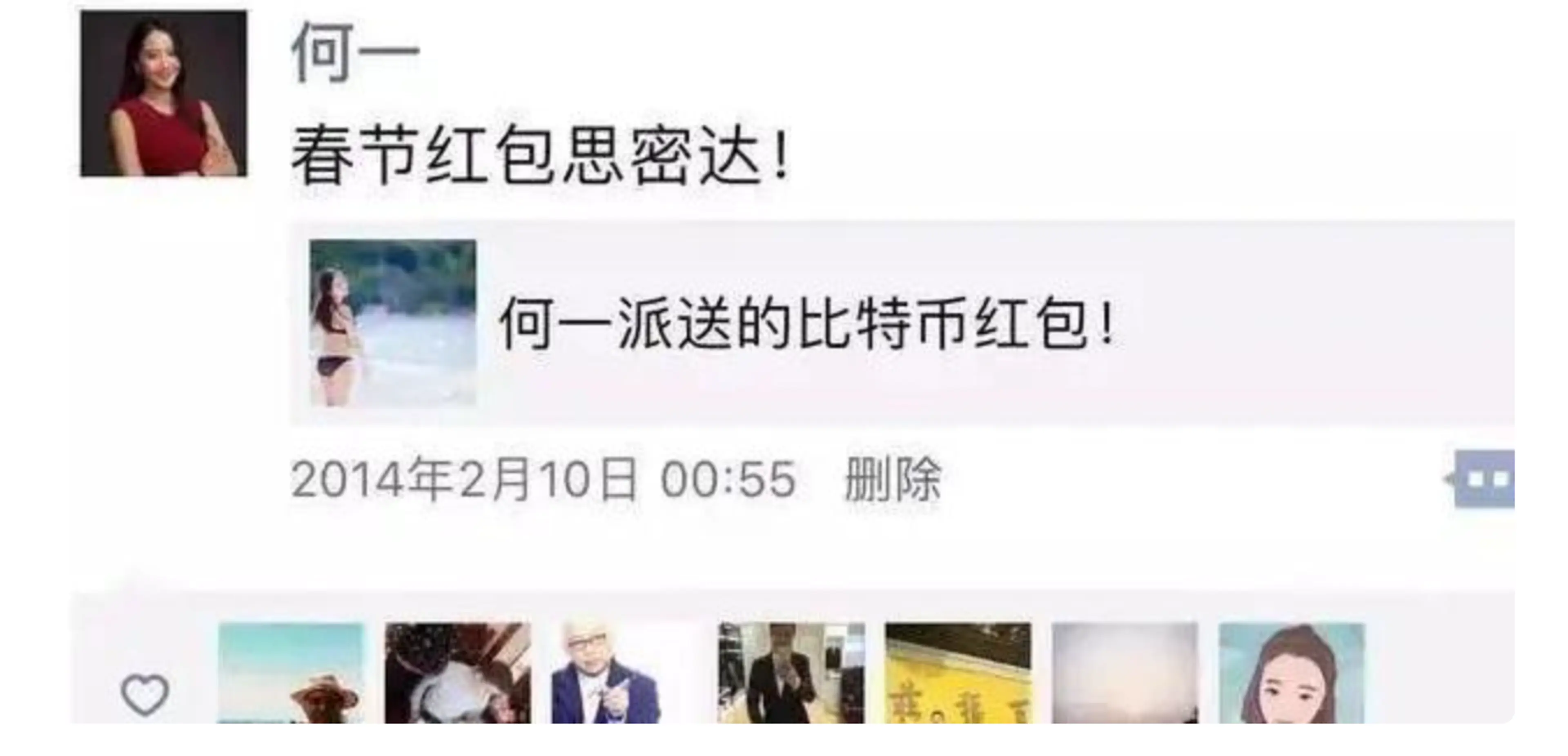
In November 2013, the price of Bitcoin had just reached 1,100 US dollars, and the OKCoin exchange had just opened, and it was preparing to conduct a Bitcoin red envelope event during the Spring Festival. At that time, Mai Gang, an investor in OKCoin Exchange, found He Yi and asked her if she could help OKCoin send a red envelope and promote it in the circle of friends for free. At that time, He Yi didn't know what Bitcoin was, so she immediately searched for Bitcoin online. After some understanding, He Yi felt that Bitcoin was so magical, so he followed the trend and sent them red envelopes. Therefore, he joined OKCoin and became the vice president, responsible for brand building and marketing.
By then she was already well-known as a travel show host and as a judge on a reality show to promote OKCoin. He Yi recalled that in the same year (2014), she hired CZ as chief technology officer because of his rich experience in engineering trading systems, including work experience at Bloomberg LP, the parent company of Bloomberg News. . CZ and Star Xu both have technical backgrounds, but they often had differences due to differences in decision-making logic and cultural backgrounds. Therefore, CZ left OKCoin in 2015. After leaving the company, CZ had a very big quarrel with OKCoin, and the final result of the two parties' handling was not very decent. In a 1,600-word Reddit post, CZ detailed the company's use of bots to increase trading volume, falsified reserve certificates and opaque financials under Star Xu's guidance. In response, Star Xu accused CZ of falsifying academic qualifications and engaging in other fraud.
He Yi felt embarrassed to be caught in the middle, so he chose to resign.
Because of the existence of a two-year non-compete agreement, He Yi could not join a cryptocurrency-related company, so on the recommendation of Zhang Ling, the investment manager of Kleiner Perkins Caufield & Byers, he joined Xia Technology as the vice president. The reputation of Yisha Technology was at its peak at that time, and it developed star products such as Yizbo, Xiaoka Show and Miaopai. At that time, Song Joong-ki became popular in China with "Descendants of the Sun". Song Joong-ki's influence and the huge fan base behind him were the big cake that many live broadcast platforms coveted. He Yi grabbed the cooperation of Song Joong Ki among many live broadcast platforms, making Yizbo become the leading live broadcast platform.
Who is Chen Guangying
After leaving OKCoin, CZ established Bijie Technology, another software-as-a-service company that provides software for exchanges and trading platforms. Over the next two years, Bitjet's technology became the cornerstone of 30 Chinese exchanges and later became the power source of Binance.
Chen Guangying graduated from Shanghai University of Finance and Economics in accounting. CZ met Chen Guangying as early as 2010. At that time, she was working in a wine shop of one of Zhao's friends and provided wine for the "Poker Night" held by CZ in Shanghai. Chen then went to a large commercial bank to do back-end management, responsible for HR, accounting and daily work. .
In 2015, when Bijie was established, CZ approached Chen Guangying and asked her if she was willing to join the company to do back-end management work. Because most of the team members at that time were engineers, and the Chinese government had many restrictions on wholly foreign-owned enterprises and joint ventures (CZ was a Canadian citizen), it was much more convenient to make Chen Guangying the nominal legal person.
Chen Guangying agreed to this arrangement and gradually won CZ's trust, and later became Binance's treasury gatekeeper. But no one knew that it was precisely because of this arrangement that it caused an uproar in the entire encryption industry. Since Guangying's name appeared on Bijie Technology's early documents, opponents of Binance seized this opportunity to spread a conspiracy. According to reports, Chen Guangying may be the secret owner of Bijie Technology and even Binance, and even Forbes wrote an investigative report on this. In a later blog post, CZ wrote, "Chen Guangying and her family have been the target of harassment by the media and netizens. If I had known that it would have such a negative impact on her life, I would not have asked her to do what she did. Something that seemed harmless at the time.”
Cryptocurrencies are still in deep bear territory in 2015, but another tulip-like craze is taking place in the “stamp card” space. Investors are lured into investment chat rooms by so-called "stamp teachers" and "wealth advisors" to invest in these seemingly promising collectibles, only to often end up with huge financial losses. Although Bijie Technology is not directly involved in these stamp frauds, his technology has invisibly contributed to the spread of this fraud. This situation has aroused great alarm from the Chinese government. In early 2017, the government quickly introduced new regulations to limit the unbridled growth of these digital platforms. By August of that year, a large number of stamp and collectible exchanges were forced to close. Most of Bijie Technology's customers went out of business.
digital nomad
Due to his work experience at OKCoin, CZ understood the logic of the entire cryptocurrency exchange and the operation of the entire industry, and began to consider opening a company of his own that did not involve cash and specialized in digital asset transactions. Not being associated with financial institutions, former colleague Ver believes that this can reduce risks and avoid supervision. At the same time, the sharp rise in cryptocurrency prices has attracted millions of new investors into the space and given rise to a new financing model within the industry – ICO.
On June 24, 2017, CZ began to create Binance and raise the ICO of Binance Coin. The total amount of BNB is 200 million, of which 100 million is used for ICO, 80 million is held by the team, the BNB held will be locked up and released year by year, and the last 20 million is held by angel investors. CZ asked He Yi to have dinner and showed her Binance’s project white paper. In July, CZ founded Binance and invited He Yi to join him. She helped rewrite part of the ICO’s white paper, agreed to join, and has since become Binance’s co-founder and CMO.
It was originally thought that exchanges that only deal with currency transactions and do not touch legal currency transactions can avoid supervision, but Binance’s time in China is running out. Back in 2013, China first restricted banks from processing cryptocurrency transactions. In an effort to curb capital outflows, combat financial fraud, and tighten control over the country's financial system, on September 4, 2017, Chinese authorities banned initial coin offerings (ICOs) and began closing cryptocurrency exchanges. In response to this move, CZ secretly and nervously migrated data hosted on more than 200 Alibaba servers to Amazon Web Services and other servers within a few weeks. The effort was successful, and CZ and other Binance employees moved to Tokyo, ending his 12-year career as an entrepreneur in China.
CZ and his Binance seemed destined to dance on the edge of global financial regulation from the beginning. They prefer to operate outside of government regulation, an approach that makes it difficult for them to settle in any one country for the long term.
In 2018, countless customers lost their Binance funds to a scam caused by fake Google ads. Although Binance was not directly responsible for these losses, the incident attracted great attention from Japanese regulators. They required Binance to register as an official exchange, which was obviously an unacceptable condition for CZ. Therefore, he decided to move his crypto empire to Malta, where Prime Minister Joseph Muscat is open to cryptocurrencies and welcomes related businesses to settle there.
However, Binance’s time in Malta was equally short-lived. Eventually, Binance announced that it would no longer be looking for a physical headquarters, but instead chose a headquarters-less operating model. This degree of decentralization is so high that for a while, it seemed that even CZ himself was consciously avoiding the Internet, as if he and his empire had become a global existence without a fixed address.
“We are not just defending, we are fighting for the industry”
In 2017, as early as the establishment of Binance, CZ began to contact Sequoia Capital. During the negotiations in August, Sequoia set a Series A valuation of 500 million yuan for Binance and planned to invest 6,000 yuan based on this valuation. Ten thousand yuan, accounting for 10.714% of the shares. On August 25, the two parties reached an investment term sheet (Term Sheet) and signed the contract on September 1. At the same time, Sequoia agreed to provide a bridge loan worth approximately 30 million yuan to Binance’s Japanese branch. In this letter of intent signed by both parties, the two parties will conduct exclusive cooperation and further negotiate financing. The deadline for exclusive cooperation is March 1, 2018, for a total of 6 months.
However, three days later, on September 4, the situation suddenly changed. Chinese authorities banned initial coin offerings (ICOs) and began to close cryptocurrency exchanges, causing currency prices to plummet. At that time, the entire market was in despair. Exchanges were being liquidated, projects were repaying their coins, and national policies had led to Sequoia’s lack of confidence in cryptocurrency exchanges. In this case, Sequoia must re-evaluate whether it should continue to invest in Binance. , so there has been no payment.
Within two weeks, Bitcoin began to rebound, and cryptocurrencies ushered in a comprehensive bull market. In the process, Binance made a lot of money just from handling fees and listing fees, so Binance was not in a hurry. On December 14, Binance proposed to Sequoia that existing shareholders and angel investors believed that the valuation provided by Sequoia in the Series A financing was low. At the same time, Binance approached another investor, IDG Capital, who was willing to invest at a Series B valuation of $400 million. On December 17, Sequoia attempted to present a new proposal to Binance. But in the early morning of December 18, Binance told Sequoia that existing shareholders and founders were unlikely to accept this new proposal.
On December 27, Sequoia unilaterally applied to the Hong Kong court for an injunction to prohibit Binance from negotiating with other investors, and the Hong Kong court approved the injunction. Binance protested the injunction, arguing that Sequoia’s unilateral application for an injunction was an abuse of litigation process. This was the first round between Binance and Sequoia, and the result: a Hong Kong court granted an injunction. Binance is prohibited from negotiating with other investors. Until April 2018, this matter changed. Binance’s defense was that “the Series B financing negotiated with IDG was not within the scope of the Series A financing signed with Sequoia.” The Hong Kong High Court announced in the first-instance judgment that the ban would be revoked, but this matter was not officially finalized until the end of 2018, which also means that Binance will be able to continue financing negotiations with investors. This is the second round between Binance and Sequoia. Binance won, but the time cost was huge.
Out of dissatisfaction with Sequoia’s behavior, CZ took Sequoia to court in June 2019, demanded compensation, and posted nearly 10 posts on Twitter:
1. The arbitral tribunal dismissed all Sequoia’s claims;
2. I won, the case was very damaging and the injunction prevented it from raising funds for Binance in late 2017, a critical time for the market;
3. Previously, the injunction and Sequoia's serious allegations against it were made public, but because the arbitration was confidential, I was unable to defend myself publicly.
4. The Hong Kong Court later determined that Sequoia’s conduct in obtaining the injunction was an abuse of process. Late last year, the tribunal finally determined that all of Sequoia’s claims were entirely without merit.
5. Red Shirt China borne a total of US$2.4 million in related legal fees, but lost the case. Even after I won the lawsuit, I was not allowed to make the results public, so I had to countersue to get the results made public.
6. I need to advance legal fees of US$779,000, which will eventually be paid by Sequoia. This is impossible for most entrepreneurs. Most entrepreneurs are also unable to obtain additional funding for their startups in the face of imminent litigation.
7. Many startups have no choice but to succumb to unfair terms or practices employed by a VC firm, especially a very famous VC firm;
8. We are not just defending, we are fighting for the industry;
9. Fortunately for today’s entrepreneurs, there are now alternatives. People are welcome to use blockchain-based fundraising.
Facing Sequoia Capital, the industry's top investment institution, CZ did not back down: "I think the right to speak now should be in the hands of entrepreneurs. Good projects and good teams will never be short of money." In the end, Not only did CZ not take investment from Sequoia, he didn’t even take investment from IDG.
The dividing line of life
During the cryptocurrency boom from 2020 to early 2022, CZ andSBF were two of the most influential representatives in this field. There are obvious similarities in their backgrounds and experiences. The most remarkable thing is that they are all children of scholars' families. However, although CZ's father is a scientist, he has always been a marginalized figure in the university world. In contrast, SBF is the son of two law professors at Stanford University and has the resources and environment at the highest level of academia. Although their starting points were similar, their life trajectories presented completely different pictures.
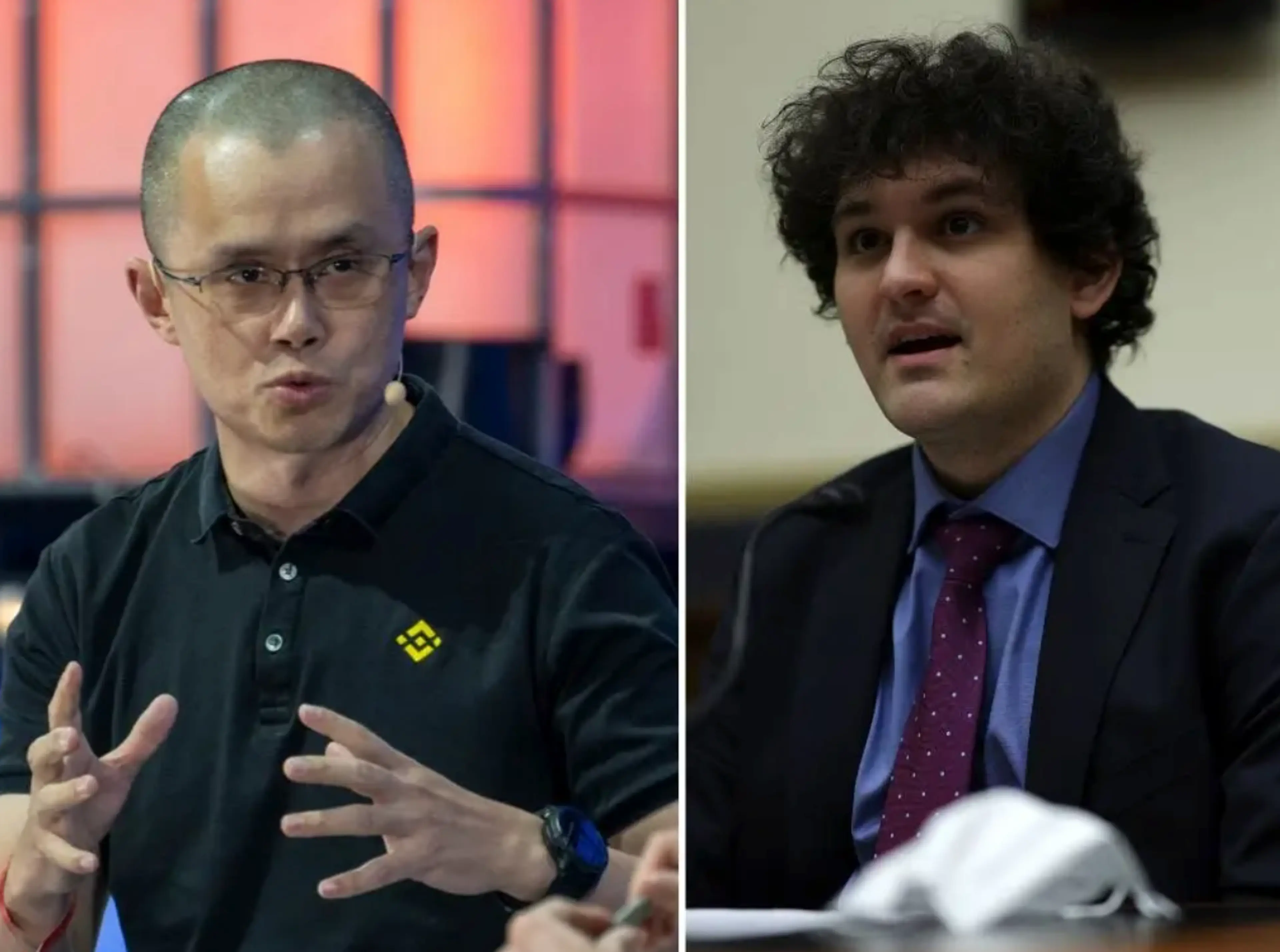
SBF was accused of a series of fraud crimes, including misappropriation of user funds, and ended up in jail. CZ took the initiative to seek reconciliation with regulatory authorities, admitted to violating U.S. anti-money laundering laws, paid a fine, resigned as CEO, and further increased Binance’s compliance (U.S. regulatory authorities did not accuse Binance of misappropriating any user funds, nor did they accuse Binance of misappropriating any user funds. Binance conducts any market manipulation. ).
“I made a mistake and I must take responsibility,” CZ wrote on social media platform CZ is already the father of two children.