Written by: Revelo Intel
Compiled by: TechFlow TechFlow
The Solana ecosystem continues to recover, where will it go in the future?
In the Blockcrunch podcast on December 4, 2023, Raoul and Solana CEO Anatoly discussed Solana and its ecological NFT and DeFi projects, etc., and reviewed and looked forward to its past, present and future development.
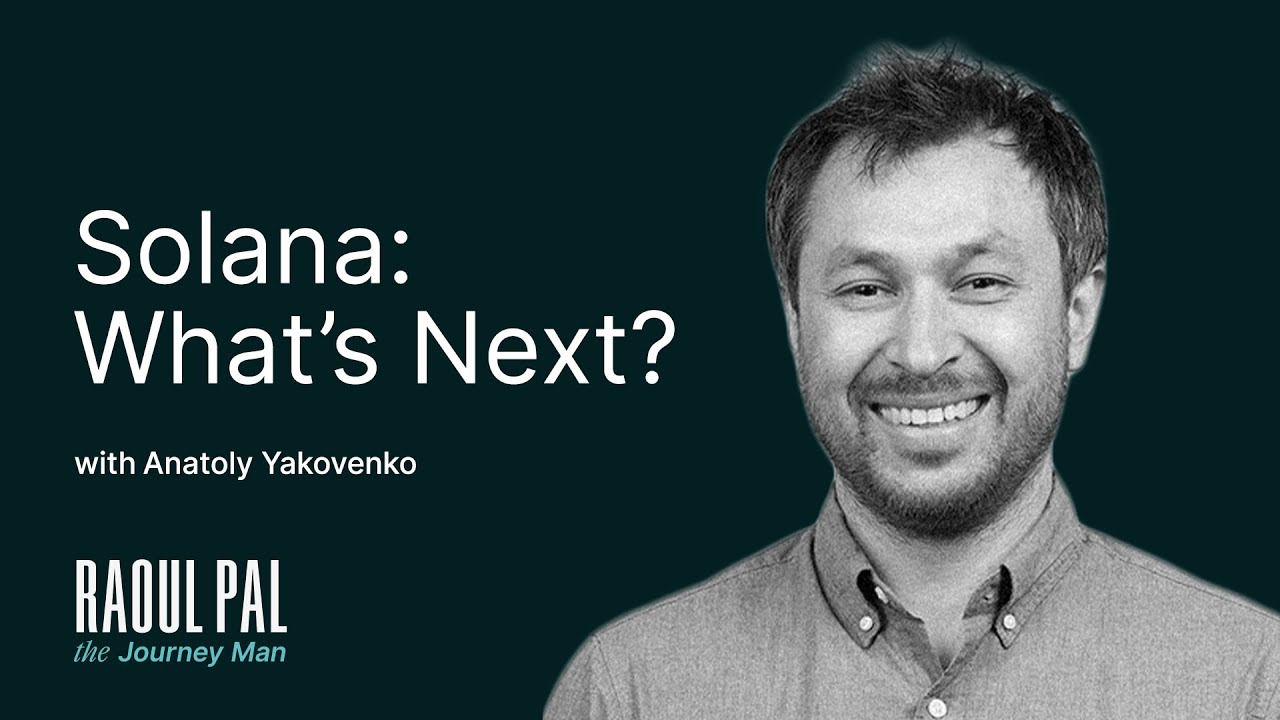
Moderator: Raoul Pal , founder of Real Vision
Speaker: Anatoly Yakovenko , CEO of Solana
Original title: "Solana: Past, Present & Future ft. Anatoly Yakovenko"
Broadcast date: December 4, 2023
Solana’s past year
Anatoly reviewed the challenges Solana faced during the year, especially dealing with the negative publicity surrounding the FTX incident.
Anatoly added that being part of the ecosystem feels different, as if it's pushing them forward. After witnessing how the community responded to challenges, he became more optimistic about the Solana ecosystem. Despite the difficulties, the team expressed its commitment to building an ecosystem rather than creating its own blockchain.
Anatoly said he tends to overthink worst-case scenarios, while Raj Gokal (Solana co-founder) is good at proactively reimagining situations. Having a partner who can balance optimism and pessimism can help lead to better solutions.
He added that startups often face near-death situations, but having a partner who remains optimistic can help navigate these challenges.
Anatoly said building on Solana is about more than just financial incentives, as many teams have different motivations. Some teams are counter-cyclical to the crypto market and focus more on product development than short-term market fluctuations.
He added that the Solana community experienced a huge shock due to the FTX incident. Although shaken, it is important for the community to take action and support the teams affected by the incident.
Anatoly stated that they worked hard to identify teams whose operations were severely impacted due to their reliance on FTX. Due to diverse funding sources, many teams were fortunate not to be significantly affected.
He added that some teams have adjusted their strategies based on changes in market conditions, such as shifting investments from high-yield platforms to short-term Treasuries.
Solana and the application layer
Anatoly said startups should plan an 18-month cycle to prove their value and progress. Demonstrating product market fit (PMF) within this time frame is critical. Even with more operating time, you need to think in terms of an 18-month period.
He used the Backpack team as an example. Backpack's founders channeled their personal influences and emotions into working harder. Instead of growing their team, they focused on increasing their hours. Their dedication has resulted in significant growth, building a strong community and product. Strategic decisions at every stage contribute to their success.
Anatoly said the Solana chain provides a cheap, fast and scalable solution. Developers focus on building applications, not scaling technology. Although there is some overlap with extension technologies such as ZK, the main focus is on application layer improvements. Since the cost of Solana is already low, raising funds for L2 solutions is challenging.
Solana's low cost makes it challenging for L2 to raise capital, he added. Ethereum’s expensive L1 and L2 solutions offer valuable propositions. Solana's focus is on building applications that people will use, not on adding more layers or frameworks.
Anatoly said that compressed NFTs provide a cost-effective solution for tracking assets on the chain. Applications such as ticketing and loyalty points could benefit from cheap blockchain-based asset tracking. The concept of compression has been discussed for a while, and real life is often stranger than fiction.
Artists with large followings can valorize their art by getting followers to pay subscription fees, he added. NFTs create scarcity and rarity for digital art, allowing artists to offer unique works to audiences.
Anatoly said he believes that rather than focusing on falling prices for limited-edition NFTs , building relationships between artists and followers will lead to more innovative applications . The true potential of NFTs is not yet fully understood, but the technology could lead to incredible applications.
He added that just like people had to learn what a link was in the early days of the internet, there is a learning curve for understanding crypto wallets. As more people become familiar with wallets and cryptocurrencies, wider adoption of NFTs will occur.
Anatoly mentioned that companies like Instagram could benefit from incorporating compressed NFTs into their platform. There is still a lot of untapped potential for innovative applications using NFT technology.
Solana and DeFi
Anatoly said there has been significant growth in DeFi on Solana, especially on platforms like marginfi, Solend, Jupiter and Jito. Even during bear markets and challenging events, these platforms continue to build and mature.
He added that DeFi represents a decentralized lending, trading, staking and other markets. The intersection of L1 staking security and DeFi applications like Jito creates interesting opportunities to earn additional income.
Anatoly said that DeFi is considered the most important application in the crypto field because it represents the penetration of traditional finance. Although adoption may be challenging due to people's reluctance to give up control of their finances, DeFi will inevitably play a significant role in the future of finance.
Anatoly added that the integration of DeFi into blockchain networks can create a positive feedback loop between validators and application users. This connection leads to greater decentralization, faster transaction speeds, and a more connected ecosystem.
Anatoly stated that Backpack is a new exchange and their goal is to create a better exchange than the FDA, achieving super transparency and proof of customer funds through multi-party computation (MPC).
He added that despite limited resources, they have successfully developed a wallet and Mad Lads’ NFT ecosystem and launched a fully permissioned centralized exchange. Currently centralized exchanges are more closely connected to the DeFi orbit than fiat currencies, but hopefully this will change in the future.
Anatoly said Cube is another exchange launched by Bartosz, who was previously the director of engineering at Solana Labs. Cube focuses on security and has implemented MPC for client funds.
He added that they designed a system where they do not hold user funds directly, but instead use multi-party wallets for fund segregation. The goal of Backpack and Cube is to prevent the failures of the past, prioritizing security and innovation.
Solana and NFTs
Anatoly said projects like Mad Lads have strong teams that can continue to realize their vision, which attracts more users. Other factors have also contributed to the growth of the NFT space, which has been faster in terms of trends and innovation compared to general cryptocurrencies.
Anatoly said that the goal of decentralization is to eliminate single points of failure, and one of the challenges is multiple teams implementing the same L1. Ethereum has achieved significant decentralization by having four different L1 implementations, although this has slowed progress. Measurable decentralization helps assess the likelihood of unrecoverable network failures and is critical to building robust systems.
He added that the Firedancer team consists of high-frequency trading experts who are skilled in coding in languages such as C and C++. They have in-depth knowledge of hardware and performance optimization.
Anatoly added that while the Firedancer team is experienced in building projects from scratch, other teams may have a different perspective because they are familiar with the beginning and end of a project.
Anatoly said the team is focused on optimizing the underlying protocol without making any changes. Their goal was to demonstrate that adding more cores to any part of the system would result in performance improvements.
He added that adding more cores should improve performance without requiring changes to the underlying protocol. The current focus is on demonstrating the scalability of existing hardware components. Once the full client is running, there will be no single point of failure, which will be an important milestone.
Anatoly said Firedancer allows testing and identification of bottlenecks in the system, facilitating optimization efforts. When necessary, proposed algorithm changes can be reviewed and accepted by the laboratory and Firedancer teams. The scalability of the network depends on software improvements and validators upgrading their hardware.
He added that Visa's transaction processing speed cannot match the needs of high-frequency trading TPS or traditional exchanges. Solana's goal is to create a hyper-optimized atomic state machine capable of meeting the needs of the securities industry. As demand grows, hardware upgrades are expected to occur naturally, ensuring continued improvements in network performance.
Anatoly said that composable computer systems like Solana can be expanded to support various functions simultaneously, including Visa, NFTs and Jupiter. It allows efficient trading between different markets. For example, in Jupiter you can exchange 20 cents and it will hit five different markets because it's more cost-effective that way.
He added that the traditional financial system suffers from inefficiencies due to the fees charged by each market. In contrast, composable computers eliminate these inefficiencies by providing cheap and fast transactions. The vision is to run finance on an extremely fault-tolerant mainframe computer with multiple implementations synchronized at the speed of light. This decentralized technology has the potential to be better than centralized systems, not only because it is decentralized, but also because it provides cheaper transactions and better price discovery.
The global nature of Solana allows state transitions to spread quickly around the world, Anatoly said. This means that when a market-moving event occurs in one place, the information arrives elsewhere at almost the same time. As a result, price discovery becomes more efficient as prices in different markets are agreed upon more quickly.
This gives Solana an advantage over centralized systems that still have delays in transmitting information from one geographical location to another, he added. Solana has the potential to be competitive in financial markets by providing comparable price discovery capabilities that are cheaper and faster than centralized systems.
Regulation and some final thoughts
Anatoly expressed a desire for faster regulatory progress in the United States. He believes that passing the Market Structure Bill and the Stablecoin Bill will provide guidance to other countries, leading to global standardized regulation. However, so far, progress has been slow and only partial measures have been implemented.
Anatoly said calling Solana and other projects securities without proper legal ruling creates uncertainty and makes it difficult to respond to regulatory challenges. Despite these challenges, being based in the United States has advantages when dealing with regulators. By showing the tangible benefits of crypto projects, such as offering affordable data plans through technology like Helium, it can help gain support from members of the U.S. Congress.
He added that from their perspective, compliance with U.S. law is inevitable for any crypto company, regardless of where it was originally founded. He believes that starting a crypto company in the United States has the same chance of success as starting one elsewhere.
Anatoly believes that companies like the Google Play Store have become more open to generating revenue through NFTs. However, he predicts Apple may struggle with this transition because of their reliance on controlling and charging for content.
He added that finding a model where platforms could earn a percentage of marketplace revenue rather than total sales could be the solution, but that could impact their bottom line. He mentioned that both Google and Apple face threats from AI, which will require them to adapt and find new business models.
Anatoly believes that AI poses a greater threat to established companies than cryptocurrencies because it disrupts their existing business models. Developers are encouraged to view AI as an opportunity to bypass traditional applications and build text-based interfaces using GPT-style technology.
Anatoly believes that the next market cycle will see a significant increase in application development. He mentioned that the quality of developers and products has continued to improve during hackathons, which is indicative of growth and innovation in the field.
He expressed excitement about the establishment of the new company and the launch of new products. However, he noted that transitioning from hackathon winners to successful companies with product-market fit can still be challenging. He expects more investment to flow into application development, which has been relatively limited compared to infrastructure investment.
Anatoly suggested that since Solana is more focused on application development, it may receive more investment in applications than Ethereum. He emphasized the need for more success stories in app development to attract venture capital.
Finally, he added that Ethereum’s focus on infrastructure development, especially L2, may limit its appeal to investors.