



Note: The original text comes from a Twitter threads posted by @NintendoDoomed .
Binance recently listed NFP, and the community said "What is this?" The core of this time is actually the “Fair Mode” and the Token Economy Report that were promulgated subsequently. It can be seen from this that Binance wants to significantly increase the ratio of retail investors vs. project developers & VCs, and increase the level of “Fair”. This may become the Binance Launchpad in the future. The core framework of currency listing will also bring new opportunities to BNB investors and hair-raising users. This Thread will analyze it for you.

Based on the introduction of Fair Mode, NFP and token economic reports, the general idea can be summarized as follows:
1. Increase the opening circulation and reduce FDV, give more shares to Launchpool and airdrops, and give more chips to retail investors;
2. Permanently lock the chips of some project parties so that they cannot be sold, thereby reducing the total supply in disguise;
3. With one increase and one decrease, the chip ratio between retail investors and project owners may increase by 10 times compared to the original project.
A. Token distribution issue
What are the problems with new projects launched by previous Launchpad/Launchpool? The chips are all in the hands of the project party and VC! Looking at Hook, which is often complained about, Launchpad only has 5%, the project team & VC Mingbao takes 40%, and then the so-called ecology and community 55% have recently been taken into Binance by the project team, euphemistically calling it "adding liquidity" ( 3/n)
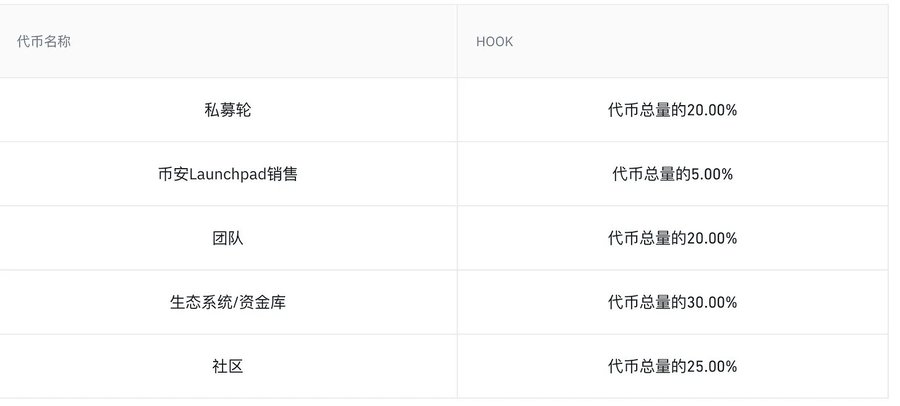
Calculated in this way, the ratio of retail investors vs. project parties & VCs on Mingbao is 1:8. In fact, it may be 1:19. In other words, the currency is basically under the control of the project party. Why should there be ecological and community distribution? The ideal situation is for the project party to rationally use these funds to achieve growth, so that even if it is gradually unlocked later, it can be supported by fundamental growth. However, the actual use is difficult to monitor and may become a tool for the project party to ship goods. In addition, due to the nature of the project The actual initial circulation is too small, only 5%-10%. Once you get on Binance, it is usually easily pulled up to $1B FDV (full circulation market value), which is close to the size of MakerDAO, one of the leading DeFi brothers. Even if the project is really successful Even if the ecological funds are properly used, they may not be able to sustain the size of 1B in the long term. In this way, there will probably be no Alpha in the long run.
B. Increase opening liquidity and reduce FDV
how to solve this problem? User education is definitely not enough. Retail investors will only trade directly, so they can only increase the opening circulation. After all, buying orders are limited, and the corresponding circulation market value is also limited. Increasing circulation will probably reduce FDV.
Looking at the previous new currency projects on Binance Launchpad, no matter the quality is good or bad, the share is about 5%, so in the end the application projects were pulled to almost $1B. This is quite outrageous. It can be said that in the eyes of users, the projects are basically It is just the shell value of the currency listed on Binance, regardless of the quality of the fundamentals, so Binance probably wants to give some differentiated valuations to projects with different fundamentals by adjusting the initial circulation model.
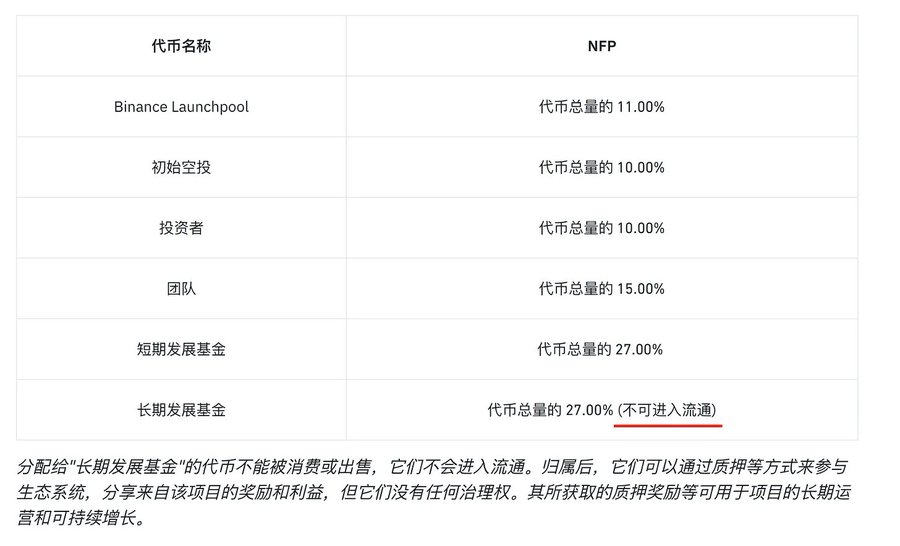
For example, NFP's launch pool + airdrop accounted for 21%, compared to Hook's 5%. Assuming retail investors allocate the same amount, NFP's FDV on the first day of opening may only be 1/4 of Hook's, which is about 200M-300M. This volume plus AI's Label, even if the project side falls flat in the future, there is still some hope to rely on narrative to achieve ATH. (8/n)
 C. Non-negotiable long-term development fund
In addition, it can be seen from the NFP chart that 27% of long-term development funds are "not available for circulation" allocations. This note is worth reading carefully: Tokens of the "Long-term Development Fund" cannot be spent or sold, they will not enter circulation. After vesting, they can participate in the ecosystem through staking and other methods and share the rewards and benefits from the project, but they do not have any governance rights...
What does it mean that the staking rewards it obtains can be used for the long-term operation and sustainable growth of the project? How does the ETH Foundation pay for development and operating costs now? Sell coins! Most project parties do the same thing. This is obviously not a long-term solution. After all, they will be gone if they sell out.
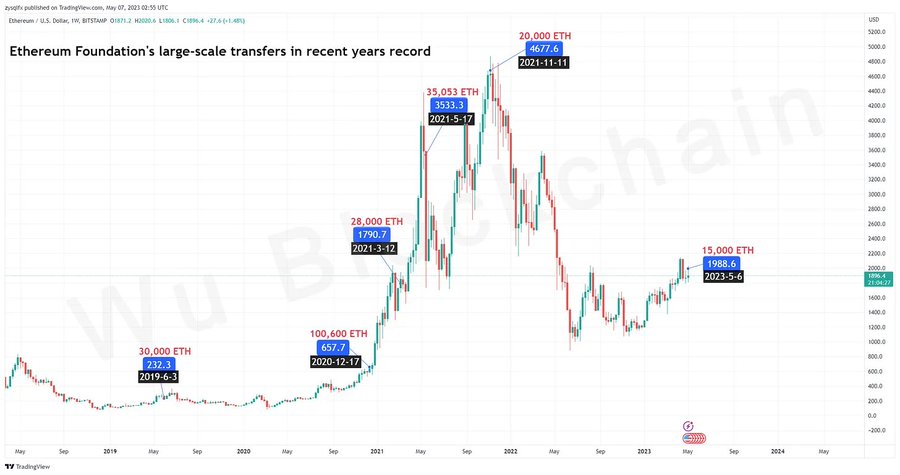
What Binance means is that the ETH Foundation will no longer sell coins, but will use its own ETH for staking, and use the money earned from staking to pay for long-term growth and operating costs. Of course, this should only apply to projects that can earn profits. The NFP report also said that it will support token “pledge sharing platform fees”. Taking a step back and saying that the project has no income, this part is almost like being directly destroyed.
If the project can really make money in the future, the project side of the short-term development fund that can be spent will probably be more cautious. After all, spending too much will dilute the Staking share of the long-term development fund, allowing it to obtain less income. A new game has been introduced. In short, the long-term development fund is to reduce the total supply in disguise, and to reduce FDV in another sense, and then also encourages project parties to work hard on projects to make money and spend less money.
D. Significantly increase the chip ratio between retail investors and project parties
As previously calculated, the chip ratio of Hook retail investors vs. project parties & VCs is 1:8, but the actual ratio is 1:19. When it comes to NFP, the open card is (Launchpool 11% + airdrop 10%) 21% vs 25% (team + VC), which is close to 1:1. The actual ratio is 21%: 52% (100%-21%-uncirculated 27 %), close to 1:2.5.
In addition, Binance stated in the report that the use of funds should be more strictly regulated. In fact, this improvement may increase and decrease. The ratio of retail investors vs. project owners & VCs has increased tenfold, although these are still impossible for projects with a certain cost. It's as good as Inscription or Meme Coin, but it's a lot more "Fair" than the original. It's a tribute to Fair Launch, so there's nothing wrong with calling it "Fair Mode".
Summarize
Binance intends to give more chips to retail investors by significantly increasing the chip ratio between retail investors vs. project parties & VCs, improve the fairness of the project, differentiate the initial valuation, reduce inflationary pressure, and incentivize project parties to build in the long term.
For retail investors, they can either buy BNB to receive more free Launchpool shares, or participate more actively in airdrops to receive more airdrop shares. Both of these are expected to allocate more shares in the future.






