


Original Japanese text: 3 Days Later: The Destiny of Destiny, The Story of Happiness by Fate of the Day 3|ポケットア
1. Even if you have money, it doesn’t mean you can make interesting games
Since developing Craftopia, we have been developing a game called Palworld for three years.
The game is finally launching in three days.
It’s been a long journey to get to this point.
Looking back, it feels like I took a lot of detours.
I kept making mistakes that I didn't need to make.
If we had known, we would not have fallen in those places, but we have fallen in those places many times.
Things that should be common knowledge to industry experts, we don’t know.
Because we were just a bunch of amateurs.
"What should I do about this?"
We start from a state of complete ignorance.
However, it is these twists and turns that forge a bond between people and create the current team.
The reason why we are able to create without being bound by industry conventions is because we are a group of amateurs.
If our company, called Pocketpair, was made up of professionals from the gaming industry, had raised funds, and was in a well-funded state, then the game "Palworld" might not have appeared in this world.
Even if you have money, it doesn't mean you can make interesting games.
2. The first game that couldn’t be released
In fact, the first game we produced at Pocketpair was never released to the public.
We spent two years developing it but couldn't find a publisher.
This was already 8 years ago.
It was around 2016, when I was only 27 years old.
Even though I'd never officially made a game, for some reason I felt confident that I could make a fun game. So, I started making mobile games with @weray166, a junior from college.
In order to devote himself to the development of this game, he resigned within a month of joining a large company.
I quit my job at JP Morgan and spent three years indecisive. And he resigned after only a month. The more outstanding people are, the more quickly they will leave the company.
He may be better than me.
We worked hard for our first official commercial game development.
We make no compromises when it comes to making our games fun.
He creates innovative and fun games while constantly reinventing them. Went through countless difficulties. He was making prototypes every day and then quickly scrapping them.
There are tons of prototypes piling up every day, but most of them are scrapped.
Along the way, we also changed the development engine from cocos2dx to Unity.
Because we feel that if we want to make 3D games, there is a strong necessity to turn to Unity.
We discarded all existing code assets and art assets. The engine processing method is also started from scratch.
This also resulted in a decrease in motivation. Changing the engine doesn't mean you can create something new.
This came with huge difficulties, but we managed to get it done.
Two years since then.
I met the people who would become directors of our current company, and together we submitted projects to various game companies.
We want them to become publishers and raise funds to move from prototype to official development.
While I was confident that the game would be fun, I wasn't sure how the prototype would turn into a business.
But I think if you go around all the major game companies, there will probably be one who will be interested.
First company. They received us warmly and commented. They pointed out some details in our plans and prototypes, and we took them back to improve them and prepare the materials again.
I said to the development team:
The response was great! Let's improve this place!
At the same time, we also arranged meetings with the second and third companies and proposed plans and prototypes.
The response from all companies has been good.
This is acceptable!
With this in mind, I made adjustments based on the feedback from each company and conveyed my positive opinions to the waiting team members.
But of course, it won't be that simple. The final decision of the project needs to be reviewed by the approvers at each stage.
In the course of repeated meetings with various companies, we gradually realized that the fundamental problem was not the content of the plan or the content of the prototype.
All companies say the same thing.
"Oh, this prototype is well done. So..."
"How was the company established? What is the historical background?"
"What's the budget?"
"What's your team configuration?"
" What is the IP? "
What's the budget?
Actually asking if we are from the gaming industry.What games have you made before? How much do they sell?
What they are actually asking is: If you do this, how likely is it to succeed?
For newcomers who have no experience in the gaming industry, the possibility of success from the beginning is extremely low.
Team configuration
Team configuration refers to what kind of system (Translator's Note: organizational structure, operation method) we intend to use to develop the game.At that time, Pocketpair actually had only three people, which was obviously not enough to develop a game with a budget of hundreds of millions. An additional development company needs to be prepared. And once it enters the operation stage, the operation system will also be questioned.
IP is?
Even if you get the budget from the publisher, you will still be asked whether you can actually complete the production and operation.At that time, the social game industry had shifted from selling games based on "game innovation" like "Monster Strike" or "Puzzle & Dragons" to "IP"-centered games. Marketing (such as famous works such as "Dragon Ball").
Since our director had given me some advice beforehand, the things I expected to be asked were included in the slides.
We are fully prepared.
I thought our script was pretty good and explained it clearly.
However, after some questioning and discussion, the results are roughly as follows.
It's a bit difficult considering the situation of our company.
It’s a bit difficult without IP…
It's a bit difficult to compete based solely on the novelty of the game.
If the situation changes, please contact us again.
No company is really talking about the specifics of the game.
Some companies haven't even touched our prototypes.
What they care about is team configuration, budget, development plan, etc., not the game itself. There are more important things than the feel of the game.
If there is anything bad about the game, we can still improve it, but as for things outside the development system, for a company with only three employees, this is an unsolvable problem.
Gradually, the number of rejected companies increased.
The second house, the third house. At the same time, the fifth and sixth houses.
I've been actively telling the development team:
"It's almost okay! It should be okay next time!"
But after being rejected by about five companies, they gradually became aware of it.
Each time we were rejected, we refined the game prototype further.
Even though deep down we thought it probably didn't make sense, we continued to improve.
We recreate presentation materials every time with attention to detail.
The design of the presentation materials is also constantly updated.
The quality of presentation materials continues to improve.
As a result, we found more than ten companies. The director used his connections to arrange the meeting.
"Maybe we can really succeed this time!" We went to meet them lightly and then returned heavily.
The conclusions of the last few companies arrived in the mail one day.
As a result, all companies rejected us.
I think there were a few companies that came close to succeeding, but ultimately failed.
It may be due to changes in the publisher's internal system or other individual circumstances.
The other members were indeed a little disappointed.
And I'm not so much disappointed as I am deeply aware of the fundamental problems with the gaming business.
The so-called gaming business is fundamentally a high-risk business.
It can bring huge profits when it's hot, but if it doesn't succeed, it's almost impossible to recoup the cost.
Essentially a high-risk, high-reward business.
The most important thing is that it is almost impossible to predict in advance whether the game will be popular. Even estimating the probability of success is difficult.
Moreover, the larger the game, the more things are uncertain beforehand.
So, they at least want to add more "certainty" areas.
The "certain" thing is that there is a record of success.
"A publisher with a proven track record"
and "a development company with a proven track record"
And working with "animators and scriptwriters with a proven track record of success"
In "Game Genres with a Record of Success"
Make games with a "track record of game design."
This is a game where "it is easier to judge whether it will succeed or not" beforehand.
It's understandable that the social gaming industry is turning to games that leverage IP.
Even so, the probability of success is less than 50%. It's a harsh world.
In this case, there is little reason to use an unknown emerging development company.
in short
"A development company with no track record of success"
Use "game design with no successful record"
The possibility of developing a novel game and getting hundreds of millions of dollars in funding is slim.
While there is a lot of reflection, the answer is simple.
We do things beyond our capabilities.
It's okay if it's just beyond your capabilities.
The problem is that we try to make other companies take risks that are not consistent with our strengths.
Such a good thing does not exist.
It's too big a business for a company that can only make mildly interesting prototypes.
3. Our destiny is in our own hands
It’s really a pity that the plan failed and the game couldn’t be released.
We put all our effort and thought into making a game that didn't even make it to launch.
We cannot turn a blind eye to this fact.
After two years of hard development, extensive discussions, and visits to more than a dozen companies, this is the reality we face.
Since then, we have changed our thinking.
We are confident in the content of the game.
This idea may be a bit arrogant,
But unfortunately, no company can review our games.
No company in the world can tell whether a game will sell based on a prototype alone.
I started to think so.
I firmly believe we can make a fun game.
However, there is no one in the world who can see the potential of this interesting game.
If there is no one who can see through it, there is nothing you can do.
Let's do it ourselves.
We want to use our own money to release games that we really think are interesting.
First, make the game within the scope of what we can manage.
Those games that failed before had budgets in the hundreds of millions.
Once you get to that scale, you have to raise money from other companies.
In that case, the same mistakes will be made again.
Even if the scale is smaller, I still have to make it all myself. Then publish it yourself.
At that time, two years after we started development, the mobile phone market had become more competitive and had become a complete red ocean. I don't think we can compete here without advertising dollars.
If you think about it carefully, the games we usually play are all games on Steam, the PC gaming platform.
Then let's publish the game on Steam.
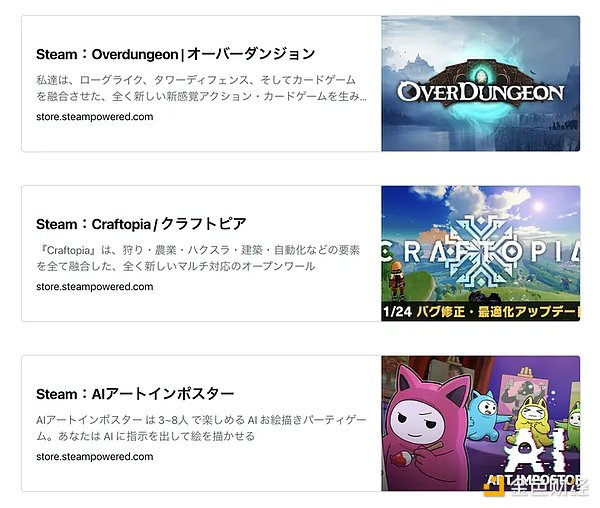
Once we realized this, we started developing Overdungeon, a game that was a combination of Slay the Spire and Clash Royale, which I loved at the time.
The game that relied solely on combining ready-made materials has sold 50,000 copies! ? Interviewed the author of "Overdungeon", he said that he "hardly ever drew a picture" and asked about the development of Web-based games.We took about half a year to make it and released it on Steam as an early access version (Translator's Note: Early Access).
Received a lot of feedback from various users.
The first release experience was to receive a lot of feedback from passionate users.
I am convinced that our field is here. We should publish the game on Steam ourselves.
Since then, Pocketpair Co., Ltd. has released three games.
All these games are published by us on the Steam platform.
From the first title, I understood. No matter how good a game you can make, you shouldn't do anything beyond your capabilities.
We just need to release the games we can make.
If you're confident that the game will be fun, that's enough.
These games are what we publish.
 02:04
02:04
01:08
And in three days, a new one will be added, representing our works.
Using our previous failures, hardships, and reflections, we built a new team from scratch and made a fun game that we really wanted to make, and it's our culmination of this.
That's "Palworld".
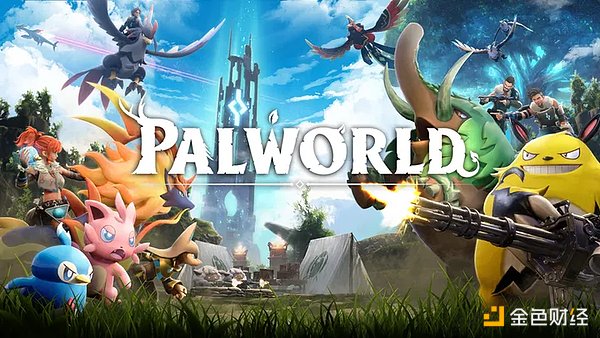
We went through all sorts of things before Palworld was released.
With every game we've made, we've learned new things and formed connections with people.
If any of the games were missing, the results might not be what they are now.
4. The accidental story of "Palworld"
Without that unreleased fantasy debut, there would be no Overdungeon.
Without Overdungeon, there would be no Craftopia.
Without Craftopia, there would be no Palworld.
And, every game launch comes with truly monumental difficulties.
That fantasy first work was really remade many times. Probably about 20 prototypes were made. There have been countless quarrels... or discussions of differences of opinion.
We also struggled to solve seemingly unsolvable problems.
But none of it paid off.
"Overdungeon" also experienced many difficulties. Since this is our first time releasing a game on Steam, we don’t understand it from start to finish. After release, we have repeated updates every day.
Although you will understand once you do it, it is really difficult.
We also negotiated and signed with a publisher for the first time. I encountered a lot of bad things.
Looking back, I think this was a failure.
Craftopia is also very difficult. Initially we planned to make a Battle Royale game. The direction of the game is not set at all.
The game was riddled with bugs at launch. We have also been updating every day since its release. Very tired.
Whenever a fatal issue occurs in testing, we redeploy and revise the advisory.
Despite this, the game was finally successfully launched thanks to the support of all players.
"What would happen if we combined these?" → "I don't know!"──Why was "Craftopia" able to overcome glitches and bugs that even the developers themselves could not fully grasp, and achieve sales of 500,000 copies?Interview with the developer of the domestic open world game "Craftopia" that sold 600,000 copies. Not repairing even when fields overlap and campfires are scattered is a hard-charging development technique with a strong character.
Then, came the highly anticipated "Palworld".
Although we have been making games for many years and learned a lot,
But the development method of "Palworld" is still far from "proper game development".
Looking back, it's truly a miracle that "Palworld" was able to be completed and released.
I can only say good luck.
I find it incredible that such an amazing game can be produced with such progress and methods.
This approach is completely the opposite of "proper game development".
Palworld exists thanks to the support of many miracles.
There are many more miracles that cannot be written here.
From the beginning, Mr. Kotaro, who is the director, took the initiative to apply to join us and it was almost entirely luck. He originally seemed to be planning to go to NetEase.
Translator’s Note: The “director” here refers to the Game Director in the Japanese game industry, which is also the chief planner and Lead Game Designer.However, it seems that he accidentally saw our recruitment on Twitter and contacted us with a relaxed mood.
As a result, he became the supervisor of "Palworld".
There are many more stories like this.
Although it can only be said to be good luck, on the other hand, the interesting games we have always believed in and worked hard to create have also brought us fate with people.
Translator's Note: The recurring "fate between people" does not refer to the kind of "interpersonal relationships" that focus on social interaction, but rather emphasizes fateful encounters and connections, which contains a deeper, even fateful A sense of connection between people. It is an unpredictable and random relationship.We were actually supported by many more miracles, and I’ve picked out a few to tell about here.
Miracle 1: A 20-year-old convenience store part-timer with no industry experience became a young ace.
Miracle 2: Successfully migrated from Unity to Unreal Engine 4. All existing code has been thrown away. No one in the company had UE4 experience.
Miracle 3: Created more than 100 monsters (parlu collectable in the game). No one in the company has experience in animation.
Miracle 4: No budget management. Barely finished. Approximately 1 billion yen was spent.
Miracle 5: Fresh graduates who were eliminated by us in resume screening became employees in the most important positions.
Miracle 6: Palworld turned out to be a very interesting game.
Miracle 1: A 20-year-old convenience store part-timer with no industry experience became a young ace.
"Palworld" is a project that gets young talent.
For a company with only about 10 employees, there are usually not many good fresh graduates to apply.
Even if such talents come, they will be poached by big companies. After all, there seems to be no reason for a fresh graduate to come to such a company.
So why do we have such good luck?
Just because the members recruited by chance happened to be very good.
One of the most important elements of "Palworld" is the "gun".
With the popularity of battle royale games, FPS/TPS (Translator's Note: First/Third Person Shooter) became popular in Japan and gradually gained popularity. However, from a global standard, FPS occupies the most popular games. an overwhelming majority.
It's very rare for a country like Japan to produce almost exclusively RPGs.
From the initial planning stage of the "Palworld" project, it was decided to focus on the "gun battle" gameplay from the FPS/TPS perspective.
But there's a big problem here.
As mentioned earlier, hiring people with experience in gun game development is very rare in Japan.
Please try to think about it, is there a domestic FPS/TPS?
The only one I can think of is Resident Evil, but that would hardly be called a gun-focused game.
"Earth Defense Force" is a bit special, but recruiting such specialized experience is almost impossible.
I'm very troubled. Of course, even if it's all amateurs, the game can reach a certain level, but I still want people with experience in making FPS/TPS games.
But if you cannot recruit talents in Japan, you can only recruit foreigners with experience in FPS/TPS game production from abroad. However, considering the current team structure, it is very difficult in practice to accept talents who only speak English.
First of all, no one within the team has a particular obsession with firearms.
I don't have any particular attachments myself. I know about the AK-47, but I'm at my wits' end when it comes to issues like caliber.
I didn't know what to do but decided to do my usual rounds on Twitter.
I limited my topic to guns and kept searching on Twitter.
In doing so, I discovered an unusual account.
"This person only uploads videos of gun loading actions..."
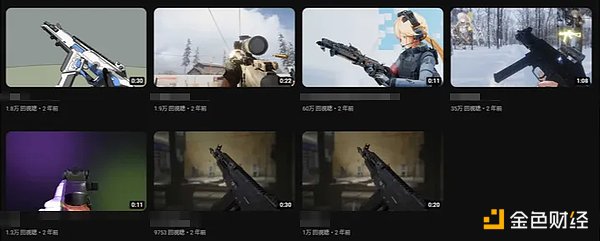
00:22
Moreover, all tweets are in English. Only the hashtag (Hashtag) is in Japanese.
The English level does not appear to be native, but is quite casual and proficient.
At least it's not school English written by a Japanese person. There are also some slang terms.
Is this person a foreigner? Love Girls' Frontline and are proficient in English, maybe Chinese or Korean...? But there are no simplified Chinese characters or Korean characters in the tweet.
Regardless, he sure likes guns.
It seemed unlikely that he lived in Japan, but I held on to one last glimmer of hope.
The problem is, he is extremely obsessed with the reloading animation of the gun and keeps uploading videos.
Well, you can say that he is a bit... or definitely... weird (変な).
(This is a serious bias)
But I need someone like this. Whether it's a gun or anything else, people who are unusually obsessed with something are usually a little weird. That's just right.
I really want someone with a passion for guns to make Palworld.
First, I tried to contact him.
I immediately responded to his tweet and private messaged him.
I hesitated to send it in English, but if the reply was in Japanese, it must be from a Japanese person, so I sent it in Japanese first.
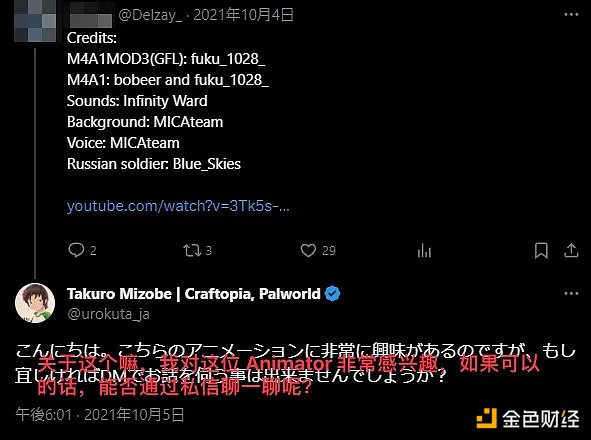
The reply came quickly.

My biggest concern is whether he has gaming industry experience.
He uploaded such a high-quality video, and it's about the reloading action from an FPS perspective, so he probably has experience in the gaming industry.
But it could also be the animation or CG industry.
Because these industries are relatively close, it is difficult to determine based on finished products alone.
If you're asking for help, it's certainly better to have gaming industry experience.
I asked directly the question I wanted to know the most and he responded quickly.

ah……
What does zero experience mean? Hobby?
There may be something wrong with the question about "game companies".
He may not have worked in a game company, but may have been involved in CG animation in animation, CG industry, or other industries.
Just to make sure, I asked him if he belonged to any company.
Then……

"part time……????"
"Hobby……????"
Oops, what's going on. Does such a person really exist?
I immediately arranged a meeting and decided to hear his story.
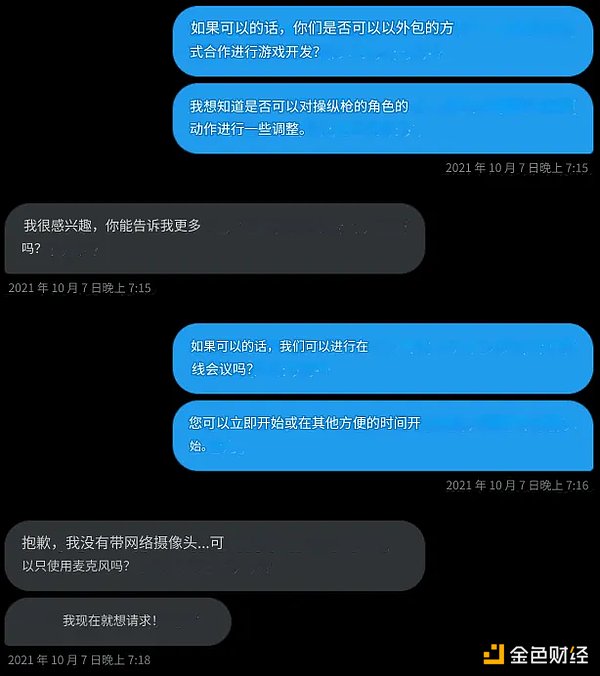
I immediately started a conversation on Google Meet. It's such a convenient era.
After talking, I learned that he indeed had no industry experience and was currently working part-time in a convenience store in Hokkaido.
He said he taught himself all about animation and tools by watching YouTube.
It’s so scary…to learn this level by yourself…
As for English, he said he learned it naturally while playing FPS.
Most Japanese people fail to learn English even after studying it for more than 10 years in college, but he learned it just by playing FPS. This is really unusual.
(Later, after joining the company, I found that he was not only good at writing, but also good at reading, listening, and speaking)
To test his abilities, I provided a video of it in development and asked for suggestions for improvements.
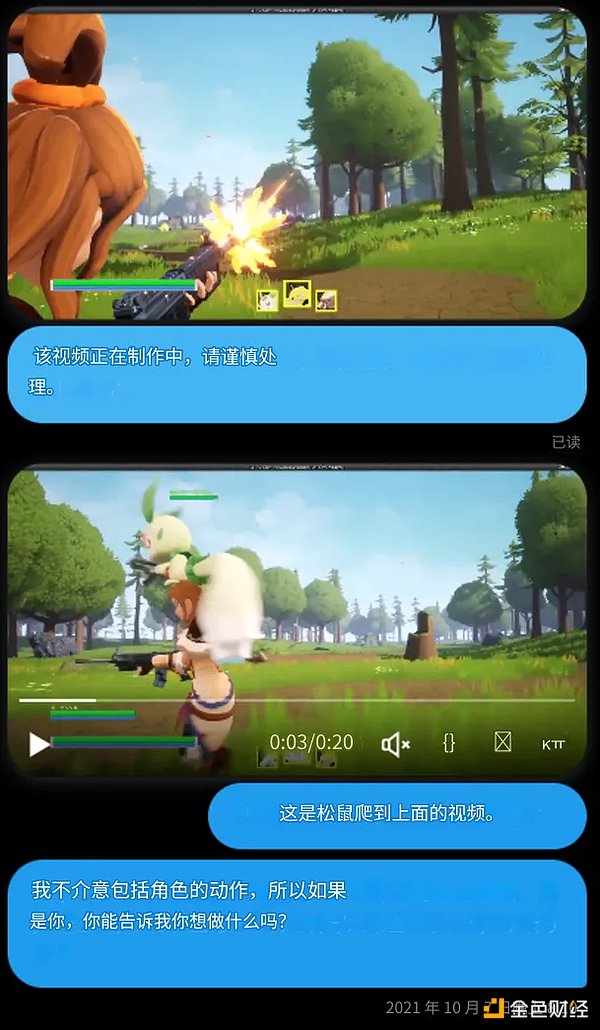
He first expressed concerns about the shift. He really works in a convenience store.
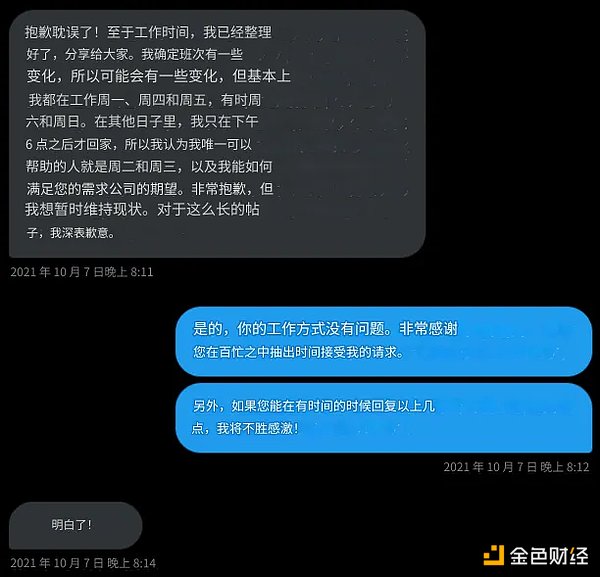
He looks very busy and hardworking...
The time I sent was 20:12 in the evening. Considering that he might be busy with part-time work, I thought it was too late to send it so late. I might not receive a reply today.
However, about 25 minutes later I received the following response.
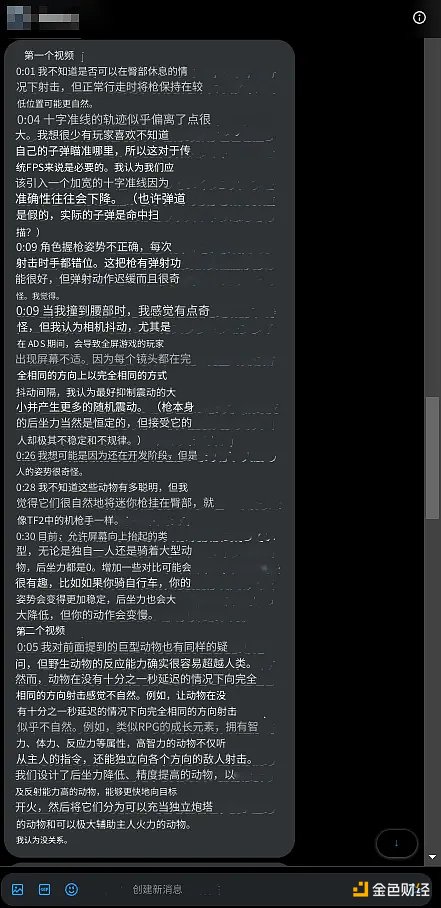
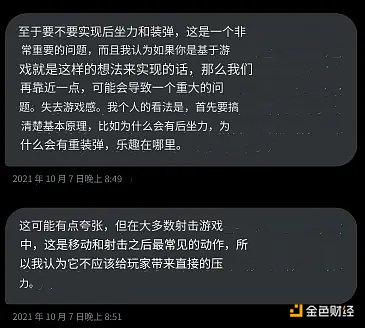
This is amazing...
It is usually impossible to write such a response in 25 minutes. The writing is full of passion.
And for someone meeting him for the first time, it’s really remarkable that he’s not afraid to make these accusations.
It is also reasonable to criticize the content.
He is undoubtedly someone who often plays a lot of FPS and has a special obsession with gun animation.
I need someone like this. Gunfight games should be made with people like this.
The Internet is always the friend of the weak.
Translator's Note: Refers to the fact that the Internet also provides equal opportunities for inexperienced people outside the traditional game industry.I immediately signed a business entrustment contract (Translator's Note: Outsourcing Contract) with him. Surprisingly, he is only 20 years old. Moreover, he graduated from high school.
20 years old, he taught himself animation skills through the Internet. He likes to make gun reloading animations and uploads them on YouTube and Twitter (and has been played hundreds of thousands of times).
I thought to myself, this is like a light novel, but is this the modern outstanding young man? I had to be shocked.
We had already hired a talent like this in 2D art before (see Miracle 5), so this was the time I decided to go with it.
After signing the business entrustment contract, we collaborated remotely for about a month. Although he had no industry experience and had almost no contact with UE4, he learned quickly.
He is humble, quick to learn and highly motivated. Such young people are not usually recruited by small companies.
There were soon calls within the company to bring him on full-time.
He's a fine young man, and rightfully so. Whether he works part-time at a convenience store, is 20 years old, or has graduated from high school, in the gaming industry, it never matters.
However, the now mature gaming industry may unfortunately be affected by these factors.
But at Pocketpair, none of that matters. As long as you have the ability.
I contacted him immediately.
After I contacted him, maybe I was speaking in a roundabout way, but he didn't seem to understand what was going on.
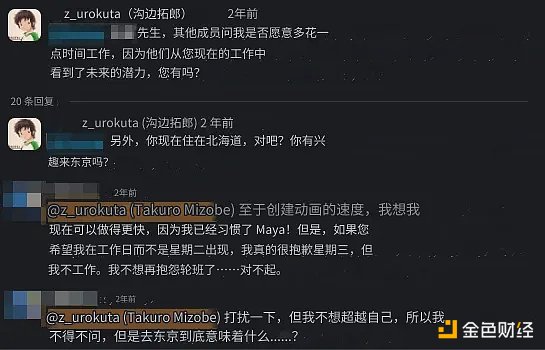
I told him straight up that I wanted him to be an employee.
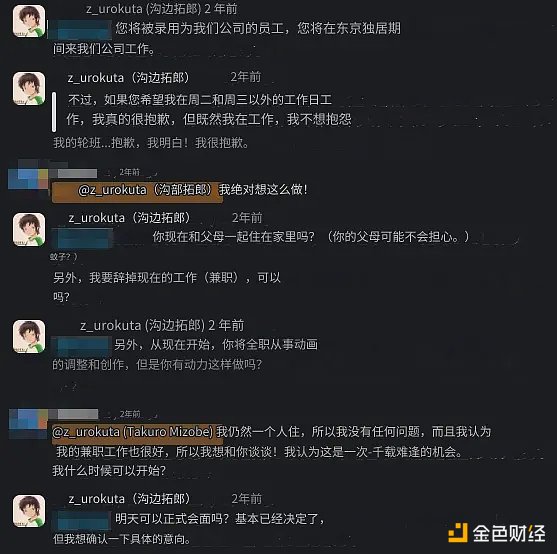
The conversation ended quickly, but later he told his parents, who seemed concerned.
Calm down and think about it, this is a natural reaction.
Suddenly, an unknown small game company in Tokyo said to a 20-year-old inexperienced middle school graduate, "We want you to become a full-time employee. Please come to Tokyo from Hokkaido." Ordinary people would suspect this to be a scam.
Moreover, he himself may feel uneasy. It was the same situation for him.
Based on his request, we decided to let him come to Tokyo for 2 weeks to 1 month to actually work in the office.
The round trip air tickets are of course paid for by our company.
After all, we are the ones asking.
After he came to Tokyo to work, things moved forward quickly.
He actually does a great job.
He seemed to have no problems in life, so he officially quit his job at the convenience store and started working in our company.
Considering that he may not be familiar with Tokyo, we also helped him arrange a place to live when we were busy at the end of the year.
Now, two years later, he's even better.
His talents aren't limited to gun animation.
Maybe because he makes his own videos, he's also pretty good at tweaking the sound effects. Most importantly, he works efficiently.
He is quick with tools and can complete any task the fastest.
As for the character's movements, he completed all the logic construction part called Blueprint (Blueprint) used in Unreal Engine, which is almost similar to programming (Translator's Note: graphical logic design tool, similar to visual programming).
Animation, screen production, camera operation, sound effects addition, blueprint production.
There are also gun adjustments.
What started out as just having him adjust the guns ended up making him responsible for pretty much everything.
In small companies, generalists who can do a variety of things are more important than experts.
I am so grateful to have met such a miracle as him.
Miracle 2: Successfully switched from Unity to Unreal Engine 4. All existing code has been thrown away. No one in the company had UE4 experience.
When it comes to engine migration, for those who don’t know much about it, it may seem as simple as upgrading from Windows 10 to Windows 11.
Quite different actually.
It's more like switching from Windows to Mac. Apparently, Windows applications won't run on Mac.
Frankly speaking, from the perspective of "reusability", the common point is just that "they are all game engines".
First, the programming languages used are different.
Unity uses C# and Unreal Engine uses C++.
The difference between C# and C++ can be compared to that between C language and Java. And C++ is more difficult and is now considered a language for professionals.
When we were using Unity to develop "Palworld", we purchased assets that relied on Unity.
A lot of Pal's animations that we used in the initial trailer were purchased in the asset store.
These actions rely on Unity's animation system and are therefore basically unavailable in Unreal Engine.
In other words, an engine migration is almost equivalent to a complete redo.
Almost only 3D models can be reused.
Even so, depending on the asset purchased, many may not be available.
Still, in game development, reworking things from scratch happens from time to time.
For example, "Jockey Girl" has the story of being reworked several times from scratch, and Satoru Iwata of "MOTHER2" has similar anecdotes.
However, in modern development, it is extremely rare to remake a game from scratch based on an engine that no one has experience with.
Almost no one makes this decision because it usually means the project has failed.
So why was such a decision made?
This happened because of an engineer who contacted us out of the blue.
Shortly before the first video trailer for Palworld was released, I received an email from a guy named Matsutani.
The general content is as follows:
"I'm a freelance engineer. "Overdungeon" and "Craftopia" are very interesting. I have 10 years of experience. I hope to make games together."
It's rare for such an experienced engineer to email me.
I immediately scheduled a meeting.
After speaking with Mr. Matsutani, I learned that he has considerable technical knowledge and is likely to have chief engineer level capabilities.
But he has no experience with Unity. All members of our company have only Unity experience.
There are three options at this time:
Not hiring Mr. Matsutani
Let Mr. Matsutani learn Unity from scratch and continue to use Unity to develop "Palworld"
Mr. Matsutani took a gamble and scrapped everything he had already done and started making Palworld from scratch using Unreal Engine.
At the time, there were only two engineers working on Palworld, and neither of them had leadership experience.
I do want to hire Mr. Matsutani, but developing from scratch, especially with Unreal Engine, which we are not familiar with, would be completely different.
Ultimately, the decision was very difficult, but we decided to trust Mr. Matsutani and remake Palworld from scratch using Unreal Engine.
I want to try a different approach and challenge.
Of course, an important reason for the decision to switch to Unreal Engine is that it is generally believed that Unreal Engine has advantages over Unity in consumer game (Translator's Note: home console-level games) development.
But judging from the cost of recruiting engineers, Unity's cost is much lower than Unreal Engine. It can even be said that there are almost no Unreal Engine experiencers on the market.
We then hired more than five engineers, and ultimately none of them had experience with Unreal Engine. They all learned through "Palworld".
Their education from scratch was entirely left to Mr. Matsutani.
After actually adopting Unreal Engine and starting the project from scratch, the unexpected happened one after another.
Surprisingly, Mr. Matsutani had no experience using the version control system git.
It seems to me unbelievable that modern team development has no experience with git, but it is true.
He said that if using Unreal Engine, it would be more suitable to use Perforce.
But Perforce is too expensive. A company like ours cannot afford that.
If you can't use Perforce, then you should at least use svn, which is more suitable than git.
Frankly, companies using svn now give off an outdated impression, and I'm a little hesitant, but after all, we are doing an engine migration, and version control systems are nothing compared to that.
I completely trusted his words and moved the version control system from git to svn.
(This is often seen as a step backwards)
This is really starting from scratch.
As a result, the engine migration was successful and "Palworld" was successfully released.
Looking back now, switching from git to svn was also the right choice.
Mr. Matsutani is indeed a great engineer.
He not only has a high level of engineering knowledge and experience, but also has the management ability to organize a team of engineers.
The games we released in the past helped us build a bond.
"Palworld" is full of such wonders.
Miracle 3: More than 100 monsters were created. No one in the company has experience in animation.
This may be something that only people with experience in 3D game development and familiarity with game animation can understand.
In fact, I had no idea what difficulties I would encounter before I started working on it.
Because we didn't understand it, we easily started making a 3D action-based monster collecting game.
I didn't realize the problem until I started working on it.
Wait, it takes a month to make a Pal...just a 3D model...
Our company has never really made a 3D model in-house before.
In Craftopia, almost all of our 3D models are purchased as assets.
To make a 3D model move, you need actions.
Since the actions in Craftopia are also purchased as resources, we didn't pay too much attention to them.
In addition, the movements of human characters can be reused if the bones match, so there is no need to consider mass production in this regard.
However, there are over 100 monsters (paloos) in Palworld.
What's even more terrifying is that every monster's skeleton is different.
Moreover, they are all unique shapes.
If the enemy is human, the actions can be reused since the bones are the same.
This is also the reason why the enemies in many realistic games are human beings.
But if there are 100 uniquely shaped monsters, obviously, actions cannot be shared. Need to be made one by one by hand.
By the way, Monster Hunter World only has about 50 monsters in total.
By this time, I again realized the risks of this game.
Wait, how many actions does each monster need?
Walking, running, jumping, injured, attacking...
Count them, at least 20. Of course it would be better if there were more.
In this game, Palu will help build the base, so animations for specific actions such as chopping and mining are also needed.
How long does it take to create an action?
Wait, on average in the industry, it takes a day to create an action?
In other words, 100 monsters * 20 actions = 2000 man-days?
And no one in the company had experience in action production. If anyone had, they would have been aware of this problem and strongly opposed it.
I realized this about half a year after development started.
too late......
In other words, the planning was too poor...
One day, a talent company (Translator's Note: Headhunter) contacted us and found a person named Adachi.
He was an experienced senior motion designer and became interested in us after seeing how Craftopia was being made.
Then he was hired as a business principal (Translator's Note: Outsourcing), and everything changed.
Mr. Adachi was also shocked at first.
"Is this how you create movements...?"
"Where's the Rig...?"
The so-called binding, simply put, is a useful auxiliary mechanism when making actions.
For example, human joints have a fixed bending direction and will not bend in the opposite direction. But without binding, you would need to manually adjust it every time you make an action.
Although Pocketpair knew about the existence of binding, it did not use it. (And I don’t even know the word “bind”)
This is absolutely impossible for a company that normally produces action, but since "Craftopia" purchases action resources, it was not a big problem before.
However, "Palworld" is different. Creating unrigged animations for over 100 monsters was like building a pyramid without heavy machinery. It's impossible in modern times.
We just don't know.
After the senior Mr. Adachi joined, we gradually established a mass production system for movements.
File management is also a mess. There are no fixed naming rules, and there is no svn version control.
He rectified all this and established a mass production system.
"What! You want to make 100 monsters? Just these people?"
Although surprised by the lack of planning, Mr. Adachi said:
"I came to this company just to see new production methods."
Then he helped us finish Palworld.
It is precisely because we were able to hire Mr. Adachi by chance that we are in the current situation.
By the way, we continued to recruit from agents after that, but no senior talent like Mr. Adachi joined.
Miracle 4: No budget management. Barely finished. Approximately 1 billion yen was spent.
It is unthinkable in a normal company to develop games without budget management.
Pocketpair is not a normal company.
Why not manage it?
Simply put, it is because budget management itself is not cost-effective, that is to say, it is too troublesome, but there are indeed some reasonable reasons.
"Palworld" originally started by producing a trailer (game PV) for marketing activities.
If a trailer isn't received well, it's not worth the budget to make it in the first place.
With this idea in mind, we spent about 3 months making a trailer and announced it at the event.
As a result, the response at home and abroad was far beyond our imagination.
And, most of the opinions are positive.
I expected some of this, but in terms of the game's appearance, I always thought it would probably be criticized anyway.
However, for gamers, many people seem to think that "as long as it's fun, anything is fine." I really like this about players.
If a game is such a big hit, it's probably best to put the budget into serious production.
Otherwise, what are the chances that if other games were made, it would have a bigger impact?
Thus, the development of "Palworld" began.
The original plan was to complete Palworld within a year.
I had no desire to make a big game.
There is also no desire to make the same game for several years.
And, by any stretch of the imagination, the Pocketpair is unsuitable for large-scale games.
There were only 10 people at that time and there was no such idea.
After all, existing employees would need to continue developing Craftopia, which was physically impossible.
So we formed a new team of about 4 people and started working on it gradually.
I wanted to finish it quickly and release it as soon as possible to see how users react.
Spending several years developing doesn't necessarily make for a great game. Long-term development risks are greater.
This is how I've always developed. Initially I thought making 25 monsters would be enough.
But after seeing the response, I changed my mind. Maybe it can be made slowly.
Let’s ignore the budget and observe it for one year.
What was the result?
Gradually realized the difficulty of this game.
First of all, a year has passed and the game is not finished at all.
This is what the game looks like after using UE4 for a few months.
01:16
This is what it looks like after one year of development.
00:22
To the uninitiated, nothing seems to have changed...
Finally, my character and enemies can move. Is the basic game system complete...?
Back then it was just about being able to shoot and capture enemies.
In fact, "Palworld" had a large number of features that had not yet been implemented in practice, and the graphics and graphics were all temporary materials.
Then, I realized that the manpower, money, and development time were far from enough to realize the envisioned game.
At that time, it took a month to create a 3D model of a monster.
If there was only one modeler, it would take 100 months. It can't take 10 years to develop.
The same goes for maps, which require a lot of background artists given the demands of modern open-world games.
At least, this is the scale of development that requires careful planning.
But planning is also difficult.
At that point we had no idea what the game would eventually become. A year has passed and only basic functions have been completed.
So thinking about it the other way around, what is the upper limit of the budget?
The most obvious upper limit is the point at which a company is about to go bankrupt.
Of course you can take out a loan, but that's when your bank account balance is zero.
The budget is capped, first, until the bank account balance reaches zero.
Just take out a loan then.
So, is budget management necessary?
No, just take out a loan or post when the company is going bankrupt and the account balance is going to zero.
Well, about two years of development left easily.
So I decided to continue production regardless of the budget. In order to complete it as quickly as possible, a large number of people were recruited.
Then, three years passed.
As a result, we hired more than 40 additional people. More people are outsourced.
At this point, the game is finally barely complete.
Although it is said to be completed, it is actually only barely in a state where it can be released as an early access version, and is still far from being truly completed. At least, it can be released to the public.
The company is almost out of money.
Just as planned!
No, is it really as planned...?
No matter how you look at it, it looks like a miracle.
I don't know how much it cost. Don't want to know either.
Based on the sales of "Craftopia", it is about 1 billion yen... (Translator's Note: More than 6.7 million US dollars)
Because those sales are all gone.
Miracle 5: Fresh graduates who were eliminated by us in resume screening became employees in the most important positions.
Now Palworld's iconic character designer is a new graduate who applied through our artist job posting on Twitter.
But I decided not to hire her during the resume screening stage.
Looking at her portfolio, I can see that she has some ability, but the illustration style displayed is a bit personal.
"If she came to a company like ours, I'm afraid she wouldn't be able to use her unique style of painting, right?"
In this way, after a brief discussion within the company, we decided to eliminate her during the resume screening stage.
Although I think she seems to have the ability, it would be even more unfortunate if she doesn't adapt after joining the job, so that's it.
With this in mind, I sent a notice of rejection.
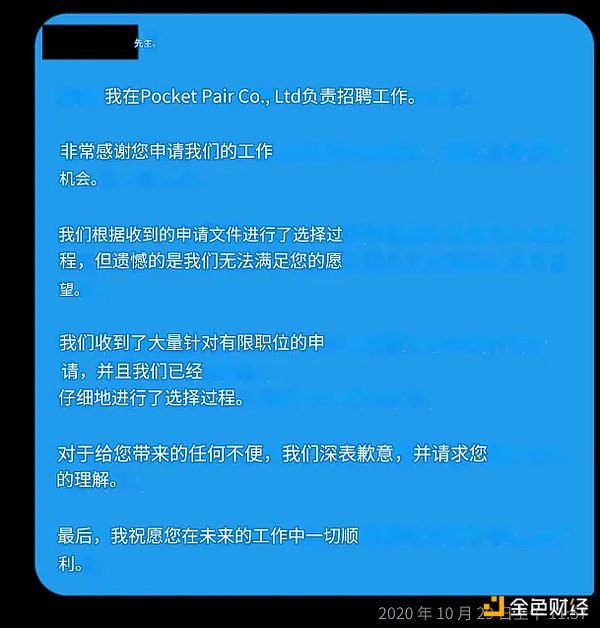
This was in October 2020.
Then, 3 months later in February 2021, I received another private message.
Just the day after we posted another artist recruitment notice.
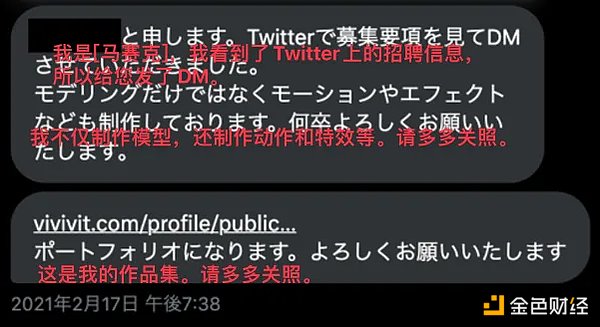
It's that girl...
Although she had already received a rejection notice a few months ago, she still sent the message again. Her behavior aroused my interest.
She was not without strength in the first place. In this case, you might as well listen to her story and finally decide to hire her.
She is now responsible for drawing most of the characters in Palworld.
She is a new graduate and has applied to nearly 100 companies but was rejected all of them.
Maybe you didn’t do well in the interview.
But it soon became clear after working with her that she had amazing talents.
I don't like to use the word "genius", but she probably is.
At least she has a rare talent. Like a sharp knife.
First, she paints at an astonishing speed. The fastest guy I've ever seen.
Probably 4 to 5 times faster than others.
Also, she corrects feedback very quickly.
It can be done in a minute as long as proper instructions are given.
At the same time, she has no resistance to English. He also knows what is popular overseas and is very sensitive to Internet memes.
She is truly a great talent for our company.
It is safe to say that with her, we were able to complete the design of 100 pallu.
Without her, the consequences would be unimaginable.
It is an amazing fact that nearly 100 companies missed out on such talent.
We have accidentally missed it once, so we are not qualified to comment on others.
It just happened. It really just happened. We were able to hire her because she applied again.
Miracle 6: Palworld turned out to be a very interesting game.
Among those who are engaged in game development, there are actually very few people who can say "we have made a very interesting game."
Frankly, making a really fun game is a rare thing.
This is true whether it's small-scale game development or large-scale game development for large game companies.
In small-scale game development, unfortunately, games often never get completed.
The percentage of people who complete the game is about 1 in 10.
In addition, due to limited budgets, it is often impossible to invest much in game graphics.
Game graphics are especially important. If the picture isn't good, most people won't even try. That's before the game is fun.
Even if you complete the game, games that can be rated as "interesting" are extremely rare.
Gaming, as a form of entertainment, requires all elements to be of high quality.
Script, graphics, game design, programming, sound effects, marketing...
Small-scale game development requires one person or a small number of people to be proficient in all of the above areas. Such a super person almost does not exist in the world.
Small-scale game development needs to be aware of the above requirements while incorporating these elements into a minimal design to create a very interesting game.
In addition, on the basis of achieving this, we need to make innovative attempts to ensure the fun of the game.
In contrast, in large-scale game development, there is often a requirement to develop as safely as possible. In other words, development without failure.
From a modern perspective, the safest game development is to use powerful IP (such as "Dragon Ball" or "Harry Potter", etc.) to support the game graphics, while the game system remains as robust as possible.
why?
If you combine high-quality graphics with a proven, stable gaming system, that alone may be enough to achieve commercial success.
Games don't need to be explosively fun as long as they recoup their costs.
Solid gameplay is fun enough on its own.
Large-scale game development itself involves a budget of billions of yen and more than a hundred people involved, so simply put, the project itself carries a certain risk of failure.
For a multi-billion yen project, just completing the game would be great.
Risking an innovative gaming system is hard to do on a budget project like this.
The only companies that can do this in large-scale games are probably companies like Nintendo.
Because of these circumstances, large game projects often produce solid and fun games.
This is the current state of most large-scale game development.
In short, the production of "very interesting" games, whether on a small or large scale, is a rare case in itself.
I think Palworld has made a very interesting game.
This is really an amazing thing, I can only say it is lucky.
There's no point in discussing why Palworld is so fun, and what exactly makes a fun game.
If after three days a lot of people say it's interesting, that's enough.
However, there is a common but common characteristic of games that I think are very interesting,
That is the "new thing".
Regarding the novelty of the game, it is easy to cause controversy as soon as it is discussed, and then it may turn into a discussion of "what is the new thing?" This is also very troublesome, so I want to avoid it.
However, Palworld is undoubtedly a new and innovative game.
There is no other game like it.
"Palworld" may currently be considered by many to be just a copycat game, but in fact, it has unique and innovative features that are different from "The Legend of Zelda: Breath of the Wild" and "Genshin Impact".
First of all, among the open-world survival-building games derived from "Minecraft", there are almost no other games that can tame monsters except "ARK: Survival Evolved".
Moreover, "Palworld" is different from "ARK" and has the following characteristics:
The appearance of Palu combines the stylized creature with a realistic background.
Palu can build its own base
Differences in taming methods
You can freely change various skills for each palu
There are more subtle differences, but at least the above aspects are different.
Especially the base building performed by Palu, inspired by the RTS and automation game genres, is very unique.
I've played it many times myself, and it's a completely different experience than ARK or other survival-building games.
This game is so fun and I'm excited to make it, but also very aware that its development won't be reproducible.
I think it's luck and miracle.
I don’t think it was developed because of my own strength.
It was just a chance encounter that came together and luckily resulted in the greatest game.
The games we've made so far connect people and it's finally done.
In addition, regarding novelty, in order to avoid unnecessary misunderstandings, I would like to explain that "novelty" does not mean "very interesting", nor does it mean that it will definitely sell well. "Very fun" games usually have novelty, and although "Palworld" fully meets this characteristic, this is just a hindsight theory. (Translator's note: This means that novelty is not the only factor that determines whether a game is "very interesting." The novelty of "Palworld" does not mean that it must be "very interesting," but it just does it based on the results).※ Although "Palworld" is a very interesting game, it needs to be added that this game is not suitable for players who like single-player games and enjoy the story at all. Please be aware of this.
There's almost no plot, so it probably won't be interesting for this type of player.
Players who enjoy the survival-building game genre such as Minecraft or Valheim may enjoy it.
5. Summary: Continue to pursue the creation of interesting games, and the fate between people is connected, creating the miraculous game "Palworld"
It's truly a miracle that Palworld came to be, to be completed, and to be such a fun game.
Of course, we put in the effort. The other members also gave their best.
This is indeed the result today. In this sense, it may be said to be part of strength.
But I really couldn't get into that mood.
If only the girl who was eliminated by me in the resume screening had not applied again.
If the gentleman from Hokkaido had not come to Tokyo.
If Mr. Matsutani did not send an email, there would be no migration to Unreal Engine.
If Mr. Adachi is not found.
"Palworld" would never be complete. It would never be the quality it is today.
More than 40 new members joined, everyone is like this.
Although there are many people who do not appear in this story, I almost all know what they are responsible for.
That mechanic, it turned out great thanks to that guy who implemented it... He's an engineer who's good at making moves. Thanks to him, the action got even better.
That character design, it was great to leave it to him. Although many difficult requirements were put forward, he successfully completed them. Speaking of which, I accidentally contacted him on Twitter...
Mr. Yoship also joined the company because he was contacted by me because he produced the MOD of "Craftopia"...
Nearly 10 people were recruited through Twitter alone. Everyone found this project interesting and decided to join it.
Thoughts extend infinitely.
"Palworld" maximizes development efficiency, and the personal dependence of each position is very high.
Regardless of who's missing, the quality of the game will now be significantly reduced, and it may even be impossible to complete at all.
Furthermore,
If AI: Art Impostor hadn't been made, one of the designers supporting the game might not have applied.
The team behind Palworld wouldn't exist if it hadn't been for Craftopia.
If Overdungeon hadn't been made, there wouldn't have been Craftopia.
Without the first fantasy game that took two years to release, there would be no Overdungeon.
Everything is interconnected. All experiences are not useless.
Finally, there was a testing moment.
In the final stage of development, there was a shortage of engineers, so for a while I had to do the optimization of the game myself.
In the "Palworld" project, I have avoided direct contact with Unreal Engine. Due to the large scale of the project, direct intervention has been avoided.
After all, it's impossible to take into account the operational management of the company, the updates of "Craftopia" and the actual development of "Palworld" at the same time.
However, in the real final stages of development, due to complex situations, only I could be responsible for memory optimization.
To be honest, I had no confidence at all. Although I have over 5 years of experience using Unity, I have never been exposed to Unreal Engine.
Can such a person further optimize the memory footprint that other engineers have already fully optimized?
But there is no other way. Failure to do so could push back the release date at worst.
In that case, all the promotional activities the marketing team has done so far will be in vain.
Development efficiency will also decrease. There is no benefit to delaying the release.
Just do it.
I was pushed into a corner, constantly reading documentation, asking questions to other engineers, and learning like crazy.
It's been 13 years since I last read C++ code. The Nintendo DS game I developed at the Nintendo Game Workshop was made in C++.
Finally, there was a testing moment.
In the final stage of development, there was a shortage of engineers, so for a while I had to do the optimization of the game myself.
In the "Palworld" project, I have avoided direct contact with Unreal Engine. Due to the large scale of the project, direct intervention has been avoided.
After all, it's impossible to take into account the operational management of the company, the updates of "Craftopia" and the actual development of "Palworld" at the same time.
However, in the real final stages of development, due to complex situations, only I could be responsible for memory optimization.
To be honest, I had no confidence at all. Although I have over 5 years of experience using Unity, I have never been exposed to Unreal Engine.
Can such a person further optimize the memory footprint that other engineers have already fully optimized?
But there is no other way. Failure to do so could push back the release date at worst.
In that case, all the promotional activities the marketing team has done so far will be in vain.
Development efficiency will also decrease. There is no benefit to delaying the release.
Just do it.
I was pushed into a corner, constantly reading documentation, asking questions to other engineers, and learning like crazy.
It's been 13 years since I last read C++ code. The Nintendo DS game I developed at the Nintendo Game Workshop was made in C++.
Translator's Note: "Nintendo Game Seminar" refers to the practical seminar held by Nintendo from 2005 to 2014, aiming to allow students to experience game production.Speaking of which, the DS has 4MB of RAM. VRAM (video memory) is only 656KB.
There is now 8GB available. What a blessing.
Don't worry about the color quantity. This is truly a luxury.
Speaking of which, when making "Craftopia", optimization was also carried out in the final stage.
Although it has quite a few bugs, it was released as an early access version.
Sorry to the players, but they actively helped us debug. Really helped a lot.
Because of them, everything is possible now.
Speaking of which, this was also the case when making Overdungeon.
This is a game that allows for a large number of animals, and reducing processing load becomes a priority.
I faced Unity's Profiler and re-examined the processing one by one.
Cache what can be cached.
There were many memory leaks and they were fixed one by one.
Speaking of which, the same is true when developing web applications.
Excessive traffic was addressed through caching and proper streaming of large image and file loads was implemented. I learned a lot from Mr. Kamipo.
Working as a developer at Pixiv - Kamipo, the blond god-level engineer, taught me all about development.Regardless of the development environment, optimization work is essential.
So far, I've always overcome it in one way or another.
Although I have not been exposed to Unreal Engine, from an application optimization perspective, I think I have been doing it for more than 10 years.
If you include the time you have been exposed to computers, it has been almost 30 years. Definitely a veteran.
Optimization is persistence. You need to read the documentation repeatedly, constantly analyze memreport, and keep an eye on the hardware to perform grep on the target. Only such people will be given a smile by the goddess of luck.
Submitted the modifications and conducted real-machine testing for confirmation. Checked the memory usage and was disappointed to see little change.
Adjust parameters and confirm again. It just keeps repeating.
This process has been repeated dozens of times over the past few days. Even after returning home, I stayed up late into the night.
Finally, at the last moment, I finally managed to find the important bottleneck.
What finally helped me was all my experience as an engineer.
The experience of "Overdungeon"






