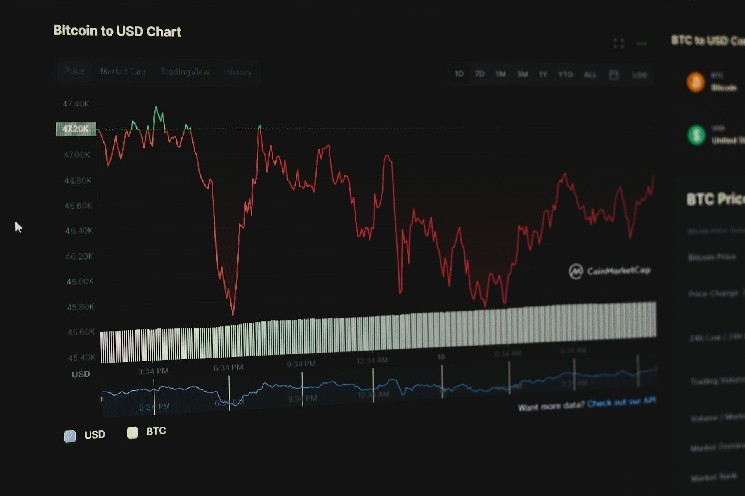
Australia has historically been a neutral and stable jurisdiction for cryptocurrency businesses. According to the Australian Crypto Survey 2023 by Swyftx, the largest exchange in Australia and New Zealand, Australia has the highest cryptocurrency adoption rate among developed countries at 23%, higher than the United States at 16%. Although Australia has a population of just over 20 million, the extremely high adoption rate of cryptocurrencies may be a cause for concern for the Australian market.
0 1Who is the regulatory authority?
Mainly the Australian Securities and Investments Commission (ASIC).
ASIC is Australia's financial regulatory agency, responsible for supervising Australia's financial markets and financial services industry to ensure the fairness, transparency and efficient operation of the market, protect the interests of investors, and maintain the stability of the financial system. At the same time, ASIC is also responsible for regulating financial services and businesses related to virtual currencies. In 2021, ASIC clarified its expectations for crypto-assets as underlying assets in exchange-traded products (ETPs) and other investment products and for market operators, retail fund operators, listed investment entities (including listed investment trusts and listed investments Companies) and Australian Financial Services License (AFSL) holders’ expectations for trading cryptoassets (see ASIC Information Form 230 (INFO 230)). In addition, ASIC has set out its expectations regarding the regulatory status of certain crypto-assets (see ASIC Information Form 225 (INFO 225)).
0 2What is the regulatory framework?
It is mainly law enforcement supervision rather than legislative supervision.
Currently, there is no separate legislation on cryptocurrencies in Australia, and while there have been legislative amendments to accommodate the use of cryptocurrencies, to date these have mainly focused on transactional relationships (such as issuance and exchange processes) and activities involving cryptocurrencies. , rather than the cryptocurrency itself. Although government departments are already conducting consultations and consultations on financial service providers and stable currency supervision.
ASIC has taken high-profile enforcement actions against cryptocurrency businesses. The focus of the action has been on alleged unlicensed operations and investor protection, but the "enforcement and regulatory" approach adopted so far has reinforced calls for legislative clarity. Although there is currently no legislation dealing with cryptocurrency as a separate area of law, this does not prevent its inclusion within the existing regime of Australian law .
0 3What are the specific regulatory rules?
Attorney Mankiw Jinzhi introduces common scenarios.
Cryptocurrency buying and selling
The buying and selling of cryptocurrencies is regulated by Australia’s current financial services regulatory regime.
Entities carrying out financial services business in Australia must hold an AFSL license (Australian Financial Services License) or obtain an exemption. Providers of cryptoasset services that constitute financial products will be required to obtain an AFSL license and related compliance and disclosure requirements . The Australian Corporations Act 2001 ( Cth ) defines “financial products” and “financial services” very broadly, and ASIC stated in INFO225 that cryptoassets with similar characteristics to existing financial products will trigger relevant regulatory obligations. Depending on the circumstances, crypto-assets may constitute interests in managed investment schemes (collective investment vehicles), securities, derivatives, or fall within a more broadly defined category of financial products, all of which are regulated by the AFSL licence.
Likewise, foreign financial services providers carrying out financial services in Australia must hold an AFSL license, unless an exemption applies. It may even be necessary to set up a local presence (i.e. register with ASIC and set up a branch) or establish a subsidiary.
Even if the buying and selling of crypto assets is not regulated by the Corporations Act, it will be regulated by the Australian Consumer Law (The Australian Consumer Law), which prohibits misleading or deceiving consumers. Therefore, care must be taken in cryptocurrency sales promotional materials to ensure that no false information is included and that buyers are not misled or deceived.
Cryptocurrency taxation
The tax implications for cryptocurrency holders depend on the purpose for acquiring or holding the cryptocurrency .
Under the Treasury Laws Amendment (2022 Measures No. 4) Bill 2022, the Australian Taxation Office treats cryptocurrencies as an asset held or traded, and Not currency. Simply put, if you trade cryptocurrencies on a regular basis and make money by taking advantage of market ups and downs, you will usually need to pay personal income tax. If it is a long-term investment, you will usually need to pay capital gains tax.
As far as Australian Goods and Services Tax (GST) is concerned, as of 1 July 2017, the supply and acquisition of cryptocurrencies are not subject to Goods and Services Tax, so consumers using cryptocurrencies are free from liability for GST twice (on purchase). Digital currency and when using digital currency to purchase other goods and services) becomes a one-time liability (only when using digital currency to purchase other goods and services).
Entry and exit declaration
Currently, Australia does not require declaration of cryptocurrency holdings upon entry or exit.
The Anti-Money Laundering and Counter-Terrorism Financing Act 2006 (Commonwealth of Australia) (AML/CTF Act) requires individuals and businesses to report any physical currency entering or leaving Australia in excess of A$10,000 (or its equivalent in foreign currency). This requirement is limited to "physical currency". While the Anti-Money Laundering/Combating Transnational Organized Crime Act was amended in 2017 to address certain aspects of cryptocurrency transfers and exchanges, the amendments did not see any changes to the Anti-Money Laundering/Combating Transnational Organized Crime Regulations. Border restrictions have been expanded.
Blockchain project currency issuance
Although ASIC acknowledges that the regulation of ICOs is challenging, it does not prohibit ICOs .
If the tokens issued are not classified as financial products, the ICO will be subject to the Australian Consumer Law; if the tokens issued are classified as financial products, the ICO will be subject to the Australian Securities and Investments Commission Act 2001 (ASIC Act) constraint. However, regardless of whether financial products are involved, the issuer must always ensure that the ICO does not involve misleading or deceptive conduct or representations. Since the design of an ICO may change during its life cycle, legal advice will need to be sought to ensure ongoing compliance.
Virtual currency mining
Currently, Australia has not issued any ban on virtual currency mining.
However, the tax treatment involved in virtual mining business will be relatively complicated and depends on many factors, including but not limited to whether it is registered for GST, the specific circumstances of each mining business, etc.
0 4 Conclusion
Blockchain and cryptocurrencies are innovative technologies in today’s world that offer new possibilities for financial services and transactions. Australia’s status as a neutral and stable jurisdiction, as well as its widespread cryptocurrency adoption, provides a conducive environment for cryptocurrency businesses. However, due to the lack of clear legislation at this stage, Australia's regulation of cryptocurrency remains uncertain, requiring companies to pay close attention to regulatory developments and enforcement actions to ensure the legality and sustainability of their businesses.