A primer on how a Central Bank balance sheet works.
Thread.
1/
We often hear about QE, QT, money printing, and similar concepts.
To fully understand these, it's important to go back to the basics.
Here is how the balance sheet of a Central Bank (Fed in this example) works.
I highlighted the most important items in blu and red.
2/
➡ Assets
1️⃣ Securities Held Outright
These are the bonds that the Central Bank owns.
In normal times, this amount is relevatively small but if the Fed embarks in QE it can grow very large.
That's why today the Fed owns $7 trillion (!) worth of securities!
3/
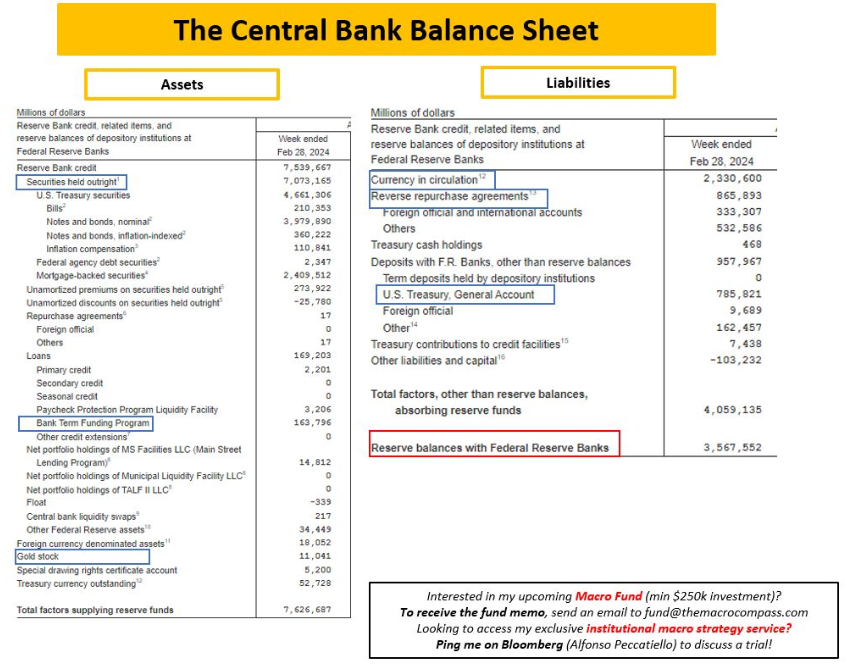
2️⃣ Bank Term Funding Program (BTFP)
One of the Fed Loans program, which was created to stop the bleeding during the 2023 banking turmoil: banks could lend Treasuries to the Fed and receive liquidity at par whatever the price of their bonds was!
These lending facilities are… twitter.com/i/web/status/17650...
3️⃣ Gold
Central Banks often own foreign denominated assets and Gold.
That's because their corporates sell goods or services abroad, and therefore foreign currencies enter the domestic banking system.
Foreign reserves are used to manage and stabilize FX markets if necessary.
5/
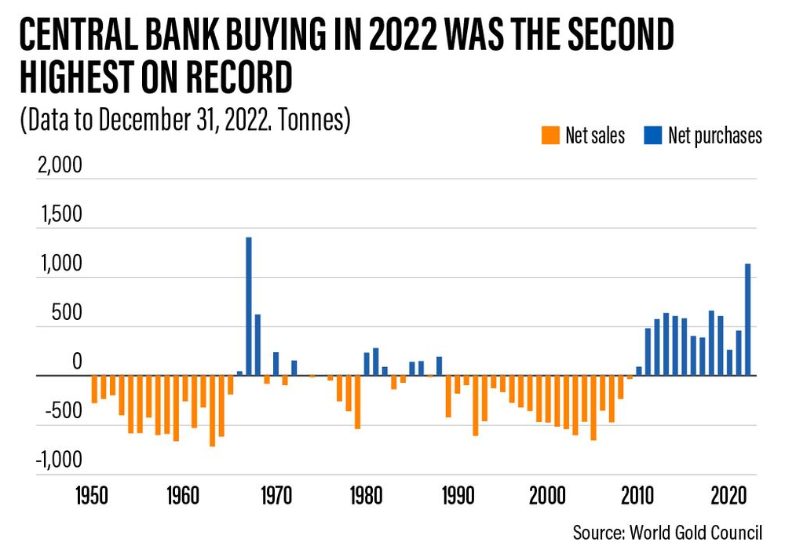
Central Banks also buy Gold to diversify their foreign holdings and have a ''hard'' asset which can't be devalued like fiat currencies.
Lately, Central Banks have been bidding up gold and therefore diversifying away from fiat currency holdings.
6/
If you are enjoying this thread:
1. I am launching my Macro Fund! Send me a message and I'll share the fund memo
2. Want more macro analysis in your inbox for FREE?
Join 140,000+ readers here:
freetmc.ck.page/4947606896
7/
Back to it: we have now covered the most important items of the asset side of Central Banks balance sheets.
Let's move to liabilities.
8/
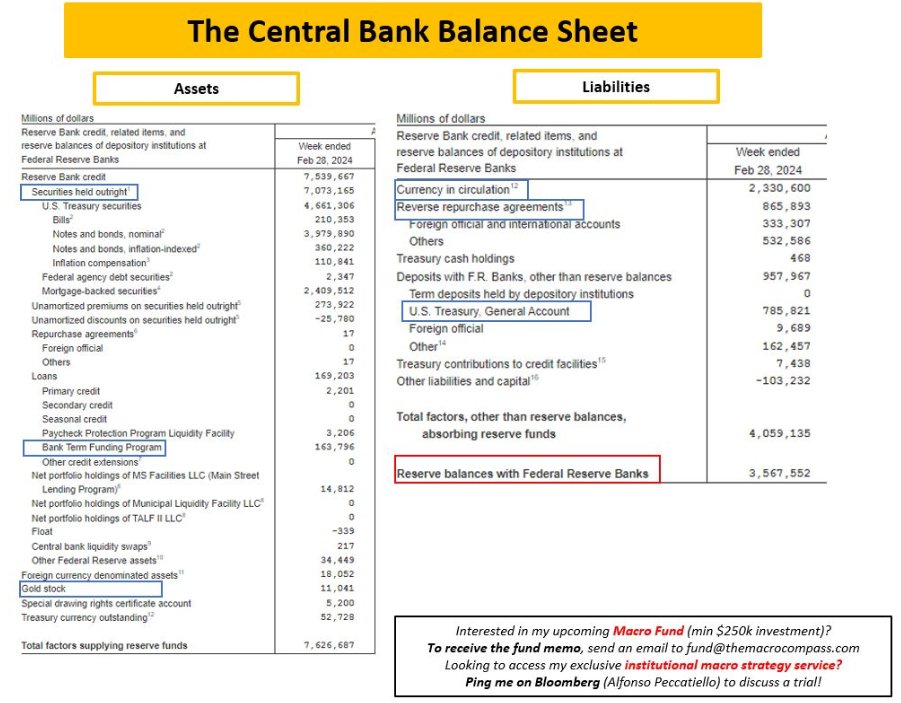
1️⃣ Currency in circulation
The private sector's preferred and most used form of money are bank deposits - we move money mostly via bank transfers today.
But coins and bills still exist, and these are a liability for the Fed and an asset for the banking sector.
9/
2️⃣ Reverse repurchase agreements
The famous RRP: a special instrument created for money markets so they could deposit money at the Fed. This was created when T-Bills were yielding 0% and the excess money floating around in MMF could bring T-Bills yield into negative (!) territory.
10/
In order to create a release valve for this excess liquidity, the Fed created the RRP.
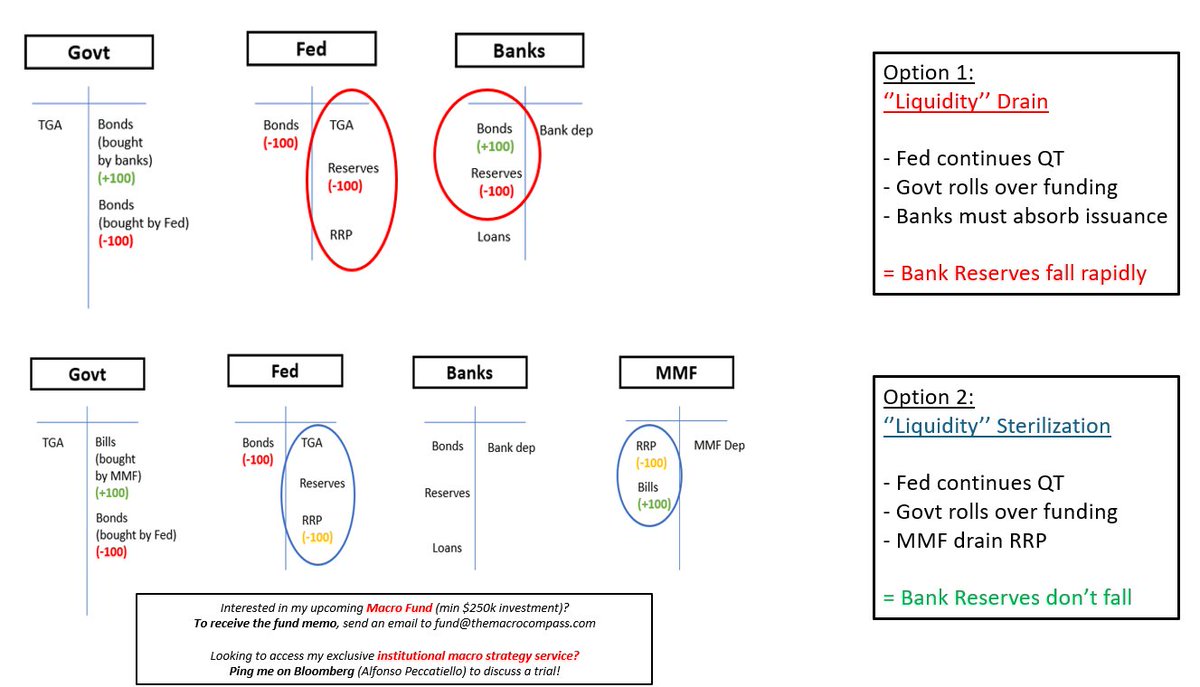
Today, there is still a meaningful amount of money parked there and it can be used to ''sterilize'' Quantitative Tightening.
11/
3️⃣ Treasury General Account (TGA)
This is the account that the US Treasury department holds at the Fed.
Think of it like their checking account: the government can always choose to unlock some of the money in the TGA and spend it in the real economy or vice versa.
12/
Increases or decreases in the TGA are important to monitor because they tell you whether the government is adding or removing resources to the private sector and also net liquidity to the interbank system.
And now, the big beast...
13/
👉 Reserve balances ( = LIQUIDITY, in red)
This item is the one most often referred to as ''liquidity'': it's the amount of reserves that US commercial banks hold at the Fed.
If you want to know where liquidity is going, you can simply track this line item!
14/
Did you enjoy this thread? If so:
1. I am launching my Macro Fund! Send me a message and I'll share the fund memo
2. Want more macro analysis in your inbox for FREE?
Join 140,000+ readers here:
freetmc.ck.page/4947606896
15/15

From Twitter
Disclaimer: The content above is only the author's opinion which does not represent any position of Followin, and is not intended as, and shall not be understood or construed as, investment advice from Followin.
Like
Add to Favorites
Comments
Share
Relevant content