Aave Labs, the development team behind the decentralized lending protocol AAVE, released a proposal called "Aave 2030" on the AAVE Governance Forum last night (1), describing a three-year development plan based on AAVE V4.
AAVE Labs presents AAVE V4
In the proposal, Aave Labs stated that the launch of AAVE V4 is the basis of the entire plan. By adding a series of improvements based on the V3 version, it is predicted that AAVE V4 will include several features:
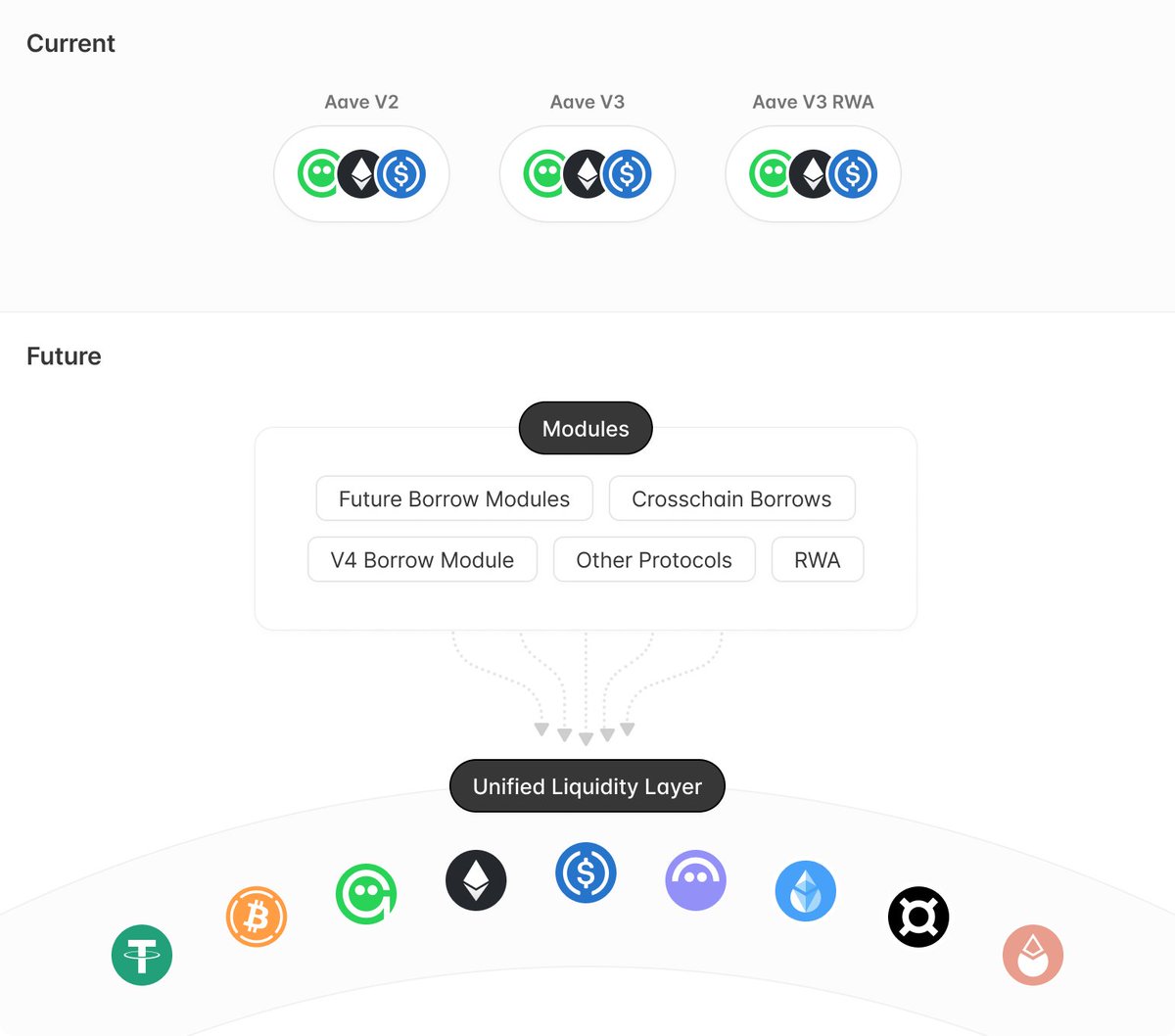
Unified Liquidity Layer
Aave V4 introduces a unified liquidity layer designed to manage supply/withdrawal (borrowing) caps, interest rates, assets and incentives, allowing other modules to provide and withdraw liquidity from it. Compared with the V3 version, the new liquidity layer is abstracted (integrated) and there is no need to migrate existing liquidity.
This architecture allows for new or improved lending features (such as segregated pools, RWA modules, and CDPs) without changing the entire system or liquidation module. It also avoids the liquidity dispersion problem that existed in older versions.
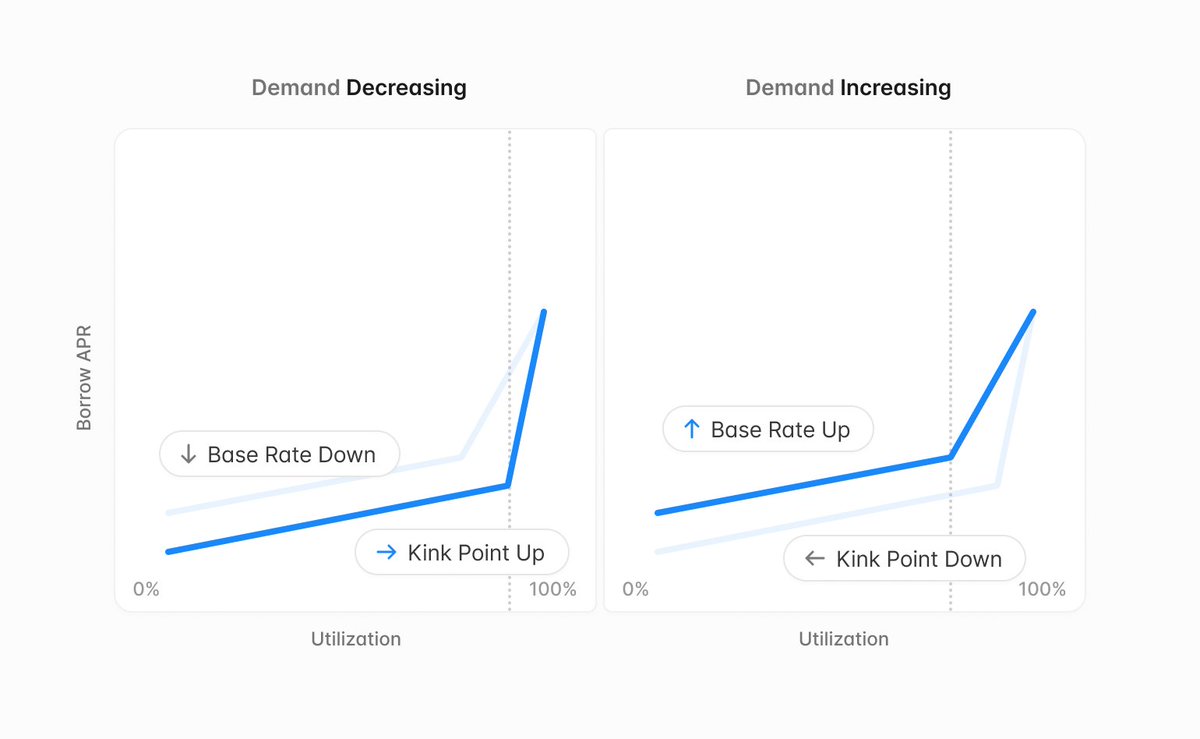
Fuzzy-controlled Interest Rates
Aave V4 proposes fully automatic rates with the ability to adjust slopes and turning points. Since the current setting is controlled by the governance mechanism, it not only increases the governance burden, but also reduces capital efficiency. Fuzzy interest rates are designed to actively control turning points so that they can be dynamically adjusted according to market conditions. The base interest rate will rise or fall based on market demand to optimize interest rates for suppliers and borrowers.
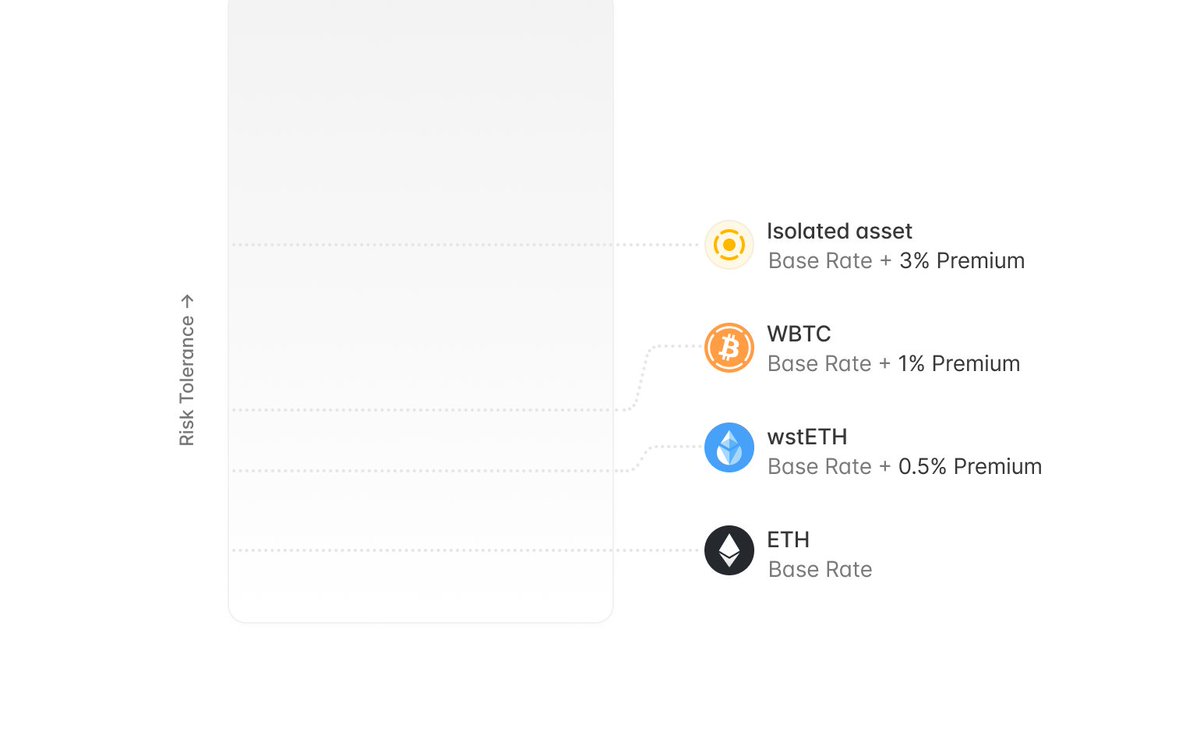
Liquidity premium mechanism
Aave V4’s liquidity premium mechanism adjusts the market’s borrowing costs based on the risk level of the collateral, which ensures fairness in pricing among all parties. In the face of higher-risk collateral, borrowing costs are relatively higher, and conversely, lower risks help reduce borrowing costs.
Aave V4 loan module
Vaults and Smart Accounts
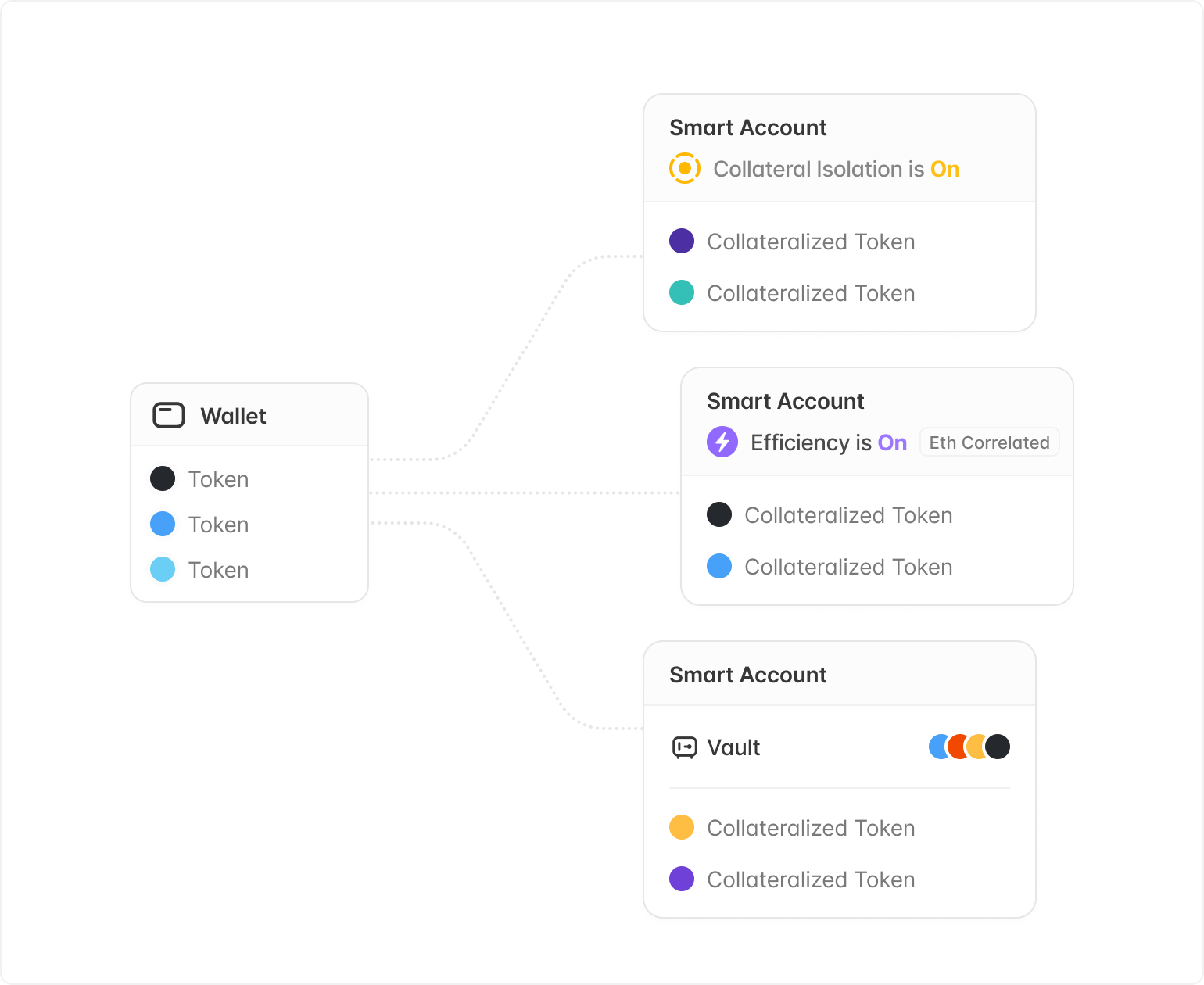
In the V4 version, Aave introduced the concept of smart accounts, aiming to solve the user experience problem in the V3 version. When users use eMode or independent asset borrowing, users need to use different wallets to manage positions. Smart Accounts allow users to create multiple accounts using just one wallet, significantly simplifying the process of interacting with the protocol.
At the same time, the smart account will also implement another major function - the Aave vault. Under the treasury mechanism, users can borrow without providing additional collateral to the liquidity layer. The collateral will be stored in smart accounts, and these assets will be locked until the borrowing is completed or liquidation occurs.
Dynamic risk allocation
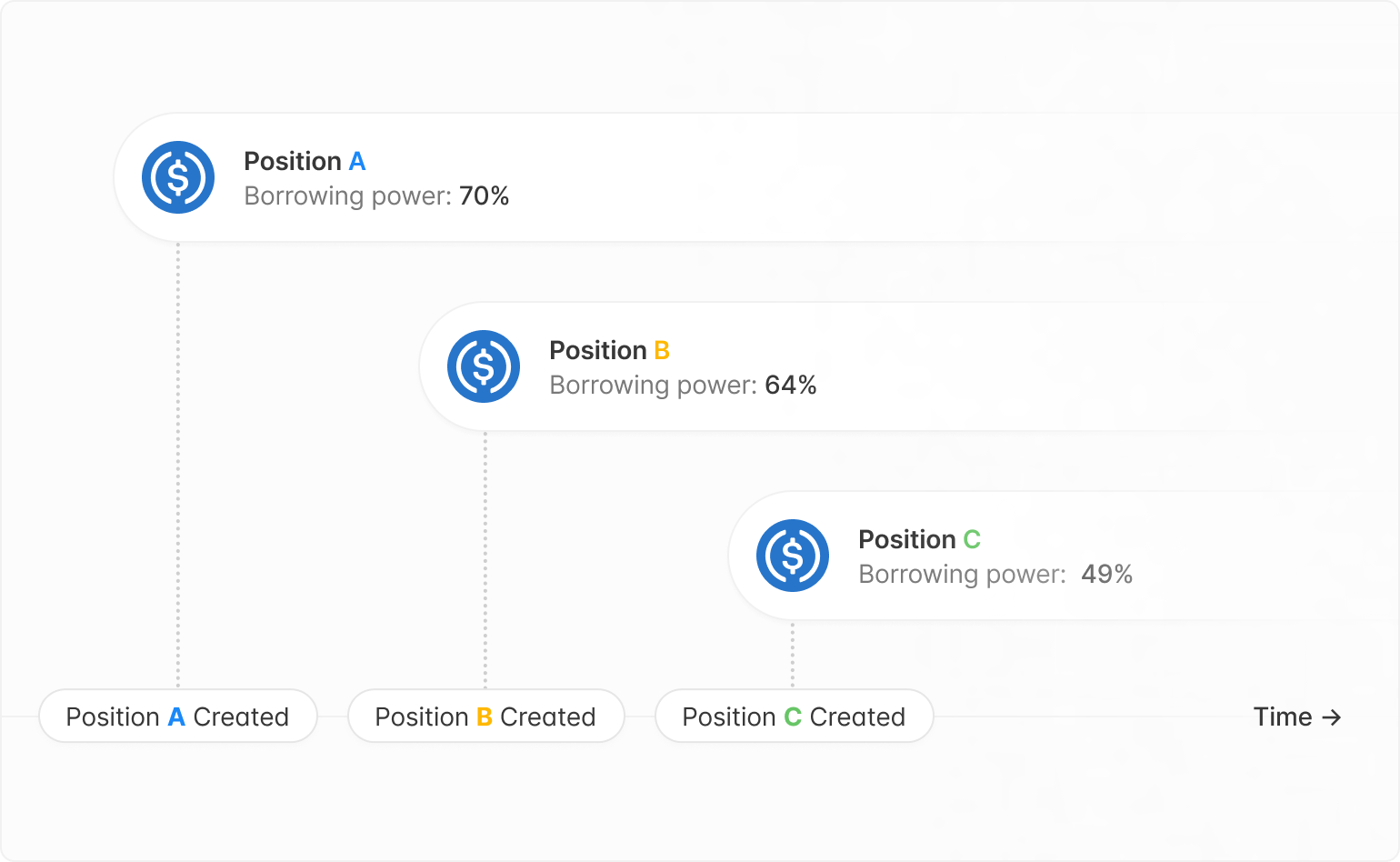
A major risk faced by the V3 version is that its risk parameters (especially the liquidation threshold) cannot be changed when the market environment changes. As for the dynamic allocation mechanism proposed by Aave V4, under this mechanism, whenever a loan occurs, the user's loan will be connected to the current asset allocation. If the market conditions change and the configuration needs to be updated, a new asset allocation instance will be created, and currently User configurations are not affected.
Automation assets offline
Taking the current version of the asset offline requires multiple governance decisions, including gradually reducing the asset's loan-to-value ratio and liquidation threshold, and ultimately eliminating its borrowing capacity.
In the V4 version, when governance initiates an automatic offline operation, a new configuration will be introduced to immediately reduce the liquidation threshold of assets to zero for new users. Every activity on the asset will trigger a series of lowering of the liquidation threshold, starting from the highest liquidation threshold, until the liquidation threshold of all users drops to zero, at which time the asset is officially offline.
Automated money management
The current V3 version collects reserve factors of each asset, which requires governance to be regularly reallocated to stablecoins or ETH, while the V4 version proposes a reverse auction mechanism. Once a certain threshold is reached, each token collected through the reserve factor can be Automatically sell to any pre-allocated asset.
Actions
Aave V4 allows users to customize automated actions in response to governance decisions.
Liquidation Engine V4
While the current version of the liquidation engine has proven its reliability, Aave V4 proposes some improvements:
- Variable liquidation factor: sufficient to return positions to safety, reducing impact on borrowers compared to V3
- Variable liquidation rewards: Introducing a reverse Dutch auction that linearly increases liquidation rewards as the position health factor decreases.
- Liquidation strategy: Different assets can use different liquidation engines to improve efficiency.
- Multiple parallel liquidations: Aave V4 liquidation engine will allow batch liquidations for the same debt/collateral, maximizing liquidator efficiency
excess debt protection
One of the disadvantages of the shared liquidity model is the risk of contagion if an asset accumulates too much debt. Excess debt can manifest in a number of ways, primarily custody and liquidity risk. Therefore, Aave V4 proposes to set a threshold for excess debt. Once this threshold is exceeded, the asset will automatically lose its lending function, preventing it from being used to spread bad debts to other assets.
Aave 2030 other prospects, GHO, RWA and application chain are all under planning
In addition to Aave V4, Aave Labs is also planning other applications to complete Aave 2030, a three-year plan, including:
Cross-Chain Liquidity Layer
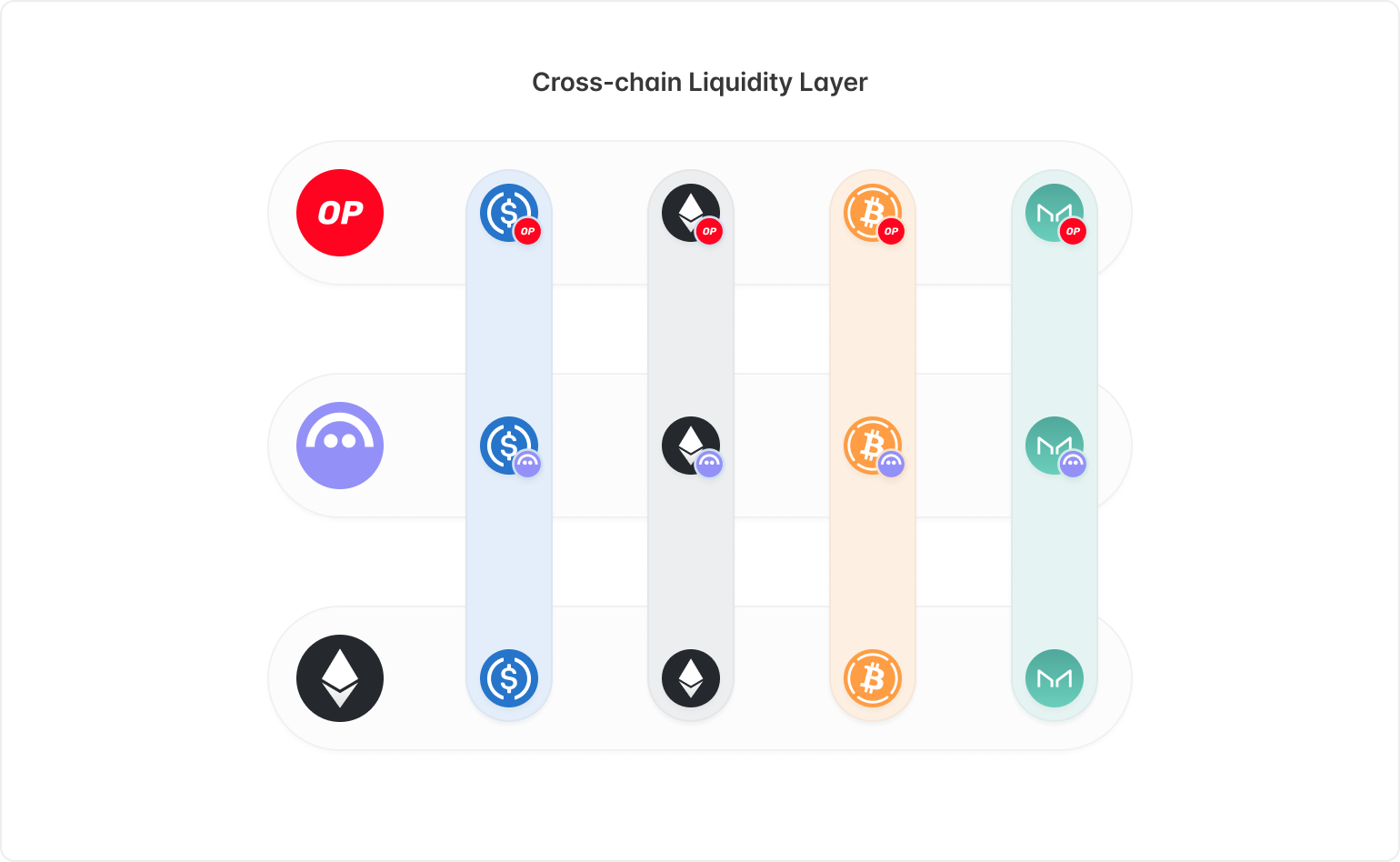
When Aave V3 was launched, one of the main functions was "Portal", whose purpose was to make Aave a chainless and borderless liquidity protocol. With the adoption of CCIP, the hyperchain concept, and the unified liquidity layer of Aave V4, Aave will be able to expand into a cross-chain liquidity protocol, which will enable borrowers to obtain instant liquidity on all supported chains.
Native Stablecoin GHO and Real World Assets (RWA)
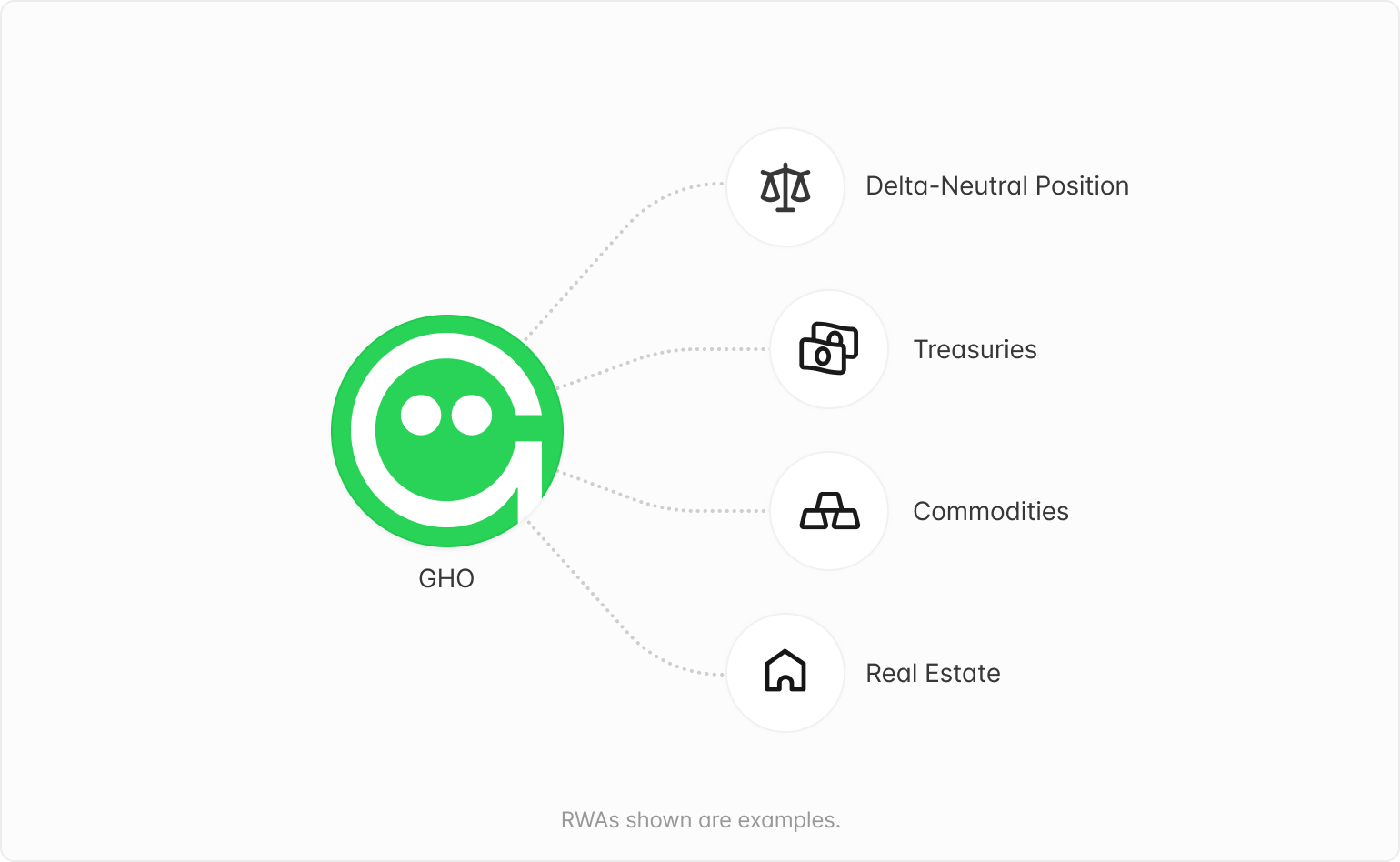
On the other hand, Aave Labs stated in the proposal that the emergence and adoption of RWA is perfectly in line with the Aave ecosystem's native stablecoin GHO. After the release of Aave V4, Aave Labs hopes to focus on RWA products built around GHO, which will help To further expand the scale of GHO as infrastructure. On such topics, Aave Labs will work closely with Chainlink.
Aave Network
In addition, Aave Labs proposed to introduce the Aave network so that it can perform multiple functions as an application chain, and Aave Labs also included on-chain governance considerations in the proposal:
- Use GHO for charging: By using Validium on the Aave network, you can implement cost-effective micropayments and improve the user experience.
- Aave V4 integrates at the network level: Aave V4 will become the main network liquidity center, providing developers with simple integrated access.
- AAVE as the primary staking asset for decentralized validators/orderers
- Governance control of the interface between the Aave network and Ethereum through Aave Governance V3
- Extensive use of account abstraction
- Inherit Ethereum’s network security
three-year plan roadmap
In order to effectively manage and implement the Aave 2030 plan, Aave Labs proposes specific goals and timelines:
the first year
Scope of Agreement:
- Introducing Aave visual identity (replacing pattern design)
- Aave V4 Sample (Q4 2024)
- Aave V Code Complete (Season 2, 2025)
Additional work:
- Integrate at least one innovative GHO facilitator
- Supports a non-EVM chain
the second year
- aave network
- Cross-chain liquidity layer
- Research and introduction of RWA products
- Integrate with at least one non-EVM chain
- Launch at least one Aave Labs product to drive Aave/GHO growth