avatar
Ethereum Daily
Follow
Posts
avatar
Ethereum Daily
02-04
Thread
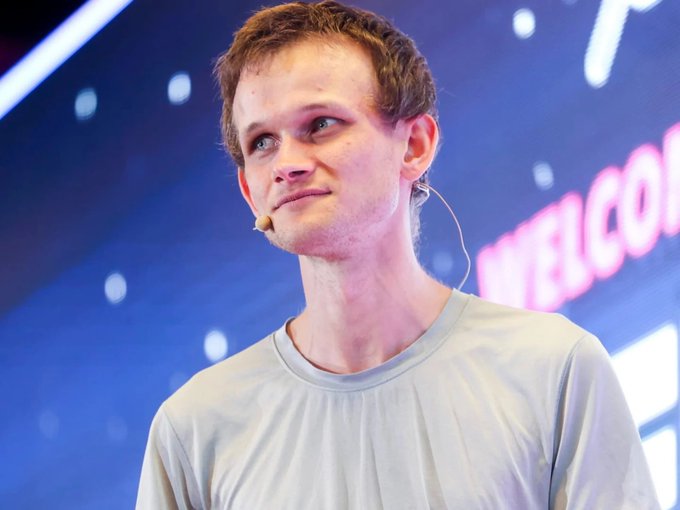
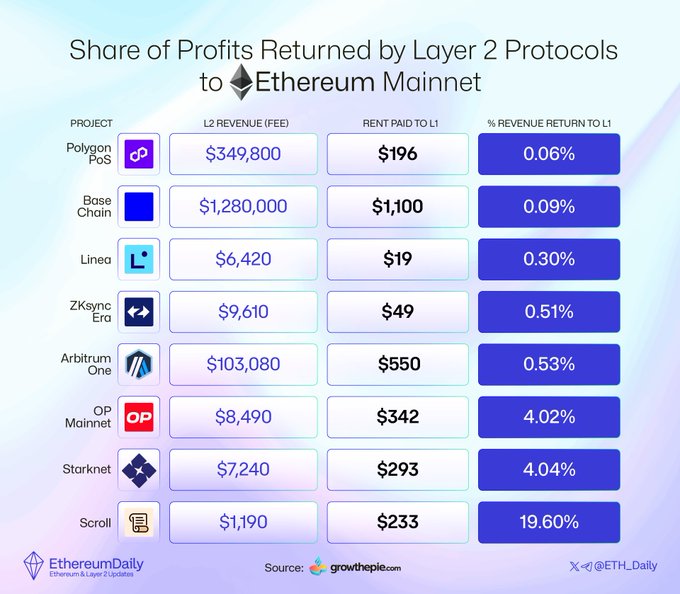
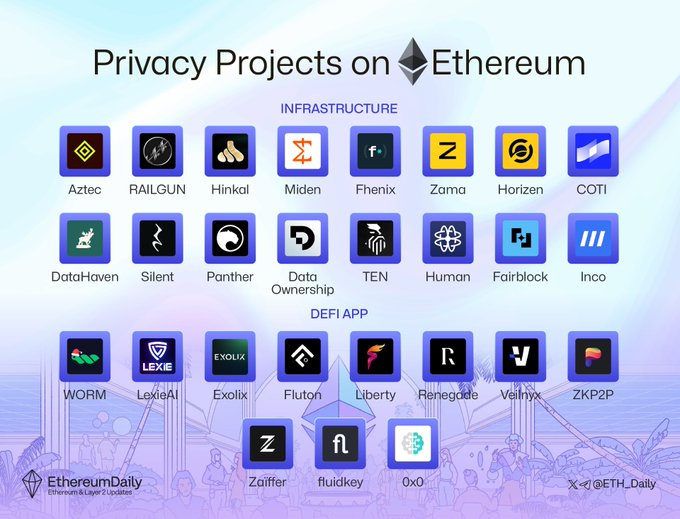
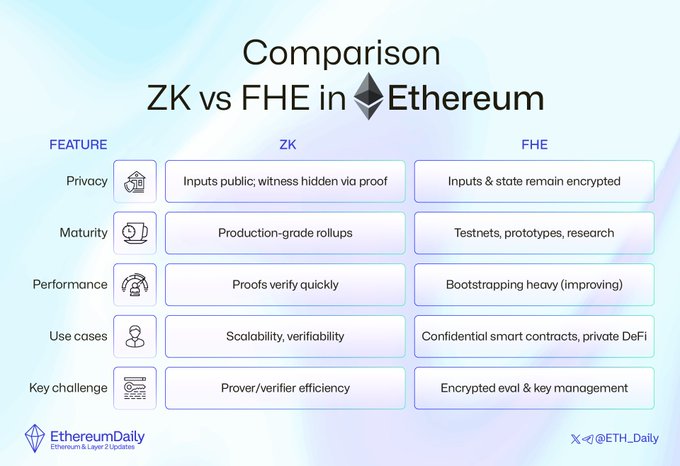
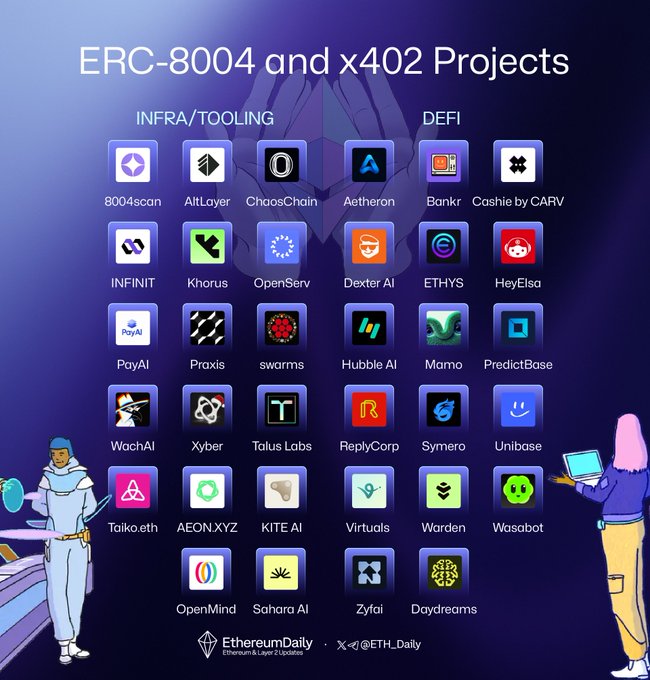
Are L2s symbiotic or parasitic with Ethereum L1? You'll hear folks rave about Ethereum's thriving L2 ecosystem expanding and benefiting L1. But over the past few years, this "growth" hasn't shown up in $ETH token prices like believers hoped. So, are L2s truly symbiotic, helping Ethereum flourish, or are they quietly parasitic, siphoning value and weakening it? An L2 project should create more value for L1 beyond just "scaling," because L1 is scaling lightning-fast on its own. With upgrades like Fusaka (60M gas limit now) and Glamsterdam (200M by end-2026), L1 fees are at rock-bottom $0.14 avg—lowest in 9 years. Activity's at ATH with 791K-1.3M daily addresses, yet fees stay low $0.1-0.2. Most current L2s retain most of the fees. Users pay on L2s, but only a tiny fraction (<1%) flows back to L1 via data posting & proofs. Over the past 30 days, Polygon generated approximately $350,000 in fees, but returned only $200 to Ethereum L1—a mere 0.06% of the total. This equates to just $0.06 returned for every $100 in fees collected. By comparison, Base returns about $0.09 per $100, while Linea fares slightly better at $0.30 per $100. This doesn't auto-make L2s parasitic—it's a wake-up call. If L2s just copy L1 (cheaper EVM clones), they're taking value without much reciprocity. But if they innovate per Vitalik's vision—privacy VMs, AI apps, ultra-scaling, low-latency—they expand the ecosystem, lock more ETH, boost demand, and turn symbiotic. L2s helped Ethereum survive congestion eras, but with L1's direct scaling, they must prove unique value or risk being seen as vampires. twitter.com/ETH_Daily/status/2...
ETH
0.02%
loading indicator
Loading..