Today
Intel
Market
Earn
Settings
Account
Theme Selection
Light
Dark
Language
English
简体中文
繁體中文
Tiếng Việt
한국어
Followin APP
Mine Web3 Possibilities
App Store
Google Play
Log in
Pendle
121,288 Twitter followers
Follow
Liberating Yield | Discord: http://pendle.finance/discord | Telegram: http://t.me/pendlefinance
Posts
Pendle
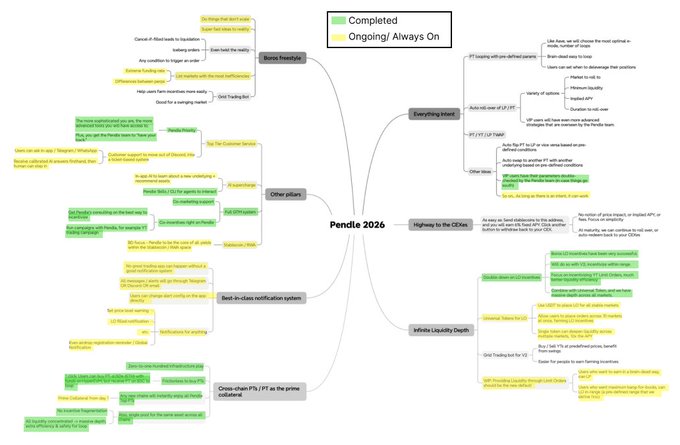
3 weeks after we shared the big, scary mindmap and already our little Pendle elves have ticked off a huge portion of it, including: ✅ Pendle MCP + Skills ✅ Pendle VIP Board ✅ LO Incentives ✅ Universal PT swap and more... What we did in Q1 2026 👇🏻🧵 twitter.com/pendle_fi/status/2...
PENDLE
4.01%
Pendle
[UPDATE] Pendle MCP can now be added to Claude Code, Claude Desktop, VSCode & its forks, Codex and Gemini. If you're building with AI, Pendle is now native to your stack 🤖
Pendle
@pendle_fi
03-27
Pendle is now 100% ready for AI agents! Introducing Pendle Skills and MCP ✅ Ready to be plugged into @claudeai, @ChatGPTapp and more ✅ Hunt yields and execute autonomously with agents DeFi’s best yields are now just a prompt away
PENDLE
4.01%
Pendle
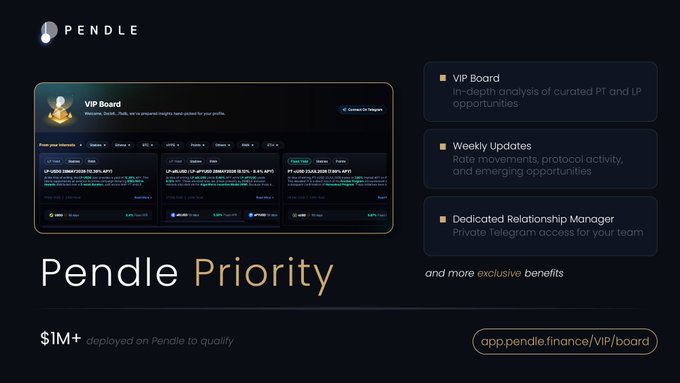
We've just published the first Pendle Priority Report, a quarterly briefing prepared exclusively for our Priority clients. Priority membership is automatically extended to anyone with over $1M deployed on Pendle. Set up your access at Pendle’s VIP Board.
PENDLE
4.01%
Pendle
03-31
Thread
#Thread#
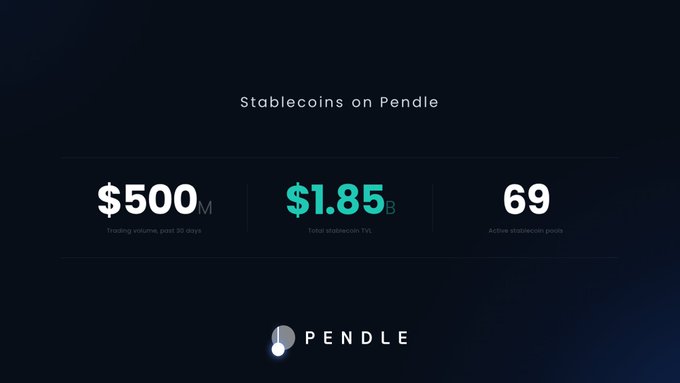
Stablecoins processed $33 trillion in payment volume in 2025, surpassing Visa and Mastercard combined. At $315 billion in market cap, they are larger than the economies of Portugal and New Zealand, and the established liquidity backbone of a global payment system. Yet 93% of stablecoins earn under 5% APY. For institutional holders, that is a planning problem. Treasuries cannot build around rates they cannot forecast, but Pendle gives them a rate they can. @global_dollar (USDG) is a case in point. Within a month of launching on Pendle, USDG has become one of the clearest examples of institutional stablecoin capital seeking structured yield: 🔹~$100M in TVL accumulated since launch 🔹Pendle is now the single largest holder of USDG onchain (~20% of total supply) That pattern holds across Pendle's broader stablecoin footprint. Pendle is currently the largest onchain venue for stablecoin fixed yield: 🔹$1.85B in stablecoin TVL across nearly 70 active pools 🔹$500M in trading volume over the past 30 days As stablecoins absorb volume from traditional rails, yield infrastructure becomes as important as the rails themselves.
PENDLE
4.01%
Pendle
03-30
Thread
#Thread#
Bullish Aave V4 👍🏻 twitter.com/pendle_fi/status/2...
AAVE
0.26%
Pendle
03-30
Thread
#Thread#
The best yield on any given day could be on Ethereum. Or Solana. Or Plasma. For most people, that's where the story ends. Not because the yield wasn't worth it, but because the path to get there was just too broken to justify. Cross-Chain PT is the answer to that 👇🏻 twitter.com/pendle_fi/status/2...
ETH
0.6%
Pendle
03-29
Thread
#Thread#
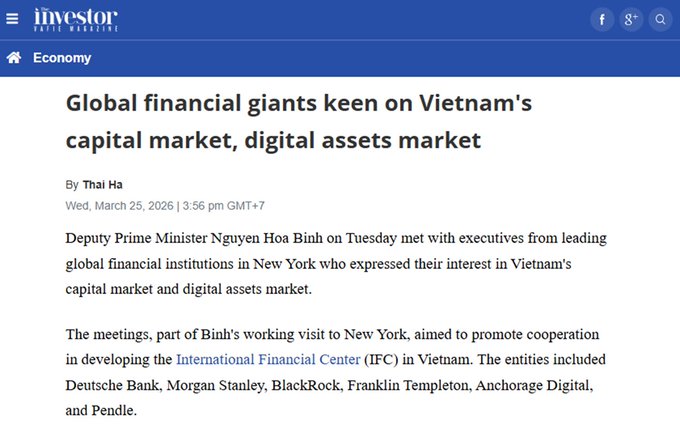
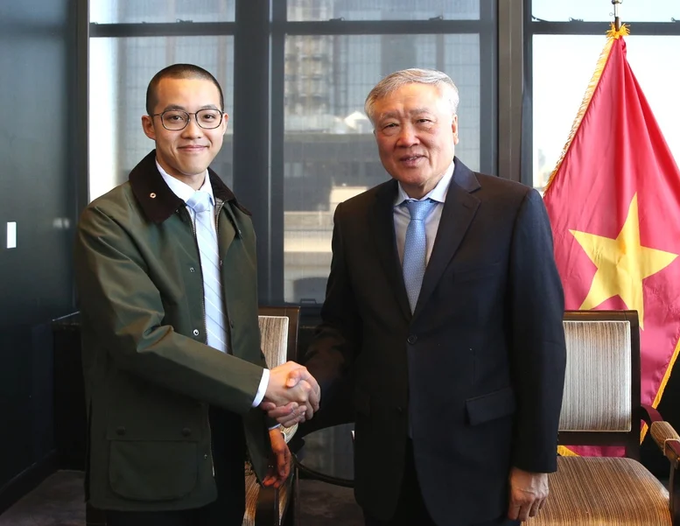
Last week, @tn_pendle met with Vietnam's Deputy Prime Minister in New York, alongside Deutsche Bank, Morgan Stanley, BlackRock, Franklin Templeton, and Anchorage Digital, to make the case for Vietnam's International Financial Center. Among a delegation of global financial giants, our dearest beloved TN Lee was the voice for asset tokenization, speaking to Vietnam's potential as a market for tokenized bonds, ETFs, and private credit, and championing the depth of talent the country has to offer. It's part of a sustained push by Vietnam's leadership to build serious financial infrastructure. The brightest days for Vietnam in DeFi are still to come, and Pendle is proud to be part of this journey.
PENDLE
4.01%
Pendle
03-27
Thread
#Thread#
Pendle is now 100% ready for AI agents! Introducing Pendle Skills and MCP ✅ Ready to be plugged into @claudeai, @ChatGPTapp and more ✅ Hunt yields and execute autonomously with agents DeFi’s best yields are now just a prompt away
PENDLE
4.01%
Loading..