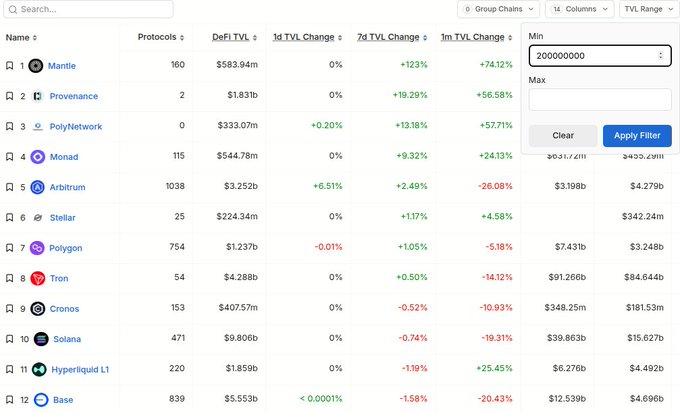
Mantle dominating the TVL battle among major chains this week due to Aave deployment + incentives...
They are up 123% on the weekly and now the 15th largest chain by TVL...
On the monthly they are up 74.12%...
Only other major chains up considerably on the monthly are:
Hyperliquid (#9) - which continues to do well...
Provenance (#10) and PolyNetwork (#19) - which don't really count...
And then BreadChain aka MegaETH (wholesome chain, I must admit) is up a ton, but is still only in spot #40 as of right now, at $75M TVL...
But yeah... think this sort of sums up my bull case for Mantle though, which is that while much of the crypto space looks eerily silent, they are actively making moves and really earnestly trying to gain ground and conquer territory within blockchain's overall subsumation of the global financial architecture...
Mantle has an absolutely enormous treasury, which gives the team significant resources with which to fuel growth, and they've been putting these resources to excellent use as of late in all sorts of different areas...
Some recent happenings:
- Big focus on RWA's and collaborations with a bunch of interesting RWA protocols
- @xStocksFi especially continues to be a success story in the above area (will link to more info on it below)
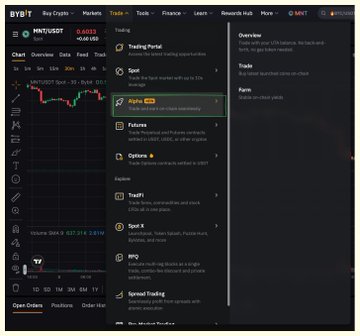
- Tons of campaigns and other stuff going on with Bybit and Byreal
- mETHProtocol continues killing it
- Bybit/Mantle synthesis continues to see success, basically replicating existing Binance/BSC and Coinbase/Base playbooks
- Mantle Global Hackathon winners just announced last week (very wholesome - my bro @Nomaticcap was one of the judges 💪🇨🇦)
- ERC-8004 just deployed on Mantle
- @Ur_global success in fintech/neobanking sector
- Launch of AlloraNetwork mainnet on Mantle
- Arrival of $wrsETH by KelpDAO and Tether's USDT0 version of its USDT
- $MNT <> Solana integration via Super Portal
- And tons of other stuff as well!
So yeah, I remain a proud $MNT holder and drum-banger as 2026 rolls on... and am very excited to see what happens with all of the above once the long-awaited bull market arrives :)
Will link to some more info in subsequent tweets!