Today
Intel
Market
Earn
Settings
Account
Theme Selection
Light
Dark
Language
English
简体中文
繁體中文
Tiếng Việt
한국어
Followin APP
Mine Web3 Possibilities
App Store
Google Play
Log in
Kaff 📊
15,777 Twitter followers
Follow
Daily Ape #2017 Ambassador: @Kollab3dotcom, @LightLinkChain,@BsquaredNetwork My only TG: http://t.me/kafka0202 DailyAPE: http://t.me/KaffDailyApe
Posts
Kaff 📊
Thread
#Thread#
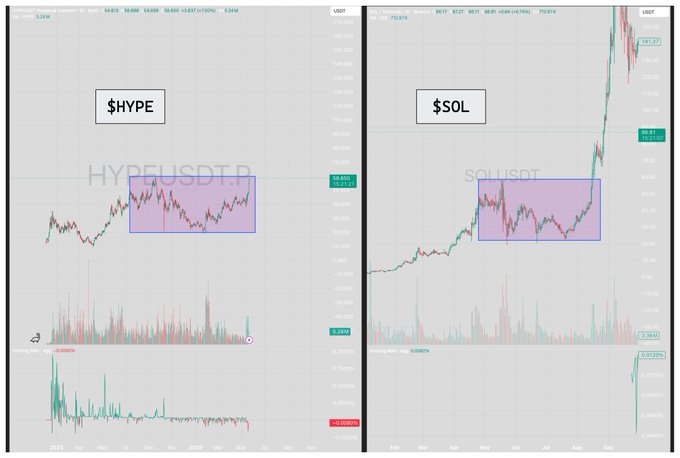
So, CT has started comparing $HYPE vs $SOL. What’s the most common thing between the two? Just look at the chart. 1st target $hype: $99
HYPE
1.26%
Kaff 📊
05-19
Thread
#Thread#
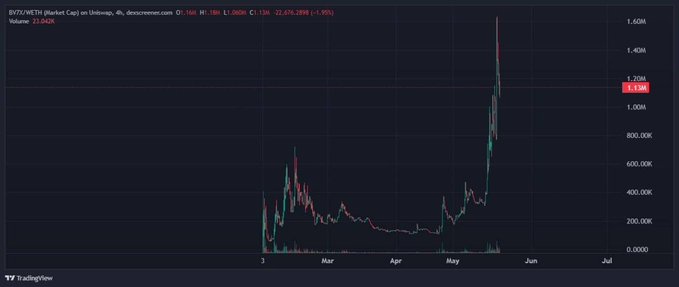
Just found an AI project with a really good concept here. Crypto has airdrops, memes, points, perps, prediction markets… infinite ways to coordinate capital and attention at internet scale. But production has no native layer. Most tokens still just monetize reflexivity. Even in AI, $RENDER, $IO, $FIL, $AKT built markets around raw compute. $TAO pushed decentralized intelligence with validator consensus. @BV7X_ pushes one step further into predictive compute where the output itself is directional intelligence and the grading mechanism is reality. Forecasts get signed + attested on Base before the event resolves. Then Polymarket becomes the oracle. No validator committee deciding who was smart. The addressable market is already there > Bloomberg Terminal ~$7.8B ARR > TradingView ~$3B > crypto data infra already hundreds of millions ARR combined BV-7X is aiming at AI agents paying for verifiable forecasts through x402 rails, machine-to-machine intelligence markets. The box crypto described but never built. $BV7X is what's inside. twitter.com/Kaffchad/status/20...
IO
0.91%
Kaff 📊
05-18
Thread
#Thread#
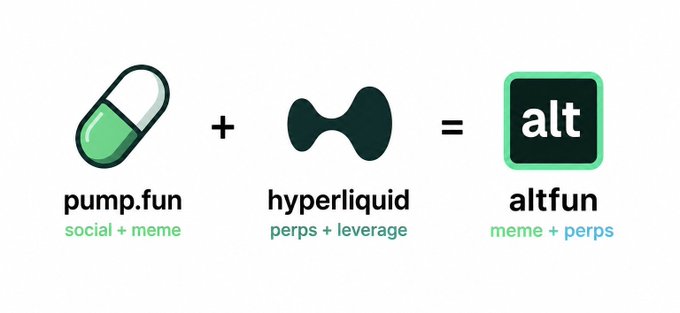
Altdotfun is creating a whole new game on #Hyperliquid. > hyperEVM has been burning ~$13M annualized $hype since @altdotfun launched. > already generated +$100M in perps volume for hyperliquid > onboarded +1,000 new users to hyperEVM. > hyperEVM user count has doubled in the past week. This is exactly why $HYPE is so strong right now. twitter.com/Kaffchad/status/20...
HYPE
1.26%
Kaff 📊
05-18
Thread
#Thread#
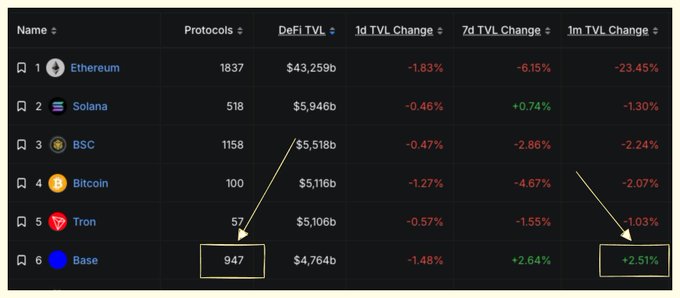
Icymi: @base is the only chain in the top 6 with positive TVL growth over the past month. even more impressive: #base now has 947 protocols, ranking #3 overall and ~2x solana (518 protocols). i believe the current base’s growth is mostly driven by the agentic on-chain economy, and it’s clearly proving it has a real MOAT in this narrative. so, keep your eyes peeled on base.
BASE
93.49%
Kaff 📊
05-16
Thread
#Thread#
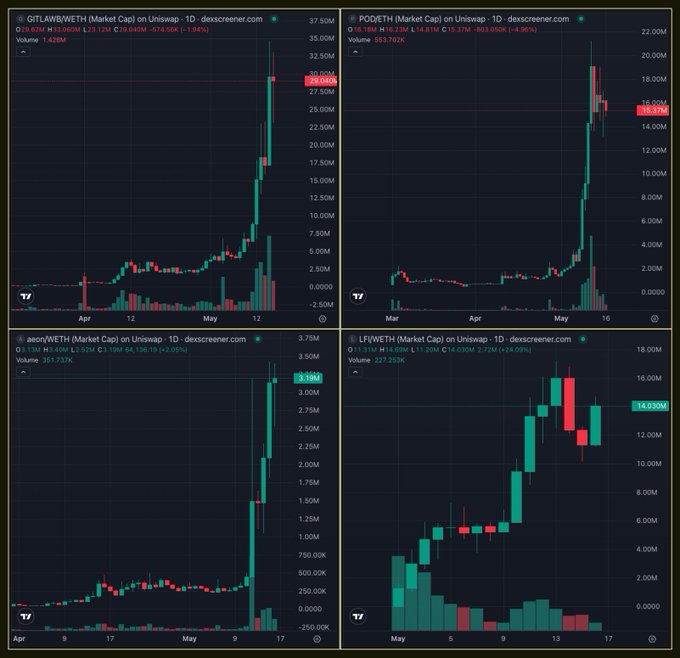
While the broader markets are bleeding, #Base is absolutely exploding with the AI agent wave. Here are some of the notable tokens on Base lately: > $VVV | @AskVenice : The blue-chip hub. Privacy-first, uncensored AI platform. Up 9x since Jan 2026. Everything rotates around it. > $POD | @dphnAI: Decentralized inference network turning idle GPUs into cheap, uncensored compute. Co-developed Venice’s default model. Increased 14x from $12M to $192M MC in weeks, still the core infra play. > $GITLAWB | @gitlawb : “GitHub for AI agents”. Decentralized code collab for humans + autonomous agents. Pumped from $200K to $30M MC within a few weeks. > $AEON | @aeonframework: $3.3M MC. Fully autonomous AI agent framework. Low-cap, high-conviction agent swarm narrative. Pops up in every Base AI list. > $LFI @lienfiapp: RWA tokenizing U.S. tax liens. Not pure AI but riding the same rotation — smashed $10M MC and new ATH. > $BNKR | @bankrbot: Major bot-launching token on Base, positioned to benefit the most from this season. I’m aping small and chilling, real usage + capital rotation feels different this time.
BASE
6.05%
Loading..