avatar
Shanaka Anslem Perera ⚡
1,995 Twitter followers
Follow
CEO @ Pet Express Sri Lanka | AI Researcher & Tech Innovator | Blockchain, Quantum Computing & Future Technologies | Entrepreneur & Strategic Thinker
Posts
avatar
Shanaka Anslem Perera ⚡
03-28
Thread
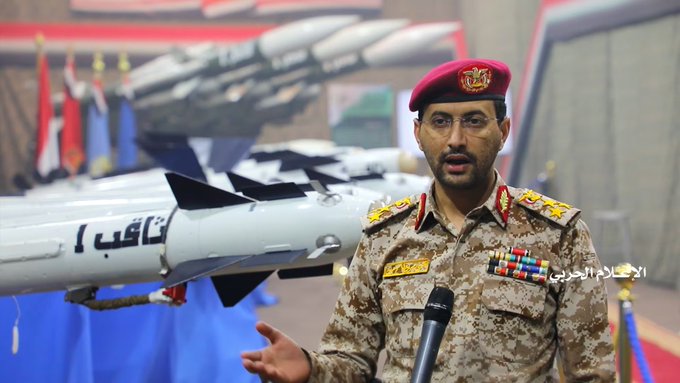
JUST IN: The Houthis just declared they are not neutral. “Fingers on the trigger,” their leader said on March 26. Direct military intervention if the Red Sea is used for hostile operations against Iran. That sentence turns a one-chokepoint war into a two-chokepoint war. Hormuz carries 20 to 25 percent of global oil. Bab el-Mandeb carries 12 percent. Combined, that is one-third of the world’s seaborne petroleum flowing through two narrow passages controlled or contested by the same axis. The Strait of Hormuz is 39 kilometres wide. The Bab el-Mandeb is 26 kilometres wide. Sixty-five kilometres of water between Iran and Yemen. One-third of global oil. The carriers have already made their decision. Maersk, MSC, CMA CGM, and Hapag-Lloyd have paused or sharply reduced Bab el-Mandeb transits since the Houthi declaration per Xeneta and Reuters. Over 70 percent of Asia-to-Europe container traffic has reverted to the Cape of Good Hope route. That adds 10 to 14 days per voyage. Two to four million dollars in extra fuel and crew costs. War risk insurance premiums have surged to 0.7 to 1 percent of cargo value, translating to $150,000 to $500,000 per voyage per Reuters and Lloyd’s data. Bab el-Mandeb traffic is running at roughly 50 percent of normal per Windward and Kpler tracking. Suez Canal passages are down 37 percent year on year. The Houthis have launched over 70 ballistic missiles and more than 20 drones at Israel since March 18 per JNS. The IDF reports a 92 percent interception rate. The March 28 launch was intercepted over southern Israel with zero damage. Hit accuracy remains very low. But accuracy is not the point. Volume is the point. Every interceptor fired costs orders of magnitude more than the Shahed it destroys. The cost asymmetry is the weapon. And the supply chain feeding the Houthis is now a closed loop. Iran provides the core: Shahed drones, ballistic and cruise missiles, anti-ship missiles, training, and smuggling routes through the Red Sea and overland through Oman per CSIS. Western intelligence reported on March 26 that Russia is shipping upgraded Geran-2 drones back to Iran’s IRGC, battle-tested and improved in Ukraine with better navigation and anti-jamming per the Financial Times and AP. The Kremlin denied it. The drones that Iran originally gave Russia are allegedly returning to the axis upgraded by the war Russia fought with them. Meanwhile, Ukraine has deployed 228 military drone specialists to five Gulf countries to teach them how to kill the same drones. Interceptor drones account for roughly 70 percent of Shahed shootdowns in Ukraine per Forces News. Militarnyi confirmed multiple shootdowns by Ukrainian teams in the Middle East as of March 22. The war is now a drone ecosystem. Iran builds. Russia upgrades. Iran distributes. Ukraine intercepts. The Gulf pays for the expertise. Every improvement by one side is studied and countered by the other across three theatres simultaneously. The market priced a single chokepoint disruption. Hormuz was the headline. But the Houthis just opened the second front. And the same 95 percent of global internet traffic that runs through undersea cables in both waterways is now threatened by the same axis that controls or contests both passages. Two chokepoints. One axis. One-third of global oil. Ninety-five percent of global data. The convergence has not been priced. open.substack.com/pub/shanakaa...…
AXIS
0%
avatar
Shanaka Anslem Perera ⚡
03-14
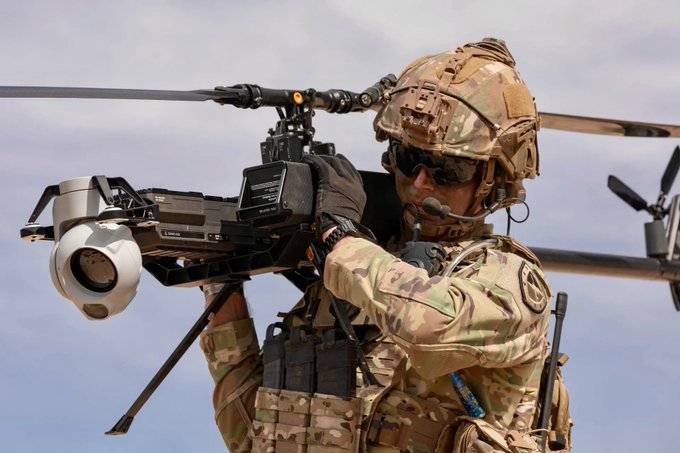
JUST IN: The US Army just awarded $20 billion to a company whose drones crashed in Ukraine. That is not a scandal. It is the point. Anduril Industries received the largest enterprise contract in modern Army procurement history on 13 March for Lattice, its AI-powered command-and-control platform that fuses thousands of sensor feeds into a single real-time battlespace map, tasks autonomous drone swarms, and enables one operator to control what previously required dozens. The contract covers software, hardware, data infrastructure, compute, and services consolidated into a unified counter-drone capability. The Army did not buy a weapon. It bought an operating system for war. The operating system was written in Ukrainian rubble. Anduril deployed hundreds of Altius loitering munitions and Ghost reconnaissance drones to Ukrainian forces starting in 2024. The early results were catastrophic. Russian electronic warfare, the most sophisticated jamming environment on Earth, tore them apart. GPS spoofing sent Ghost drones spiralling into the ground. Persistent jamming reduced general drone hit rates to 10 to 15%. Altius units crashed before reaching targets. Ukrainian operators, who were simultaneously building their own drones at a rate of one million per year with 96% indigenous production, were unimpressed. Anduril did something most defence contractors do not. It sent engineers to the front line, collected operator feedback in real time, and redesigned the aircraft in months rather than years. The result was Ghost-X: a fundamentally different machine. Where the original Ghost relied on GPS, Ghost-X flies on vision. Onboard computer vision algorithms, optical flow sensors, and terrain mapping through electro-optical and infrared gimbals give the aircraft autonomous navigation in environments where every satellite signal is jammed. It does not need GPS because it can see. It does not need a datalink because Lattice gives it mission autonomy. It does not need a dedicated operator because one person can task an entire swarm. Ghost-X proved, in Anduril’s words, “markedly more resilient” in both Ukrainian combat and US Government electronic warfare testing. The drone that crashed in a jammed Ukrainian field became the drone that flies through jammed airspace without flinching. The $20 billion contract is the Army’s bet that what survived Russian EW can defeat Iranian Shaheds. The Iran war is the contract’s first test at scale. IRGC one-way attack drones are down 95% according to Hegseth’s briefing, but they are not gone. The Mosaic Doctrine’s 31 autonomous commands can still launch from dispersed positions using the simplest guidance systems available. The coastline that produces fast boats also produces cheap drones that do not need to be sophisticated to overwhelm. Lattice’s counter-UAS architecture, AI-fused radar and electro-optical data identifying threats in seconds, autonomous interceptors engaging without human delay, single operators managing swarm responses across the battlespace, is designed for exactly this: volume. The contract also reveals what the Army learned from Ukraine that it will not say publicly. Indigenous Ukrainian interceptors achieved 70% success rates against Russian drones in February 2026, built cheaply, iterated rapidly, and deployed at scale by operators who learned electronic warfare the hard way. The Army watched a country with a fraction of America’s budget outperform imported systems by iterating faster. The $20 billion is not just a purchase. It is an admission that the future of air defence is software-defined, AI-driven, and built by companies that treat combat data as a product cycle rather than a procurement milestone. Anduril’s drones crashed in Ukraine. Then they learned to see. Now the Army is betting $20 billion that seeing is enough to win a war where everything that depends on a satellite signal dies. Full deep dive analysis open.substack.com/pub/shanakaa...…
GHOST
1.17%
avatar
Shanaka Anslem Perera ⚡
03-14
Iran just offered to reopen the Strait of Hormuz. But only if you pay in yuan. CNN confirms, citing a senior Iranian official, that Tehran is considering allowing a limited number of oil tankers through the Strait provided the cargo is traded in Chinese yuan. Not dollars. Not euros. Yuan. The waterway that carries 20% of global oil, that seven P&I clubs closed through insurance, that a wounded Supreme Leader ordered permanently shut, that the United States just bombed the military defences of Kharg Island to force open, is being offered back to the world on one condition: the currency changes. This is the most consequential sentence of the war that nobody in the oil market has priced. The petrodollar system was born in 1974 when Saudi Arabia agreed to price oil exclusively in dollars in exchange for American military protection. That agreement has governed global energy trade for fifty-two years. Every barrel of crude on Earth has been denominated in dollars. Every central bank holds dollar reserves because oil requires them. Every nation that imports energy must first acquire dollars to pay for it. The system is the foundation of American financial hegemony, and Iran just proposed replacing it with yuan for the world’s most critical chokepoint. China is already the model. Eighty to ninety percent of Iranian crude exports to China settle in yuan or barter through CIPS, the Chinese cross-border payment system that processed 175 trillion yuan, approximately $24.5 trillion, in 2025, a 43% increase year on year. Since 28 February, 11.7 to 16.5 million barrels of Iranian crude have transited the Strait to China via shadow fleet under IRGC protection while every other nation’s shipping is locked out. China pays in yuan. China’s tankers move freely. Everyone else burns or reroutes. The war was supposed to force the Strait open. Instead it is being reopened selectively, on Iran’s terms, in China’s currency. America bombed Kharg to demonstrate it controls the island. Iran responded by demonstrating it controls the condition of passage. The military targets are rubble but the negotiating position is intact: the Strait opens when the currency changes. The implications cascade across every domain. If yuan-denominated tankers begin transiting Hormuz while dollar-denominated tankers remain locked out by insurance, mines, and IRGC targeting, the war produces a bifurcated oil market: yuan barrels for China and BRICS partners at Iranian-discounted prices, dollar barrels for the West at war-premium prices. Two prices for the same commodity. Two currencies for the same waterway. Two systems for the same barrel of oil. The fragmentation the dollar was designed to prevent is being accelerated by the war that was supposed to preserve it. China imports 45% of its crude through the Hormuz region. It holds 90 to 130 days of strategic reserves. Its teapot refineries process Iranian crude at $9 to $12 below Brent. Its CIPS system bypasses every Western sanction. And now the country whose Supreme Leader cannot stand is offering Beijing the one thing no amount of American airpower can bomb: a currency alternative for energy transit. The Strait is not reopening for ships. It is reopening for yuan. And the fifty-two-year-old system that priced every barrel in dollars just met the war that may end it. open.substack.com/pub/shanakaa...… twitter.com/shanaka86/status/2...
BTC
1.23%
avatar
Shanaka Anslem Perera ⚡
03-11
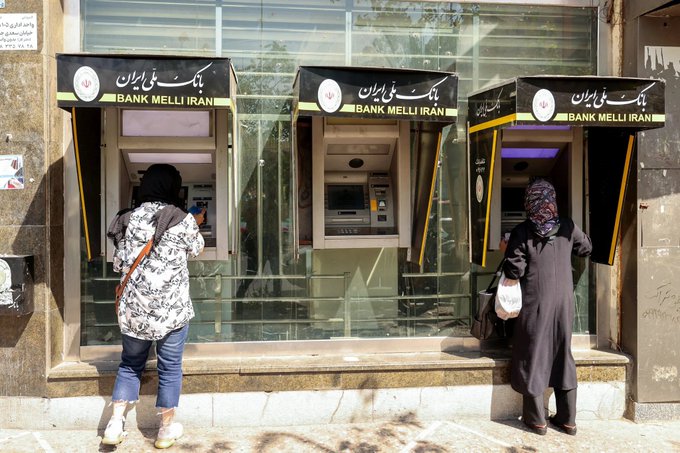
BREAKING: Hundreds of thousands of Iranians woke up this morning to frozen bank accounts. Reports circulating from Iranian activists and citizens describe overnight SMS notifications locking accounts at Bank Sepah and Bank Melli. Websites blocked. Offline channels disabled. No login possible. The regime’s explanation: “Central Bank technical upgrade to communication switches for network stability.” This requires context. Bank Sepah is the IRGC’s primary financial institution, designated under international sanctions for decades as the Revolutionary Guard’s banking arm. Bank Melli is Iran’s largest state-owned commercial bank, the institution through which ordinary Iranians hold savings, receive salaries, and conduct daily transactions. The regime locked both simultaneously, the military bank and the people’s bank, overnight, during the most intense phase of a war that is burning through munitions, fuel, and foreign reserves at a rate no Iranian budget was designed to sustain. The “technical upgrade” explanation has not been confirmed by any Central Bank of Iran official statement accessible to international media. No timeline for restoration has been published. No independent verification of the technical claim exists. What exists is an overnight lockout of the two banks most critical to war financing and citizen liquidity, imposed twelve days into a conflict where the rial trades at 1.5 million per dollar, inflation runs between 40 and 60%, electricity shortfalls hit 14,000 megawatts, and water rationing is active in multiple provinces. When a regime at war freezes its military bank and its largest civilian bank on the same night and calls it maintenance, the question is not whether you believe the explanation. The question is what the alternative implies. If this is a technical upgrade, it is the worst-timed infrastructure maintenance in the history of banking, executed during an active war while the population faces rationing, currency collapse, and zero public appearances from a Supreme Leader whose own state television described as wounded. If this is not a technical upgrade, it is a liquidity seizure. The regime is accessing citizen deposits and IRGC reserves to fund continued operations under the Mosaic Doctrine’s 31 autonomous commands, each burning through pre-positioned stockpiles of missiles, drones, and fuel at rates that exceed peacetime budgeting by orders of magnitude. Thirty-three waves of ballistic missiles with one-ton warheads are not free. Someone is paying for them. If the treasury is empty, the banks are next. The rial tells the story the regime will not. At 1.5 million per dollar, the currency has already priced regime fragility. Bitcoin and gold demand inside Iran, unmeasurable but visible in peer-to-peer volume spikes on regional exchanges, reflect a population that trusts cryptographic scarcity more than the institution that just locked their savings. This is unverified at the highest evidentiary tier. I flag that explicitly. But the pattern is consistent: regimes under existential military pressure seize domestic liquidity before they seize territory. Iran’s war machine runs on pre-delegated orders from a dead Supreme Leader. Those orders require ammunition. Ammunition requires funding. And the funding just went dark the same night the banks did. The accounts are frozen. The explanation is hollow. And the regime that cannot show its Supreme Leader’s face now cannot show its citizens their own money. Full analysis open.substack.com/pub/shanakaa...…
OVN
0.42%
avatar
Shanaka Anslem Perera ⚡
03-09
Thread
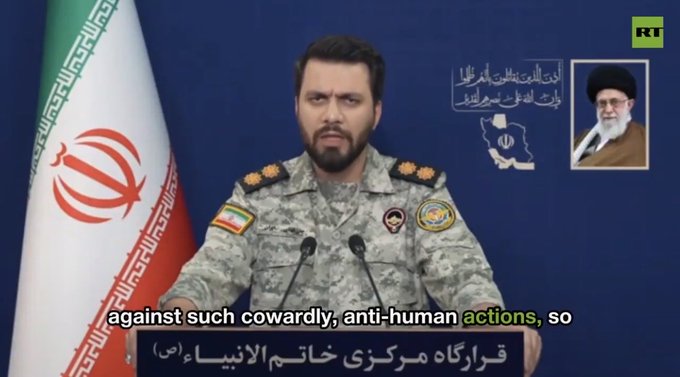
BREAKING: “If you can tolerate oil at more than $200 per barrel, continue this game.” Brigadier General Ebrahim Jabari, adviser to the IRGC commander, said this on 8 March directly to the Gulf states hosting American bases. Brent is already trading at $103 to $108 with intraday spikes touching $115 to $119. WTI has breached $100. The IRGC is not threatening from a position of weakness. It is threatening from a position where the Strait is already commercially closed, seven P&I clubs have already withdrawn, and 31 autonomous provincial commands are already striking targets across six Gulf countries simultaneously without requiring a single order from Tehran. This was not rhetoric. It was a capability statement. Here is why. The IRGC maintains an estimated 2,500 to 6,000 ballistic and cruise missiles distributed across 31 autonomous provincial commands activated under Mosaic Defence doctrine after the 28 February decapitation. Each command controls its own launchers, stockpiles, and target lists. None requires authorisation from Mojtaba Khamenei, the new Supreme Leader who has never spoken publicly, or from Pezeshkian whose ceasefire promise was overridden within hours. Iranian drone production runs at approximately 10,000 units per month. A Shahed costs $20,000. It can reach any oil terminal, any desalination plant, any port, and any tanker loading berth in every Gulf state from a launch site the size of a parking lot. The $200 scenario is not about closing Hormuz. Hormuz is already closed. Zero tanker transits. The $200 scenario is about what comes next: systematic, sustained, decentralised strikes on the oil export infrastructure of Iran’s neighbours. Saudi Arabia’s Ras Tanura terminal. The UAE’s Jebel Ali port complex. Kuwait’s Mina al-Ahmadi. Qatar’s Ras Laffan, already under force majeure. Bahrain’s Bapco, already struck. These are not hypothetical targets. Provincial commanders have already demonstrated the reach, the accuracy, and the doctrinal authority to hit them independently. The arithmetic is merciless. Hormuz carries 20 million barrels per day. Pipeline bypasses cover 3.5 to 5.5 million. Current deficit: approximately 15 million barrels trapped daily. If provincial commands begin systematically targeting Saudi and UAE export terminals, the deficit widens to include production that currently bypasses the Strait. Saudi Arabia’s East-West Petroline moves 2.5 million barrels per day to Yanbu on the Red Sea. If Yanbu is struck, or if Houthi reactivation closes Bab al-Mandab, that bypass disappears. At that point the market loses not 20 million barrels but 25 million or more. The 1973 embargo removed 5 million. The 1979 revolution removed 4 million. The 2003 Iraq invasion removed 2 million. The all-time price high was $147 in 2008 on a supply disruption a fraction of this magnitude. $200 is not the ceiling of a 25-million-barrel removal. It is the floor. Goldman Sachs raised its Q2 Brent forecast to $76 and flagged $100 if disruption exceeds five weeks. They have not modelled 31 autonomous commands with 10,000 drones per month targeting every unhardened export terminal between Kuwait City and Muscat while the Strait remains actuarially closed and the reinsurance market refuses to underwrite a single transit. The IRGC spokesman was not making a threat. He was reading the order of battle to an audience that still prices this war inside a legacy framework where centralised states negotiate, ceasefires hold, and oil shocks mean-revert. Thirty-one commands. Ten thousand drones per month. Twenty-five million barrels at risk. Brent already past $108 with no ceasefire counterparty in existence. And no one in Tehran with the authority to call it off. Full analysis in the link. open.substack.com/pub/shanakaa...…
UNITS
0%
loading indicator
Loading..