avatar
Benson's Trading Desk
Follow
Posts
avatar
Benson's Trading Desk
03-13
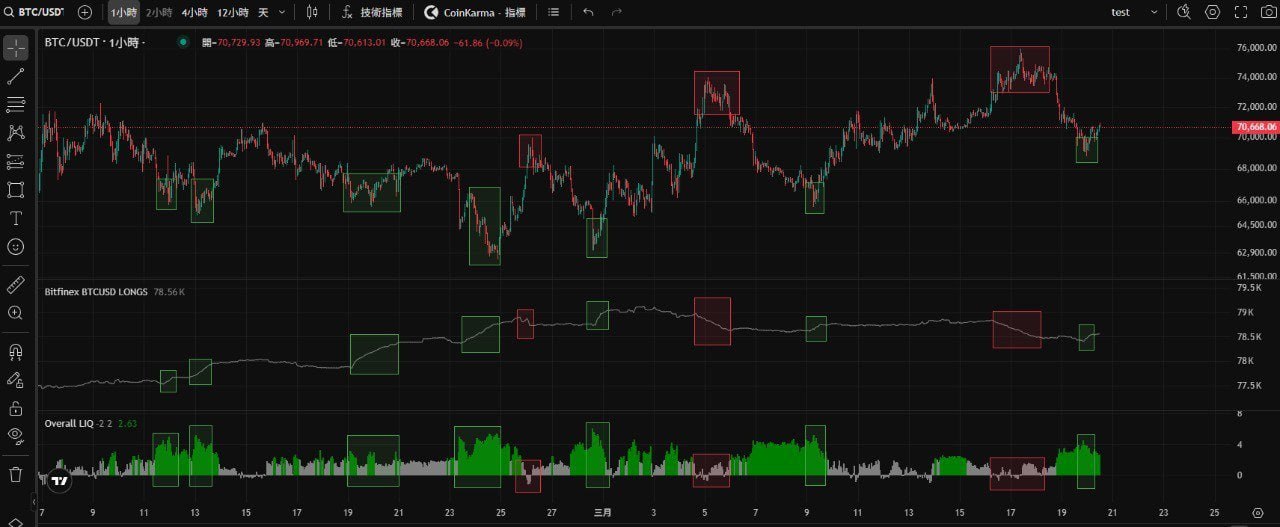
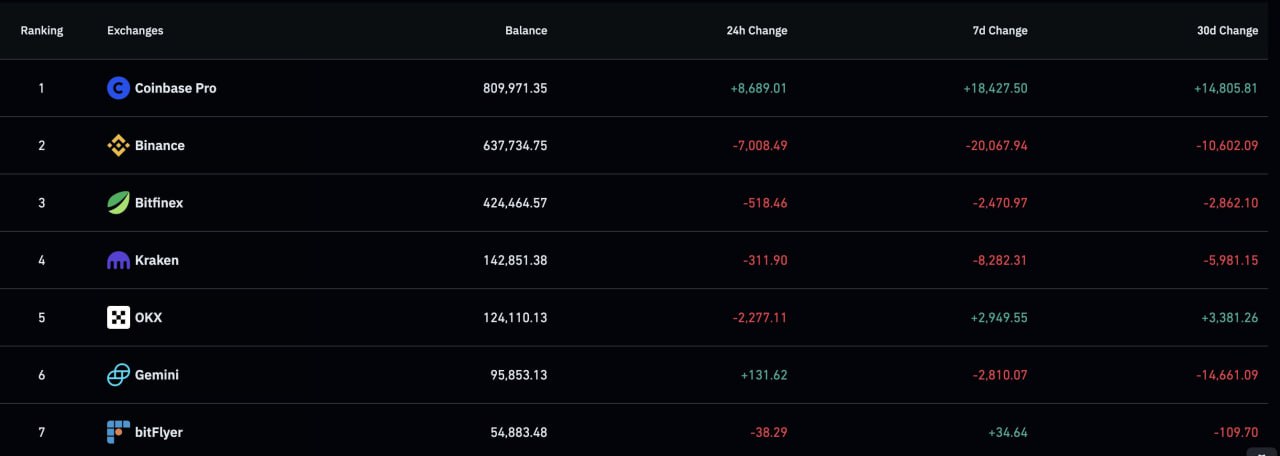
Some people ask why Bitfinex has such high interest rates, and why whale don't borrow money on the blockchain at lower interest rates? Large borrowers are very sensitive to interest rates, especially since Bitfinex whale borrow $1-2 billion; a 1% difference in interest rates would amount to $10 million a year. Later I discovered that Bitfinex's top-ranked user was likely a Tether-related entity, because this user frequently criticized USDC on Twitter... Therefore, I suspect that this Tether-related entity has sufficient margin leverage to long, but prefers to borrow money from its own exchange rather than from other places. This is likely due to security concerns; they are hesitant to deposit too much margin on other platforms. One piece of evidence is that Bitfinex has less than 5% of Binance's market share, but its Bitcoin reserves reach 60% of Binance's. Apart from Tether storing its own Bitcoin there, I can't think of any other reason. These days, which big investor would dare to put so much money in Bitfinex? From another perspective, this is actually a good thing for lenders, as it means that there is a long-term and stable demand for large loans on Bitfinex, and the credit and financial strength of borrowers are far superior to those of ordinary retail investors. This also explains why Bitfinex, an exchange with a relatively low market share, has such a large demand for lending over a long period of time. The above is just my personal speculation and may not be the actual situation.
ETH
0.49%
avatar
Benson's Trading Desk
03-11
In a bear market, Bitfinex lending is the best option for those seeking stable income. Currently, the average lending rate for USD on Bifinex is around 17% (daily rate of 0.047%), while Binance's active deposit rate is only slightly over 3% (the green and yellow lines in the chart). Other major exchanges are similar, showing a significant difference. If you put $100,000 into Bitfinex for lending now, you can earn about $35 in interest per day. That's roughly $1,000 per month, and $12,000 per year. In comparison, the current yield on US Treasury bonds is around 4% to 5%. With the same $100,000, buying US Treasury bonds for a year would only yield about $4,000 to $5,000. That's almost three times less. With such high interest rates, aren't there any risks involved? First, Bitfinex's margin lending mechanism differs from other exchanges. The money lent out can only be traded within the exchange and cannot be withdrawn directly. This means your money won't be borrowed and disappear. This alone makes it safer than many other platforms' financing and lending products. Secondly, Bitfinex is backed by Tether. Everyone knows Tether is very wealthy, and even if something goes wrong, it still has a certain level of solvency, since the shareholder structure and senior management of both companies are the same group of people. Third, Bitfinex's lending market has experienced major liquidation events such as March 12th, May 19th, and October 11th. There were instances of leveraged long positions being wiped out, but the exchange itself filled the gaps each time. This exchange has been operating for over 10 years, and there have been no reports of any borrowed funds incurring losses. Why are interest rates so high now? This is related to Bitfinex's user structure. Most exchanges experience a decrease in lending demand and a correspondingly lower APY when the market is sluggish. However, Bitfinex is different. Demand in the lending market is driven by whale, whose operating logic is the opposite of whale investors. They are adept at leveraging up their positions when the market is depressed and everyone is fearful. Therefore, during the previous bear market cycle, Bitfinex's annualized lending rate remained above 20% for a long period, while the USDT interest rates of other exchanges were less than 5%. So if you're the kind of person who "doesn't want to participate in market fluctuations, but also doesn't want your money to sit idle," Bitfinex lending is a worthwhile option to consider. Bitfinex is a fiat currency exchange that supports deposits and withdrawals in major currencies such as USD and EUR. If you have an overseas brokerage account, transferring funds is quite convenient. For those in the crypto, there will definitely be times when you need a place to park your funds. Bitfinex perfectly meets this need: you can keep your money there to earn interest, and withdraw it when you need it. My first viral article, written seven years ago, was a tutorial on Bitfinex lending. At that time, Bitfinex's lending scale was about $300-400 million; now it has exceeded $1 billion. From then until now, Bitfinex lending has always been a very stable way to earn interest. It's just that the market has matured, and the annualized interest rate is no longer as high as it used to be, often ranging from 20% to 30%. However, the current annualized rate of around 15% is actually three times that of US Treasury bonds, and much higher than the current returns from cash-futures arbitrage. Let me explain some points to note during operation. First, let's talk about wallet settings. Bitfinex offers various wallet options. When you deposit funds into the exchange, they are stored in the "Exchange" wallet by default. Remember to transfer the funds to the "Funding" wallet so you can lend them out. Next is the choice of currency. The lending market is divided into USDT and USD. On average, the interest rate of USD is about 2% higher than that of USDT, and the daily trading volume of USD is also larger, so the chances of funds being lent out are higher. Therefore, if you are looking for better long-term returns, it is recommended to exchange your USDT for USD. Next is the interest rate setting. Bitfinex's lending operates on an "order" system, unlike Binance or OKX's one-click deposit system, where you need to set the interest rate and number of days yourself. If you don't have a specific plan, you can use the FRR (Flash Return Rate) feature. Simply put, it's the average interest rate calculated by the platform. You can set up FRR to automatically lend money for 7 or 30 days. Once funds are repaid and become idle, the system will handle it for you. Sometimes you might find people who want to borrow for 120 days straight. The interest rate might be a little lower, but if you want to save yourself the hassle, you can just borrow for 120 days directly. Anyway, it's still higher than US Treasury bonds. To be honest, its UI isn't very user-friendly, I admit that. But considering it consistently offers higher-than-average returns than the market average, I think this drawback is negligible. In conclusion: 1. Bitfinex currently offers an annualized lending rate of approximately 17%, which is more than three times higher than its peers. 2. The lending pool exceeds US$1 billion, supporting large-scale lending. 2. Funds are only traded within the exchange and cannot be withdrawn, making the mechanism more secure than other platforms. 3. Having weathered numerous major market fluctuations, there has never been a case of borrowers experiencing a loss of funds. 4. Supports fiat currency deposits and withdrawals, making fund transfers convenient. 5. It has an FRR (Free Loan Response) automatic lending function; once set up, it can operate automatically. If you have idle US dollars and don't know where to put them, Bitfinex lending is a stable and efficient option. Recommended link: bitfinex.com/sign-up?refcode=A...
USDT
0.01%
avatar
Benson's Trading Desk
03-10
Many people ask what OpenClaw can actually be used for. Some people use it to make money—writing code, automating projects, and taking on freelance work. For me, it's mainly used to improve the workflow of running the company. I've split the Discord platform into different channels, each with different system prompts and skills corresponding to different projects. Article writing is for article writing, coding is for coding, and market research is for market research. For more complex projects, I inject the project folder path and a dedicated memory library into the system prompts to reduce wasted tokens from tool use. Then I integrated the company's Slack, Linear, GitHub repo, and the member group's Telegram group into it. The AI regularly scans the member group's chat history. When someone reports a bug or makes a feature request, it automatically assesses the severity and directly issues a ticket on Linear to the appropriate person. I also use Whisper to transcribe weekly meeting recordings into transcripts, which I then use to generate meeting summaries and action items. But for all this to work, there's a prerequisite: you must first feed it basic information. The most interesting thing is that once the AI has enough context, it starts doing things you hadn't designed in advance. It knows what decisions were made in last week's meetings, which tickets were assigned to whom, and what's delayed. So when a task is overdue, it proactively suggests that the PM catch up. It's not that I set a rule for it to do this. It judges what to do based on the context itself. That's the power of context. The more complete the information you feed it, the more it can do for you, and much of it you wouldn't have thought of beforehand. Besides company operations, I recently started a new channel category completely unrelated to work: parenting. My son was just born, and I want to seriously study how to raise a child. But parenting information is too scattered; the quality of content in the Chinese-speaking world varies greatly, and much of it is plagiarism. So I had OpenClaw crawl some high-yield parenting blogs from abroad, compiling the more systematic content sources. Then I used NotebookLM's Skills to input all this knowledge, asking it to output structured summary files. I built a Knowledge Base using these summaries. Now, for any parenting questions, I can simply ask on the Discord channel, and I can be sure that my questions aren't misleading, because everything is based on high-quality sources that I've carefully selected. None of these uses were planned before I installed it. When I installed OpenClaw, I didn't know I'd use it to manage tickets. I didn't know I'd use it to keep track of project manager progress. I certainly didn't know I'd use it to research how to raise children. Each scenario happened after I installed it, when I encountered a pain point, and then I thought, "Hey, maybe this can solve it." This "Hey, maybe I can give it a try" moment only happens when you have the tools at hand. Those who haven't installed it won't even have this thought. Most people's attitude towards AI tools is this: figure out what you want to do first, then decide whether to install it. But this logic has a fatal flaw: if you don't use it, you have no idea what it can do. If you don't actually play around with it, your understanding of the tool will be limited to other people's descriptions, screenshots, and tweets. Those are all secondhand information. The biggest problem with secondhand information is that it only tells you what others find useful. But what truly changes the way you work is often what you discover accidentally while playing around. No one will write tutorials about these things because they are too personal; you only learn by experiencing them yourself. When I was researching how to use Lobster in company operations, I found there was practically no information available because everyone was still figuring it out. Lobster was a project launched last November, but it truly went viral in mid-January of this year. That means it's only been in the public eye for a little over a month. All users are pioneers; everyone is feeling their way in the dark. In other words, most of the use cases that have emerged so far were things that most people didn't initially think of doing. Currently, 90% of people's understanding of AI is still stuck in the "GPT 3.5 era" of chatbots, but the tech world has undergone a complete transformation. Today everyone's discussing Context Engineering; if you haven't worked with AI agents, you won't understand. Tomorrow everyone's talking about multi-agent workflows; if you haven't run one, you'll understand even less. Last year, everyone was copying various prompt templates; then a bunch of people were researching MCPs; now everyone's talking about Skills. The trend changes every few months. Without heavy use, you have no idea what these things do, let alone why people are jumping from one to the next. Every time you choose "wait and see," you're widening this gap. And this gap has a terrifying characteristic: you don't feel it happening. Because you don't know what you don't know. You think you just haven't installed a tool yet. But in reality, you're missing out on an entire layer of cognitive updates. Those who have used it already think about problems differently. When they see a task, their minds automatically conjure up the idea that "AI can do this." This isn't a gap in knowledge; it's a gap in mindset. Knowledge can be acquired, but mindset cannot. Mindsets can only be developed through experience. So why insist on using it for a specific purpose? The first generation of internet users didn't use the internet for e-commerce or gaming; they simply thought it was cool. In this era of rapid technological iteration and no standard answers, "act first, then talk" is perhaps the most underrated principle of action.
avatar
Benson's Trading Desk
02-24
A recent Citrini article went viral on X, outlining a hypothetical scenario for 2028: AI's immense success would cause unemployment to soar to 10% and S&P to plummet by 38%. This article has many points to criticize, one of which is its direct equating "everyone can use AI to write their own apps" with "software companies will no longer be needed." Currently, the circle of people who can use AI to handle complex tasks, write their own automation, and develop their own tools is extremely small. There's a very long road between "technically feasible" and "truly widespread adoption." Even if it does spread, some software will be impossible to eliminate. GitHub doesn't sell software, it sells an ecosystem. Tens of millions of developers collaborate, share, and maintain open-source projects. You might use AI to write your own version control system, and then what? Do you use it alone? Vercel is the same. It's tied to an entire front-end deployment ecosystem that you can't replicate yourself. Similar examples include GoDaddy and Stripe; there are too many to list. The true moat of SaaS is its ecosystem and data, not its code. Without these, no matter how skilled the coder, they can't replicate it. The ones that will truly die first are pure utility apps without network effects. For example, simple accounting apps and basic automation tools will indeed be easily replaced by AI. But this is a completely different proposition from "the software industry is finished." There's also the issue of systems. Many public institutions are still using systems from twenty years ago. The healthcare system has better SaaS available, but hospitals refuse to switch. This reflects human nature. In a rigid organization, few people want to change something that works perfectly, because there's no benefit in doing so, and they'll be held responsible if it breaks down. No matter how powerful AI is, it can't change a system that doesn't want to change. Therefore, my view is that software stocks are currently being unfairly punished by sentiment. Citrini's article amplified fear; the algorithm detected deteriorating sentiment and sold off accordingly. I'm one of those who have personally used AI to significantly increase productivity. I know it's incredibly powerful. But precisely because I use it daily, I'm also acutely aware that claiming something that might take ten or twenty years to happen within two years is just scaremongering. When 3D printing first emerged, some predicted factories would go out of business. Over a decade later, mass manufacturing is thriving. You have to believe that there are lazy people in this world who can only ever be consumers, unable to create what they want themselves, and these people make up the vast majority of the world's population. AI helping you create things quickly is a completely different matter from the entire software industry being replaced.
loading indicator
Loading..