Today
Intel
Market
Earn
Settings
Account
Theme Selection
Light
Dark
Language
English
简体中文
繁體中文
Tiếng Việt
한국어
Followin APP
Mine Web3 Possibilities
App Store
Google Play
Log in
vivienna.btc
26,871 Twitter followers
Follow
Posts
vivienna.btc
02-01
Thread
#Thread#
I love quiet seaside cities with few people, a book, a pot of tea, and I can sit there from sunrise to sunset. Photos taken by my daughter; no fancy techniques, just pure emotion. 🥹
vivienna.btc
01-31
Thread
#Thread#
lol
vivienna.btc
01-26
Thread
#Thread#
As you wished, I'm single now.
vivienna.btc
01-23
Thread
#Thread#
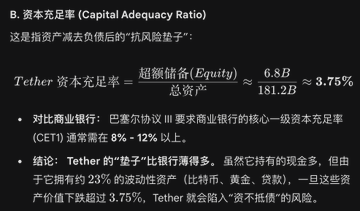
Looking forward to Sister Bee's analysis. A personal opinion: Saying that stablecoins are fully collateralized is a misinterpretation of the balance sheet. Leaving aside the issues of having too many high-risk assets as reserves, lacking central bank liquidity support, and not having commercial deposit insurance, you can also use commercial bank standards to calculate and evaluate Tether's balance sheet, looking at its core reserve ratio and capital adequacy ratio. While commercial banks no longer have a statutory reserve ratio, they generally maintain around 12% for many years. Their capital adequacy ratios are even more problematic. twitter.com/viviennaBTC/status...
ETH
0.5%
vivienna.btc
01-22
Thread
#Thread#
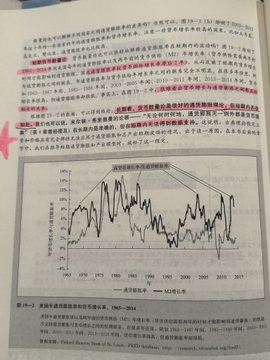
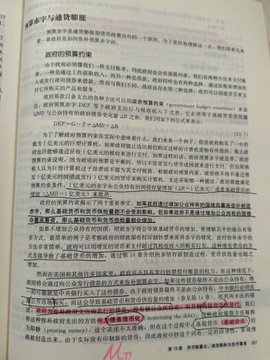
#Gold #TIPS When trading any asset currently associated with "interest rate cuts + short-term inflation," please note the following: 1. Inflation's feedback on the money supply typically lags (by 2 years). 2. The monetization of government debt leads to an increase in high-powered money (base money), but this does not necessarily cause inflation in the short term—only long-term efforts to offset budget deficits through money creation will lead to sustained inflation. 3. Analysis of the money demand side is also worth noting. Monetary policy, by impacting the fundamental demand factors for money, shifts the demand-supply curve, ultimately achieving economic equilibrium. Therefore, the main impact of inflation on the returns of various assets in 2026 may not be clear, and the impact may not be unipolar. It is also necessary to discuss whether some assets have already preemptively benefited. *Monetary Economics*—Part Six
TIPS
0%
-- END --