avatar
Aakash Gupta
146,225 Twitter followers
Follow
Posts
avatar
Aakash Gupta
NASA pays $100M for Microsoft 365 licensing across the agency. They standardized every system on Microsoft. They put Microsoft Surfaces on the Orion spacecraft as the crew's personal computing devices. And the first technical crisis of humanity's return to the Moon was Reid Wiseman radioing Houston to say he has two Microsoft Outlooks and neither one works. Mission Control's response? "With your go, we can remote in and take a look." The same exact workflow your company's IT helpdesk uses when you submit a ticket on a Monday morning. Except the user is traveling at 4,275 mph, 30,000 miles from Earth, and the Wi-Fi situation is considerably worse. This spacecraft survived hydrogen leaks, helium leaks, a faulty heat shield, and a broken toilet. Outlook broke anyway. The toilet actually got fixed faster. The real story here is that Microsoft has achieved something no other software company in history can claim: a support ticket from lunar transit. Their enterprise sales team should frame this. "Battle-tested in space" is a positioning statement most B2B companies would mass murder for, and Microsoft accidentally earned it because Outlook crashes everywhere, including orbit. Outlook remains the only software in human history that performs identically whether you're in a cubicle in Redmond or aboard a spacecraft bound for the Moon. Universally, reliably broken. And we keep buying it anyway.
Polymarket
@Polymarket
JUST IN: Artemis II crew experiences issues with Microsoft Outlook on their way to the Moon, asks ground crew for assistance.
PAYS
0%
avatar
Aakash Gupta
03-29
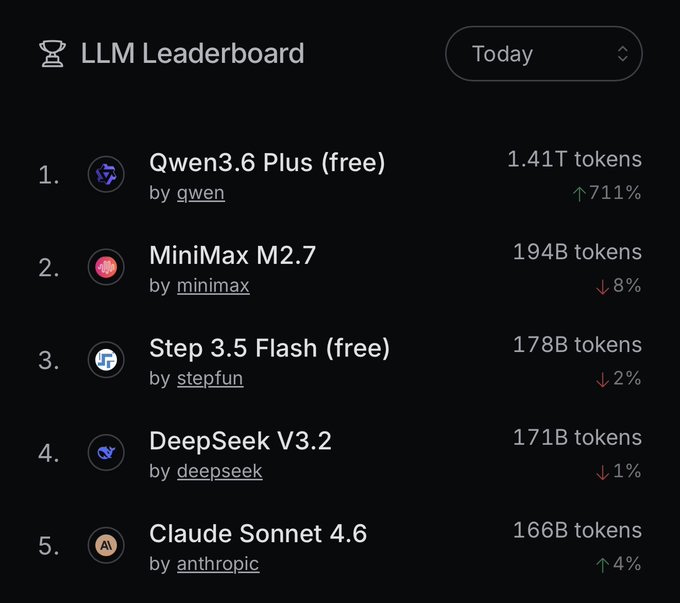
OpenAI may have caused the worst consumer hardware crisis in a decade with purchase orders that were never real. In October 2025, Sam Altman flew to Seoul and signed simultaneous deals with Samsung and SK Hynix for 900,000 DRAM wafers per month. That's 40% of global supply. Neither company knew the other was signing a similar commitment at the same time. The pricing and terms would have looked very different if they had. Those "deals" were letters of intent, not binding purchase orders. No RAM actually changed hands. But the market treated them as real. Contract DRAM prices jumped 171%. A 64GB DDR5 kit went from $190 to $700 in three months. DDR4 kits that should have been in oversupply doubled. Retailers stopped posting prices entirely. The Abilene Stargate expansion just got cancelled because OpenAI couldn't forecast its own demand. Oracle couldn't agree on financing. The partners are squabbling. Bloomberg reported the $500B project hadn't started and no funds were raised to meet the initial budget. Multiple data center buildouts are delayed or shelved. Now DDR5 prices are finally dropping for the first time in months, and it has nothing to do with OpenAI walking away from anything. Google released TurboQuant on March 24, a compression algorithm that cuts AI memory requirements by 6x. SK Hynix and Samsung stocks dropped 6% and 5% overnight. Corsair kits fell $60-100 from their highs within days. One company locked up 40% of global memory with commitments it may never fulfill. A different company published a research paper. The research paper is doing more for RAM prices than the entire supply chain has done in six months.
Roger
@rdd147
03-29
🚨 RAM prices are plummeting after OpenAi failed to fulfill its commitment to purchase 40% of World supply and terminated its $71 billion SKHynix promise. $MU x.com/wccftech/statu…
SK
0%
avatar
Aakash Gupta
03-17
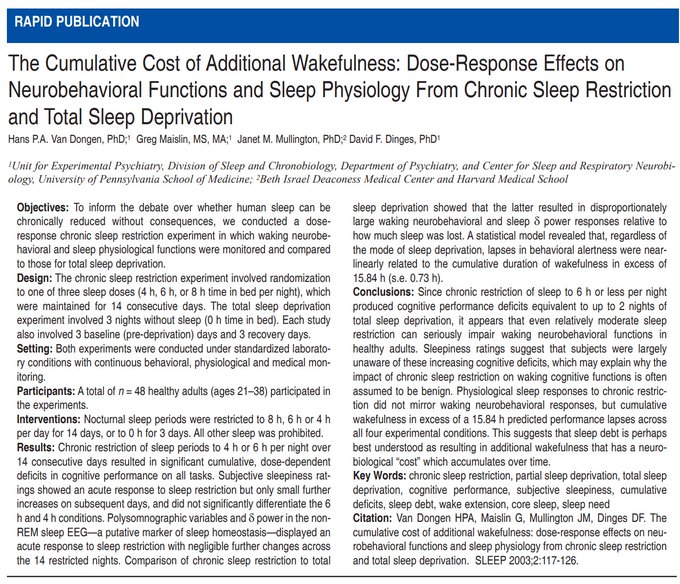
Emotional suppression costs you about 30% of your working memory. Measured on fMRI. The anterior cingulate cortex processes emotional pain and cognitive control through overlapping circuits. When you shove emotions down instead of processing them, your prefrontal cortex burns glucose on inhibition. That’s glucose not available for decision-making, planning, or execution. The brain doesn’t have separate budgets for “feelings” and “performance.” It’s one pool. The military figured this out the hard way. After decades of “push through it” culture, SOCOM funded research into emotional regulation for tier-one operators. The finding: operators who named and processed emotions before missions had faster reaction times and better decision-making under fire than operators who suppressed. The Special Forces pipeline now includes psychological flexibility training. The historical record confirms it. Stoicism, the philosophy most often cited to justify “stop talking about feelings,” literally requires examining your emotions in writing every single day. Marcus Aurelius wrote the Meditations as a private journal. Epictetus taught students to dissect their emotional responses in granular detail. The entire Stoic method is structured emotional processing, not emotional avoidance. What actually kills performance is rumination, looping on the same thought without resolution. The fix for rumination is more processing, not less. Cognitive behavioral therapy, the most evidence-backed intervention, works by teaching people to articulate and examine feelings with precision. The highest performers process fast and move. They don’t skip the processing step.
Marc Andreessen
@pmarca
03-17
It is 100% true that great men and women of the past were not sitting around moaning about their feelings. I regret nothing.
BURNS
0%
loading indicator
Loading..