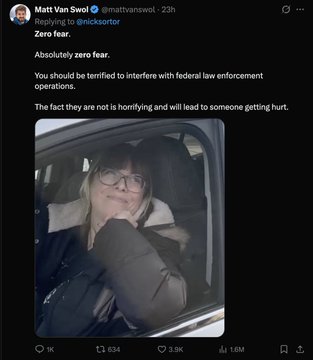
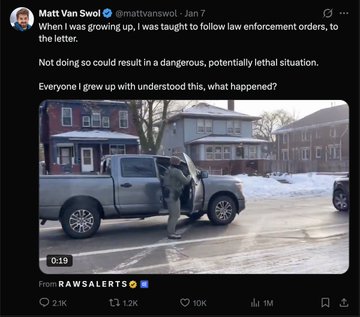
In a past life, I was a reporter in Putin's Russia.
During that time, a leading Russian opposition journalist told me he feared interactions with law enforcement because a police officer could easily plant drugs on him to fabricate a criminal case.
A few years later, a totally apolitical acquaintance was arrested for participating in an unsanctioned protest. Only he hadn't been protesting; he had been sitting on a park bench. Four police officers grabbed him — one holding each arm, one holding each leg — and carried him away. After two days in jail, he was convicted of the same charges as many other protesters: blocking traffic and chanting anti-government slogans. He was lucky to get off with a fine.
These are two "small" examples of life in a police state. Notably, neither involves lethal force.
And that wasn't Russia at its worst. Since then, the Kremlin has de facto outlawed dissent.
So if you think it's desirable for Americans to be "terrified" of law enforcement, if you believe lethal force is a justified response to any disobedience (legal precedent states otherwise), you don't know what you're asking for.