Original title: The Evolution of Prediction Markets - Castle Research Report Takes a Deeper Look at Polymarket and Azuro
Author: Atomist , Mooms and Francesco , castlecapita
Compiled by: Arain , ChainCatcher
The future is inherently unpredictable, and throughout history humans have attempted to predict it, either through monetary bets or strategic actions.
Will it rain tomorrow?
Will my enemies attack today?
For a long time, making these predictions was a matter of life and death.
Historically, most of these markets have been “closed”, either centralized or managed by a third party. This means that participants must abide by predefined rules and do not have the ability to create their own markets or set their own conditions.
The advent of cryptocurrencies provides the opportunity to move these markets on-chain, making them truly decentralized and resistant to manipulation.
Unlike centralized markets, where users trade with a “bookmaker,” decentralized prediction markets allow users to trade with other users who are betting in the opposite direction.
Since the launch of Augur in 2015, prediction markets have become a prominent use case for cryptocurrencies and were even mentioned in the Ethereum whitepaper.
Despite this, they have only recently gained mainstream attention.
Prediction markets have experienced unprecedented growth across all metrics, finding product-market fit (PMF) in speculation around events such as the launch of an Ethereum ETF and the results of the US election.
This report aims to provide a comprehensive overview of the prediction market landscape, introducing the concept, highlighting historical use cases, examining the current state of the art, and taking a deep dive into two leading platforms, Azuro and Polymarket, to explore the future potential of this space.
We think this is going to be a winner – are you willing to place your bets?
Between gambling and cryptocurrencies: The importance of prediction markets
Prediction markets are one of the most fascinating applications of cryptocurrency, allowing users to bet on various events on-chain.
Gambling has been ingrained into human culture since the Paleolithic era.
By 3000 BC, the Sumerians were using six-sided dice for gambling.
For thousands of years, humans have gambled on just about everything.
With the proliferation of technology and the rise of digital natives, gambling has gradually shifted to online platforms, making online gambling a booming industry.
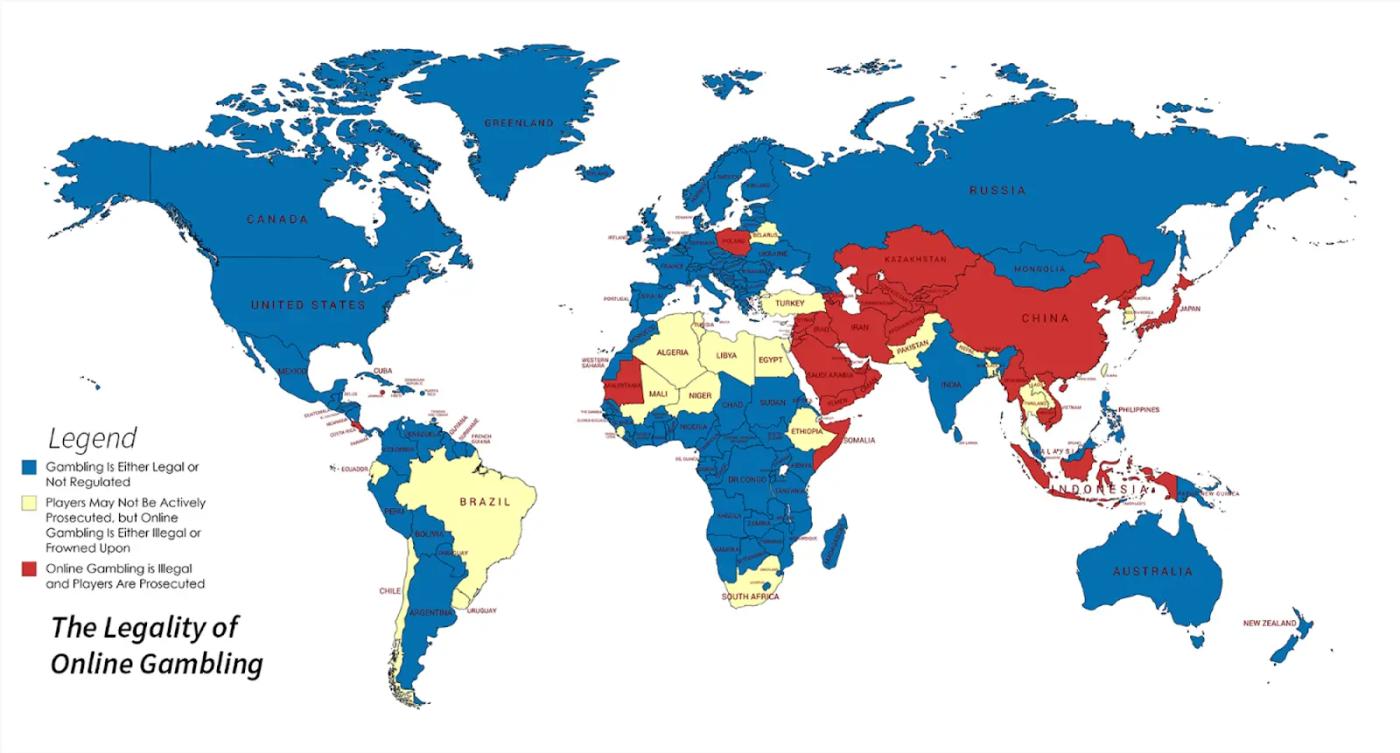
Source: Casinosenligne
The global gambling market is estimated at USD 773.7 billion in 2023 and is expected to reach USD 1 trillion by 2030, with a compound annual growth rate (CAGR) of 3.7% (2023-2030).
Within this broader space, the global online gambling market will reach $100.9 billion in 2024 and is expected to grow at a CAGR of 6.20% to reach 281.3 million users by 2029, driven by several notable trends:
1. The global economic situation worsens
2. Increase in digital native users
3. Convenience and accessibility of online gambling
4. Improved regulatory clarity
Arguments for decentralized casinos
Nearly one-third of the world’s population lives in countries where gambling is in a legal grey area or is outright prohibited. Officially, these restrictions are intended to protect citizens from the risks of gambling. However, rather than solving the problem, these restrictions drive individuals to unlicensed operators.
As a result, users face worse odds, higher fees and a significantly increased risk of fraud or scams by unscrupulous operators.
To fill this gap, in just a few years, global online platform giants like Rollbit and Stake have risen to become some of the most popular online gambling platforms, sponsoring influential celebrities, sports events, and teams — and did you know? They both accept cryptocurrencies.
In this context, prediction markets find a place at the intersection between cryptocurrencies and gambling, fitting in with the “decentralized casino thesis” put forward by GCR.
Prediction markets have less friction than other cryptocurrency use cases because they do not require users to understand all the nuances of the inner workings of the system.
Users are already familiar with online betting, so the transition to prediction markets is seamless, requiring minimal guidance and change in habits.
About Prediction Markets
Before diving into the importance of prediction markets, it is crucial to introduce the concept. Prediction markets refer to platforms where users can bet on the outcomes of future events.
They function similarly to futures markets but cover a much wider range of topics, including not only asset prices but also sports, politics, weather, and even the likelihood that your favorite crypto influencer will be sentenced to jail.
Behind the scenes, prediction markets operate through smart contracts that encode the rules of each market, ensuring a fair and transparent system.
Users participate in the market by purchasing outcome-based shares with a value of 0 (for incorrect predictions) or 100 (for correct predictions).
How do prediction markets work?
Users use stablecoins to interact with decentralized applications (dApps).
They bet on the outcomes of events they think are likely to occur.
Depending on the outcome of the event, they either gain a payoff or lose their bet.
Prediction markets can adopt an order book (Polymarket) or automated market maker (AMM) design.
- Prediction markets using order books (Polymarket) allow users to trade directly with other users, similar to traditional stock or futures markets.
- Prediction markets using an automated market maker (AMM) design (Azuro) automatically match orders between buyers and sellers through smart contracts without the need for human intervention.
In an order book based prediction market:
Users can choose between market orders or limit orders.
The liquidity of the market is directly related to the activities and interests of users.
The order book provides transparency into the current bids and asks in each market.
In the design of an automated market maker ( AMM ):
Users are incentivized to deposit liquidity into pools, forming a “unified betting platform” covering all markets, and in exchange they receive a share of trading fees.
The AMM adjusts the odds and defines prices and other conditions within the prediction engine.
The prediction engine determines all the logic of accepting bets, including payout allocations, etc.
Based on its results, the market can be segmented into various types:
Binary Markets: Yes/No (e.g., will Bitcoin reach $100,000 next month?)
Categorical markets: multiple options (e.g., who will be the next president of the United States?)
Scaling Markets: Range-based options (e.g., what will the price of Bitcoin be next month?)
History and Early Use Cases of Prediction Markets
Augur Protocol
Prediction markets are not a new concept in the cryptocurrency world.
They are one of the early use cases, with the Augur protocol and its token $REP being one of the earliest examples.
Augur is a decentralized prediction market oracle network. Its initial coin offering (ICO) took place in 2015, and its V1 version was launched three years later in 2018.
This anticipation led to a surge in users, making Augur V1 one of the most popular decentralized applications (dApps), surpassing Cryptokitties in popularity.
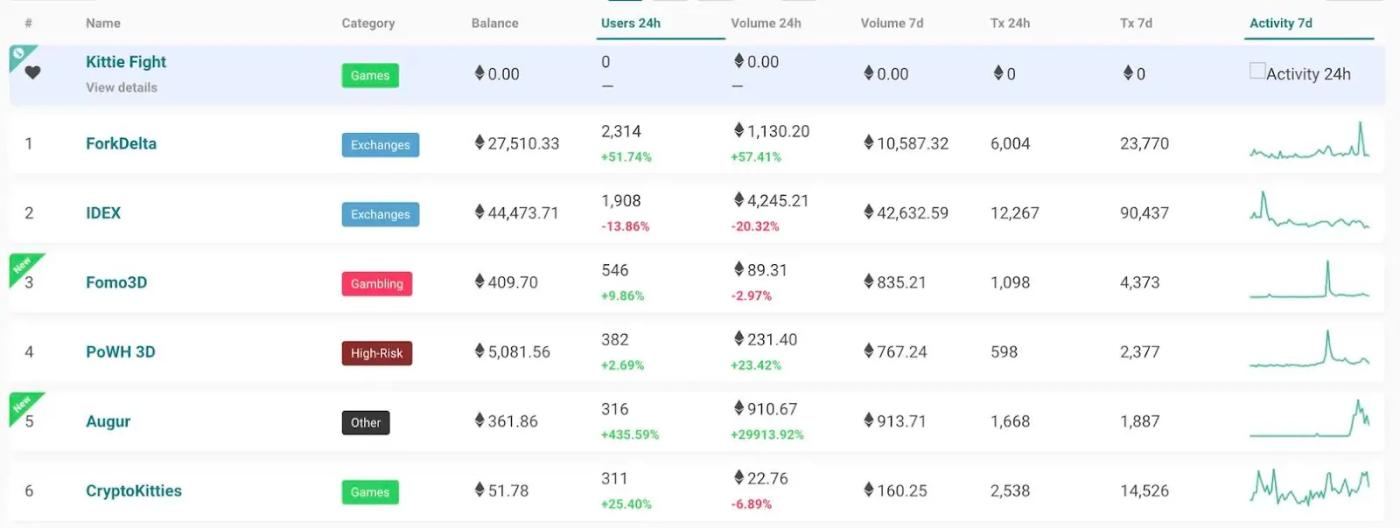
Source : dappradar
Augur aims to solve a key problem with blockchain: how to transmit real-world data to the blockchain without relying on a third party, the so-called “oracle problem.” The solution enables users to place bets on controversial markets, including murder.
In 2020, Augur V2 was launched, bringing several improvements:
- Peer-to-peer order book design
- Use DAI as the base currency for transactions
These improvements are designed to improve the transparency, efficiency, and user experience of the system. The peer-to-peer order book design allows users to trade directly with each other, while the use of DAI as the base currency provides more stability and predictability as DAI is a stablecoin pegged to the US dollar.
Why Augur Failed
Despite these improvements to its product, Augur is still having trouble gaining market acceptance, as reflected in the following data.
Historical trading volume:
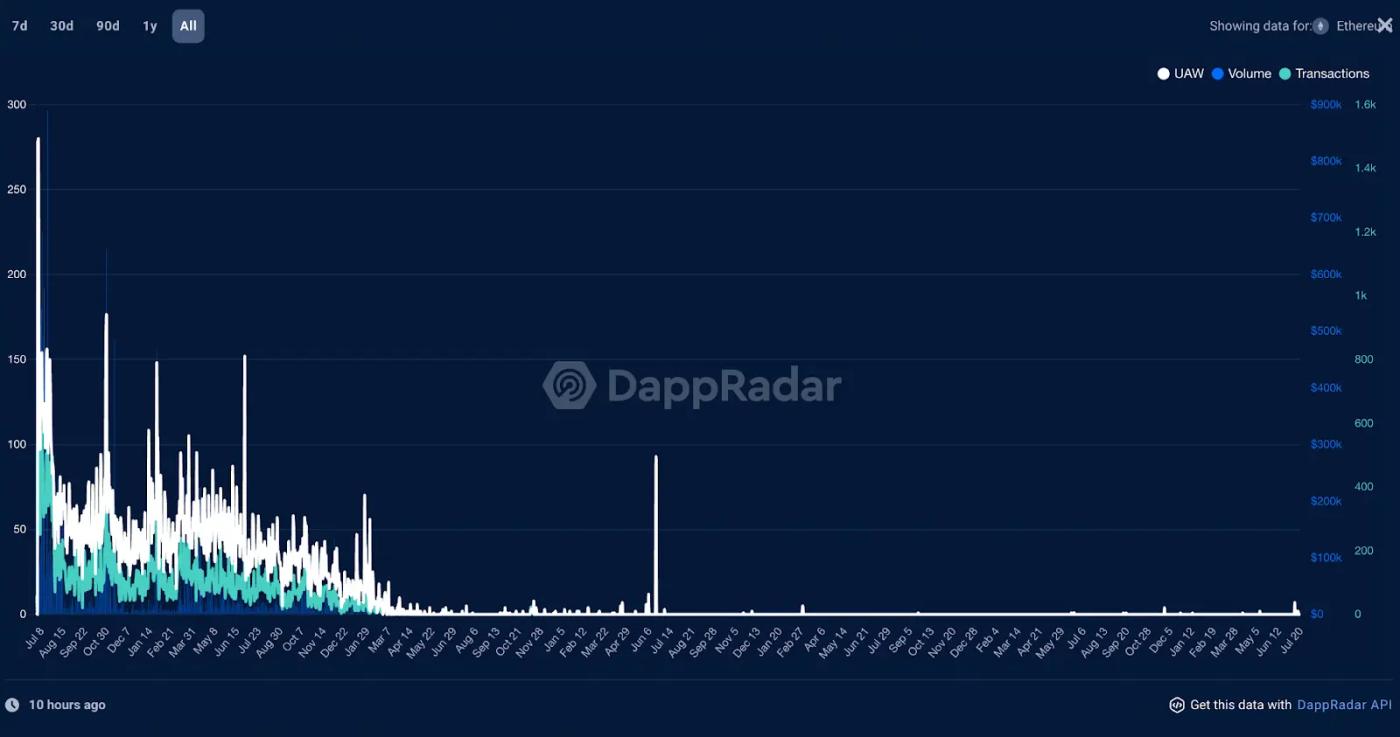
Annual transaction volume:
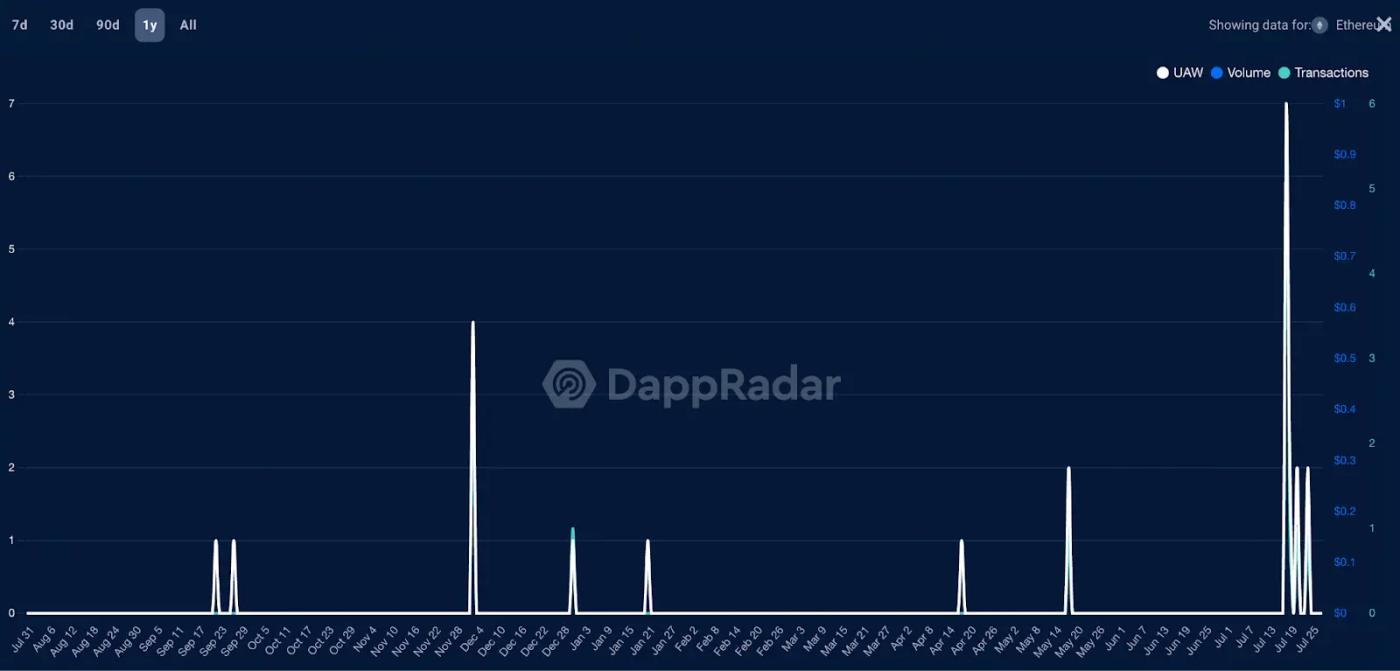
Factors contributing to this include:
1. Early entry: When Augur launched, Uniswap V1 had not yet been deployed, and many of the current mechanisms for providing liquidity did not exist. It was the era of Etherdelta. Prediction markets on the platform also struggled to find a solid business model (PMF), and after the initial excitement, they typically experienced a decline in usage.
2. Accessibility: There is no easy way to access the platform. Users must download the Augur application client and have a functioning Metamask wallet with an ETH balance.
3. Complexity: The platform’s mechanics and user interface are quite complex, which leads to network issues and long connection times.
4. Limited number of markets: The limited number of available markets restricts user participation.
5. High GAS fees: Built on Ethereum, Augur’s transactions are subject to ETH GAS fees.
Prediction Market Industry
Industry Frontier
Fast forward to 2024, and the prediction market industry is experiencing unprecedented interest and growth.
The U.S. election served as a major catalyst for the prediction market industry, reflecting the growing connection between cryptocurrencies and real-world events such as ETF approvals and U.S. candidates’ political stances on Bitcoin.
Notably, a U.S. presidential candidate mentioned decentralized prediction markets as a source of election data, highlighting the industry’s growing relevance.
Prediction markets are now considered one of the most accurate ways to gauge the public’s true sentiment on a variety of topics. This increased attention translates into rising trading volumes and growing user interest.
Next, let’s explore the current state of prediction markets through on-chain data and leading platforms, using Azuro and Polymarket as case studies.
Understanding prediction markets through data
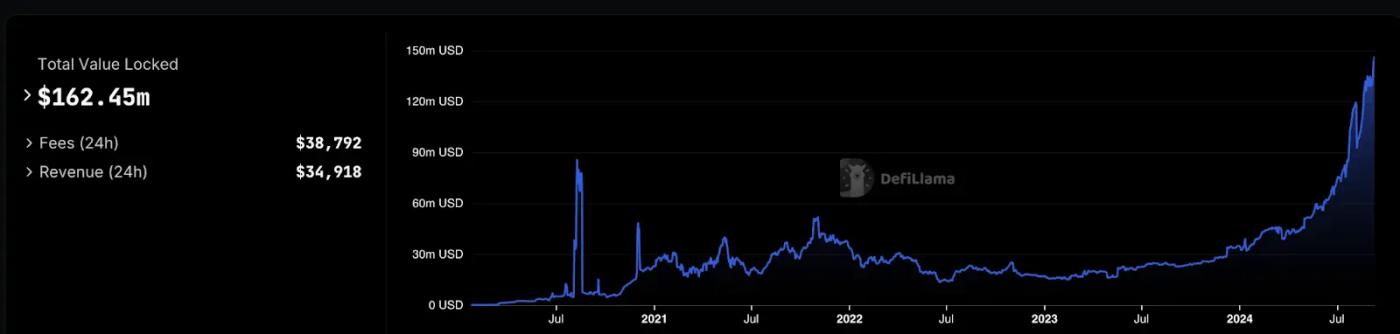
The prediction market industry holds a total locked value (TVL) of $162 million.
While the Defilama chart shows the industry since its inception, the majority of TVL accumulation occurred in 2024.
Source : Defillama
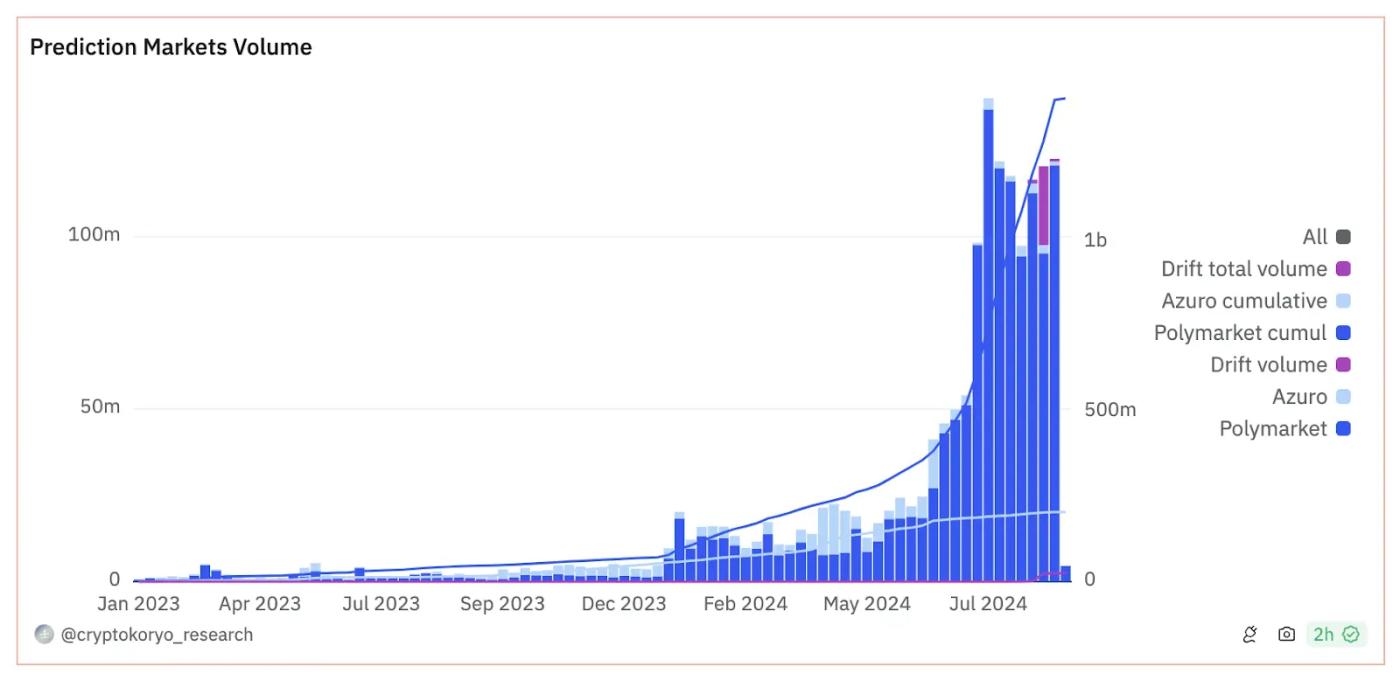
Likewise, trading volume surged more than sevenfold from a peak of $25 million per week prior to June 2024 to $183 million per week in August 2024.
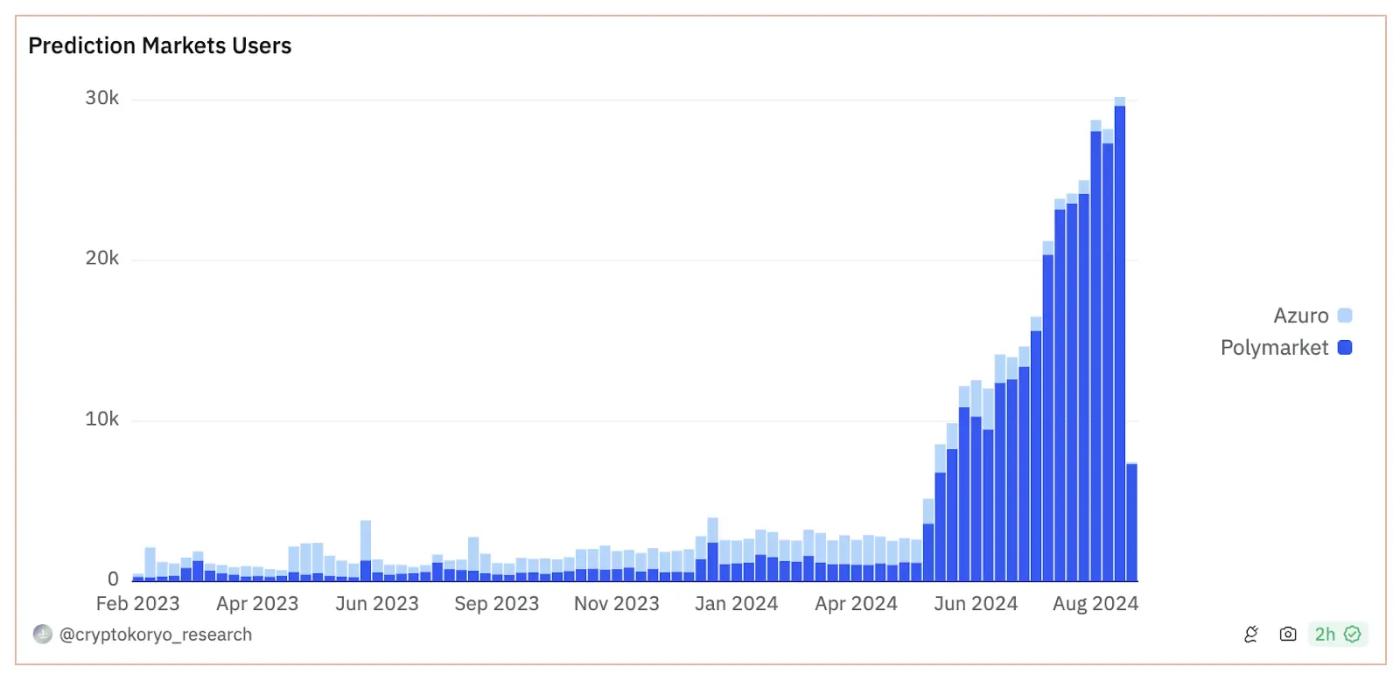
As a result of their recent growth, approximately 30,000 users participate in the prediction markets daily, which is a significant increase from the average of 3,000 users until May 2024.
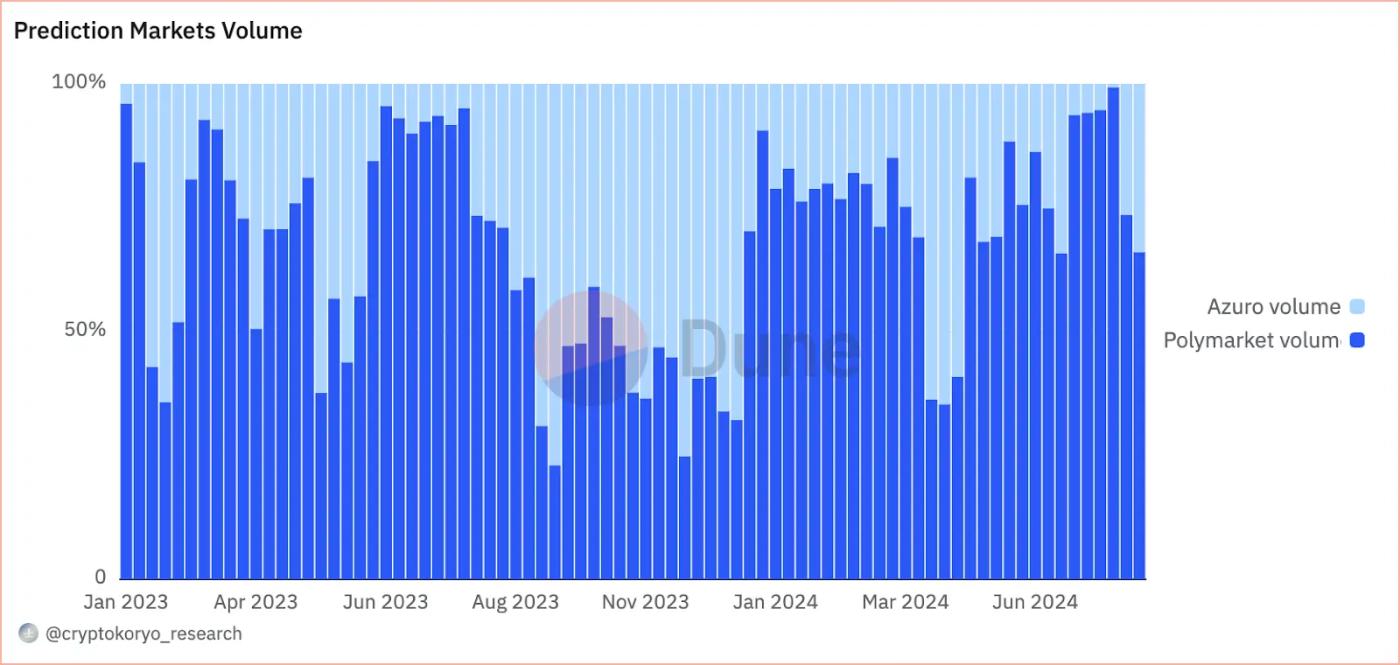
This growth is consistent with a rise in daily trading volume, as much of the new volume came from users joining Polymarket to bet on major events such as the US election.
Azuro and Polymarket examples
This section analyzes two leading players in the industry, Azuro and Polymarket.
It takes a deep dive into how these platforms work under the hood, their differences and similarities, and argues that rather than competing with each other, these platforms complement each other, each with its own unique characteristics.
Polymarket
Since its launch in 2020, Polymarket has become a household name in the prediction market industry. Many believe that Polymarket is the Trojan Horse that will finally bring cryptocurrency into the mainstream.
Based on Polygon, Polymarket’s TVL (total locked value) reached $87.5 million, accounting for more than 60% of the industry’s total TVL.
Polymarket has undergone some evolution during its development. Initially, the market was deployed as a "constant product" automated market maker (AMM), similar to the Uniswap V2 pool, where the stock price of each market reflected the probability of the outcome. However, over the past year, the market has gradually moved to an order book model.
Currently, each market takes the form of an order book where users can post their bids and asks.
Polymarket uses UMA’s decentralized Optimistic Oracle for dispute resolution, with UMA token holders acting as unbiased judges of relevant market outcomes. In the event of disagreement about the outcome of an event, “disputers” can challenge the answer.
Since its inception, Polymarket has achieved the following:
- Trading volume exceeds $1.4 billion
- The number of transactions reached 3.1 million
- There are more than 150,000 total bettors on the platform

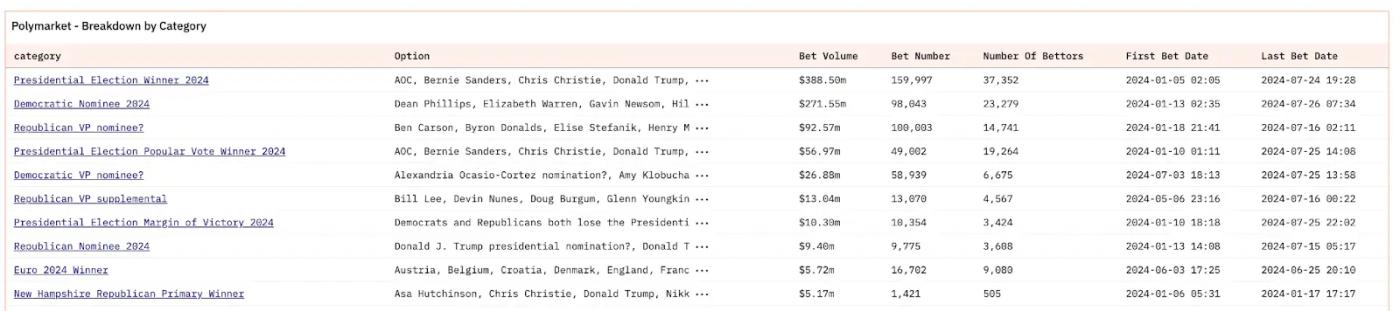
As of August 2024, Polymarket's most popular categories by bet volume were primarily political, with the exception of one sports category related to the 2024 European Cup winner.
Polymarket seems to cater to large-scale, occasional major event bettors rather than smaller, frequent betting customers.
The two most popular categories on Polymarket, “2024 Presidential Election Winner” and “2024 Democratic Candidates,” contributed more than $660 million, or 84.23% of total trading volume.
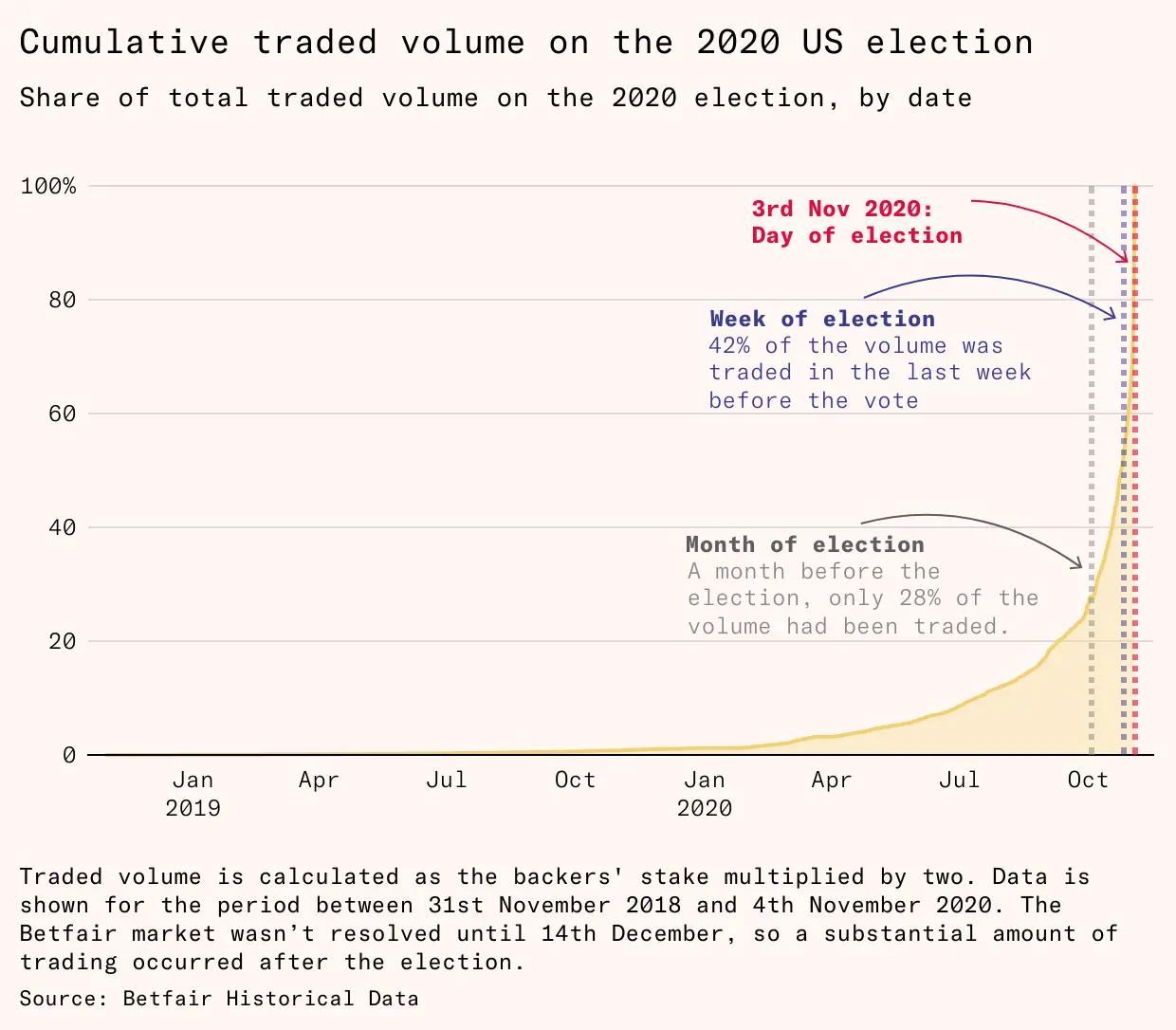
As we approach the 2024 U.S. presidential election, it will be interesting to see whether cumulative volume trends will be similar to 2020.
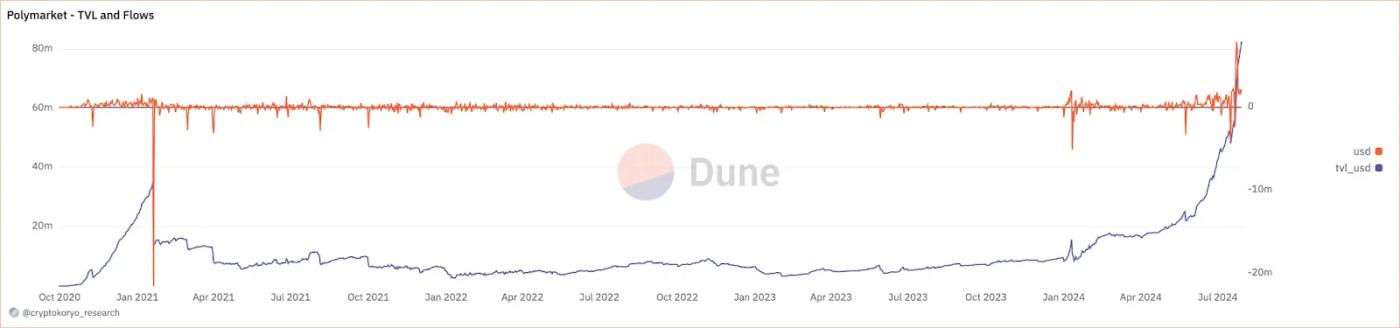
While the surge in Polymarket’s trading volume can be attributed to the U.S. election, all of the platform’s on-chain metrics have shown positive trends since the launch of the Bitcoin ETF in early 2024, indicating that the adoption of prediction markets is generally increasing.
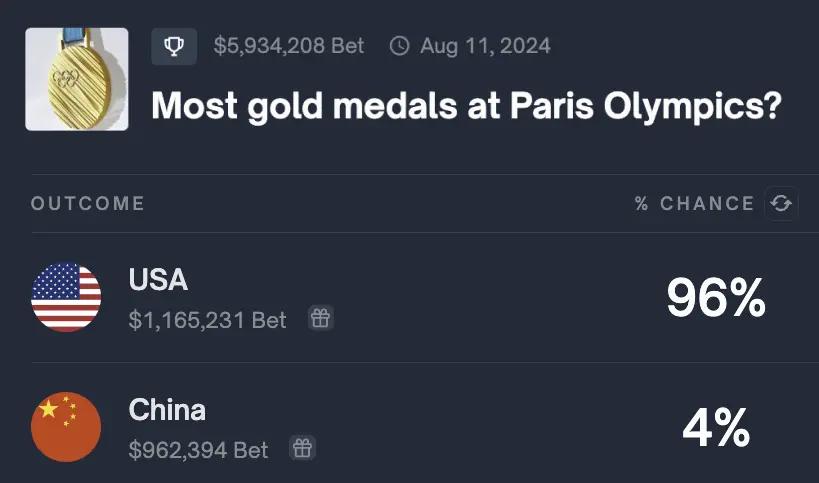
As part of its roadmap, Polymarket pledged to increase the number of supported markets and reduce its reliance on political events.
Recent events, such as the Olympics, have fueled activity in these markets, with the market predicting the most gold medals at the Paris Olympics becoming the third largest market with over $6 million in trading volume.
Additionally, they just open-sourced PolyLend, their peer-to-peer (p2p) lending protocol, which allows users to “borrow USDC using their conditional token positions locked in existing markets as collateral.”
PolyLend provides the following features:
- Increase leverage on conditional token positions by borrowing USDC.
- Fixed-rate loans are offered on USDC that are overcollateralized through conditional token positions.
- The loan is transferred to the new lender using a Dutch auction mechanism.
Interestingly, Polymarket said this development will not be used in production, but will be open sourced to the community to build on top.
Azuro
Azuro is an infrastructure and liquidity layer built for gaming dApps and protocols, currently running on Polygon, Gnosis Chain, and Chiliz.
Azuro introduces a peer-to-peer pool design that addresses the inefficiencies of the peer-to-peer model, including:
- Reliance on active liquidity
- Multiple marketplaces are needed to ensure user participation
- Activities focus on major events
Under this new model, market makers and users interact by providing liquidity in a pool that serves multiple markets. In this way, anyone can act as a banker and provide liquidity to bettors, thereby creating "passive liquidity" and real yield, with liquidity providers acting as counterparties to bettors on Azuro.
Adding more markets on a single pool also helps spread the risk of liquidity providers and improves the capital efficiency of the platform, allowing it to scale:
- Supporting more transactions
- Improve user experience
- Increase returns for liquidity providers
The design utilizes a novel data structure, called the Liquidity Tree, to track provided liquidity.
Azuro’s liquidity pool acts as a counterparty on the platform, allowing users to provide liquidity and effectively become market makers, generating real yield from the fees collected by the protocol.
In this way, users who provide liquidity to a pool can immediately gain exposure to all markets supported by the pool and earn fees based on the market’s spread and volume, which are “embedded” in the market odds.
Under Azuro, dispute resolution is managed through an “optimistic oracle approach”, which they plan to decentralize in the near future. Since Azuro primarily supports sports events, they have clear conclusions and rarely involve ambiguous situations such as political or news-related events. AzuroDAO will serve as the final arbiter of truth in the event of a dispute over an oracle resolution result (implementation coming soon).
In addition to supporting sports markets and more games, Azuro allows anyone to launch a prediction app or website faster and without any upfront costs, such as bookmaker.xyz, a prediction app.
These front ends can abstract away all the core technology, avoid launching liquidity, and directly access Azuro’s liquidity, while also earning a percentage of profits from pools associated with their user activity, similar to an affiliate marketing model.
Since its launch, Azuro has enabled:
- Over $200 million in projected trading volume
- Over 5.8 million forecast-related transactions
- More than 30,000 punters in total

Azuro’s user base has been growing aggressively, reaching a record high of over 2,500 new users. An interesting observation is that most Azuro users are returning customers. This shows that the platform is not only able to attract new users, but also maintain user loyalty and repeat usage.
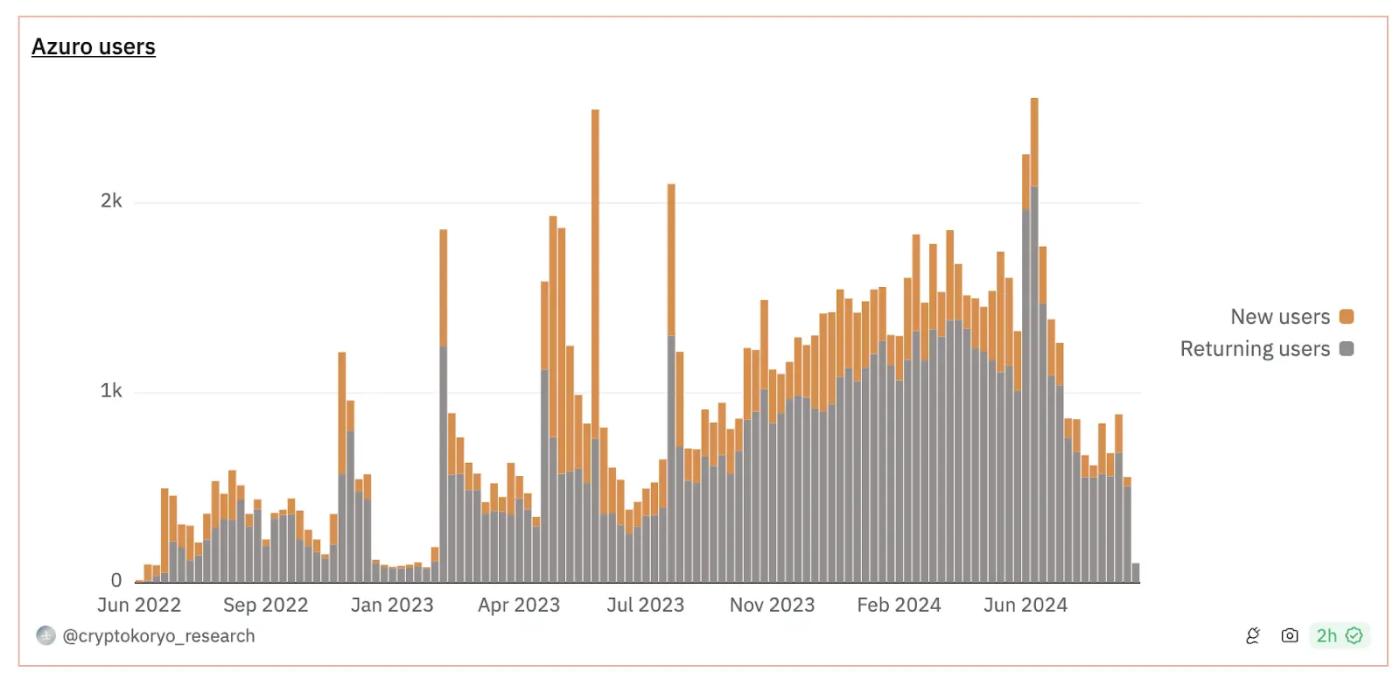
Why is this the case?
Azuro’s largest event only accounts for 0.7% of their total volume, so their betting volume is widely distributed. On top of that, they offer a range of events and games to keep users engaged.
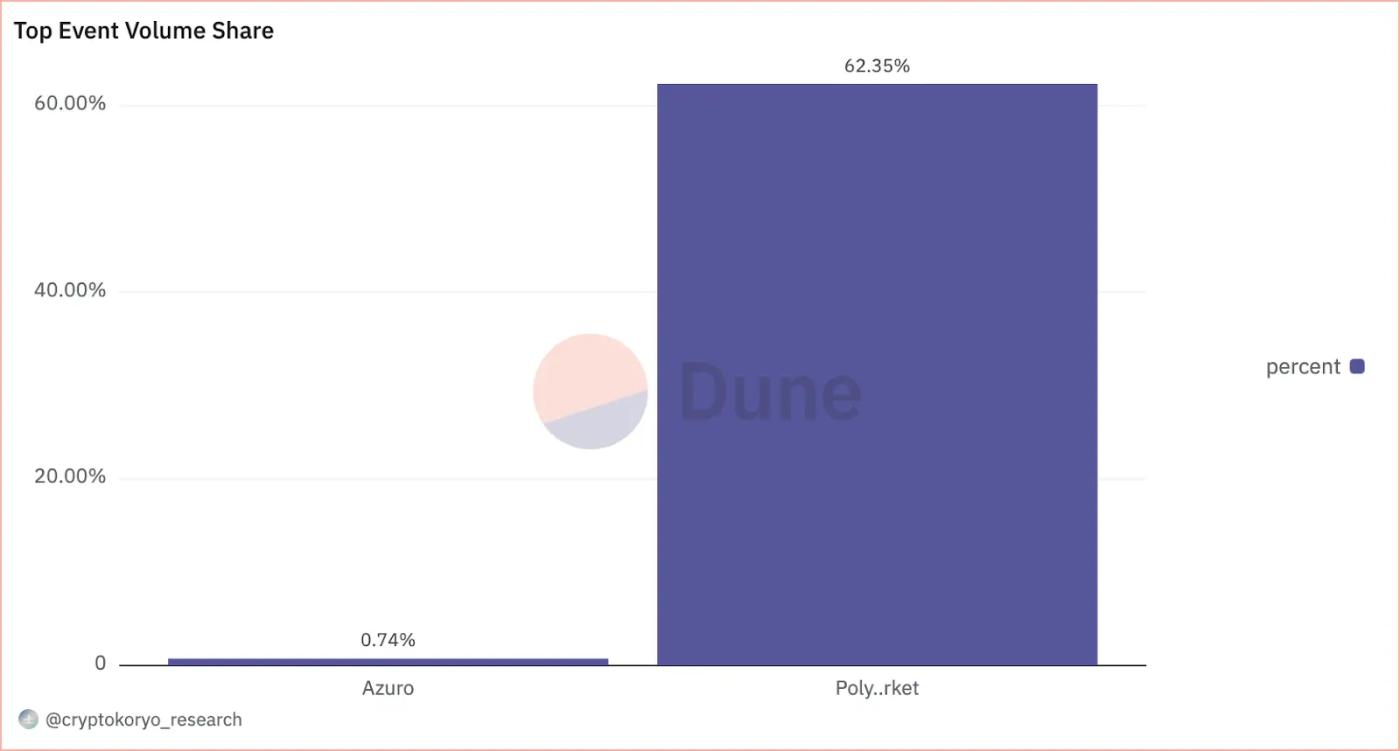
Therefore, Azuro mainly attracts users who like to place repeated bets across various markets, with a focus on sporting events.
Let’s take a deeper look at which categories drive the majority of transaction volume on Azuro as of August 2024:
- 58.4% Football matches
- 11.9% Basketball
- 11.2% Tennis
- 9.6% Baseball
The only non-sporting events in Azuro’s top events are eSports games: Counter-Strike (ranked 6th), League of Legends, Dota 2, and CS:GO.
Within these categories, which markets drive the most volume?
Azuro’s 10 most successful events were all soccer matches. English Premier League matches led the way in terms of single-match betting volume, with Arsenal vs. Chelsea in April 2024 bringing in nearly $15 million in bets.
As for the number of bettors, international football matches are the most popular.
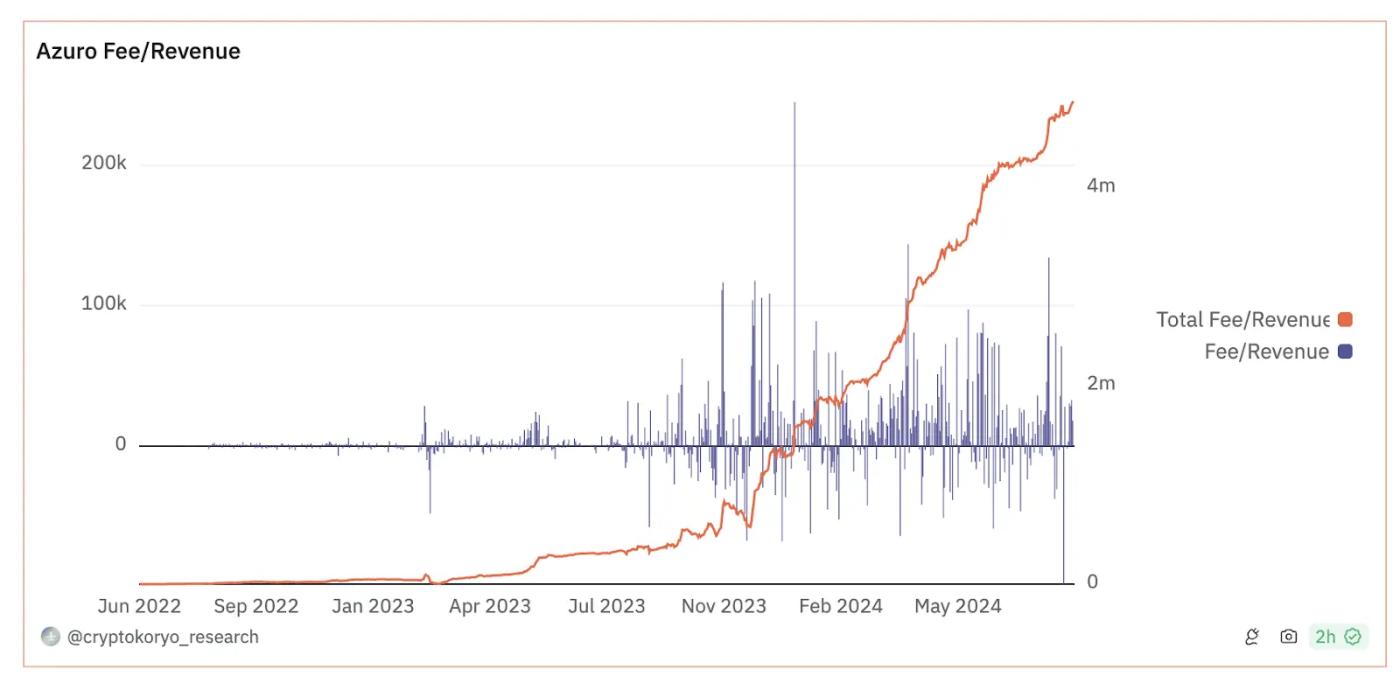
Since its inception, Azuro has generated over $4 million in revenue for liquidity providers, with an average annualized yield (APY) of over 20% (currently 12%).
In the case of Azuro, liquidity providers are exposed to counterparty risk because the liquidity pool acts as the counterparty to all trades on the platform and its affiliated platforms.
$AZUR Token
Azuro’s native token $AZUR is used as a governance token and adds a layer of gamification and incentive alignment between users and the protocol.
Having a native token is one of Azuro’s main differentiators from Polymarket.
As part of its roadmap, Azuro is working to support a wider range of events, including social and political ones: they recently announced a U.S. presidential election winner market, the protocol’s first non-sports market.
In addition to expanding the market, Azuro is also investing in the following areas:
- Decentralization of governance and dispute resolution mechanisms
- Support more networks and achieve cross-chain liquidity
- Launching a front-end without coding
- Provide further value-added mechanism for $AZUR and DAO
Comparative Analysis
First, we can see the technical design differences of each prediction market protocol as shown below.
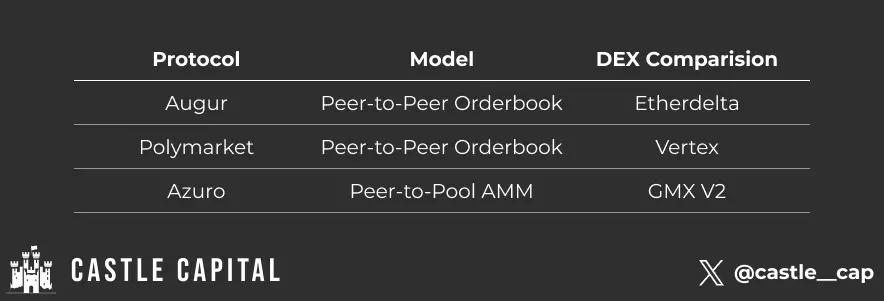
Augur seemed ahead of its time, like Etherdelta, building a traditional order book product on a chain that had not yet scaled or reached sufficient performance. Polymarket initially leveraged Uniswap's success in the constant product formula for a better user experience, and then transitioned to an order book, similar to Verterx. Finally, Azuro implemented a peer-to-peer pool model similar to GMX, which allows Azuro to evenly scale liquidity across all markets, have deep pools serving multiple markets, and abstract complexity away from users.
Besides the technical aspects, we can also make business comparisons:
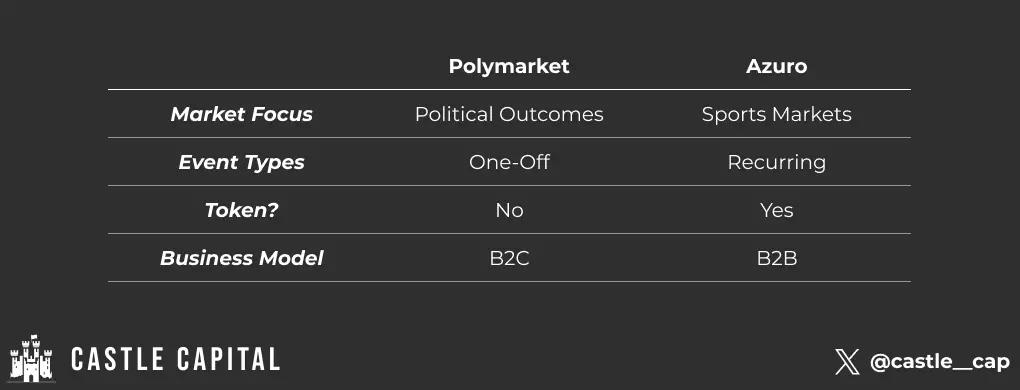
Political Market and Sports Market:
Prior to the US election narrative, Azuro was a leader in the space due to its offering of sports-related markets. However, the US election became the main driver of the recent success of prediction markets, dominated by Polymarket. At the same time, since Azuro relies on sporting events, which have a break during the summer, its trading volume slows down in the summer.
One-time events vs. recurring events:
While Polymarket thrives on large but limited number of markets, attracting strategic narrative speculators, they are likely using Polymarket as a one-time use, i.e. they come to the market specifically to bet. Azuro, on the other hand, offers many smaller markets, drawing users back and converting them into repeat customers. On Polymarket, top events account for 62% of total volume, while on Azuro, this is just 0.74%. This highlights how Polymarket positions itself to capture the biggest “news” events, while Azuro’s offering, in contrast, includes multiple smaller events, more suitable for repeat betting.
Token or No Token:
Regardless of whether Azuro’s token has a significant impact on its transaction volume and user growth, having a token provides a broader strategy for aligning incentives between the protocol and the community.
B2B vs B2C :
The platforms are complementary rather than competing. Azuro is more focused on B2B and recurring sports events, while Polymarket is more focused on B2C and news, politics and economic events.
Seeking Growth:
Both platforms are looking to expand their list of supported markets, as well as reach more networks.
Main challenges
As novel tools, prediction markets face several challenges before they can be adopted beyond the cryptocurrency space:
1. Liquidity: Low participation often leads to insufficient market depth, causing wider bid-ask spreads and reduced forecast accuracy. This low liquidity may also make the market more susceptible to price manipulation by a small number of participants.
2. Regulatory uncertainty: The legal status of prediction markets varies by jurisdiction, and the lack of clear regulations creates significant legal risks. Compliance with laws such as Anti-Money Laundering (AML) and Know Your Customer (KYC) is particularly complex for decentralized platforms because these platforms emphasize anonymity.
3. Market manipulation: The open and pseudo-anonymous nature of these platforms, as well as the relatively small size of certain markets, make them susceptible to manipulation.
4. User Experience: The complexity of decentralized platforms, including the need to manage wallets and understand gas fees, can become a barrier for non-technical users, limiting wider adoption.
5. Oracles and data accuracy: Prediction markets rely on oracles to bring external data into the blockchain. Ensuring the reliability and security of these oracles is critical, as inaccurate data can lead to erroneous results and loss of trust.
6. Scalability: High transaction costs and slow processing speeds on some blockchains make participation expensive and less attractive, especially during periods of network congestion.
7. Incentives and governance: Properly aligning the incentives of participants, market makers, and data providers is a challenge. Decentralized governance can be slow and contentious, leading to inefficiencies in managing the platform.
8. Trust and Adoption: Building trust in a decentralized environment without a central authority is difficult. Overcoming these trust issues and convincing users to transition from traditional platforms is key to wider adoption.
Addressing these challenges will require continued innovation, regulatory engagement, and community development to ensure the long-term success of decentralized prediction markets.
Predicting the future of the market industry
In prediction markets, people vote with their money.
As a result, they are increasingly recognized as providing accurate public sentiment on a variety of topics.
Platforms like Azuro and Polymarket lead the space, each with their own unique strengths and market needs. Azuro excels in sports markets and recurring events, while Polymarket dominates major political and news-related events.
As a short-term goal, both platforms hope to expand their marketplace offerings.
Polymarket aims to reduce its reliance on U.S. elections, while Azuro hopes to support more political and news markets and drive more trading volume outside of sports betting.
The future of prediction markets looks promising, with great potential for AI integration and market offering expansion that will enhance their utility and appeal.
One of the speculations involves AI agents, where prediction markets will move from manual market creation to being led by AI. For example, Azuro will use Olas to develop intelligent AI agents that can perform specific tasks on its platform. In prediction markets, we can envision AI agents that can efficiently provide liquidity to the market and extract API data from the market.
Additionally, they will act as “guardians” of the system, resolving conflicts and preventing disputes, enhancing the resilience and smooth operation of prediction markets.
As the industry evolves, prediction markets are expected to become a key tool for gauging public sentiment and making informed decisions in a decentralized manner.
In this way, the use of prediction markets can lead to truly decentralized sentiment that can be natively integrated into news sites and mainstream newspapers, and even used by politicians.
Prediction markets such as Azuro and Polymarket may further solidify their position in “real sentiment”, offering API services to news and data providers.
In fact, prediction markets are not limited to cryptocurrency users but are also an interesting avenue for traditional gamblers, political pundits, news publications, and others.
This could also slightly change the platform, expanding into decentralized surveys and other forms of polling to gauge public opinion, build arguments, and test hypotheses and assumptions.
“As news noise continues to increase, prediction markets represent an ‘economically backed source of truth’ in a world where fake news, post-truth and deepfakes are growing problems.”
Prediction markets finally disrupt the mainstream narrative.
Can they sustain their positioning beyond the seasonal hype?
Do we expect more challengers to enter this market once it consolidates?
It's worth pondering.