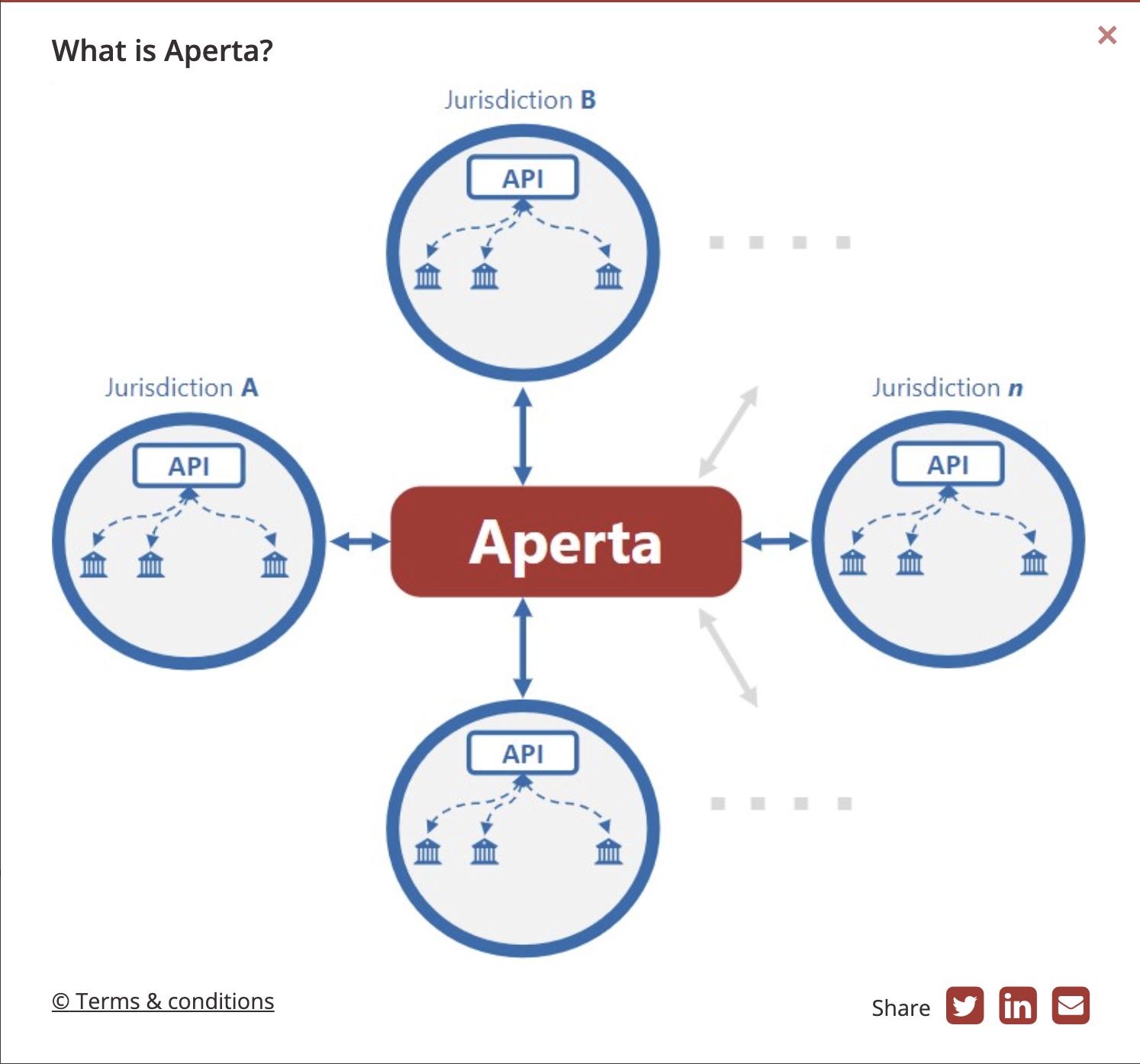
The Bank for International Settlements (BIS) recently launched a project called Project Aperta, aiming to improve cross-border circulation of global finance and reduce financial friction costs. The goal is to connect open financial infrastructures in different countries or regions, thereby enhancing transaction efficiency. The initial application scenario is trade finance for small and medium-sized enterprises (SMEs), and it will be expanded to more application areas in the future.
Aperta Solves the Fragmentation of Global Financial Data and Strengthens Interoperability
BIS points out that global trade and financial enterprises face many difficulties when using financial products such as letters of credit, trade credit insurance, and supply chain financing, not only due to cumbersome processes, but also the lack of digitization and portability of data, ultimately resulting in low efficiency and rising costs.
Although about 70 countries and regions are currently promoting Open Banking, allowing different financial institutions to share data and services, the inconsistent standards and agreements across countries have led to the inability to smoothly exchange data, increasing system dispersion and complexity.
The goal of Project Aperta is to avoid the fragmentation of data flow and enhance interoperability, connecting the open financial infrastructures of different countries, so that data can flow seamlessly across borders, reducing the friction costs in trade finance and supporting cross-border trade for SMEs.
Aperta's Partners
BIS Innovation Hub Hong Kong Centre
Central Bank of the United Arab Emirates
Central Bank of Brazil
Bank of England
Hong Kong Monetary Authority
Global Legal Entity Identifier Foundation (GLEIF)
ICC Digital Standards Initiative (ICC DSI)
FinTech Centre, Standard Chartered Foundation, University of Hong Kong
Allowing End-to-End Encrypted Data Sharing and Transmission via API
Aperta is an experimental platform that enhances cross-border interoperability, connecting financial systems in different countries or regions, allowing them to exchange and share data. Aperta has a multilateral nature, and third-party providers (banks, FinTech companies, or other financial institutions) can seamlessly connect to third-party providers in other countries or regions, promoting the efficiency of cross-border data transmission.
The data includes payment and account data, letters of credit, and electronic bills of lading for international trade. Aperta allows the transmission of data via API with the user's consent, and it is protected by end-to-end encryption to ensure data privacy and security, and only the transaction parties can view and use the data.
Aperta Workflow Diagram
Source
Disclaimer: The content above is only the author's opinion which does not represent any position of Followin, and is not intended as, and shall not be understood or construed as, investment advice from Followin.