Preface
Last week, Story Protocol announced the launch of its final testnet, Odyssey. Nearly 100 ecosystem partners are building killer applications on Odyssey. As the last testnet before the official launch, let's take a close look at the changes that Story Protocol is about to bring to the IP industry through its massive $140 million funding.

1. Current State of the IP Industry
Since the enactment of the Digital Millennium Copyright Act in the US in 1998, the focus has been on addressing copyright infringement issues on the internet and digital platforms, primarily preventing the illegal copying and distribution of copyrighted works. Since then, the global retail revenue of the intellectual property industry has expanded to reach $356 billion by 2024, generating $44 billion in royalties for IP owners.
To better understand the intellectual property landscape, we need to be familiar with the key participants here:
Supply Side:
IP Owners: Grant licenses for their content in exchange for royalties (licensing out)
IP Creators: Obtain these licenses, leveraging the brand's reputation to attract customers (licensing in)
Demand Side:
IP Distribution Platforms: For example, game companies that use IP to provide value-added services to end-buyers.
Intermediaries:
Intellectual Property Professional Services: Consulting and law firms that facilitate the smooth transaction of intellectual property between IP owners and IP creators, as well as between IP creators and IP distribution platforms.

2. Pain Points in the Intellectual Property Industry
Despite the progress, the current intellectual property industry is far from perfect. Today, nearly 80% of IP licensing sales revenue is completed through intermediaries: the aforementioned consulting and law firms.
2.1 Friction in IP Licensing
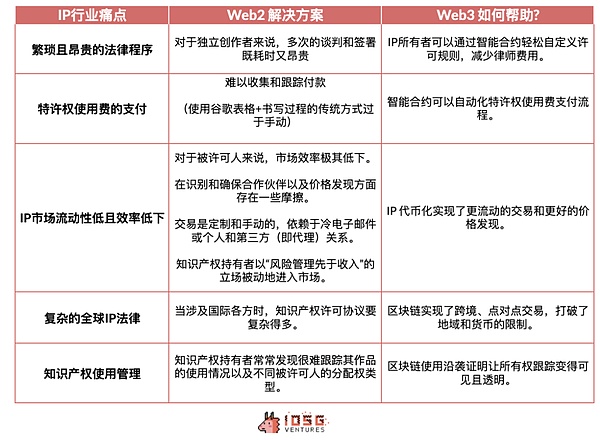
Due to the presence of numerous intermediaries between the supply and demand sides, independent IP creators often lack the time and resources to hire legal and consulting professionals. The manual management tasks of recording intellectual property contracts using Microsoft and Google tools (spreadsheets, documents, etc.) further delay and complicate the entire licensing process.
This makes secondary independent derivative creators unwilling to pay licensing fees to IP owners through official channels, and they are more inclined to infringe. Traditionally, for intellectual property licensing transactions between two large companies, an escrow account must be used as an intermediary. The lawyers of both parties need to review and sign the contract before the transaction can be completed. Reliance on escrow accounts is extremely inefficient, and this process can be fully automated using smart contracts.
2.2 IP Distribution Platforms Hinder Innovation in Intellectual Property
Web 2 distribution platforms often have excessive power in IP transaction negotiations, especially when dealing with independent IP owners, as these platforms can precisely control the exposure and traffic of each IP.
As Story Protocol founder SY Lee pointed out, content companies often lack network effects, forcing them to rely on large content production and marketing budgets to survive. This overwhelming bargaining power makes it difficult for smaller IPs to be profitable, often leading to their failure before launch. Even large IP studios are hesitant to develop new IPs, instead choosing to focus on expanding existing IPs.
For example, Moloco reported that after Apple banned targeted advertising for mobile consumers, the cost per install skyrocketed, causing many mobile apps to fade away. To counter the pricing power of Web 2 platforms, independent IP owners and creators need an effective way to fight back.
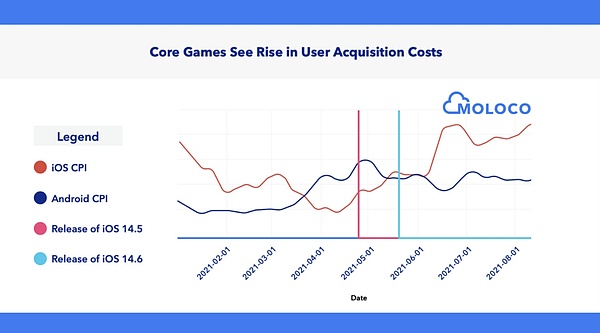
Source: Moloco
The most promising solution is to help small independent IPs evolve into networks. Transforming intellectual property into a model of fan and creator networks can help break these monopolistic structures and bring more value to IP owners.
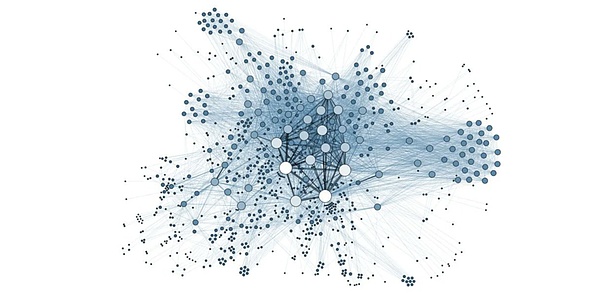
Source: Story Protocol founder SY Lee
Of course, the problems in the IP industry go far beyond this, and the following are the challenges faced by the traditional IP industry and why we believe Web 3 can help solve these problems.

3.Opportunities in Web3
The IP industry faces obvious problems of inefficiency and lack of transparency, and Web 3 offers potential solutions. But haven't Non-Fungible Tokens (NFTs) and related protocols already solved these problems?
3.1 Is NFT Alone Enough?
Undeniably, the invention of Non-Fungible Tokens (i.e., ERC-721 tokens) has indeed introduced a permanent identifier to represent the ownership of specific metadata such as text, images, and videos, effectively representing IP on-chain!
However, these NFTs are relatively static, as their metadata is fixed once minted. To address this limitation, Dynamic NFTs (dNFTs) were introduced, providing greater flexibility by encoding predefined conditions in smart contracts to allow for automatic metadata updates triggered by on-chain or off-chain events.
Another important issue surrounding NFTs is liquidity and royalties, which are widely explored areas in the financialization of NFTs. Sudoswap solves the liquidity challenge through an AMM model, enabling automated price discovery and adjustment. This addresses the liquidity issues in traditional markets like OpenSea, where sellers often wait for buyers to match their prices.
Blur further improves the NFT trading experience by reducing market fees to 0% and aggregating listings across multiple markets, allowing users to easily compare prices and liquidity across platforms. Blur also launched Blend, a lending protocol that enables users to borrow against their NFTs without selling them.
While the AMM model and market aggregation have increased liquidity, some NFTs, particularly rare or niche ones, may still face challenges with pool liquidity. To address affordability and liquidity issues, Floor Protocol has attempted to fractionalise NFTs into micro-tokens, called μ-Tokens, to make them more accessible. The issue of NFT royalties remains contentious, with past disputes between Blur and OpenSea. Magic Eden has taken a clear stance, imposing royalties on all ERC-721C series listed on its platform.
As NFTs continue to evolve, the Lego bricks of blockchain innovation in the intellectual property domain seem to be in place, but a critical piece is still missing: the ability to support the programmability of creator derivatives.
3.2 What is the Programmability of Derivatives?
IP owners need IP creators to create derivatives to maintain the prominence of their IP and extend its lifespan. The more creators involved, the greater the long-term benefit for that IP. This creates a dilemma that requires a better solution to effectively manage and enforce licensing agreements.
However, IP derivatives often involve complex parent-child relationships that are difficult to handle. Current NFT protocols struggle to track the connections between each version created on-chain and effectively implement customized royalty structures or licensing agreements.
When Pudgy Penguins' CEO Luca Netz sold over 20,000 toys on the Amazon platform in just two days, the cumbersome process of signing partial licenses with individual NFT holders added extra time and legal costs.
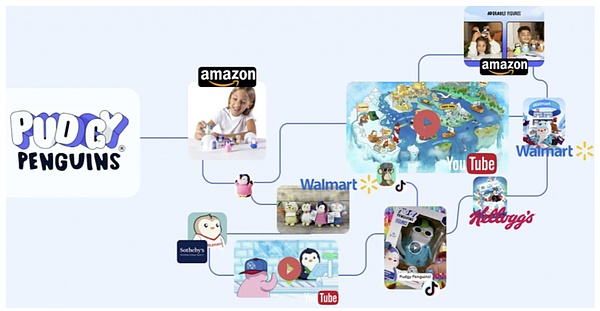
Source: TinTinLand
The essence of derivative programmability is to support more efficient IP licensing and version control between IP owners and derivative creators.
A simple analogy is Git and GitHub. The core of GitHub is Git, which tracks every change made to files. This version control system allows you to track and revert to any point in the version history.
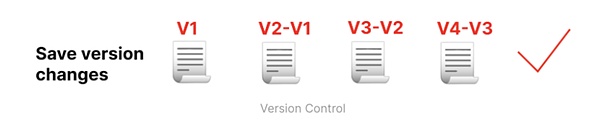
So why is this programmable layer so important for IP creation and attribution?
Intellectual property (IP) creation and ownership are key elements in the Web 2 and Web 3 ecosystems. In the context of Web 2, the importance of IP has become evident through the rise of AI-generated content (AIGC) and user-generated content (UGC). Similarly, in Web 3, the relevance of IP attribution has been emphasized by the popularity of meme coins. Examples such as $BRETT, $APU, $PEPE, $PEPE2.0 originating from the PEPE theme boy club demonstrate the significance of derivative works in this space. These meme coins have exhibited massive trading volumes, but the original creator, Matt Furie, has had difficulty capturing the economic value generated by these derivative assets.
For instance, while $PEPE and $PEPE2.0 are viewed as distinct tokens by the market, $PEPE2.0 is essentially a derivative asset of $PEPE, differentiated only by a color change. This situation highlights the limitations of the current IP management framework in Web 3. Utilizing the IP tracking functionality of the Story Protocol, the original holders of $PEPE should capture the value creation of their IP.
Under this new mechanism, either a portion of the derivative tokens of the Pepe theme should be airdropped to the IP owners, or a portion of the transaction fees should be directly paid to the IP owners, allowing the original creator of the Pepe theme IP, Matt Furie, to benefit economically.
Clearly, a more effective solution is needed to manage the relationships between IP asset derivatives, one that provides greater programmability, which is what the Story Protocol is actively developing.

4. Story Protocol
The main innovation of the Story Protocol lies in its ability to provide IP owners with a comprehensive, open-source solution to manage their IP assets. This includes features such as verification, authorization, traceability, and automated profit sharing and claiming, all with enhanced programmability. The Story Protocol has built an EVM-compatible L1 blockchain using the Cosmos-SDK, allowing IP owners to easily register their intellectual property as L1 IP assets.
The Story Protocol records the multi-level parent-child relationships between various IP assets, where each asset can be a Web 3 native Non-Fungible Token (NFT) or an on-chain proof of ownership NFT for a real-world IP, such as Donald Duck. In the case of bringing real-world IP onto the chain, the Story Protocol has also developed a code-based contract template called the Programmable IP License (PIL).
Through the PIL, IP owners can map their off-chain licensing terms to the blockchain by attaching the PIL to their IP assets. The Programmable IP License (PIL) fully embodies the "code is law" principle in the blockchain domain and provides three pre-defined templates:
Non-Commercial Social Remixing: This template allows users to freely use, share, and remix the original IP in a social environment, but explicitly prohibits any commercial use.
Commercial Use: This template allows users to purchase the right to use the original IP at a pre-set price, but prohibits the resale of the original IP or the creation and sale of commercial derivatives.
Commercial Remix: Building on the Commercial Use template, this allows for the commercial use of derivative works and their resale.
An IP asset can have multiple different PILs, and in addition to the pre-set templates, users can also customize their own terms of use. These terms are publicly transparent to all participants. Other creators can view these terms and, if they agree, can obtain a license with a single click and immediately start creating derivative works.
When derivative works generate revenue, the smart contract will automatically distribute royalties between the original IP creator and the derivative work creator based on the pre-set terms of the original IP. This process is efficient, transparent, and does not require third-party intervention, ensuring that profits are fairly and promptly distributed to all participants. In addition to openness, licensing, and royalty distribution, the Story Protocol also includes a dedicated dispute module for rights verification. This module allows IP owners to report IP derivative creators in cases of IP infringement. Currently, the Story Protocol's legal team serves as the arbitrator, but in the future, this may be handed over to a third-party legal team for arbitration.
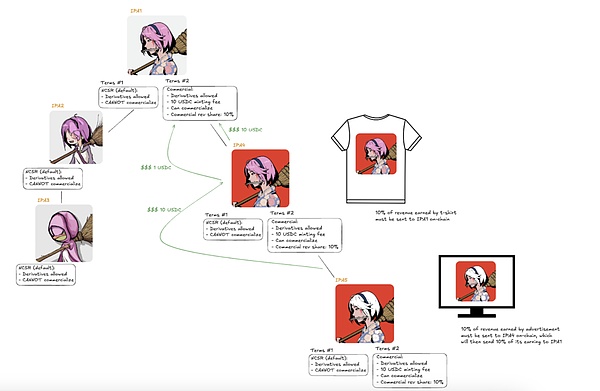
In the example above, we can see how the Azuki IP NFT can create derivatives and distribute profits, allowing both the IP owner and the derivative creator to generate commercial revenue.
4.1 From Illiquidity to Liquidity
The Story Protocol, as a new intermediary, replaces the traditional intermediaries such as costly legal and consulting services. This innovation significantly lowers the entry barrier for IP licensing, while ensuring that derivatives and remixes are controllable and traceable, ultimately protecting the originality of IP owners and derivative creators.
However, some may be concerned about the non-uniformity of the market. The customization of IP is essentially infinite, and when over-customization occurs, it can lead to potential liquidity issues in the financial market. How can this problem be solved? What automated matching solutions can be implemented to meet the diverse preferences of the demand side?
Solving the market liquidity issue is a key differentiator for the Story Protocol compared to competitors like Spaceport.
Through the licensing module and royalty module, the Story Protocol's users (including IP owners and derivative creators) primarily trade two types of tokens:
License Tokens (ERC-721): These tokens grant the right to use intellectual property or create intellectual property derivatives. They can be minted by paying a fee or purchased on the secondary market. When the license token is burned, the holder accepts the terms of the intellectual property license, allowing them to start creating derivative works. This system transforms the derivative rights of intellectual property into tradable assets, providing new income opportunities for the original creators.
Royalty Tokens (ERC-20 token, 1B supply): These tokens represent a portion of the revenue generated by the intellectual property. The revenue comes from three sources: the fees for minting license tokens, IP usage revenue, and revenue sharing between the original IP and its derivatives. Royalty tokens allow holders to claim a share of this revenue, making the future income stream of intellectual property more liquid and available for creators and investors.
License tokens transform the derivative rights of intellectual property into tradable liquid assets, providing original creators with diversified income sources. At the same time, royalty tokens, as asset-backed securities, can tokenize future cash flows, enhancing the liquidity of IP asset owners and investors. This process reflects the benefits of asset securitization, allowing the income rights of intellectual property assets to be traded like financial assets. Furthermore, the purchase or sale of IP usage fee tokens reflects investors' optimism or pessimism about the future income of the IP.
The Story Protocol stands out due to its L1 architecture. By registering all IP assets on a single L1, it can ensure the unified processing of these assets and prevent liquidity fragmentation. For example, meme coins can be viewed as a form of intellectual property asset. Although meme coins are typically ERC-20 tokens, if they are converted to ERC-721, they will essentially represent meme NFTs.
IP assets deployed on different blockchains (e.g., $MOODENG) are often treated as separate tokens, even if they represent the same underlying asset. This leads to liquidity competition between the same tokens on different chains, thereby reducing their overall value. The Story Protocol's L1 structure solves this problem by consolidating liquidity in one place, preventing the dilution of asset value across multiple blockchains.
Furthermore, the Story Protocol's royalty payment and licensing modules help control the excessive creation of derivative memecoins, such as $NEIRO, $Neiro, and $NEIROETH, through a copy-cat approach. By introducing licensing fees, the cost of launching new meme coin derivatives will increase, thereby preventing the unsustainable proliferation of these tokens.

4. IP+Web 3.0: A Promising Future
All of this sounds very exciting, and indeed, we can already clearly envision how the traditional IP industry will be massively disrupted by blockchain.
Especially with the advent of the AIGC era. AIGC represents a revolutionary change in the way creative works are produced, using advanced AI algorithms to automatically generate text, images, audio, and video, blurring the boundaries between human creativity and machine-generated output.
However, the copyright issues in the field of Gen AI have not yet been resolved. Traditional intellectual property laws allow intellectual property owners to decide how to use their works, including creating new derivative works based on the original work. But there is no clear legal framework for confirming the copyright of content generated by Gen AI.
One unresolved situation is: should these AI-generated works be considered unauthorized derivatives or entirely new intellectual property? This is an issue that urgently needs further clarification and improvement in copyright law.
Today, Gen AI has generated a large amount of content based on existing IP. For protocols like Story, it is crucial to help establish IP ownership within AIGC and solve the challenges of traceability, liquidity, and royalty distribution of these AIGC IPs.
Clearly, we still need to remain calm. A very obvious fact is that Web 3 is still in the development stage, as described in the innovation diffusion model, transitioning from early adopters to early majority.
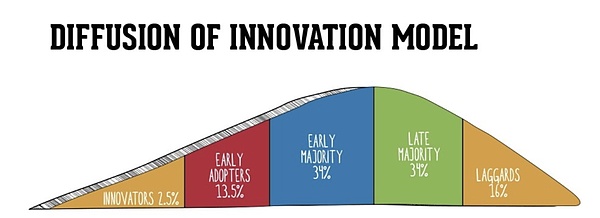
Source: Everett Rogers' Innovation Diffusion Theory
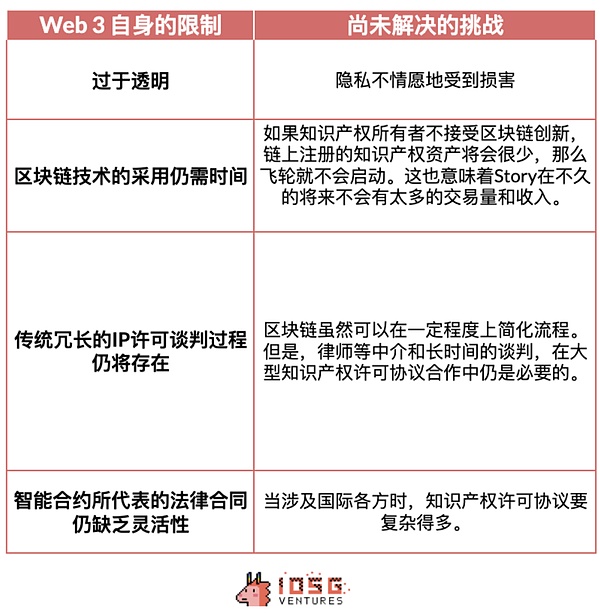
However, we believe that over time, this situation will naturally improve, and the reasons are also very clear. According to the recent a16z Crypto State of the Union report, there are about 617 million cryptocurrency holders, with record-high active addresses and usage. We believe that with the mass adoption of Web3, combined with the progress of the Story Protocol itself, the IP era will develop in an ideal direction.