I can’t believe I’m writing this blog post.
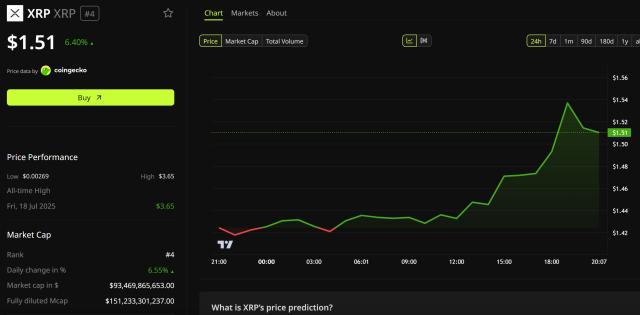
A year ago, I wrote that bull markets get more crazy than you expect. And watching XRP pump 3.5x in a month, overtaking Solana, feels like peak insanity.
You might hate XRP and want to ignore it. I ignored it for years—since I joined crypto in 2018. But here’s the thing: the market isn’t wrong. We are.

If memecoins became too big to ignore, maybe XRP is the next playground for degens chasing generational wealth. Or maybe it’s not.
Either way, curiosity got me.
This blog post breaks down how the XRP Ledger (XRPL) works, how to buy tokens on it, the core concepts you need to know, and where to go for deeper research.
By the end, you’ll at least understand XRP enough to decide if it’s worth touching—or running away from.
What the Hell Is XRPL?
XRPL markets itself as a blockchain built for speed and efficiency.
But it’s not really fast, decentralized or efficient (as you’ll see, the efficient part is debatable).
XRPL doesn’t use PoW or PoS. Instead, it uses federated consensus where validators agree on transactions without mining or staking.
Here’s how it works:
Over 109 validators process transactions, with 31 trusted validators forming the Unique Node List (UNL) for consensus.
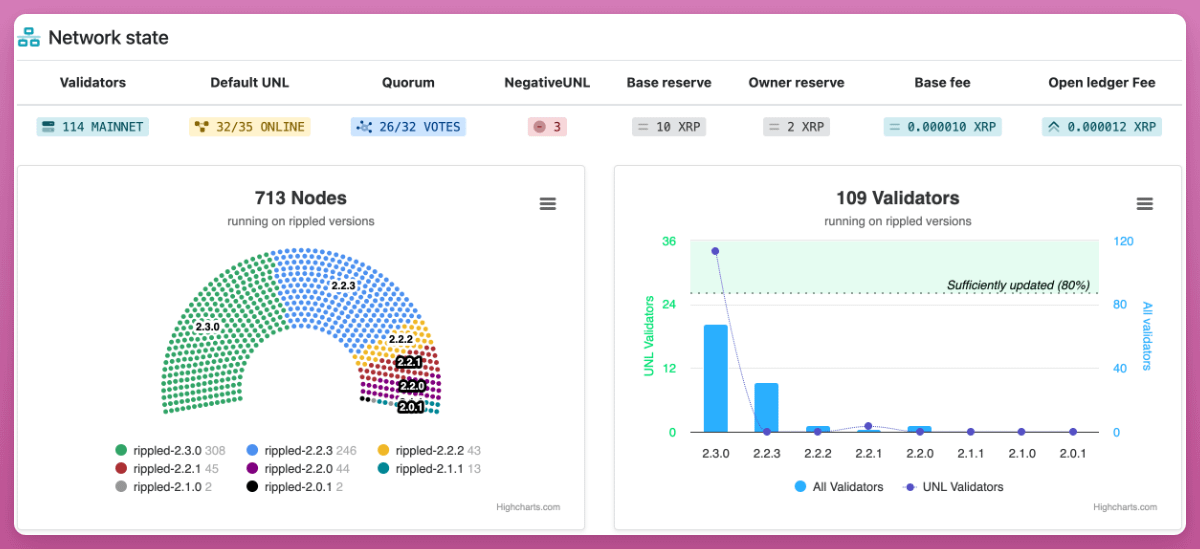
In practice, around 31 trusted UNLs run XRP Ledger. Those include Arrington XRP Capital, Bifrost wallet, Ripple themselves, XRPscan etc. You can find the live list here or on XRP scan (which is more user friendly).
They claim that any entity can run and publish a UNL, chosen for reliability. But this reliance on the UNL introduces centralization risks, as Ripple and the XRP Ledger Foundation heavily influence the default UNL. Claims are that Ripple Labs needs to approve them.
The name “federated consensus” is really appropriate.
You’d expect XRP to be fast as it relies on just a few validators.
Nope. Transactions confirm in 3–5 seconds. Solana is miles ahead in node number, transaction speed, and as you will see, smart contract capabilities and so forth.
The good think is that fees are almost zero at 0.00001 XRP per transaction.
WTH Are Trust Lines, Reserves, Negative Balances, and Rippling
When you create an XRPL wallet (to trade XRP memecoins), you'll notice something unusual.
First, you need at least 10 XRP to activate an account. Additionally, for each token you hold in your wallet, XRPL requires a reserve of 2 XRP per token (so if you hold 20 memecoins, you’ll need 40 XRP “reserved.”)
There is currently a governance vote underway to reduce these requirements by 10x. You can find the current requirements under the "base reserve" and "owner reserve" tabs on XRP Scan.
The reason for it is different mechanism how balances work via “Trust Lines.” This is the most complex part so give me a minute to explain.
“Trust lines are structures in the XRP Ledger for holding fungible tokens. Trust lines enforce the XRP Ledger's rule that you cannot cause someone else to hold a token they don't want. This precaution is necessary to enable the XRP Ledger's use case for community credit among other benefits.” - Ripple docs
In essence, with Trust lines no one is forced to hold tokens they don’t trust, to prevent spam, and allow controls like freezing, authorization, and the “No Ripple flag” to prevent unwanted balance adjustments.
Trust lines on XRPL are the backbone of its token system.
They connect two accounts and define the balance between them, enabling the issuance and transfer of tokens.
When an issuer creates a token, their balance can becomes negative, representing the amount they’ve issued, while the holder’s balance becomes positive.
For example, if an issuer sends 100 tokens, their trust line balance is -100, and the recipient’s balance is +100.
Rippling (where the name Ripple comes from) takes this a step further by enabling token balances to flow through connected accounts during payments. It’s like a passive exchange system that allows funds to settle atomically without issuer involvement.
For example, if Alice owes Bob $10 and Bob owes Charlie $10, rippling lets Alice pay Charlie directly, adjusting balances across trust lines.
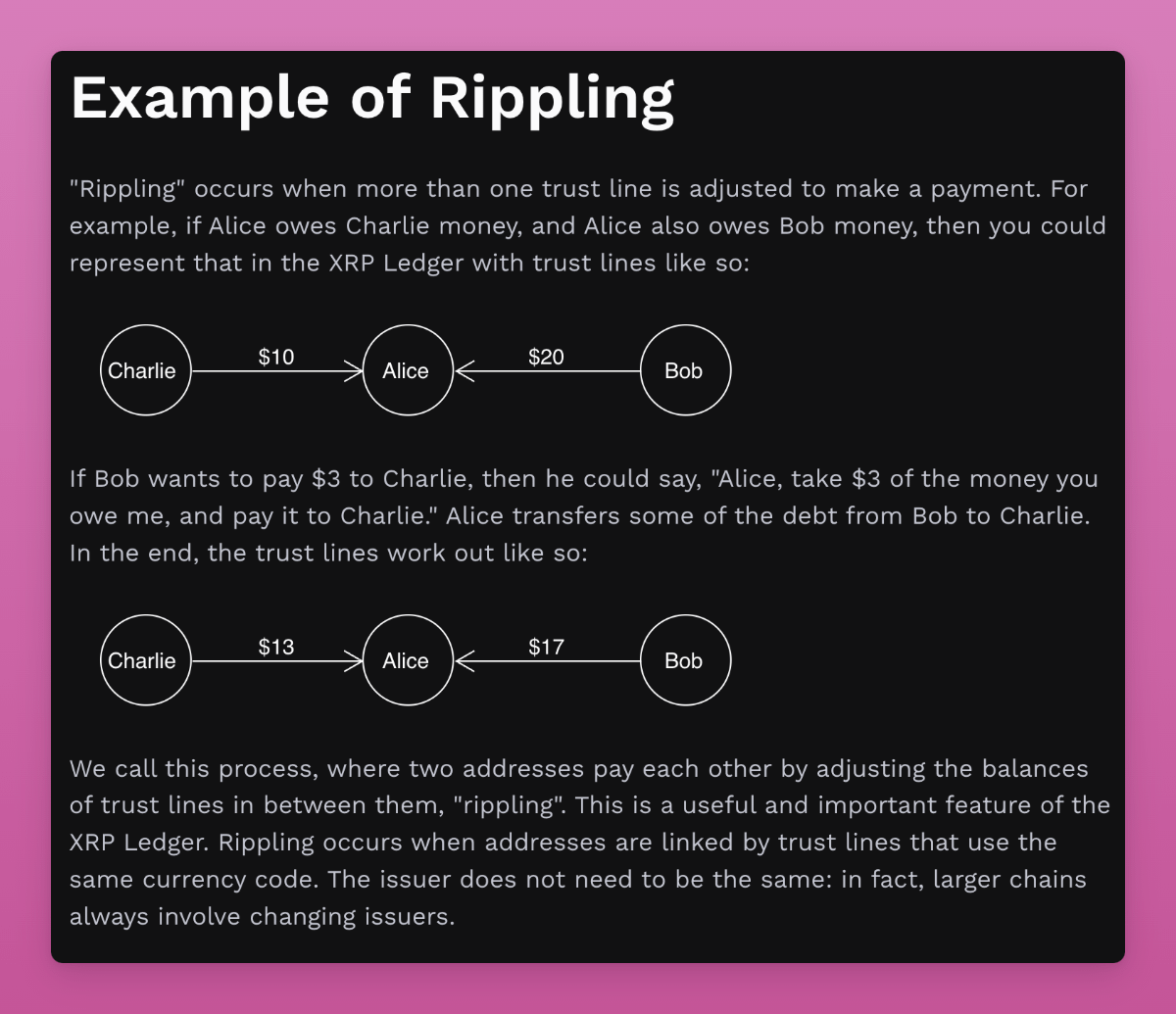
Remember why Ripple designed it this way!
It's like to a double-entry accounting system for “efficient” net settlement, built for real-world assets, stablecoins, tokenized commodities, and cross-border payments.
It means that the issuer has a lot more control on how the assets are being used.
For compliance (think stablecoins), Authorized Trust Lines issuers can enable the Require Auth flag, restricting token ownership to approved accounts. This feature makes XRPL good for KYC/AML-regulated assets.
Decentralization maxis will have a fun time criticizing it.
If you understood how it works, you’ll probably won’t want rippling to be enabled as your balance could be adjusted. Users can enable or disable that rippling.
Enable Rippling:
If you want to allow balances to flow through your account as part of a payment path.
Used by accounts acting as intermediaries, such as market makers or exchanges (not sure if you earn fees. I guess not?)
Disable Rippling:
If you want to prevent your balances from being used in payment paths.
Common for regular users to protect their balances from unintended adjustments.
And as I mentioned above, each trust line (like the line opened between your wallet and a memecoin issuer) requires a 2 XRP reserve locked into your wallet.
If you’re confused, check Ripple’s explanation here.
EVM Sidechain: Ethereum on XRPL
XRPL doesn’t have a full virtual machine like Ethereum’s EVM, Solana’s SVM, or Aptos’ Move VM. Instead, it uses WebAssembly-based Hooks, lightweight programs for basic transaction logic.
Hooks aren’t as powerful as smart contracts. They’re better for simple automation, like rejecting transactions if your balance drops too low.
Although XRPL has a native AMM that allows liquidity provision and cross-token trading. More on how to do it in just a second.
So, while XRPL supports basic programmability, it can’t compete with Ethereum for complex DeFi or dApps—at least not natively.
For this reason Ripple is developing an EVM sidechain, currently in testing and should be live in a few months. XRP will be the gas token.
Alpha: The EVM<>XRPL bridge is powered by Axelar, so if it picks up Axelar can be a big winner here.
In short, XRP is going modular! And it will be fun to see if the sidechain picks up any steam.
Ok, the boring part is done. You’ve made it. Now, the degen part.
How to Buy Memecoins on XRP
An absolutely mind bending fact is that Ripple Ledger has a native AMM, like “enshrined AMM” where you can trade … mostly memecoins.
The TVL is still very low on it but volumes have been going up due to memecoin mania. ~ 14M XRP is deposited into AMM pools, so we are indeed early (or very late as XRP trades higher MC than SOL).
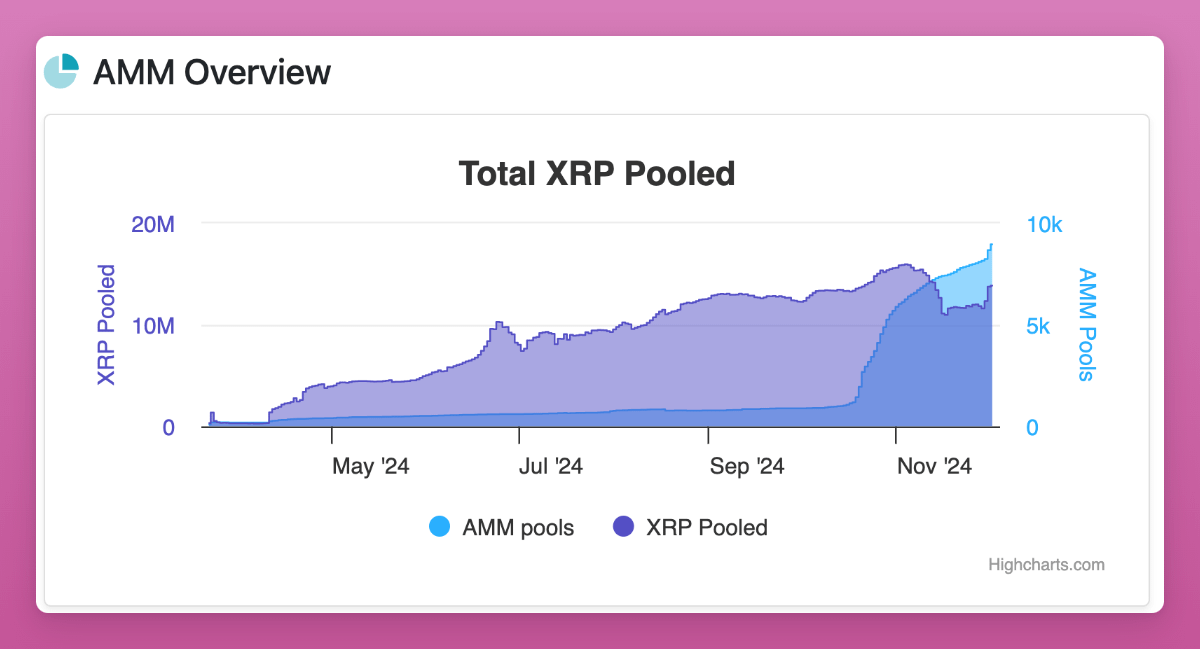
You can check how much XRP is locked per pool on XRP Scan.
Note, that XRP scan offers readable data on transaction, analytics, validators and more. You can track whale wallets, token concentration data so memecoin trading based on data is possible.
The easiest way to start trading memecoins:
Go to the First Ledger website. It allows creating a wallet on Telegram or on browser saving your keys locally.
Alternatively, try Xaman wallet on phone. It works okay, and you an import your keys on both wallets to see which you like more.
Get XRP from CEX or many recommend Simpleswap to bridge different assets to XRP. Didn’t try it but shared my ref link if you want to use it.
You can sort memecoins on Firstledger token page. You’ll see that new tokens are being created every minute.
Note! The supply of most memecoins is very concentrated. You’ll see 10 wallets holding up to 40%+ of the total supply. Pump dot fun is really needed on XRPL to make token issuance more fair.
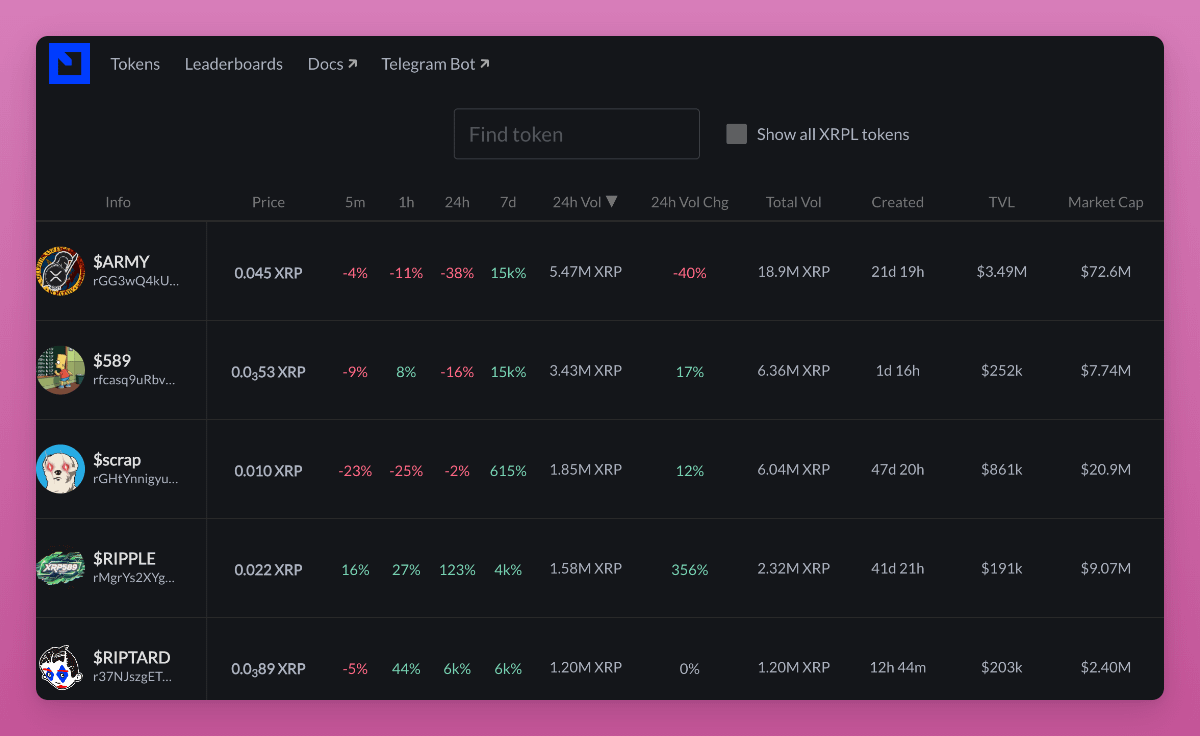
Tip: Sort tokens by 24-hour volume, market cap, number of holders, or creation date. My hunch is that tokens created earliest, with the highest volume and most holders, will perform better than recently created ones. However, the strategy is yours to decide.
A much more advanced platform is xMagnetic.
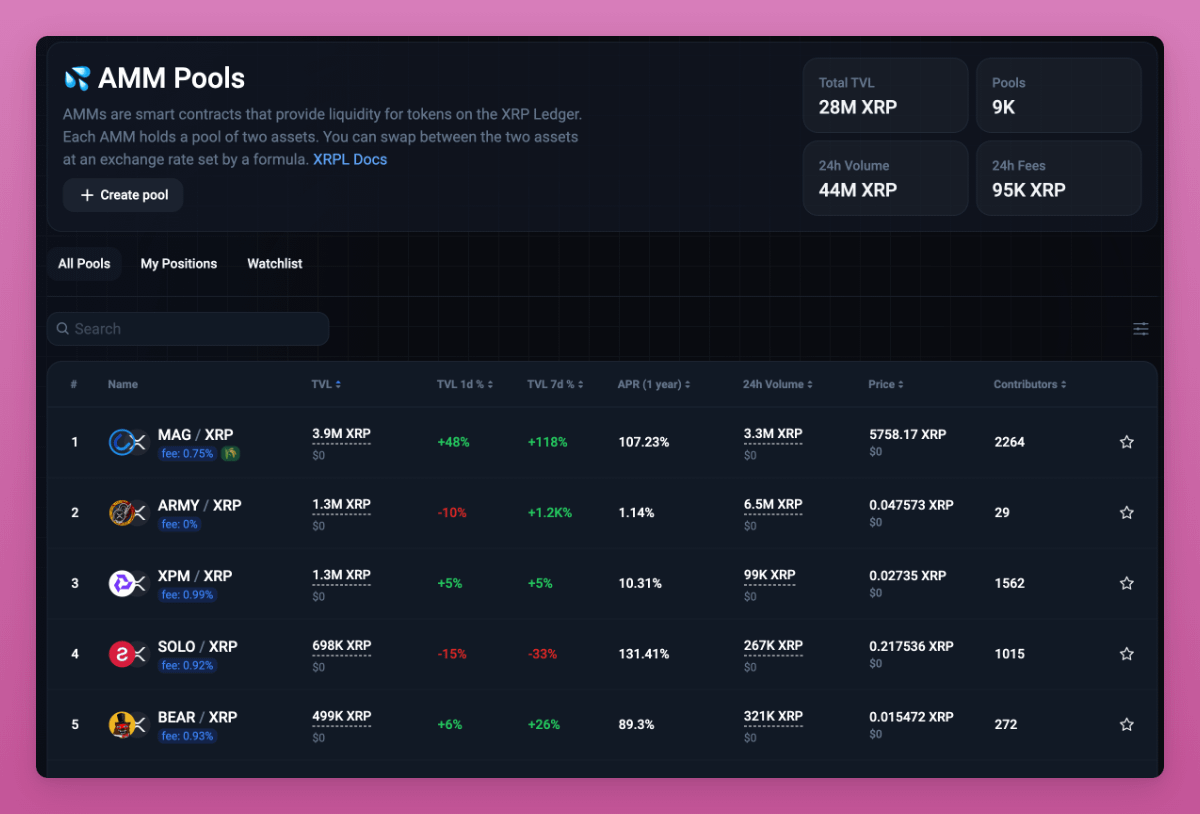
You can discover tokens, provide liquidity and see stats. I recommend Xaman wallet to use it with xMagnetic. Sologenic DEX is an alternative but didn’t really work for me.
Now you are ready to explore Ripple degen trenches. The question is: Are you willing to do so?
Please click on ❤️ if you liked this blog post, and subscribe if you loved it!