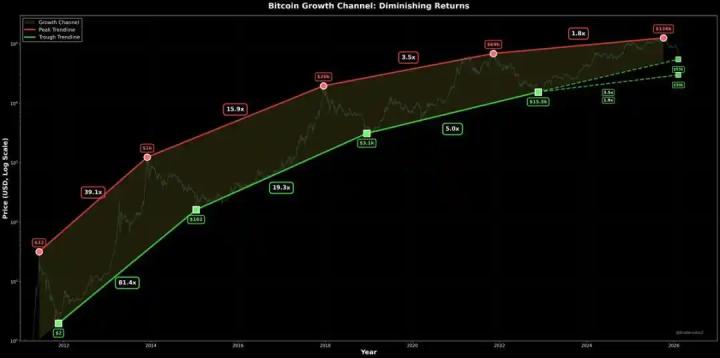
Prologue to the New Era of Strategic Investment: Ethena
On November 5, 2024, Trump successfully won the U.S. presidential election, marking the beginning of an economic transformation led by traditional industries and decentralized finance. The core of Trump's policy is to break the shackles of the U.S. dollar hegemony on the domestic economy, revive the industrial economy, and weaken the excessive control of the Democratic Party and its financial capital over the U.S. economy. In early November, ArkStream Capital astutely recognized the crucial role Ethena (ENA) plays in this historical moment and strategically invested $5 million in Ethena. As one of ArkStream's heavily weighted investment projects, Ethena's performance has met our expectations, bringing us excellent financial returns.
As an innovator in the DeFi field, Ethena is committed to providing various stable and scalable crypto-native currency solutions. Its first stablecoin is the crypto-native synthetic U.S. dollar USDe, whose core innovation is to maintain an inherently stable value by holding spot positions and corresponding short positions in various mainstream crypto assets using a Delta hedging strategy. This design is not dependent on traditional U.S. dollar bank reserves and can bypass the traditional financial system dominated by the Democratic Party, becoming a new alternative to the U.S. dollar.
The second stablecoin, USDtb, is co-developed with Securitize, a renowned institution in the RWA (Real-World Assets) field, and is built on BlackRock BUIDL, connecting traditional financial products such as the U.S. dollar, short-term U.S. Treasury bonds, and repurchase agreements. This creates a digital U.S. dollar backed by the stable yield of real-world assets, which can efficiently channel funds into U.S. domestic industries and the real economy, supporting Trump's core goal of reviving industry and creating jobs.
It is worth mentioning that World Liberty Financial, led by the Trump family, although not adopting the DAO model, has demonstrated its grand vision in the DeFi field by pushing for DeFi to enter the mainstream U.S. financial market. In the DeFi field, projects that can generate sustainable income are particularly focused on, such as the lending platform Aave, the oracle network Chainlink, the RWA-backed ONDO, and the crypto-native stablecoin solution Ethena. Reportedly, WLFI has cumulatively invested $750,000 in Ethena tokens through on-chain transactions and announced a partnership, planning to use Ethena's yield-bearing token sUSDe as collateral on the WLFI lending platform.
The Perspective of RWA and Stablecoin Investment
RWA (Real-World Assets), payments, and stablecoins constitute three core intertwined elements in the financial field. They can be considered as a whole in specific financial scenarios, or they can be viewed as specialized tracks with independent meanings. Among the three, the concept of payments is relatively clear, and its application scenarios are similar to the traditional financial world. For the other two, RWA refers to assets that are digitized through Web3 technology and transformed into transparent and easily tradable assets on the blockchain. This process covers a diverse range of asset classes, including stablecoins, private credit, U.S. Treasury bonds, commodities, and stocks. Given the unique and significant proportion of stablecoins within RWA, stablecoins can also be considered as an independent track. This chapter will explore the growth rate and market space of RWA and stablecoins from an investment perspective, and focus on the evolution of the stablecoin market landscape and the development trajectory and challenges faced by crypto-native stablecoins.
Excellent Growth and Broad Prospects
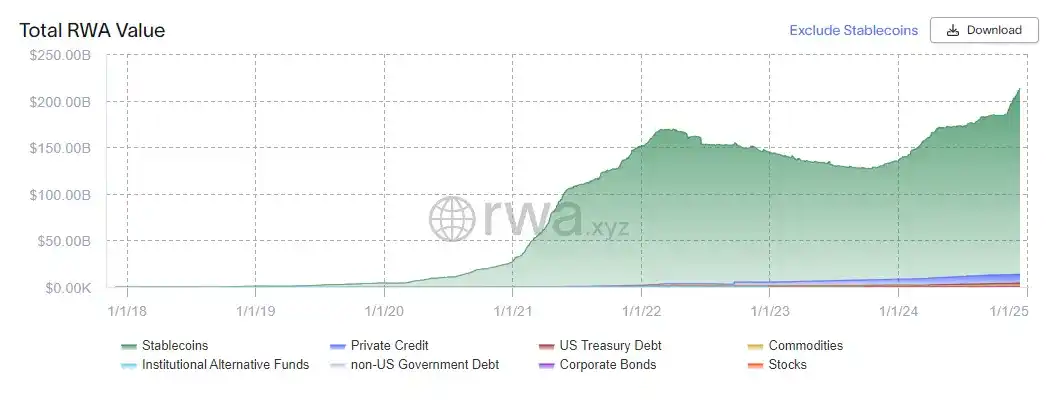
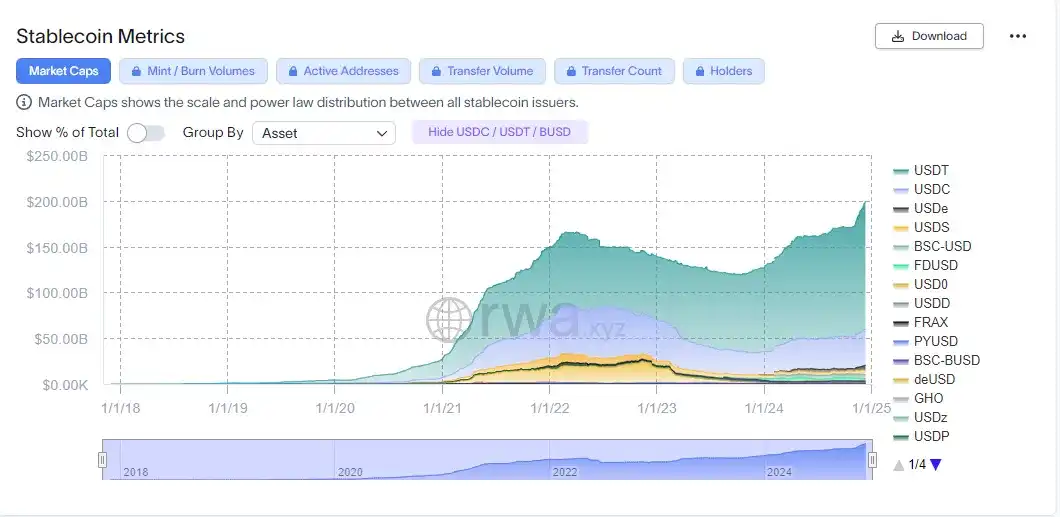
By combining the total asset value trends of RWA and stablecoins, we can intuitively grasp their market size and growth dynamics. Currently, the total asset value of the RWA market is approximately $218.3 billion, of which the stablecoin market size has reached $203.4 billion, accounting for a high proportion of 93.2%. The stablecoin market has grown from $30 million at the beginning of 2018 to the current $203.4 billion, such a massive growth not only reflects the strong development momentum of stablecoins but also highlights their immense market potential. In the non-stablecoin RWA field, the total asset value has grown from $10 million in 2018 to $14.9 billion currently, with a corresponding annual compound growth rate also showing an impressive performance. Private credit and U.S. Treasuries have played a key role in this growth process.
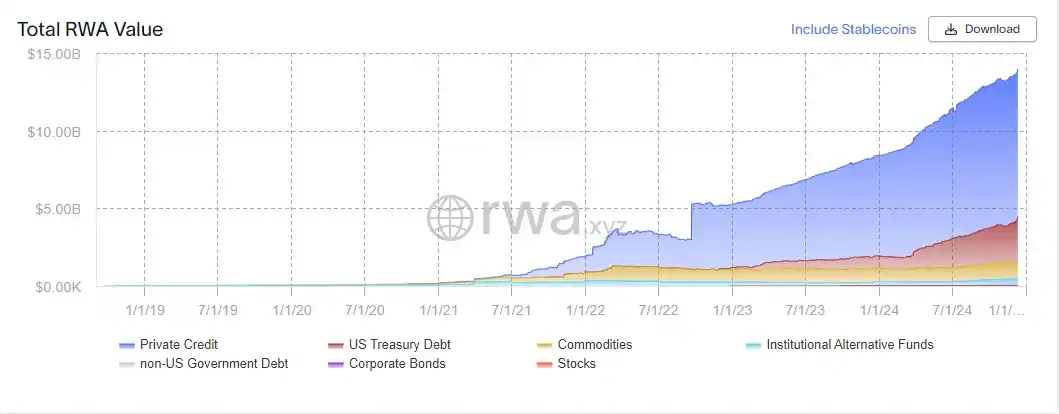
Stablecoins, as a unique and critical asset class within the RWA field, deserve special attention and analysis. Before discussing them, let's briefly understand the U.S. dollar and its related assets. The U.S. dollar, with its exceptional international status, has become the key currency for cross-border transactions, financial settlements, and global investments. The U.S. dollar and its related assets, such as U.S. Treasuries, play a core role in the financial markets, further consolidating the U.S. dollar's position as a global reserve currency and making it a symbol of global hard currency.
In the cryptocurrency market, since 2018, U.S. dollar-pegged stablecoins have played a crucial role. They not only serve as the benchmark currency unit for transactions but also act as shadow U.S. dollar assets, active in various scenarios such as remittances and payments. For example, the current on-chain daily transaction volume is stable in the range of $25 billion to $30 billion, and even during market downturns, this data has not fallen below $10 billion. In terms of trading volume, according to a CCData report, the monthly trading volume of stablecoins on centralized exchanges reached $1.8 trillion in November 2024, exceeding half of the total cryptocurrency market capitalization. Combining data from CoinMarketCap, we can estimate the daily average trading volume to be $6 trillion in November, meaning that stablecoins account for 30% of the industry's trading volume on centralized exchanges. This proportion does not even include on-chain stablecoin trading volume, indicating that the actual proportion may be even higher. In addition to trading volume and transaction volume, stablecoins have also introduced stable-yield assets such as U.S. Treasuries as underlying assets, providing stable and sustainable yields, bringing positive externalities to the industry and further promoting the connection and integration of Web3 and the real world.
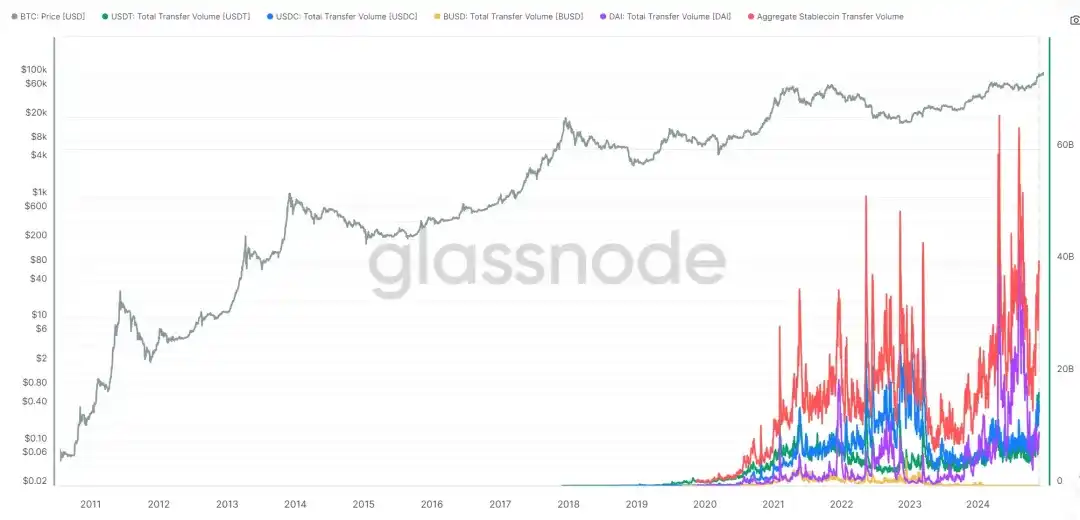
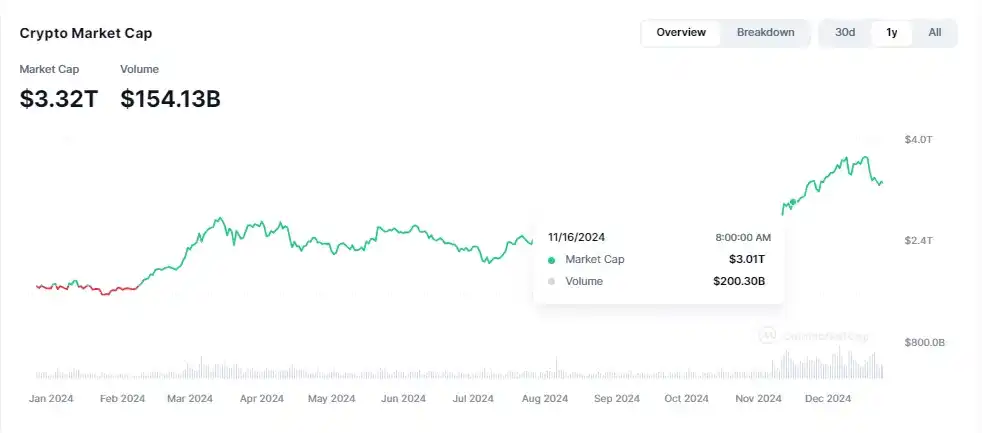
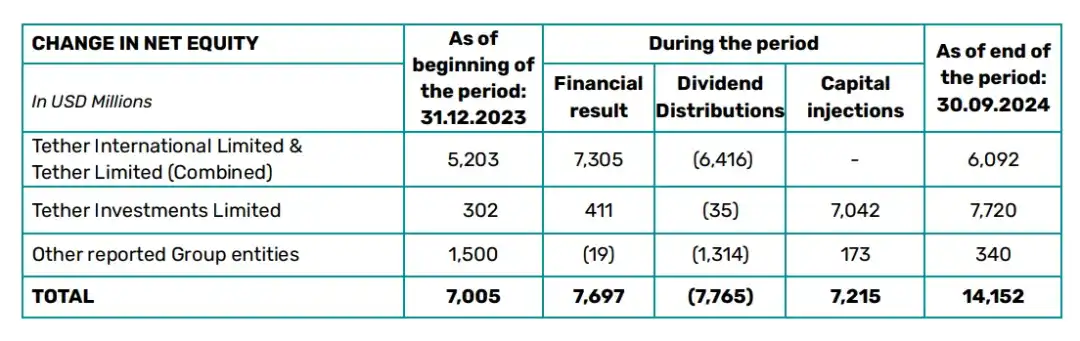
With the approval of Bitcoin and Ethereum spot ETFs in 2024, capital inflows have driven the overall cryptocurrency market capitalization to new highs. We expect that as the industry's market capitalization grows and the user base continues to expand, stablecoins will also likely break historical highs in terms of market capitalization, transaction volume, and other key data indicators.
The Evolution of the Stablecoin Market Landscape
The emergence of stablecoins stems from the crypto industry's strong demand for price stability tools. In the early stages, mainstream cryptocurrencies like Bitcoin and Ethereum experienced high price volatility, making them difficult to use as stable units of account. Stablecoins, pegged to fiat currencies like the US dollar, provided a relatively stable store of value and medium of exchange. This allowed users to hold a digital asset that could withstand market fluctuations and facilitate rapid fund transfers. As the demand for stablecoins increased, various types of stablecoins gradually appeared, including fiat-backed stablecoins, decentralized collateralized stablecoins, and algorithmic stablecoins. These stablecoins offered users a diverse range of options to meet different market needs and risk preferences.
In exploring the stablecoin market, we will focus on analyzing several representative stablecoins. These include USDT issued by Tether, USDC issued by Circle, DAI/USDS issued by the MakerDAO protocol, and the algorithmic stablecoin UST issued by Terra.
USDT, as an early entrant into the cryptocurrency market, has gained widespread market support and recognition since 2018. It has not only been accepted by numerous exchanges, but has also further penetrated the secondary market, DeFi protocols, various public chains, and Layer2 solutions. As a result, USDT has maintained a leading market share. Currently, USDT's underlying assets primarily consist of US Treasuries and overnight reverse repurchase agreements, and due to the lack of real-time transparency of these assets, USDT has historically experienced several depegging events, with the largest deviation reaching 10%. Nevertheless, USDT's first-mover advantage and global applicability have kept it dominant in the spot and derivatives trading volumes of mainstream exchanges. Major exchanges generally use USDT as the core trading pair, even though they also support other stablecoins like USDC or FDUSD, as USDT's trading volume and market depth still far exceed those of other stablecoins.
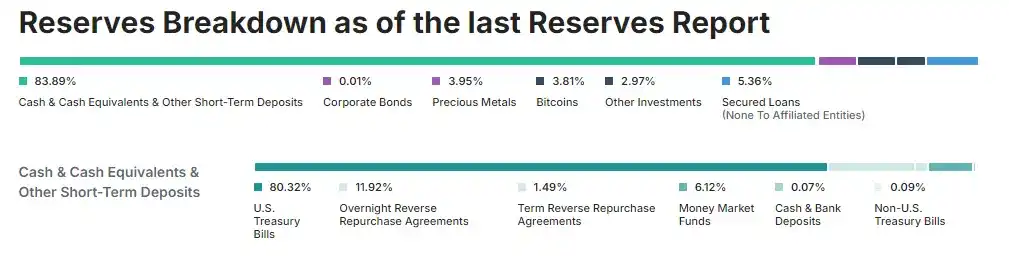
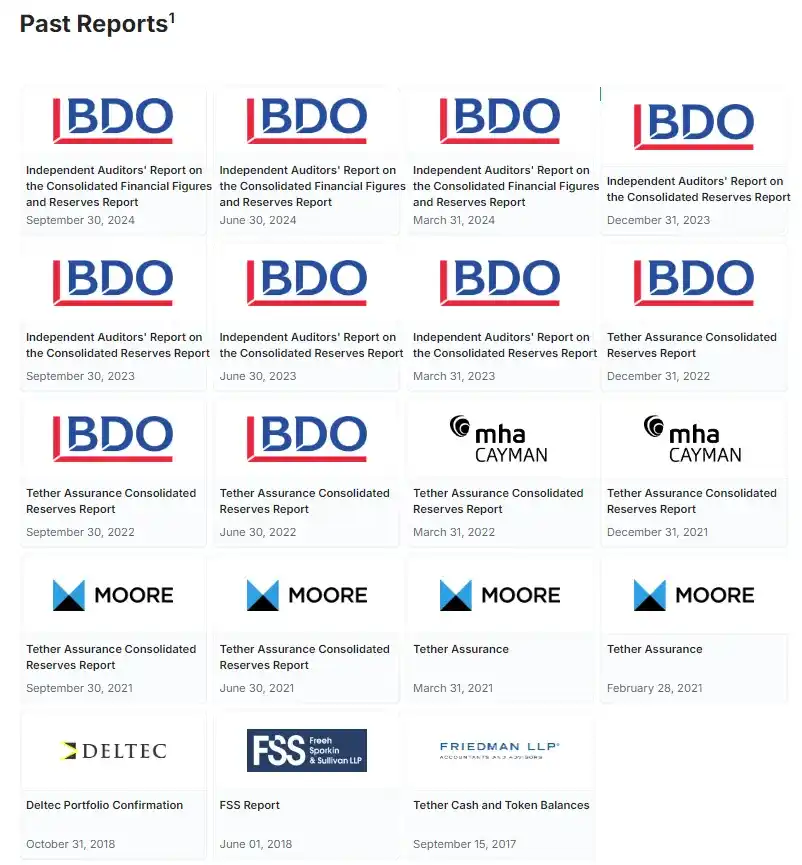
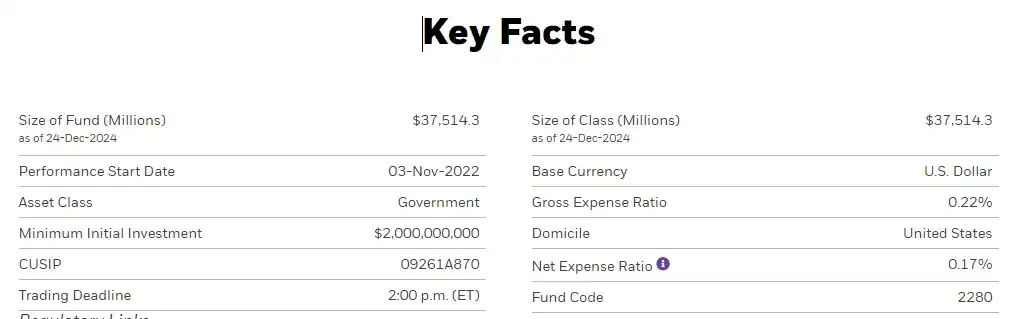
USDC, issued by the Circle company with strong regulatory resources and multiple asset management licenses, has already become the second-largest stablecoin in the cryptocurrency market since its launch in October 2018, with a market share of around 20.9%. Based on its excellent compliance and transparency, USDC's underlying assets are primarily composed of US dollar cash, short-term Treasuries, and US overnight reverse repurchase agreements. Most of USDC's reserves are held in the Circle Reserve Fund (a 2a-7 government money market fund registered with the SEC), which provides investment portfolio reports daily through BlackRock to ensure transparency. At one point, USDC's issuance volume approached 77.6% of USDT's, but in the March 2023 Silicon Valley Bank (SVB) bankruptcy event, Circle had approximately $3.3 billion of USDC reserves held at SVB, a small portion of its $40 billion total reserves. This news initially caused market panic, leading to a USDC price crash and depegging, and even triggering a bank run. However, with the joint rescue plan of the Federal Reserve and the Treasury Department, Circle announced that SVB's deposits were 100% secure, and market panic gradually subsided, with USDC's price recovering to near-normal levels. This event exposed the fragility of USDC in the face of traditional banking system risks, and its issuance volume has since shown a downward trend. To enhance USDC's stability and transparency, Circle has implemented a series of measures. Although its market share has not recovered to its previous high, USDC's inherent compliance still keeps it competitive in on-chain transaction volume and other key data indicators compared to USDT.
DAI/USDS is a decentralized stablecoin issued and managed by the MakerDAO protocol, aiming to maintain a 1:1 peg with the US dollar. Initially, DAI was generated through an over-collateralization mechanism, where users could lock up cryptocurrencies (such as Ethereum) in MakerDAO's smart contracts to generate DAI. This mechanism required the collateral value to be greater than the generated DAI amount to ensure DAI's price stability. However, during periods of severe price volatility, DAI could trigger a cascade of liquidations, and the transparent on-chain nature of the transactions made the liquidation thresholds easy targets for directed attacks, leading to failed liquidations and bad debts. To mitigate these risks, MakerDAO has introduced more collateral options, such as USDC and wBTC, and established a dedicated risk management team. DAI's decentralized nature provides unique advantages in certain application scenarios, particularly in the DeFi space, where it plays a core role not only as a medium of exchange but also in lending, payments, and staking activities. Although its market share is smaller compared to centralized stablecoins like USDT and USDC, DAI's market capitalization still holds a place in the global stablecoin market.

UST, the decentralized algorithmic stablecoin within the Terra ecosystem, aims to maintain a 1:1 peg with the US dollar. It relies on Terra blockchain's smart contracts, with the Luna token as the value backing. Users mint UST by burning an equivalent value of Luna, and redeem Luna by burning UST, with market arbitrageurs helping to maintain the price stability. During periods of rising Luna prices, the UST mechanism can promote a positive feedback loop, the so-called "positive spiral" upward. However, when Luna prices decline, as the Luna market capitalization may be insufficient to support the UST market capitalization, UST is prone to entering a "death spiral", where the price depegs from the US dollar. UST had previously gained significant market share by offering high yields through the Anchor Protocol, attracting user deposits and expanding its scale. Unfortunately, in the May 2022 Terra ecosystem collapse, UST's price stabilization mechanism faced severe challenges, ultimately leading to its depeg from the US dollar and a price collapse to zero. This event highlighted the risks and challenges of pure algorithmic stablecoins in terms of market confidence and algorithm design, which become particularly evident under extreme market conditions.
It is evident that in the stablecoin market, fiat-backed stablecoins have already captured a large market share and continue to grow, but due to the constant demand for trading, decentralized-issued stablecoins have been exploring new paths. Among them, Ethena has emerged as a standout, with its synthetic US dollar USDe occupying a niche in the DeFi space through its innovative financial solutions. USDe's distinguishing feature is its use of advanced Delta hedging strategies to maintain its peg to the US dollar, setting it apart from traditional stablecoins. Additionally, the stablecoin USD0 issued by Usual is worth noting, as it integrates the stability of traditional financial instruments (RWA) with the transparency, efficiency, and composability of DeFi. USD0, with its permissionless and compliant framework, directly passes the real yield from RWA to community users, demonstrating the competitiveness of this new type of stablecoin in the market. The emergence of these new stablecoins not only diversifies the market, but also brings more choices and investment opportunities for users.
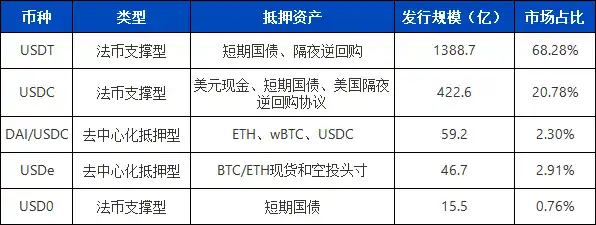
Core Indicators of Crypto-Native Stablecoins
We define "crypto-native stablecoins" as stablecoins that are not backed by fiat currencies, such as USDe and USD0. This type of stablecoin includes stablecoins collateralized by mainstream cryptocurrencies like Bitcoin and Ethereum, algorithmic stablecoins pegged to prices, and stablecoins that use a neutral strategy to anchor their value.
When evaluating these crypto-native stablecoins, we consider multiple dimensions, the most important of which are the stability, market capitalization, and application scenarios (including DeFi integration and support from centralized exchanges) of the stablecoin.
Stability is a key indicator for measuring the value of a stablecoin. The core value of a stablecoin lies in its price stability, i.e., its ability to maintain a stable exchange rate with the anchored asset. If a stablecoin fails to maintain this anchoring relationship, its "stability" will be questioned, and it will lose its basic function as a stablecoin.
In addition to ensuring the price stability of the stablecoin, it must also achieve a certain market scale in order to become a mainstream currency and occupy a place in the financial ecosystem. If a stablecoin cannot achieve scale expansion, its influence and practicality will be limited, and it will be difficult to have a significant impact in the highly competitive market.
The market scale of a stablecoin depends on the breadth of its application scenarios. Stablecoins without actual application scenarios, no matter how large their market value, will find it difficult to solidify their market position, like a tree without roots. Therefore, stablecoins must do their utmost to obtain a wider user base and more diversified application scenarios to ensure the stability of their value and the enhancement of their liquidity.
Why We Invest in Ethena
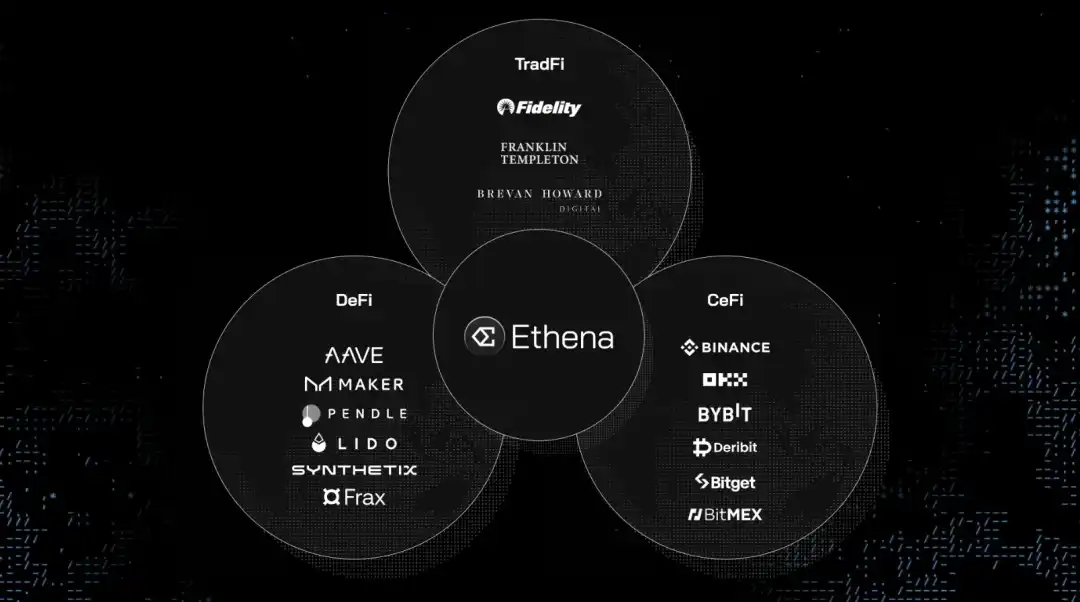
Ethena's vision is to build bridges between DeFi, CeFi, and TradFi by reshaping the cryptocurrency ecosystem, in order to promote the prosperity of the next-generation internet finance. Its first stablecoin, USDe, has already achieved deep integration in key areas of DeFi, including money markets, leveraged collateral in the derivatives market, stablecoin infrastructure, interest rate swap protocols, and spot AMM DEXes. In the exchange domain, Ethena's liquidity pools not only support existing centralized and decentralized trading platforms, but also help emerging exchanges solve the problem of initial liquidity, becoming a leading provider of deep and over-the-counter liquidity. For TradFi, Ethena's USDe is highly sought after for its unique yield, which combines the actual yields of two cryptocurrencies in the billions of dollars, and its yield is weakly negatively correlated with traditional financial interest rates, with the underlying assets custodied by TradFi-recognized custodians. USDe provides large investors with a convenient way to obtain excess returns in the cryptocurrency market through a single asset. As real interest rates decline and the market's speculative behavior and leverage demand in cryptocurrencies grow, Ethena's USDe yield is expected to further increase, making it an important driver for attracting trillions of dollars in TradFi entities to invest in the Ethena ecosystem.
Delta Neutral Synthetic Dollar USDe
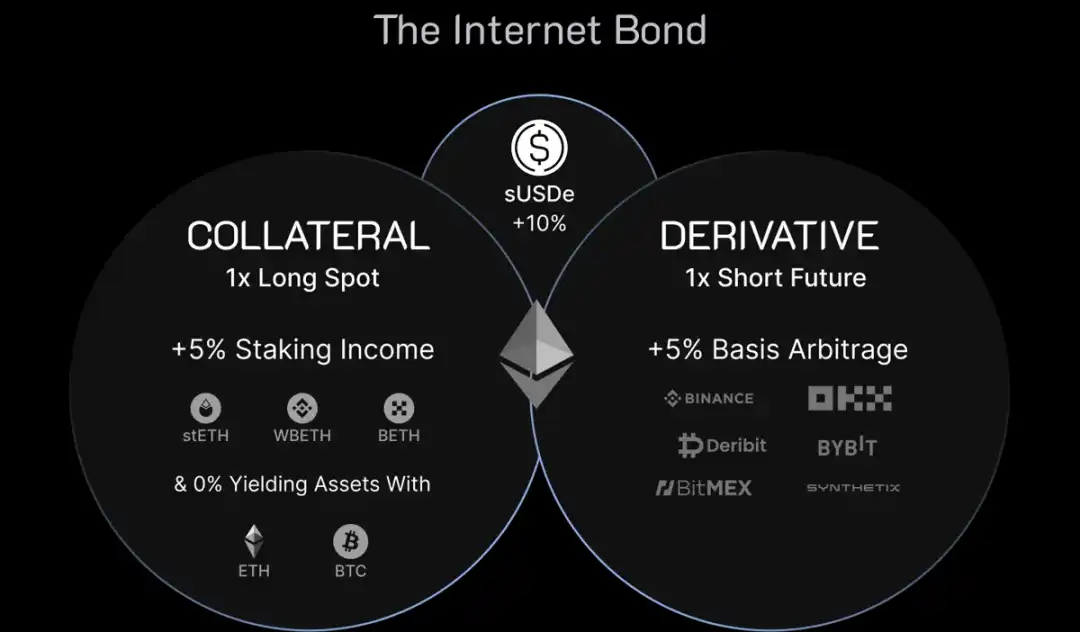
Ethena's USDe stablecoin, as a crypto-native asset, differs from dollar stablecoins that rely on traditional assets such as US Treasuries as the underlying support. Its issuance mechanism involves holding mainstream cryptocurrency spot positions and establishing short positions on exchanges. This innovative model of stablecoin plays an important role in the market, not only locking in the value of mainstream crypto assets, but also injecting liquidity into the derivatives market. Particularly during bull markets, as the prices of mainstream assets rise and the size of derivatives contracts expands, the USDe scale also grows accordingly. In addition, the short capital fee rate of USDe provides holders with a more attractive yield compared to traditional stablecoins like USDT. This advantage attracts more users to choose USDe, further driving the expansion of USDe's scale.

Minting, Redemption, and Staking
The minting process of USDe allows users to exchange the underlying assets for USDe by sending them to the protocol, while redemption is the process of users burning USDe to redeem the original collateral assets. Staking USDe allows users to lock USDe in smart contracts to earn yield. When users stake USDe, they will receive sUSDe, whose value will increase as the protocol's earnings accumulate. Users can unstake sUSDe at any time to receive the USDe with the accumulated value.
Delta Neutral Anchoring Mechanism
The anchoring mechanism of USDe is mainly achieved through the execution of automated and programmatic Delta neutral hedging strategies to maintain relative stability against its underlying collateral assets. This strategy establishes short positions in the derivatives market equivalent to the spot assets, to offset the price fluctuation risks of the spot assets, so that the synthetic dollar value of USDe remains relatively stable under most market conditions. In addition, Ethena protocol's revenue sources, including spot staking yields and short position capital fee income, further enhance the stability of USDe. Through this series of mechanisms, USDe can become a reliable medium of exchange and store of value in the crypto market, maintaining a stable peg to the US dollar.
Hedging Strategies and Risk Control
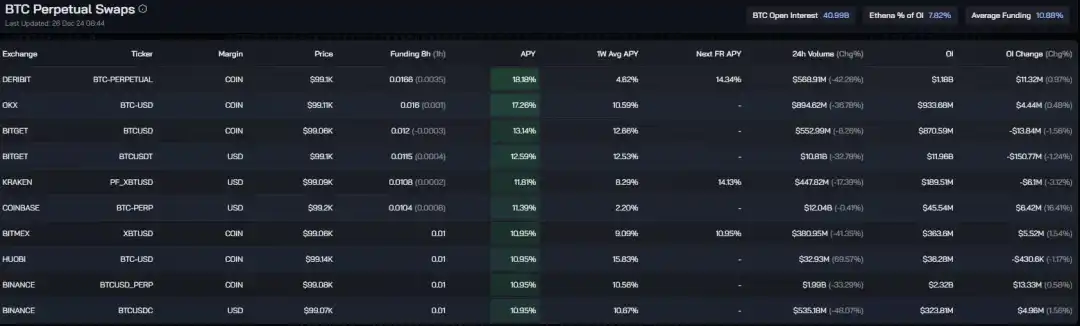
Ethena's hedging mechanism is a system composed of off-chain application service components that interact with on-chain smart contracts and the Ethereum blockchain, responsible for obtaining market data, verifying data integrity, calculating risk exposures, coordinating internal system information, publishing prices for USDe minting and redemption, determining order routing and execution locations, real-time verifying the integrity of information and operations, monitoring the availability of dependencies, and coordinating collateral liquidity, as well as publishing real-time developments. This system is centered on protecting the protocol's collateral to ensure the stability of USDe and the real-time integrity of the system. In addition, Ethena has a deep understanding of various potential risks, including smart contract risks, external platform risks, liquidity risks, custodial operation risks, exchange counterparty risks, and market risks. To address these challenges, Ethena actively takes measures to mitigate and diversify these risks, in order to enhance the resilience and reliability of the entire system.
Transparency and Fund Security
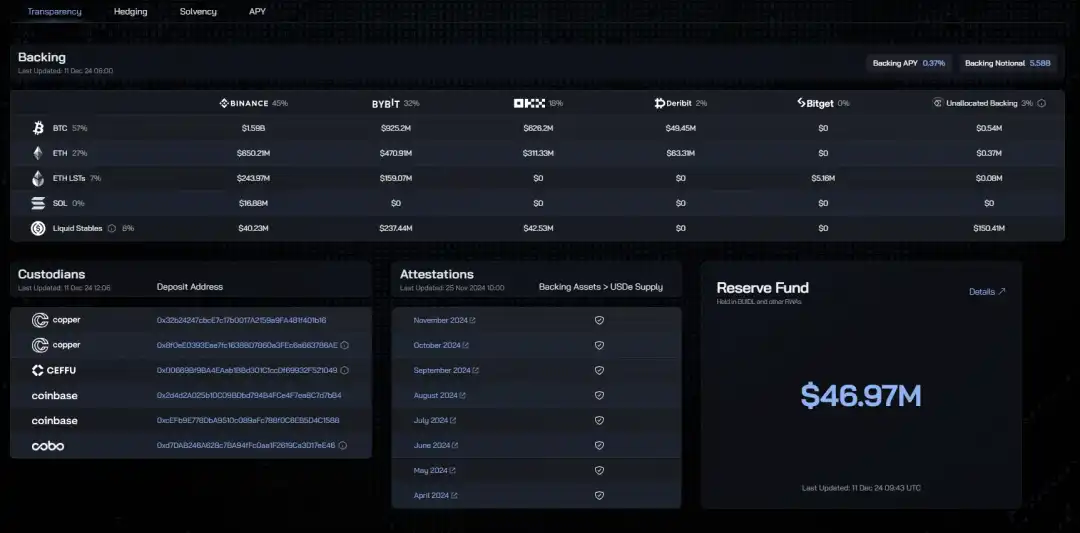
The core value of a stablecoin lies in its anchoring ability, i.e., maintaining a stable value pegged to the fiat currency it is linked to. Historically, some stablecoins like USDT and USDC have experienced de-pegging incidents due to lack of transparency and inadequate risk control mechanisms. To address this, Ethena has adopted a multi-signature and asset custodial mechanism, as well as deep cooperation with exchanges, to ensure the stability and transparency of its asset management. Additionally, Ethena has established a sufficient reserve fund to address extreme market volatility in fee rates. This series of strategies not only enhances the credibility of USDe, but also provides a solid security guarantee for USDe's yield, ensuring the interests of holders and the stability of the market.
TradFi-Friendly Digital US Dollar USDtb
USDtb is an institutional-grade stablecoin, backed by BlackRock's BUIDL, the world's largest asset management company, with high-quality short-term government bonds as collateral, ensuring its excellent security and credibility. In the DeFi field, USDtb is not only fully accessible and easy to integrate, but can also be used as collateral on centralized exchanges and major brokers, providing traditional financial institutions with a direct channel to access DeFi. In addition, USDtb also has a unique on-chain direct minting and redemption mechanism, which realizes 24/7 service, further enhancing its competitiveness and convenience in the digital asset market.
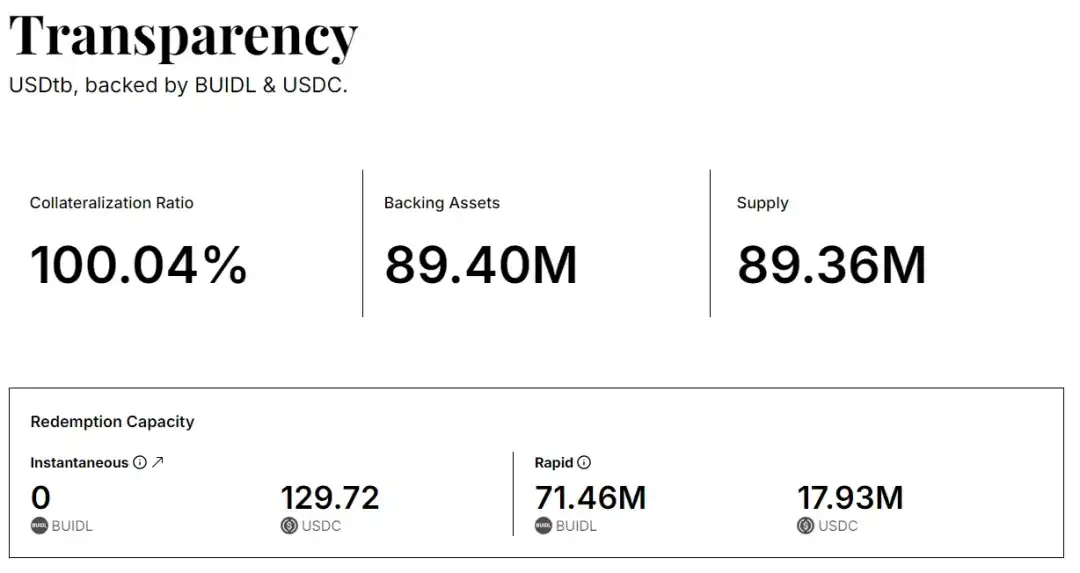
As an independent product from USDe, USDtb provides users with a new choice with a distinctly different risk profile. Its existence allows USDe to more effectively address market challenges, especially during periods of negative interest rates, where Ethena can close USDe's hedging positions and reallocate assets to USDtb, thereby mitigating related risks and enhancing the overall stability and resilience of the system.
ENA Token Design
The ENA token plays a critical role in the Ethena ecosystem, serving as both a governance token that grants holders the right to participate in key decisions, such as electing risk committee members and shaping policy directions, as well as providing an opportunity to stake and earn additional yield as sENA. As ENA is set to be used as a voting tool for the Ethereal derivatives exchange in the future, its importance in Ethena's development roadmap is becoming increasingly evident. These functionalities not only solidify ENA's position as the core of the Ethena protocol, but are also crucial for maintaining the protocol's decentralized governance and incentivizing user participation.
In terms of liquidity, ENA has performed exceptionally well on major exchanges, with trading volume consistently ranking among the top, which not only demonstrates the market activity of the Ethena protocol, but also indicates its widespread recognition and acceptance by the market.

Operating Resources
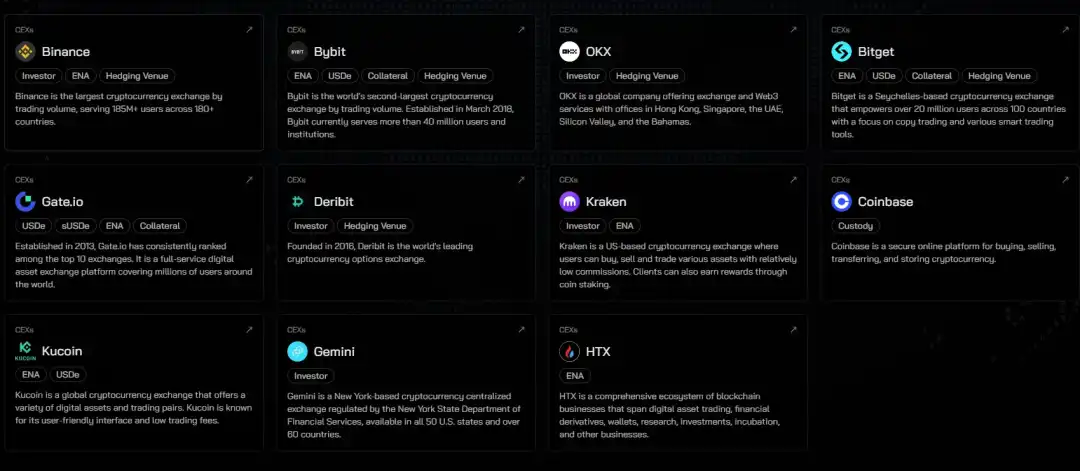
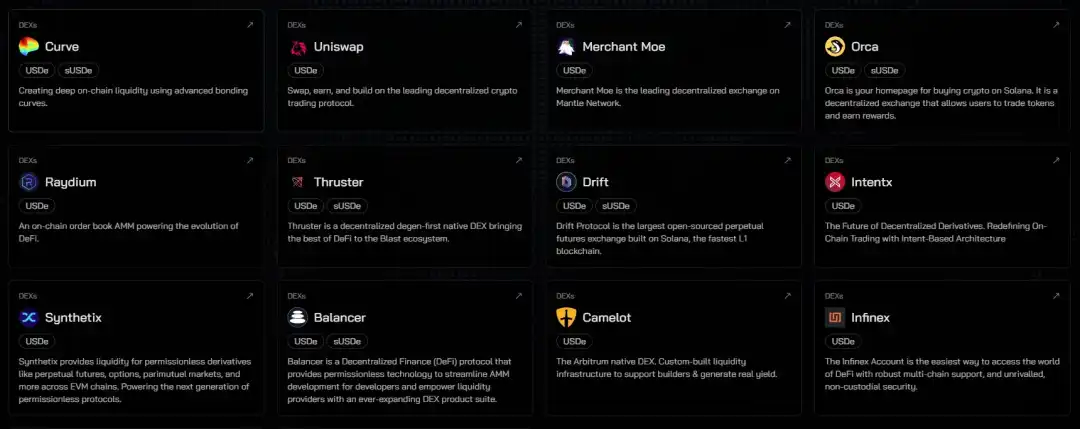
Ethena has implemented a series of hedging strategies through deep cooperation with major well-known exchanges to address unexpected situations in the derivatives market, ensuring the stability and security of USDe. Additionally, the use of USDe as a trading quote currency is gradually being implemented, thanks to Ethena's efforts to increase liquidity and mitigate risks. In terms of resources, Ethena has partnered with several top global market makers, who provide liquidity and market depth, further enhancing the market adaptability and resilience of USDe.
The Future Prospects of Ethena
In the stablecoin field, the competitive landscape is far from settled, and while USDT and USDC occupy leading positions, emerging competitors are fully capable of challenging their market positions. The key is to choose stablecoin protocols with unique mechanisms, able to stabilize the anchored value, increase market capitalization, and expand application scenarios. Just as DEXes have already captured 10% of CEX trading volume, decentralized financial products are rapidly capturing market resources due to their verifiability and convenience. We expect that by 2025, decentralized stablecoins represented by Ethena will continue to grow their market share, reaching a 10% market share, or $20 billion.
At the same time, we believe that Ethena will become one of the important financial tools for the implementation of Trump's policies. The implementation of Trump's policies will also promote Ethena's strategic position in the revitalization of the US economy and the reshaping of the global financial landscape, becoming an important support for the domestic and global digital finance ecosystem. As an industry pioneer, ArkStream Capital will witness the great transformation of this decentralized finance era alongside Ethena.
Welcome to join the official BlockBeats community:
Telegram Subscription Group: https://t.me/theblockbeats
Telegram Discussion Group: https://t.me/BlockBeats_App
Twitter Official Account: https://twitter.com/BlockBeatsAsia